Phone:
(701)814-6992
Physical address:
6296 Donnelly Plaza
Ratkeville, Bahamas.

Phone:
(701)814-6992
Physical address:
6296 Donnelly Plaza
Ratkeville, Bahamas.

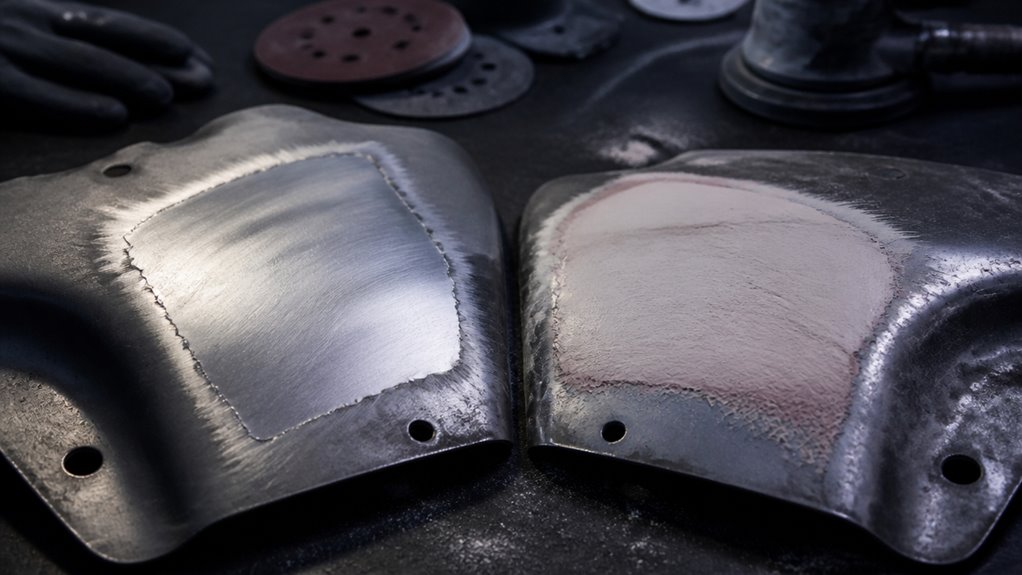
You’ll want JB Weld when you need a strong, lasting bond for structural or load-bearing repairs on metal, plastics, or machinery. It cures slowly but delivers steel-like strength and durability.
Bondo, on the other hand, works best for fast, cosmetic fixes like filling dents and smoothing surfaces. It cures quickly for sanding and finishing.
Choosing between them depends on whether you prioritize strength or speed. Keep exploring to understand when and how to apply each for peak results.
| Feature | JB Weld | Bondo |
|---|---|---|
| Product Type | Two-part epoxy adhesive | Polyester-based body filler |
| Main Purpose | Structural bonding and durable repairs | Cosmetic dent filling and surface smoothing |
| Primary Function | Creates strong bonds between materials | Fills dents, holes, scratches, and imperfections |
| Composition | Resin and hardener with a steel-reinforced formula | Polyester-based filler |
| Strength | High mechanical and tensile strength | Not designed for structural strength |
| Durability | Long-lasting bond resistant to stress and wear | Best suited to cosmetic finishing rather than heavy loads |
| Bonding Capability | Strong adhesion to metals and multiple other materials | Adheres to metal, fiberglass, and wood |
| Metal Compatibility | Steel, aluminum, iron, copper, brass, and bronze | Steel and aluminum body panels |
| Other Compatible Surfaces | Wood, ceramic, fiberglass, concrete, and many plastics | Fiberglass and wood |
| Structural Repairs | Excellent for cracks, load-bearing repairs, and machinery | Not recommended for structural or load-bearing repairs |
| Automotive Applications | Metal cracks, damaged components, and structural fixes | Dents, scratches, shallow holes, and body panel imperfections |
| Surface Finish | Hard, durable repair surface that can be sanded | Smooth, sandable finish ideal for primer and paint |
| Sanding Ease | Requires more effort to shape and finish | Easy to sand and shape |
| Set Time | Approximately 4 to 6 hours | Approximately 5 to 10 minutes |
| Full Cure Time | Approximately 15 to 24 hours | Approximately 20 to 30 minutes |
| Repair Workflow | Requires longer waiting before sanding or applying stress | Allows faster filling, shaping, and finishing |
| Heat Resistance | Maintains strength up to approximately 300°F | May shrink or crack under rapid temperature changes |
| Flexibility | Not suitable for flexible plastics like polyethylene | Designed primarily for rigid surface filling |
| Fume Considerations | Milder odor, but good ventilation is recommended | Strong fumes during curing, requiring good ventilation |
| Temperature Sensitivity | Handles moderate temperature fluctuations but extreme conditions may affect performance | Rapid temperature changes can cause shrinking or cracking |
| Storage | Cool, dry place below 77°F (25°C) | Cool, dry place below 77°F (25°C) |
| Shelf Life | Up to two years unopened | Up to two years unopened |
| Best For | Strong, permanent bonding and structural repairs | Fast cosmetic repairs and professional-looking surface preparation |
| Main Advantage | Superior bonding strength and durability | Quick curing, easy sanding, and smooth finishing |
| Main Limitation | Longer curing time and more difficult surface shaping | Limited structural strength and load-bearing capability |
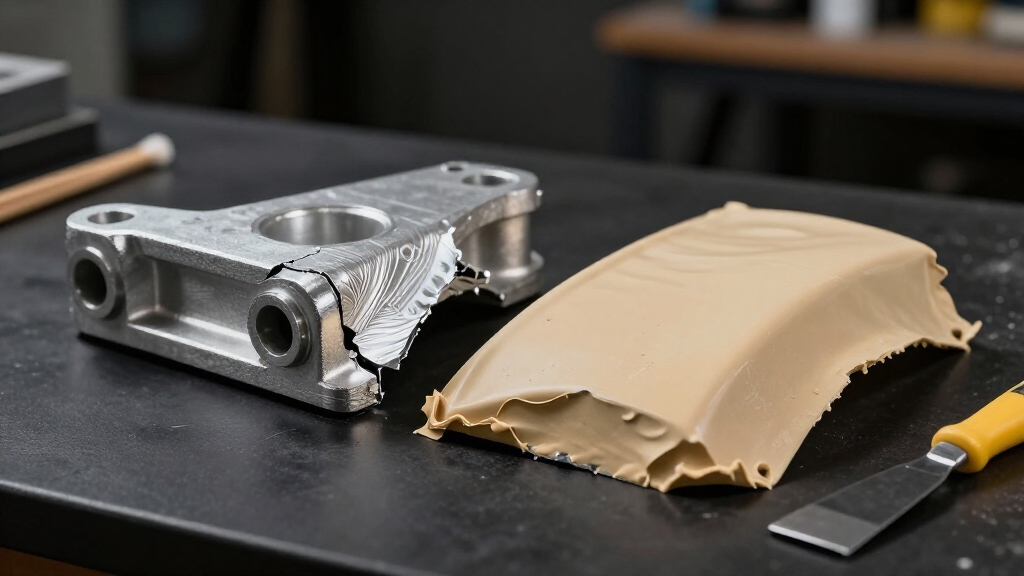
When you need a durable, structural repair, JB Weld offers a two-part epoxy adhesive designed to bond and seal metal and various other surfaces. You mix equal parts of resin and hardener, activating a chemical reaction that creates a tough, steel. However, when working with metal surfaces, it is crucial to protect your skin from welding UV radiation that can cause serious burns and long-term damage.
Bondo serves as a polyester-based body filler specifically formulated for automotive repair tasks that require filling dents, holes, and surface imperfections.
Bondo is a polyester-based filler designed to repair dents, holes, and surface imperfections on vehicles.
You’ll use Bondo primarily to restore the smooth contour of damaged auto body panels. Its fast curing time lets you sand and shape the surface quickly, making it ideal for cosmetic refinishing rather than structural repairs.
Bondo adheres well to metal, fiberglass, and wood but doesn’t provide strong bonding strength like epoxies. When you encounter shallow dents or scratches, apply Bondo to fill and level the area before sanding it flush with the surrounding surface.
This creates a seamless base for primer and paint, ensuring a professional finish. Its ease of use and finishing capabilities make it a go-to for auto body cosmetic repairs. Unlike Bondo, products like JB Weld require a longer cure time for maximum strength and durability.
Deciding between JB Weld and Bondo hinges on the nature of your repair task, whether you need a strong, durable bond or a smooth, sandable surface.
If your project demands structural adhesion, metal bonding, or sealing, JB Weld fits best due to its epoxy formulation and compatibility with metals and various substrates.
Conversely, if you’re addressing cosmetic imperfections like dents or scratches on auto body panels, Bondo offers superior shaping and sanding properties.
Choose JB Weld when your repair requires strength, long-term durability, and versatile surface compatibility.
Opt for Bondo when you need quick curing, easy sanding, and a refined finish on automotive surfaces.
Understanding these distinctions guarantees you select the right product tailored to your repair’s purpose and desired outcome.
Keep in mind that JB Weld Original delivers an exceptionally strong bond with a tensile strength of 6,220 PSI, making it ideal for demanding repairs.
Although both JB Weld and Bondo serve repair purposes, JB Weld delivers superior strength and long-lasting durability due to its epoxy-based, steel-reinforced formula designed for structural bonding.
JB Weld offers unmatched strength and durability with its epoxy, steel-reinforced formula for structural repairs.
When you need a repair that withstands stress, heat, and load, JB Weld’s molecular adhesion guarantees a tough, permanent bond.
Bondo, on the other hand, excels at filling and smoothing but lacks the mechanical strength to support structural repairs.
Feel confident using JB Weld for critical fixes that demand reliability.
Avoid frustration by not relying on Bondo for load-bearing applications.
Experience peace of mind knowing JB Weld resists cracking and wear over time.
Appreciate Bondo’s quick sanding and finishing but recognize its limits on durability.
Proper surface preparation and curing time are essential to achieve the maximum strength of JB Weld’s tensile strength.
When it comes to bonding surfaces, you’ll definitely want to reach for JB Weld if you’re working with metals or other materials that need a strong, lasting hold. It’s really reliable for those tough jobs!
On the flip side, if you’re tackling auto body repairs—like fixing dents or smoothing out surface imperfections—Bondo is your go-to. It excels at filling and sanding, making those repairs a breeze.
Additionally, JB Weld offers superior bond strength and heat resistance compared to many adhesives, making it ideal for heavy-duty applications.
When working with metal and a variety of other surfaces, JB Weld excels as a versatile bonding agent that creates strong, durable repairs on steel, aluminum, iron, copper, brass, and bronze.
It also bonds effectively to wood, ceramic, fiberglass, concrete, and many plastics, making it your go-to for structural fixes beyond metalwork.
In contrast, Bondo is primarily designed for cosmetic surface repairs and lacks the adhesive strength JB Weld provides on metals.
Choose JB Weld if you need:
This precision makes JB Weld indispensable for demanding bonding tasks across multiple materials. It also cures to a steel-like hardness rated at 4000 PSI, ensuring durability under high stress.
Beyond bonding strength, auto body repairs demand materials that handle surface imperfections with finesse. When filling dents, scratches, and shallow holes, Bondo excels on automotive panels, providing a smooth, sandable finish ideal for paint prep.
It’s designed specifically for bodywork surfaces like steel, aluminum, and fiberglass, where cosmetic contouring is critical. JB Weld, meanwhile, is better suited for structural repairs requiring strong adhesion on metals such as steel, aluminum, and iron.
While it bonds well to various surfaces, JB Weld isn’t optimal for shaping or smoothing imperfections. You’ll want to use JB Weld for metal cracks and load-bearing fixes but rely on Bondo for cosmetic filling and shaping.
Selecting between them depends on whether you prioritize structural strength or surface finish in your auto body repair. Proper surface preparation and curing conditions significantly improve JB Weld’s pressure capacity for reliable structural repairs.
You’ll notice that JB Weld usually takes about 4 to 6 hours to set and can take up to 24 hours for a full cure. That can really stretch out your project timeline, right?
On the flip side, Bondo sets up quickly, which means you can sand and finish much sooner. This can really speed up those cosmetic repairs!
It’s important to allow JB Weld the recommended full cure time before sanding or stressing the repair to ensure maximum strength and durability.
Although both JB Weld and Bondo serve repair purposes, their cure times differ markedly and directly impact your workflow efficiency and project timing.
JB Weld Original sets in 4 to 6 hours and fully cures in 15 to 24 hours, requiring patience for strength development. In contrast, Bondo cures rapidly, often within 20 to 30 minutes, enabling faster sanding and finishing.
This difference means you can move quickly with Bondo but must allow JB Weld sufficient time to achieve its structural integrity.
Feel confident waiting for JB Weld’s durable bond to form.
Experience relief with Bondo’s quick sanding readiness.
Manage frustration if your project demands faster handling.
Balance your workflow between strength and speed needs.
Keep in mind that applying thinner layers of JB Weld can accelerate drying and ensure uniform curing.
Understanding how cure times impact your repair workflow helps you plan project steps and manage expectations effectively.
JB Weld’s longer cure time requires you to allocate more waiting time before sanding or applying stress. This is suitable for structural repairs.
Bondo’s fast curing lets you move quickly through filling, shaping, and sanding stages, making it ideal for cosmetic finishes.
Choosing the right product based on your project timeline ensures efficiency and quality.
Heat generated during the curing process can affect the thermal gradients, influencing how the material sets and bonds.
| Product | Set Time | Full Cure Time |
|---|---|---|
| JB Weld | 4-6 hours | 15-24 hours |
| JB Weld PlasticBonder | 15 minutes | 30 minutes |
| Bondo | 5-10 minutes | 20-30 minutes |
Match cure times to your workflow for optimized repair sequencing.
Select JB Weld when your project demands a durable, load-bearing bond that withstands stress and environmental factors.
It’s engineered for structural repairs on metals, plastics, and other substrates where strength and permanence are critical.
Conversely, choose Bondo when your goal is to smooth surfaces, fill dents, or refine cosmetic imperfections without bearing heavy loads.
With JB Weld, you get:
Bondo excels in shaping and finishing work but lacks the structural integrity JB Weld provides.
Your choice hinges on whether strength or surface finish is paramount.
When you need both strong bonding and a smooth finish, applying JB Weld and Bondo together can deliver ideal results.
Start by cleaning and roughening the damaged surface to guarantee maximum adhesion.
Apply JB Weld first to structurally bond and fill cracks or holes; allow it to cure fully, typically 15-24 hours for maximum strength.
Once cured, sand the JB Weld layer smooth to prepare for Bondo.
Then, mix and apply Bondo over the bonded area to fill minor imperfections and create a uniform surface.
Work quickly, as Bondo sets fast, and sand it to the desired contour and smoothness.
Finally, prime and paint as needed.
This layered approach leverages JB Weld’s durability and Bondo’s finishing capabilities for a robust, professional repair.
Although JB Weld and Bondo serve different repair purposes, using them incorrectly can compromise the effectiveness and durability of your work.
Using JB Weld and Bondo properly ensures strong, lasting repairs tailored to their specific functions.
You must match each product to its intended function: JB Weld for structural bonding and Bondo for cosmetic filling. Avoid shortcuts that weaken your repair or cause rework.
Common mistakes to avoid include:
Applying Bondo on oily or unclean surfaces, preventing adhesion and causing peeling.
Using JB Weld on flexible plastics like polyethylene, leading to bond failure.
Neglecting proper curing time for either product, which reduces strength and finish quality.
Over-sanding Bondo before it fully hardens, resulting in uneven surfaces and cracks.
Yes, you can use JB Weld and Bondo together on the same repair.
Start by applying JB Weld for strong, structural bonding or crack filling.
Once cured, use Bondo to fill dents or smooth the surface for a cosmetic finish.
This combination leverages JB Weld’s durability and Bondo’s sanding ease, letting you achieve both strength and a refined appearance in one repair job.
Just make sure each layer fully cures before proceeding.
You’ll notice that Bondo releases strong fumes during curing, often requiring ventilation for up to 30 minutes or more to keep indoor air safe.
JB Weld’s epoxy has milder odors but still benefits from good airflow, especially during its 15-24 hour cure.
Neither product is harmful if used properly with ventilation.
Always work in a well-ventilated space or use a respirator to minimize inhaling vapors and protect your health indoors.
Temperature changes can affect your repairs differently depending on the material.
Epoxy-based adhesives like JB Weld handle moderate temperature fluctuations well, maintaining strength up to about 300°F. However, extreme heat or cold can cause brittleness or softening.
Polyester fillers like Bondo cure fast but may shrink or crack under rapid temperature swings, reducing durability.
For lasting results, apply and cure both products within recommended temperature ranges. Avoid extreme conditions during and after repair.
You shouldn’t paint Bondo immediately after curing; it needs a full cure time, typically around 20 to 30 minutes, depending on temperature and humidity.
After curing, you must sand it smooth before painting to guarantee proper adhesion and an even finish.
Painting too soon can cause adhesion issues or imperfections. Always follow the manufacturer’s recommended cure and sanding times for best results and a durable, smooth paint job.
You should store JB Weld and Bondo products in a cool, dry place below 77°F (25°C) to maintain their effectiveness.
Both products can last up to two years unopened. Avoid exposure to direct sunlight and extreme temperatures, as these can degrade the chemical properties.
Always seal containers tightly after use to prevent curing inside the container. This ensures the materials remain usable and ready for your next repair job.
Now that you know the strengths and weaknesses of JB Weld and Bondo, choosing the right one isn’t as tricky as it seems.
But here’s the catch: using them together might just release the ultimate repair solution you didn’t expect.
Whether you need structural integrity or a flawless finish, mastering their application can save your project.
Ready to take your repairs to the next level? The choice you make next could make all the difference.