Phone:
(701)814-6992
Physical address:
6296 Donnelly Plaza
Ratkeville, Bahamas.

Phone:
(701)814-6992
Physical address:
6296 Donnelly Plaza
Ratkeville, Bahamas.

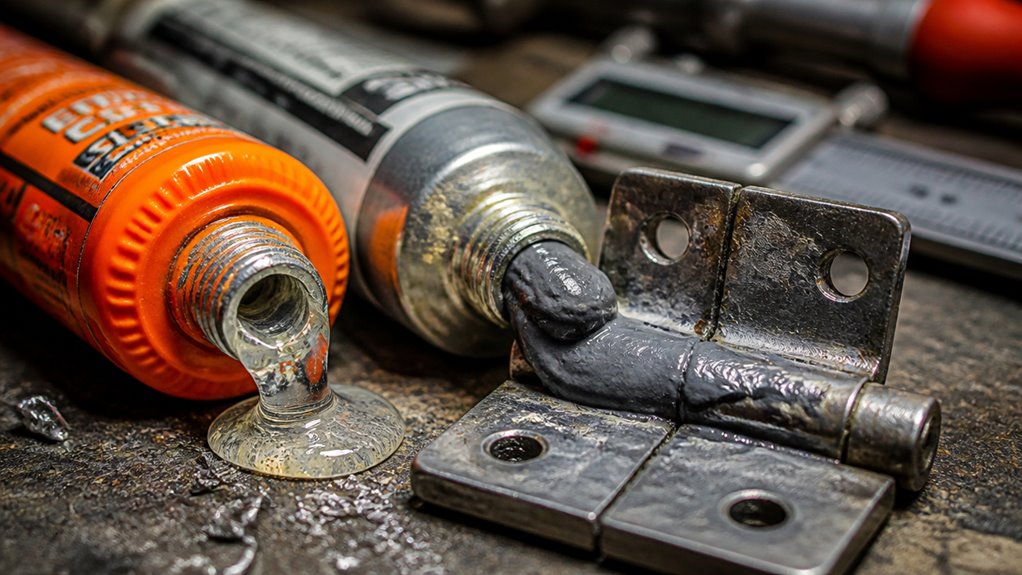
You’ll want Gorilla Epoxy for quick-setting, clear bonds on porous or mixed materials like wood, plastic, and glass.
It cures fast and works well under 200°F but lacks high heat tolerance and machinability.
Choose JB Weld for heavy-duty metal repairs requiring up to 500°F continuous heat resistance, superior strength (5020 psi), and machinability.
It’s ideal for structural steel or aluminum and resists moisture and chemicals.
Keep exploring to understand their best-fit applications and usage tips.
| Feature | Gorilla Epoxy | JB Weld |
|---|---|---|
| Best For | Household repairs, crafts, mixed materials | Heavy-duty metal repairs and structural applications |
| Bond Strength | 3,300 PSI | 5,020 PSI |
| Heat Resistance | Up to about 180°F | Up to 500°F continuous (600°F short-term) |
| Initial Set Time | 5 minutes | 3–4 hours |
| Full Cure Time | 24 hours | 15 hours |
| Finish | Crystal clear | Dark metallic |
| Machinability | Limited | Can be sanded, drilled, and machined |
| Surface Compatibility | Wood, plastic, ceramic, glass, concrete | Steel, aluminum, iron, and other metals |
| Waterproof | Water-resistant | Fully waterproof |
| Chemical Resistance | Moderate | Excellent |
| Outdoor Performance | Good for occasional exposure | Excellent for long-term outdoor and marine use |
| Appearance | Nearly invisible bond | Industrial-looking finish |
| Ease of Application | Fast and beginner-friendly | Requires longer curing and patience |
| Best Temperature Applications | Indoor and moderate heat | High-temperature automotive and industrial repairs |
| Cost | Generally lower | Slightly higher |
| Main Advantage | Fast curing with a clear finish for everyday repairs | Superior strength, heat resistance, and durability |
| Main Drawback | Not suitable for high heat or heavy structural loads | Slower curing time and visible metallic finish |
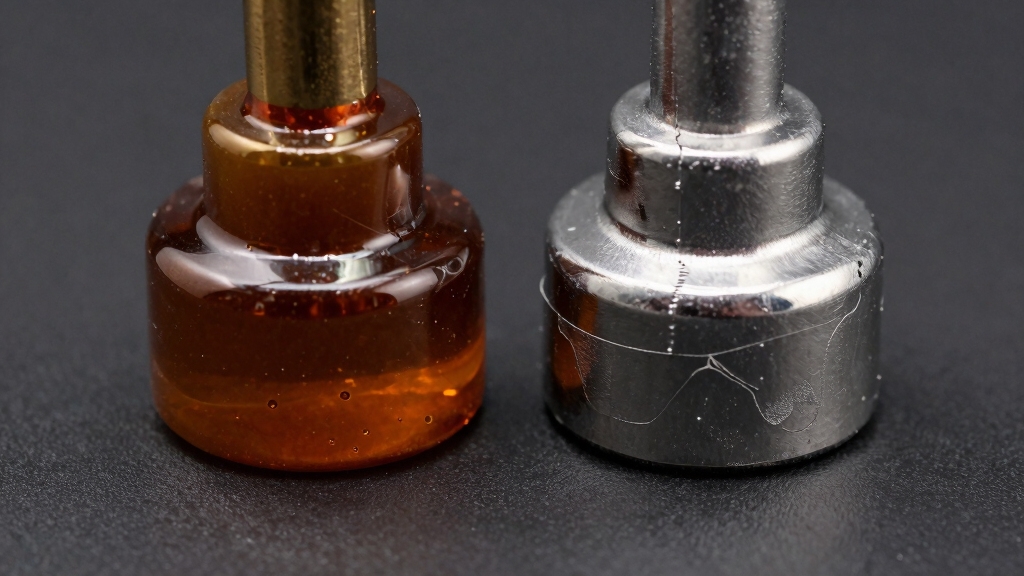
When comparing JB Weld and Gorilla Epoxy, you’ll find that JB Weld offers superior bond strength and heat resistance, making it ideal for heavy-duty metal repairs and high-temperature applications.
JB Weld’s metallic filler enhances tensile strength and durability, particularly on metals, and it withstands continuous exposure up to 500°F, peaking at 600°F briefly.
In contrast, Gorilla Epoxy suits lower temperature ranges and bonds well to porous materials like wood and ceramics.
JB Weld requires longer curing times but provides a sandable, machinable finish, while Gorilla Epoxy cures quickly with a clear, aesthetic finish.
You’ll choose JB Weld when durability and thermal tolerance are critical, and Gorilla Epoxy for rapid assembly or mixed-material projects where temperature and mechanical load are less demanding.
However, when working with welding or high-heat environments, it’s crucial to use protective gear to prevent skin damage from UV radiation exposure.
Evaluate the bond strength of JB Weld and Gorilla Epoxy to determine their suitability for your project’s mechanical demands.
JB Weld offers a superior bond strength of 5020 psi, markedly higher than Gorilla Epoxy’s 3300 psi. This indicates better load-bearing capability.
JB Weld provides a significantly stronger bond at 5020 psi, outperforming Gorilla Epoxy’s 3300 psi.
This difference is critical when you need a durable, structural bond, especially on metal surfaces. JB Weld’s metallic filler enhances tensile strength and longevity.
The gravity failure point further confirms this advantage, with JB Weld supporting up to 27.5 lbs compared to Gorilla’s 17.5 lbs.
While Gorilla Epoxy provides respectable adhesion suitable for moderate tasks, it falls short in heavy-duty applications.
Consequently, if your project requires high mechanical resilience and long-term durability, JB Weld is the technically stronger choice.
Additionally, proper surface preparation, including cleaning and roughening, is essential to maximize the bond strength and durability of JB Weld.
Beyond bond strength, understanding the heat resistance of JB Weld and Gorilla Epoxy shapes their suitability for high-temperature environments.
JB Weld withstands constant temperatures up to 500°F (260°C) and tolerates short exposures up to 600°F (316°C). It maintains structural integrity once fully cured, making it ideal for components like exhaust manifolds or engine parts subjected to sustained heat.
In contrast, Gorilla Epoxy operates effectively only up to about 180°F intermittently. Polyurethane variants degrade rapidly beyond 200°F.
If you need a heat-resistant adhesive for high-thermal applications, JB Weld’s metallic filler and thermal stability outperform Gorilla Epoxy by a significant margin.
Consequently, you should choose JB Weld for demanding, heat-intensive repairs and Gorilla Epoxy for moderate temperature conditions below 200°F.
For the highest temperature applications, consider J-B Weld’s ExtremeHeat formula, which withstands continuous heat up to 1000°F and direct flame exposure up to 2400°F.
Understanding the cure times of JB Weld and Gorilla Epoxy is essential for matching adhesive performance with project timelines and durability needs.
Gorilla Epoxy sets rapidly in 5 minutes and fully cures in 24 hours, allowing quick handling and faster project completion.
JB Weld requires 3–4 hours to set and up to 15 hours for full cure, prioritizing long-term durability over speed.
Durability-wise, JB Weld’s metallic filler delivers superior tensile strength and load-bearing capacity, making it ideal for heavy-duty repairs.
Gorilla Epoxy suits lighter applications.
JB Weld performs best when applied to properly prepared surfaces, as surface preparation is critical for achieving maximum bond strength.
| Feature | JB Weld | Gorilla Epoxy |
|---|---|---|
| Initial Set Time | 3–4 hours | 5 minutes |
| Handling Time | 4–6 hours | 30 minutes |
| Full Cure Time | 15 hours | 24 hours |
| Durability | High (metal filler) | Moderate |
Surface compatibility plays a vital role when choosing between JB Weld and Gorilla Epoxy, as each adhesive excels with different materials.
JB Weld’s metallic filler optimizes adhesion and tensile strength on dense metals like steel and aluminum, making it ideal for industrial or structural repairs.
However, it performs poorly on wood, where traditional glues are superior.
In contrast, Gorilla Epoxy bonds effectively with porous substrates such as wood, concrete, plastic, ceramic, and glass.
Its formulation accommodates mixed materials, proving advantageous for crafts and household applications.
When you need a strong bond on metal, JB Weld’s specialized composition is your best choice.
For versatile use across varied porous surfaces, Gorilla Epoxy offers reliable adhesion without sacrificing ease of application or curing speed.
Select based on your material requirements to guarantee peak bonding performance.
Additionally, JB Weld cures to a steel-like hardness rated at 4000 PSI, making it exceptionally durable for metal repairs.
Although both JB Weld and Gorilla Epoxy offer water resistance, JB Weld provides full waterproofing that withstands continuous exposure to moisture. This makes it the superior choice for applications involving water immersion or high-humidity environments.
You’ll find JB Weld’s chemical-resistant formulation maintains structural integrity in harsh outdoor conditions, including exposure to acids and solvents. Gorilla Epoxy, while water-resistant, lacks the complete waterproof properties necessary for submerged or persistently wet settings, limiting its durability outdoors.
When you need reliable performance for marine repairs, plumbing, or outdoor metal bonding, JB Weld resists degradation and maintains adhesion over time. Gorilla Epoxy suits automotive or household repairs exposed to occasional moisture but doesn’t match JB Weld’s long-term environmental resilience.
For sustained water contact and demanding outdoor durability, JB Weld is clearly the better technical solution. Proper application and full curing are essential for achieving JB Weld’s maximum strength and long-lasting bond in outdoor conditions.
When you choose between Gorilla Epoxy and JB Weld, the finish quality substantially influences your project’s final appearance and functionality. Gorilla Epoxy cures to a transparent, crystal-clear finish, making it ideal for visible joints where aesthetics matter. JB Weld, however, hardens into a darker, metallic surface, better suited for industrial or structural uses where appearance is secondary.
Consider these key points:
Choose based on whether visual subtlety or machinability matters more to your project. For best results with JB Weld, proper surface preparation techniques are essential to ensure a strong and durable bond.
Opt for JB Weld when your repair demands exceptional strength and durability under stress. Its bond strength of 5020 psi significantly exceeds Gorilla Epoxy’s 3300 psi, providing superior load-bearing capacity essential for structural applications.
The metallic filler enhances tensile strength and adhesion on metal surfaces, making JB Weld optimal for steel or aluminum repairs. It withstands continuous temperatures up to 500°F and short peaks at 600°F, ideal for engine components or exhaust systems exposed to high heat.
JB Weld’s full cure time of up to 15 hours prioritizes long-term robustness over quick fixes. Waterproof and chemically resistant, it performs reliably in harsh environments. Choose JB Weld to guarantee heavy-duty repairs maintain integrity, strength, and durability where Gorilla Epoxy’s capabilities fall short.
Proper surface preparation and curing conditions significantly improve JB Weld’s pressure resistance and overall performance.
Heavy-duty repairs requiring maximum strength clearly favor JB Weld. Gorilla Epoxy excels in projects demanding quick bonding and aesthetic appeal.
You’ll find Gorilla Epoxy ideal when working on crafts or household items due to its fast set time and clear finish. It bonds well to porous materials like wood, ceramic, and plastic, making it versatile for decorative or mixed-material tasks.
Consider these benefits:
Choosing Gorilla Epoxy streamlines your craft projects without compromising on neatness or versatility. Proper surface preparation is essential to ensure the best bond and durability when using epoxy adhesives.
Although both JB Weld and Gorilla Epoxy require surface preparation for peak adhesion, the specific application techniques differ markedly due to their curing times and material compositions.
When applying JB Weld, mix equal parts thoroughly and expect a 3–4 hour set time. Allow 15 hours for full cure; this slower process guarantees optimal strength on metals.
Gorilla Epoxy, by contrast, sets in 5 minutes with a 24-hour full cure, making it ideal for quick repairs on porous and mixed materials. You should apply Gorilla Epoxy swiftly but precisely to avoid premature curing.
JB Weld demands patience for maximum durability.
Always ensure you mix the resin and hardener in an exact 1:1 volume ratio to achieve the best bonding strength and proper curing.
| Aspect | JB Weld | Gorilla Epoxy |
|---|---|---|
| Set Time | 3–4 hours | 5 minutes |
| Full Cure | 15 hours | 24 hours |
| Surface Suitability | Metals, industrial uses | Porous, household items |
Neither JB Weld nor Gorilla Epoxy is recommended for direct food-contact surfaces.
Both contain chemical components that could leach harmful substances.
If you need a food-safe adhesive, look specifically for FDA-approved epoxies designed for that purpose.
Using standard industrial or household epoxies on utensils, containers, or surfaces in contact with food risks contamination and health hazards.
Always verify certification before applying any adhesive in food-related environments.
You shouldn’t use either JB Weld or Gorilla Epoxy on children’s toys because both contain chemicals that can be harmful if ingested or inhaled.
For instance, JB Weld’s bond strength of 5020 psi reflects industrial-grade components, not child-safe materials.
Their formulations lack FDA approval for food-contact or toy safety standards.
Instead, choose adhesives specifically labeled non-toxic and certified safe for children to guarantee health and regulatory compliance.
When you use JB Weld underwater, you’ll benefit from its full waterproof formulation, maintaining strong adhesion and durability even under constant water exposure.
Gorilla Epoxy, while water-resistant, won’t hold up as well submerged long-term, as it can degrade and lose bond strength.
JB Weld’s chemical resistance and curing properties let it perform reliably in marine or wet environments, whereas Gorilla Epoxy suits brief moisture but not continuous underwater use.
When cleaning up JB Weld or Gorilla Epoxy spills, act fast. For uncured epoxy, use acetone or isopropyl alcohol to dissolve the residue before it hardens.
Once cured, you’ll need mechanical removal like scraping or sanding since solvents won’t work. JB Weld’s metallic filler makes it tougher to remove, demanding more abrasion.
Always wear gloves and ensure good ventilation during cleanup to avoid chemical exposure.
Yes, you can paint over both adhesives after curing.
JB Weld’s surface can be sanded and shaped before painting. This provides a roughened texture that enhances paint adhesion, especially for industrial finishes.
Gorilla Epoxy cures clear but offers limited sanding; light scuffing is recommended to improve paint bonding.
For best results, confirm both are fully cured and clean surfaces before applying primer and paint. This will help achieve durable, uniform coatings.
When deciding between JB Weld and Gorilla Epoxy, consider that JB Weld offers a bond strength up to 3,960 PSI. This makes it ideal for heavy-duty repairs requiring high heat resistance and durability.
Gorilla Epoxy, with its faster cure time and versatility on various surfaces, suits crafts and household projects better. Understanding these key differences helps you choose the right adhesive for your specific needs. This ensures peak performance and project success every time.