Phone:
(701)814-6992
Physical address:
6296 Donnelly Plaza
Ratkeville, Bahamas.

Phone:
(701)814-6992
Physical address:
6296 Donnelly Plaza
Ratkeville, Bahamas.

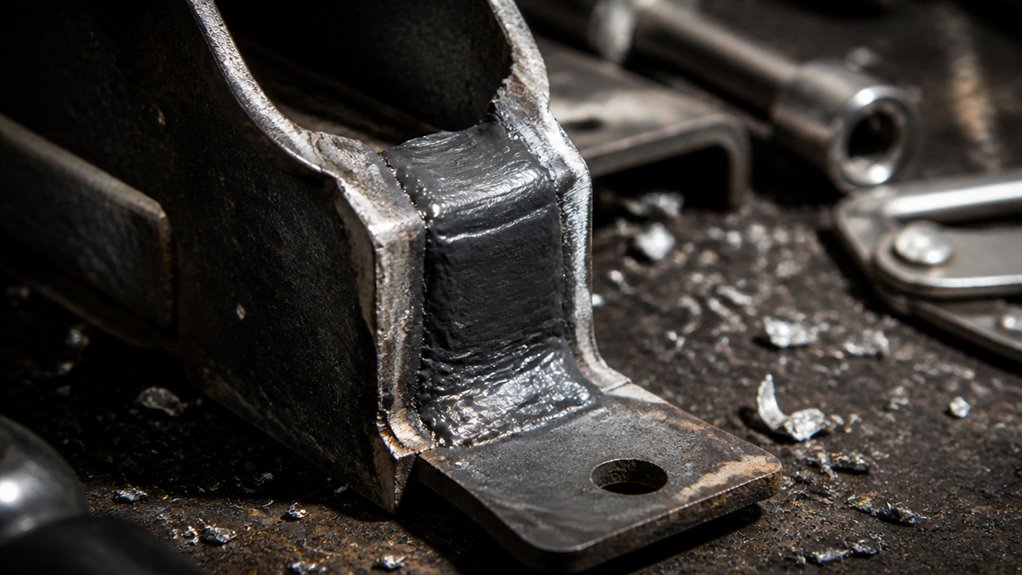
You want J-B Weld Original for the strongest bond. It delivers a steel-reinforced tensile strength of 6,220 PSI, outperforming other J-B Weld formulas in rigidity and durability.
It cures fully in 15–24 hours on properly prepped surfaces to maximize strength. While MMA adhesives may offer faster set times and higher shear strength in some cases, J-B Weld Original excels in heavy-duty, heat-tolerant metal repairs.
Understanding its strengths and limitations helps in choosing the right product for your needs.
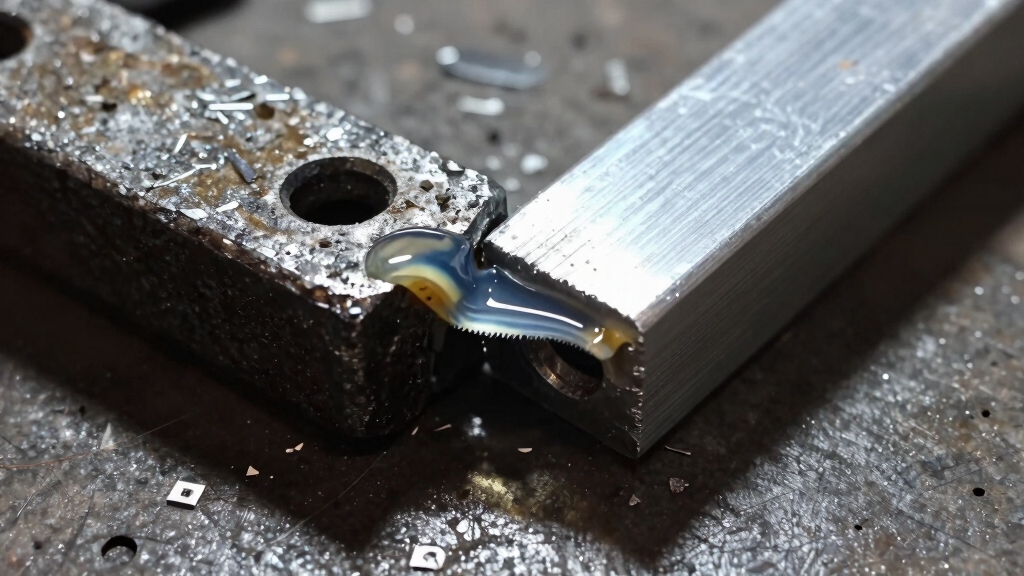
Because you need a reliable adhesive for tough metal repairs, J-B Weld Original stands out as the strongest epoxy in the brand’s lineup due to its steel-reinforced formula and high tensile strength of 6,220 PSI.
J-B Weld Original delivers unmatched strength for tough metal repairs with its steel-reinforced formula and 6,220 PSI tensile strength.
This reinforcement imparts exceptional rigidity, enabling the epoxy to withstand significant mechanical stress. You’ll find that its 1:1 mix ratio ensures consistent chemical composition, vital for uniform curing and bond strength.
The 4–6 hour set time, followed by a 15–24 hour full cure, allows molecular cross-linking to develop maximal adhesion. To maximize performance, you must prepare surfaces by cleaning and roughening them, as bond strength depends heavily on substrate condition.
Additionally, the cured product tolerates temperatures up to 550°F, confirming its suitability for demanding metal-repair environments. It is important to apply the epoxy on dry, prepped surfaces to ensure the strongest bond and durability.
While J-B Weld Original is recognized for its high tensile strength and steel-reinforced formulation, other J-B Weld products prioritize different performance attributes such as flexibility, gap filling, or rapid curing.
You’ll find that Original delivers a tensile strength of 6,220 PSI, making it the brand’s strongest general-purpose epoxy, especially suited for rigid metal repairs.
In contrast, formulas like KwikWeld cure faster but sacrifice some strength, while SteelStik offers enhanced gap-filling capabilities with moderate strength.
Each variant targets specific repair needs rather than maximizing tensile strength alone.
When selecting a J-B Weld product, you should match the formulation’s characteristics to your application requirements.
The Original is the benchmark for strength, but other formulas excel where flexibility or speed is critical.
For best results, it is important to follow proper surface preparation techniques to ensure maximum adhesion and durability.
When aiming for maximum bond strength with J-B Weld Original, you must prioritize thorough surface preparation and proper curing. The epoxy’s 6,220 PSI tensile strength depends heavily on substrate cleanliness and texture.
Removing oils, rust, and debris guarantees intimate contact, while roughening the surface enhances mechanical interlocking. Without this, the steel-reinforced epoxy can’t achieve its designed rigidity and adhesion.
Curing time directly impacts polymer cross-linking, which defines the final bond’s durability and heat resistance up to 550°F. You should allow the full 15–24 hour cure under recommended conditions for peak strength.
Rushing or inadequate curing compromises molecular bonding, reducing load capacity and increasing failure risk. In sum, your prep and curing diligence releases J-B Weld Original’s peak performance on metal and other rigid substrates.
Proper storage of the product in a cool, dark place away from humidity and temperature fluctuations is essential to maintain maximum longevity and ensure consistent bond strength.
Although J-B Weld Original stands out as a robust general-purpose epoxy with a tensile strength of 6,220 PSI, you should consider that alternative metal-bonding adhesives, such as MMA (Methyl Methacrylate) formulations, can surpass it in specific applications.
For example, MMA adhesives like Infinity Bond MMA 420 have demonstrated markedly higher load resistance on aluminum substrates compared to some J-B Weld variants. This indicates that bond strength depends not only on adhesive chemistry but also on substrate type, surface preparation, and loading conditions.
While J-B Weld Original offers reliable performance on clean, roughened metals with good thermal tolerance, MMA adhesives often provide quicker set times and superior shear strength in dynamic or high-impact environments.
Hence, when selecting an adhesive, analyze your metal type, load direction, and repair context to determine whether J-B Weld Original or an MMA-based product best suits your needs. Proper surface preparation is essential for achieving the strongest bond possible with either adhesive.
Consider the mechanical demands of your metal repair before deciding if J-B Weld can serve as a welding substitute.
While J-B Weld Original epoxy offers impressive tensile strength around 6,220 PSI and excellent bond rigidity on properly prepared metal, it lacks the fusion bonding that welding provides.
Testing shows J-B Weld withstands loads up to approximately 1,800 pounds in favorable conditions but fails markedly below the strength of TIG or MIG welds.
You must account for factors like load direction, stress type, and environmental exposure.
For structural or high-stress repairs, welding remains superior due to metallurgical fusion, which epoxy adhesives can’t replicate.
J-B Weld excels in sealing, gap filling, and low-to-moderate load repairs but doesn’t replace welding when maximum mechanical strength and durability are critical.
Additionally, achieving full cure is essential to maximize the epoxy’s mechanical properties and heat resistance, ensuring the strongest possible bond.
Specialty J-B Weld products serve distinct purposes that the Original formula may not fully address. You should select them based on specific repair challenges.
Specialty J-B Weld products target unique repair needs beyond the Original formula’s capabilities.
While the Original excels in general metal bonding, specialty versions offer tailored properties that guarantee performance in niche scenarios.
Consider these factors when deciding:
Choosing specialty J-B Weld guarantees prime bond characteristics aligned with substrate conditions and mechanical demands. This approach maximizes repair durability and functional longevity rather than relying solely on the Original’s maximum tensile strength. For best results, also consider the optimal ambient temperature during curing, as environmental factors significantly influence bond strength and drying time.
J-B Weld Original takes about 15 to 24 hours to fully cure under typical conditions.
You should apply the epoxy with a 1:1 mix ratio, then allow 4 to 6 hours for initial set time before handling.
Achieving full strength requires that entire cure period, with temperature and surface preparation markedly impacting curing efficiency.
For peak bond strength, make certain the epoxy cures at room temperature on clean, roughened surfaces.
You want a bond that resists water, withstands moisture, and blocks leaks.
Yes, J-B Weld Original is waterproof once fully cured. Its epoxy resin forms a dense, impermeable barrier that doesn’t absorb water or soften when wet.
However, its waterproof performance depends on proper mixing, application, and curing time. While it seals against water, prolonged immersion or harsh chemicals might degrade the bond.
Consider environmental exposure before relying solely on it.
Yes, you can sand and paint J-B Weld Original after it fully cures.
Once it has hardened, typically after 15 to 24 hours, it forms a rigid, steel-reinforced bond that accepts sanding to smooth the surface or shape the repair.
Painting is also effective, but make sure the surface is clean and dry.
Using a primer before painting can improve adhesion and finish quality on the cured epoxy.
Imagine J-B Weld Original as a shield against heat, standing firm up to 550°F once fully cured. This temperature threshold guarantees it maintains structural integrity under intense thermal stress.
You’ll find it reliable for metal repairs exposed to high heat, but remember, surpassing this limit risks weakening the bond. So, when you need a durable fix that won’t buckle under heat, J-B Weld Original has you covered up to that precise temperature boundary.
You should store J-B Weld Original in a cool, dry place at temperatures between 60°F and 80°F to maximize shelf life.
Keep the tubes tightly sealed to prevent air exposure, which can degrade the epoxy.
Avoid freezing or excessive heat, as extreme temperatures compromise the product’s chemical stability.
Proper storage preserves the resin and hardener’s reactivity, ensuring consistent curing performance when you’re ready to use it.
When you need a bond as tough as steel forged in fire, J-B Weld Original stands unmatched.
Its molecular grip surpasses other formulas, ensuring repairs that don’t just stick, they endure.
But remember, like a craftsman shaping metal, your surface prep and curing time are the secret welders behind its strength.
While specialty J-B Welds have their place, for raw, reliable power, J-B Weld Original remains your go-to.
It is an unyielding bridge where metal meets metal.
[…] sustained thermal stability. For repairs involving these metals, selecting an adhesive with strong steel-reinforced rigidity is essential to ensure durable bonding under thermal […]