Phone:
(701)814-6992
Physical address:
6296 Donnelly Plaza
Ratkeville, Bahamas.

Phone:
(701)814-6992
Physical address:
6296 Donnelly Plaza
Ratkeville, Bahamas.

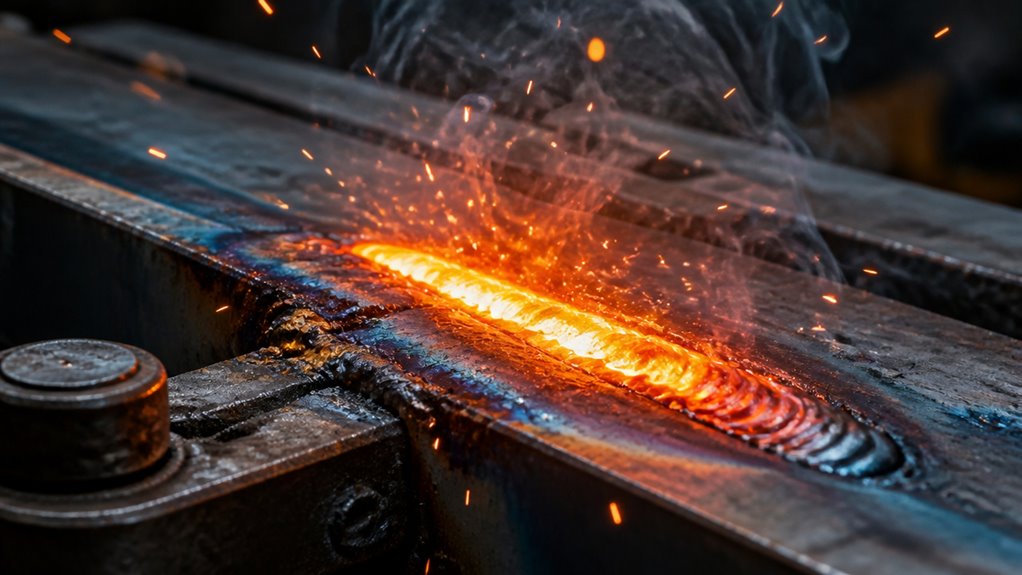
A fusion weld is created by melting the base metals at their joint, forming a molten pool that solidifies into a strong metallurgical bond without relying on mechanical fastening.
You don’t usually need external pressure, but controlling heat input is critical to avoid weak points and manage the heat-affected zone.
Fusion welding lets you join a wide range of metals, with or without filler metal, depending on joint design and material compatibility.
Explore how heat, methods, and materials influence this precise process.
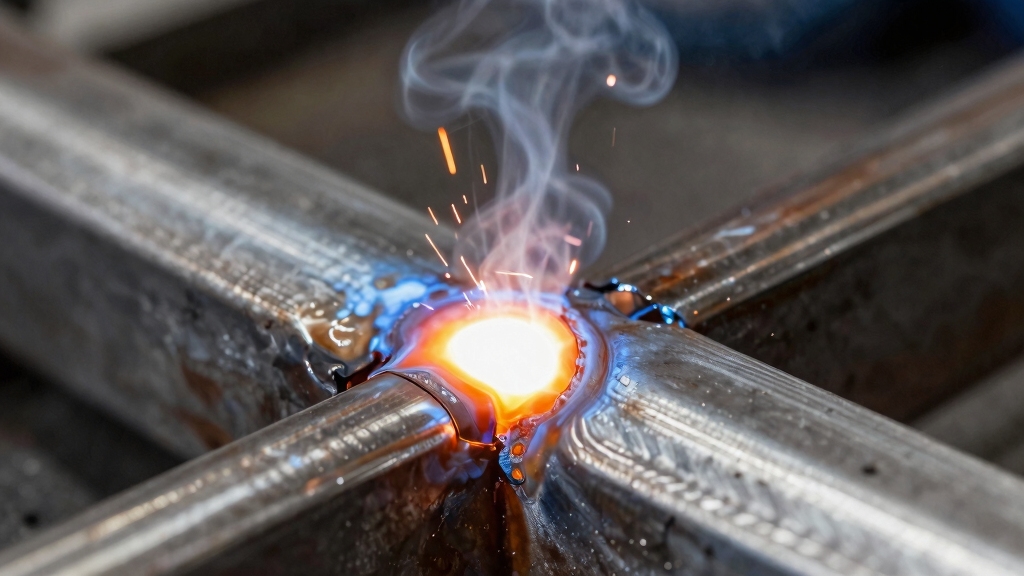
Understanding fusion welding begins with recognizing that it relies on melting the base metals at the joint to create a strong, metallurgical bond.
When you apply sufficient heat, the base materials reach their melting points, forming a molten weld pool that solidifies into a unified joint.
Applying enough heat melts base materials, creating a molten pool that solidifies into a strong, unified joint.
You may add filler metal to bridge gaps or enhance strength, but it’s not always necessary.
The key is that fusion welding creates a bond through solidification, rather than mechanical fastening.
External pressure is typically unnecessary, except in resistance welding where contact pressure is significant.
The process often produces a heat-affected zone around the joint, which you must consider for metallurgical effects.
Fusion welding covers various methods, all centered on melting and resolidification to produce durable, metallurgically sound joints.
Controlling heat input and welding parameters is critical to ensure full fusion and avoid weak points in the joint, which directly impacts weld quality.
While many joining techniques rely on mechanical fastening or adhesive bonding, fusion welding sets itself apart by creating joints through melting and solidification of base metals.
You achieve a metallurgical bond, not just a mechanical connection, by raising the base metal to its melting point. This forms a molten pool that solidifies into a unified joint.
Unlike mechanical methods, fusion welding rarely requires external pressure, except in resistance welding. Adhesive bonding depends on chemical adhesion without altering the base metal’s microstructure.
In contrast, fusion welding induces a heat-affected zone that can affect material properties. It also allows for autogenous or filler-assisted joints, offering flexibility in joint design.
Its reliance on melting distinguishes it sharply from processes that join by deformation, pressure, or chemical means. This emphasizes metallurgical continuity for strength and durability.
Electric arc welding, a common fusion welding method, uses an electric arc to generate the high temperatures needed to melt metals and create the weld.
Fusion welding’s ability to create strong metallurgical bonds through melting and solidification means you can join a wide variety of materials.
You’ll find it effective for metals with compatible melting points and chemical properties, including steels, aluminum alloys, titanium, and nickel-based alloys.
Fusion welding also accommodates joining dissimilar metals using appropriate filler metals to guarantee metallurgical compatibility and joint integrity.
| Material Type | Common Alloys | Fusion Welding Suitability |
|---|---|---|
| Ferrous Metals | Carbon steel, stainless steel | High |
| Non-Ferrous Metals | Aluminum, copper alloys | Moderate to high |
| Exotic Alloys | Titanium, nickel alloys | High |
This versatility makes fusion welding indispensable in manufacturing, aerospace, automotive, and repair applications, where precise metallurgical control is vital. Proper surface preparation is essential to prevent contamination and ensure high-quality welds.
To create a weld pool, you start by generating intense heat. This heat raises the temperature of the base metal at the joint until it reaches its melting point.
Once that happens, a molten weld pool forms, allowing the materials to combine and fuse together.
Understanding how this weld pool forms is super important. It’s all about controlling the quality and strength of the weld.
When you know what’s happening in that pool, you can make better decisions and achieve a stronger bond.
The amount of heat input, determined by the combination of amperage and voltage, directly affects the size and stability of the weld pool.
Heat concentrates at the joint area, raising the base metal temperature until it reaches its melting point.
As you apply heat, the metal absorbs energy, causing atomic vibrations to intensify until bonds break and the metal changes from solid to liquid.
This melting is localized, confined to the weld zone, ensuring controlled fusion without compromising the surrounding material.
Key factors influencing melting include:
Different welding methods produce varying peak temperatures, with arc welding generating electric arcs up to ~6,000°F, which directly affects the melting and fusion process.
Once the base metal reaches its melting point, a molten weld pool forms at the joint.
You’ll notice this pool consists of liquefied base metals and, when applicable, melted filler metal, creating a homogeneous liquid mixture.
Heat input from your welding source maintains this pool, controlling its size and stability.
The weld pool’s fluid dynamics influence fusion quality. Too little heat causes incomplete melting, while excessive heat risks burn-through or distortion.
As you withdraw the heat source, the pool cools and solidifies, forming a metallurgical bond.
Managing the weld pool’s temperature and shape guarantees proper penetration and weld integrity.
Precise control of heat input is critical to minimize distortion and maintain joint integrity during welding.
You’ll come across a variety of common fusion welding methods, each with its own unique heat sources and techniques. For instance, arc welding techniques, gas welding processes, and high-energy welding methods all work to create the weld pool in different ways.
But at the heart of it, they all share the same basic principle: melting the base metal for fusion.
Now, understanding how each method operates is really important. It can help you choose the right one based on the materials you’re working with and the level of precision you need.
One widely used example is GMAW welding, which employs a continuous consumable wire electrode and shielding gas to create strong, clean welds with high deposition rates.
Arc welding techniques harness electrical energy to generate intense heat that melts the base metal and, when used, filler metal, creating a fusion weld. You control an electric arc between an electrode and the workpiece, producing a localized molten pool.
This pool solidifies to form a metallurgical bond.
Key arc welding methods include:
Shielded Metal Arc Welding (SMAW): Uses a consumable electrode coated with flux to protect the weld area from oxidation.
Gas Metal Arc Welding (GMAW or MIG): Employs a continuous wire electrode and inert gas shielding for efficient, clean welds.
Gas Tungsten Arc Welding (GTAW or TIG): Utilizes a non-consumable tungsten electrode and inert gas, offering precise control for thin materials.
The GTAW process, also known as Heliarc welding, uses inert gases like argon or helium to shield the weld pool from contamination, enabling high-quality, defect-free welds on non-ferrous and stainless metals.
Gas welding heats the base metals to their melting points using a controlled flame produced by burning a fuel gas with oxygen, typically oxy-acetylene. You control the flame’s intensity and size to precisely melt the joint area, forming a molten weld pool.
When needed, you add filler metal, which melts and integrates with the base metal, creating a strong metallurgical bond upon solidification. Gas welding allows you to work with various metals and thicknesses, though it requires careful heat management to prevent excessive heat-affected zones and distortion.
Unlike high-energy methods, gas welding uses lower temperatures and slower cooling rates, which influence microstructure and mechanical properties. You’ll find gas welding especially useful for repair work and applications demanding portability and simplicity. Mastering flame control is critical to achieving quality welds and avoiding defects.
Although high-energy welding methods require specialized equipment, they deliver precise control over heat input and weld quality. They focus intense energy sources like lasers or electron beams directly onto the joint.
You benefit from minimal heat-affected zones and deeper penetration, which reduces distortion and enhances joint integrity. These methods suit applications demanding high precision and repeatability.
When you employ high-energy welding, consider these key attributes:
Laser beam welding uses concentrated light energy for fine, narrow welds with high speed.
Electron beam welding exploits accelerated electrons in a vacuum for deep, clean welds.
Both methods often operate without filler metal, creating autogenous welds with strong metallurgical bonds.
Precise focusing of the laser beam enables control over weld penetration and heat-affected zones, ensuring consistent and high-quality joints.
When you face gaps or irregular joint surfaces that prevent proper fusion of base metals, using filler metal becomes necessary to guarantee a strong, continuous weld.
Filler metal bridges these discontinuities, ensuring metallurgical bonding across the joint. You should also use filler metal when the base materials differ in composition or thickness, as it helps accommodate variations and enhances joint integrity.
Additionally, filler metal can compensate for joint design limitations or material loss during preparation. Selecting a filler metal compatible with the base metals is critical to maintain mechanical properties and prevent defects.
However, in precise autogenous welds with well-fitted joints, filler metal may be unnecessary. Your decision depends on joint geometry, material compatibility, and performance requirements to optimize weld quality and durability.
Controlling heat input is essential for managing the heat-affected zone (HAZ) during fusion welding. Excessive heat can alter the base metal’s microstructure and weaken the joint. You need to balance heat input to minimize distortion while ensuring adequate fusion.
Monitoring and adjusting welding parameters directly influence HAZ size and properties. To optimize heat input and control the HAZ, you should:
Select appropriate welding current, voltage, and travel speed to reduce unnecessary thermal exposure. Utilize high-energy welding methods, like laser or electron beam, which localize heat and shrink the HAZ. Implement preheating or controlled cooling to manage thermal gradients and reduce residual stresses.
Fusion welding delivers strong, reliable joints that meet the demanding requirements of manufacturing and repair industries.
You benefit from its ability to produce metallurgical bonds that withstand mechanical stresses and environmental factors, ensuring durability.
The process accommodates a broad range of material thicknesses and types, making it versatile for various applications.
You can precisely control heat input to minimize distortion and metallurgical changes, critical in high-quality fabrication.
Fusion welding also supports both autogenous and filler-assisted joints, which helps bridge gaps or join dissimilar metals effectively.
Additionally, advanced methods like laser or electron beam welding reduce the heat-affected zone, enhancing joint integrity.
This combination of strength, adaptability, and precision makes fusion welding an ideal choice for your manufacturing and repair needs.
Fusion welding impacts the environment primarily through energy consumption and emissions.
High-energy processes like laser or electron beam welding use significant electricity, which may involve fossil fuels, contributing to carbon footprints.
Additionally, fumes and gases generated during welding can release harmful pollutants if not properly ventilated.
Managing heat input also matters. Excessive heat raises energy use and can cause material waste, so optimizing your process reduces environmental impact effectively.
Think of fusion welding as taming a fire dragon. Control is crucial.
You must wear flame-resistant clothing, gloves, and an auto-darkening helmet to shield your eyes from intense arcs.
Guarantee proper ventilation to avoid inhaling toxic fumes. Ground your equipment to prevent electric shock.
Keep flammable materials away and monitor heat-affected zones closely.
Following these precautions helps you harness power safely, preventing injuries and ensuring precise, reliable welds.
Yes, you can automate fusion welding for large-scale production efficiently.
Automation enhances consistency, speed, and precision, especially using robotic MIG or laser beam welding systems.
You’ll reduce human error and increase throughput while maintaining weld quality.
However, you must carefully program and monitor equipment to control heat input and prevent defects.
Integrating sensors and feedback mechanisms guarantees real-time adjustments, optimizing the welding process for your specific materials and joint designs.
Oh, you love it when porosity, cracks, or incomplete fusion crash your fusion weld party, don’t you?
These defects sabotage your joint’s strength, cause leaks, and invite premature failure.
They distort metallurgical bonds, increasing stress concentrations and corrosion risks.
You must control heat input, cleaning, and technique to avoid them.
Otherwise, your “perfect” weld becomes a structural nightmare, compromising durability and safety in critical applications.
Choose precision over chaos.
You need to regularly clean welding torches, nozzles, and contact tips to prevent spatter buildup and assure stable arcs.
Inspect cables and hoses for wear or damage, replacing them promptly.
Calibrate power sources and check gas flow rates to maintain consistent heat input and shielding.
Lubricate moving parts as specified by the manufacturer.
Routine maintenance reduces equipment downtime, improves weld quality, and controls heat-affected-zone variability critical for precision fusion welds.
Fusion welding puts you at the helm of a powerful process, melting materials to create a seamless bond.
Unlike other methods, it relies on intense heat to form a molten weld pool, giving you precise control over strength and durability.
Whether joining metals or alloys, managing heat input is key to avoiding damage.
When you need reliable manufacturing or repair, fusion welding is your go-to tool, turning raw materials into unified structures with the precision of a surgeon’s scalpel.