Phone:
(701)814-6992
Physical address:
6296 Donnelly Plaza
Ratkeville, Bahamas.

Phone:
(701)814-6992
Physical address:
6296 Donnelly Plaza
Ratkeville, Bahamas.

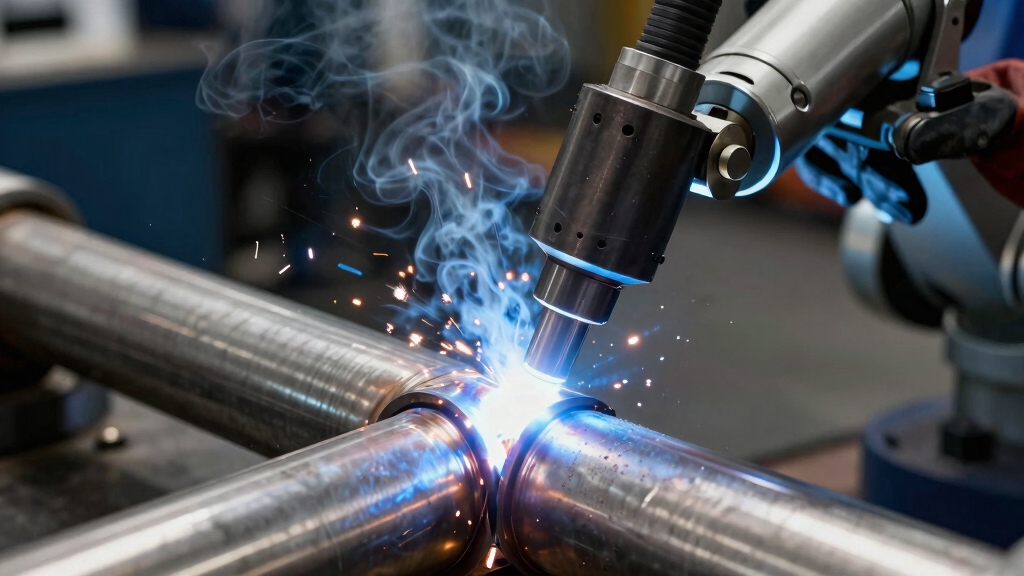
Oxy-acetylene welding (OAW) uses a precise flame from burning oxygen and acetylene gases reaching around 3,480°C to fuse metals.
You control gas flow through regulators and mix them in a torch to adjust flame types: neutral, oxidizing, or carburizing. Each type affects weld quality differently.
Neutral flames suit most steels, providing clean, strong joints. This method is ideal for thin metals under 5 mm and requires careful flame and safety controls.
Exploring its techniques reveals how to optimize your welds efficiently.
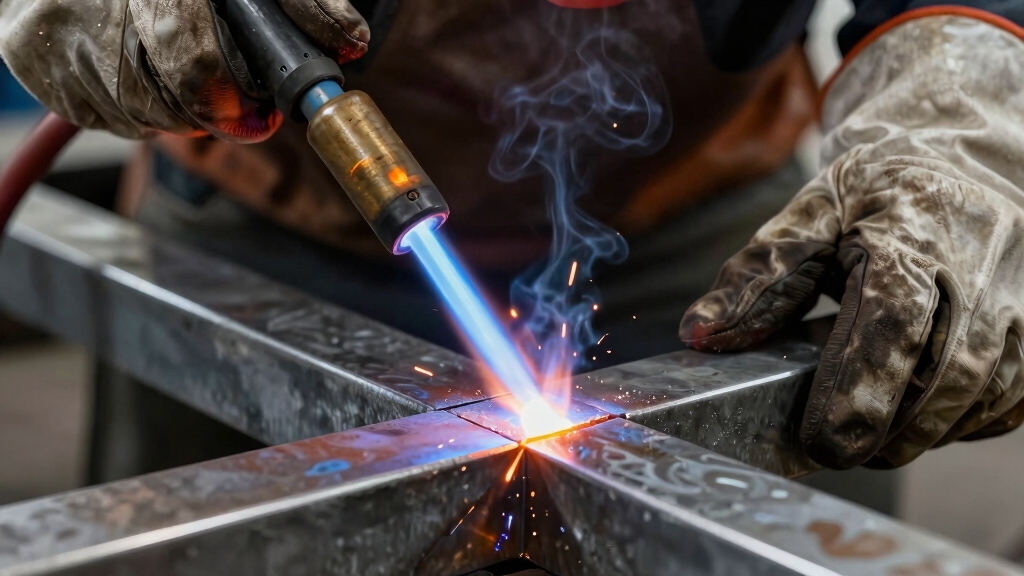
Mastering oxy-acetylene welding means understanding how the combustion of oxygen and acetylene produces a high-temperature flame, reaching up to 3,480°C. This flame melts metals for fusion.
You control gas flow from pressurized cylinders through regulators and hoses to the torch, where mixing occurs. Adjusting the flame type—neutral, oxidizing, or carburizing—depends on the metal you weld. Neutral flames are most common for steel.
Direct the flame precisely at the joint to melt edges and add filler rod if necessary. This forms a molten pool that solidifies into a strong bond. Safety valves prevent backflow and flashbacks, which are essential for operating at high pressures.
This versatile, portable process suits thin metals and detailed work without relying on electrical power. It makes oxy-acetylene welding ideal for repairs and fabrication.
Proper flame control is crucial to ensure optimal heat and clean combustion during welding.
Oxy-acetylene welding excels when working with thin metals, especially those under 5mm thick, due to its precise flame control and moderate heat output.
Oxy-acetylene welding is ideal for thin metals under 5mm, offering precise flame control and moderate heat.
You’ll find it highly effective on low-carbon steel, mild steel, and cast iron, which respond well to the neutral flame’s balanced oxygen-acetylene mix.
Non-ferrous metals like copper, brass, and bronze also weld efficiently with OAW, using carburizing or oxidizing flames tailored to their chemical properties.
Aluminum and stainless steel require careful flame adjustment and often specialized filler rods for peak results.
Avoid thick or high-carbon steels, as OAW’s heat may cause excessive distortion or weak joints.
Proper flame adjustment to achieve a neutral flame is essential for optimal welding quality and fusion.
Alright, let’s dive into oxy-acetylene welding! First things first, you’ll want to set up your equipment with care. Make sure that all the regulators, hoses, and torch components are securely connected and leak-free. It’s super important to double-check this step for safety.
Once your setup is good to go, it’s time to adjust the oxygen and acetylene flow. You’ll want to find that sweet spot for the correct flame type and intensity, which really depends on the metal you’re working with and how your joint is configured. Take your time with this—getting the flame right can make a big difference!
Now, onto the fun part: the welding itself! Apply those precise techniques, like making leftward or rightward passes. Keep an eye on your flame angle and the placement of your filler rod as you go. This will help you create a strong, uniform weld that you can be proud of. Happy welding!
To achieve the best results, aim for a neutral flame by balancing the oxygen and acetylene ratio for peak temperature and clean combustion.
Begin by securely positioning the oxygen and acetylene cylinders in an upright stance. Ensure they’re firmly clamped to prevent tipping.
Next, attach the regulators to each cylinder, verifying that pressure settings align with manufacturer specifications for safe gas delivery.
Connect the color-coded hoses, green for oxygen and red for acetylene, to the regulators and torch. Check for leaks using a soap solution.
Finally, install the appropriate torch tip for your welding task, ensuring it matches the metal thickness and joint type.
Ensure cylinders are handled with proper depressurization procedures and safety equipment before and after use.
This setup secures safe, efficient operation during oxy-acetylene welding.
With your equipment properly set up and safety checks complete, you can proceed to ignite the flame by opening the acetylene valve slightly and using a spark lighter. Adjust the oxygen valve to achieve a neutral flame, identified by a clear inner cone.
Position the torch tip 2-3mm from the joint, moving steadily along the seam. If filler metal is required, feed the rod into the leading edge of the molten pool. Maintain consistent speed to avoid overheating or undercutting. After welding, close acetylene first, then oxygen to extinguish safely.
Always wear appropriate personal protective equipment to prevent injuries from sparks and heat.
| Step | Action | Key Tip |
|---|---|---|
| Ignite Flame | Open acetylene, spark lighter | Slight valve opening |
| Adjust Flame | Add oxygen for neutral flame | Clear inner cone visible |
| Weld Joint | Move torch steadily | Maintain 2-3mm distance |
| Add Filler Rod | Feed into molten pool | Consistent rod angle |
Although oxy-acetylene welding offers versatility and precision, guaranteeing safety depends heavily on using the correct equipment. You must select components designed to handle high pressures and prevent hazardous conditions like flashbacks or gas leaks.
Ensuring safety in oxy-acetylene welding requires using equipment designed to handle high pressure and prevent hazards.
Proper regulators control gas flow and pressure, while hoses rated for acetylene and oxygen prevent ruptures. Your welding torch must have integrated flashback arrestors and check valves to stop flame reversal. Equipping yourself with a reliable spark lighter guarantees safe ignition, avoiding open flames from matches or lighters.
Key essential equipment includes:
Each item plays a critical role in maintaining control and preventing accidents during your welding operations. Regular inspection of equipment and maintenance are essential to identify wear or damage that could lead to hazardous situations.
How do you guarantee peak weld quality when working with oxy-acetylene welding? You start by mastering flame types.
The neutral flame, with equal oxygen and acetylene, is essential for steel, providing a stable, non-reactive heat around 3200°C.
An oxidizing flame, richer in oxygen, raises temperature but risks metal oxidation. This flame is best reserved for brass and specific alloys.
The carburizing flame, with excess acetylene, creates a reducing atmosphere, preventing oxidation on non-ferrous metals like aluminum.
Precise flame adjustment guarantees metal compatibility and weld integrity, avoiding defects such as oxidation or carburization.
Monitor flame characteristics closely. The inner cone’s length and color indicate the proper gas ratio.
Controlling flame type and intensity directly affects molten pool behavior, penetration depth, and final joint strength. These are critical factors for consistent, high-quality oxy-acetylene welds.
Proper control of heat input and flame chemistry is critical to ensure full fusion and avoid weak points in the weld joint.
Oxy-acetylene welding is a go-to method in automotive repair. It’s perfect for those precise joins and for patching up thin metal sections. You really can’t beat it when it comes to getting those delicate details just right.
In the realms of fabrication and construction, this technique shines too. It’s especially handy for assembling light-gauge components where you need a steady hand and some serious versatility. Plus, it can handle welding metals up to 5mm thick, making it a must-have for any detailed work on thinner sections across various industries.
Its ability to join metals through fusion makes it a critical welding technique within broader fabrication processes.
Oxy-acetylene welding plays an essential role in automotive repair by enabling precise joining and patching of thin metal components commonly found in vehicle bodies and exhaust systems.
You’ll find it invaluable for repairing rusted panels, restoring frame sections, and fixing leaks in exhaust pipes. Its controlled flame allows you to work on delicate sheet metals without warping or burn-through.
Common automotive applications include:
When welding is not feasible, many technicians use clamp sleeve couplers to mechanically join exhaust components securely without heat.
Mastering fabrication and construction tasks often involves utilizing oxy-acetylene welding for joining thin metal sections, repairing structural components, and assembling frameworks where precision and controlled heat input are critical.
You’ll rely on the neutral flame to avoid metal distortion and achieve strong, clean joints. OAW excels in applications requiring spot repairs or custom metal assemblies, especially when electric welding isn’t practical.
| Application | Key Considerations |
|---|---|
| Structural repairs | Controlled heat to prevent warping |
| Framework assembly | Precise flame for uniform penetration |
| Metal fabrication | Suitable for thin, light-gauge metals |
Proper surface preparation and controlling heat input are essential to prevent defects and ensure weld integrity in oxy-acetylene welding applications.
When working with thin metal sections under 5mm, you’ll find that oxy-acetylene welding offers exceptional control for producing clean, strong joints without excessive heat distortion.
The precise flame adjustment allows you to weld delicate automotive panels, repair light-gauge steel, and fabricate detailed components where heat input must be minimized.
You can seamlessly join metals like mild steel, brass, and copper alloys using neutral or slightly carburizing flames for peak metallurgical results.
Key thin metal applications include:
This versatility makes OAW invaluable for industry and repair tasks involving thin metals.
Although the process may seem straightforward, achieving consistent, high-quality welds with oxy-acetylene welding requires careful attention to flame adjustment, joint preparation, and technique.
Consistent, high-quality oxy-acetylene welds demand precise flame control, joint prep, and skilled technique.
You need to set a neutral flame for most steels to avoid oxidation or carburization.
Before welding, thoroughly clean and bevel joint edges to guarantee proper fusion.
Use the leftward technique for thin sheets, maintaining a steady torch angle and speed to control heat input and prevent burn-through.
When adding filler rod, feed it steadily into the leading edge of the molten pool to promote uniform penetration.
Keep the torch flame size appropriate to the workpiece thickness and avoid overheating.
Proper post-weld cooling prevents cracking, and inspecting the bead for uniformity helps guarantee weld integrity.
Choose oxy-acetylene welding for its precise flame control, allowing you to weld small, delicate components and thin metal sections with accuracy. This control lets you tailor the flame’s temperature and composition, ensuring ideal fusion without overheating the base metal.
The process’s versatility accommodates various metals and joint types, making it invaluable in repair and fabrication. Its portability means you can work practically anywhere, even without electrical power.
Precise flame adjustment enables clean, distortion-free welds on thin gauges.
Portable and self-contained equipment is ideal for fieldwork and diverse environments.
Flexible flame types (neutral, oxidizing, carburizing) adapt to metal-specific needs.
Low equipment and operational cost with minimal setup is perfect for small to medium projects.
These advantages make oxy-acetylene welding a reliable, efficient choice for detailed metal joining.
Despite its many benefits, oxy-acetylene welding has specific limitations that you must consider to guarantee effective and safe operation.
It’s best suited for thin metals under 5mm; attempting thicker materials reduces weld quality and efficiency.
The process is slower than arc welding, limiting productivity for large-scale projects.
You must carefully manage flame adjustment. Neutral flames are critical for steel to avoid oxidation or carburization defects.
Safety demands strict adherence to protocols: always inspect hoses and regulators for leaks, keep cylinders upright and secured, and ensure proper ventilation to avoid gas accumulation.
Use flashback arrestors to prevent flame from traveling back into hoses.
Wear appropriate PPE, including flame-resistant gloves, goggles, and protective clothing.
These precautions minimize risks from high-pressure gases and intense heat during welding.
You store oxygen and acetylene cylinders upright, secured with chains or straps to prevent tipping.
Keep them at least 20 feet apart or separated by a non-combustible barrier.
Store cylinders in a well-ventilated, dry area away from heat, flames, and combustible materials.
Always close valves tightly and use protective caps during storage.
Regularly inspect for leaks or damage.
Never store acetylene near oxygen cylinders without proper separation.
You must regularly check regulators, hoses, and torch fittings for leaks or damage, replacing worn parts promptly.
Clean torch tips to prevent clogging and guarantee consistent flame quality. Lubricate moving parts per manufacturer guidelines.
Always inspect flashback arrestors and safety valves for proper function. Store cylinders upright, secured, and away from heat.
Perform pressure tests periodically, and keep equipment dry to avoid corrosion, guaranteeing reliable, safe oxy-acetylene welding operation.
You can’t effectively use oxy-acetylene welding underwater due to oxygen and acetylene’s flammability and combustion requirements.
Extreme conditions like high winds or rain disrupt the flame’s stability and safety.
Instead, specialized underwater welding methods, such as wet or dry hyperbaric arc welding, are preferred.
If you work in harsh environments, you’ll need equipment designed for those conditions.
OAW’s open flame and gas supply make it unsuitable and hazardous underwater or in severe weather.
You choose filler rods based on the temperature needed to melt and fuse metals without degrading their properties.
Higher temperatures require rods with compatible melting points to guarantee proper fusion and avoid cracking.
For example, steel demands rods that withstand neutral flame heat (~3200°C) to maintain strength.
Using a filler rod with an unsuitable melting temperature can cause weak joints or excessive oxidation.
Precise temperature matching is critical for weld quality and durability.
Oh, you love a surprise explosion, don’t you?
Flashbacks usually happen when you let oxygen and acetylene mix inside the torch or hoses, caused by blockages, wrong pressures, or worn parts.
To prevent them, keep your regulators and hoses in tip-top shape. Use flashback arrestors and maintain proper gas pressures.
Always purge lines before lighting, and never force the flame. Safety valves are your best friends; don’t ignore them.
Now that you’ve grasped the essentials of Oxy-Acetylene Welding, you’re equipped to tackle metal joining with precision and confidence.
This technique, often called the “Swiss Army knife of welding,” offers unmatched versatility, from delicate repairs to heavy-duty fabrication.
Remember, mastering flame control and safety protocols isn’t optional; it’s critical. With the right skills and equipment, your welds will be stronger, cleaner, and more reliable than you ever imagined possible.