Phone:
(701)814-6992
Physical address:
6296 Donnelly Plaza
Ratkeville, Bahamas.

Phone:
(701)814-6992
Physical address:
6296 Donnelly Plaza
Ratkeville, Bahamas.

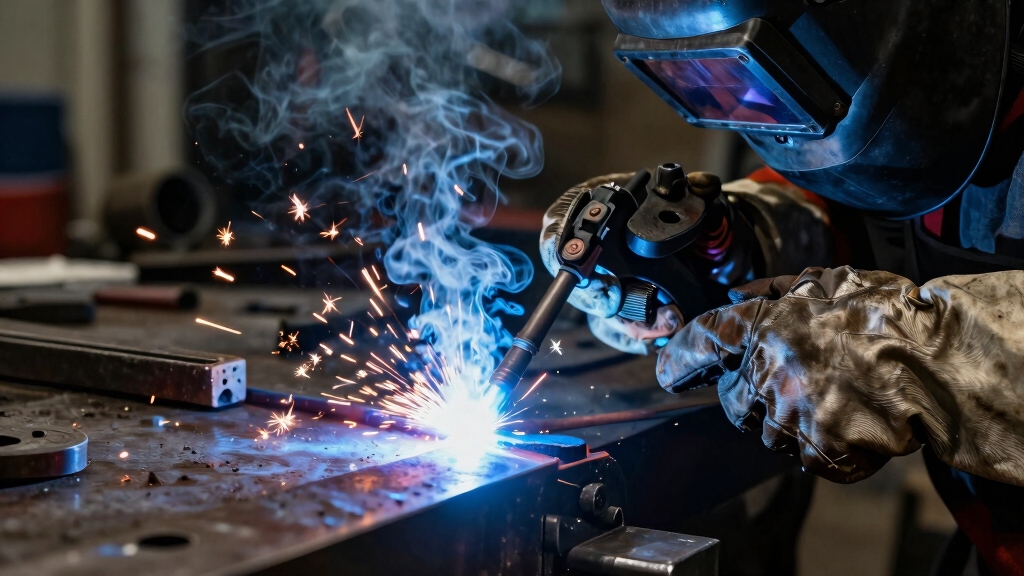
Welding works by applying intense, focused heat to melt the surfaces of metals or thermoplastics. This creates a molten pool where atomic diffusion enables strong metallurgical bonds.
You control heat input through methods like electric arcs or oxy-fuel flames to achieve precise fusion. Adding compatible filler materials improves joint strength and fills gaps.
Cooling solidifies the weld with microstructural changes influenced by thermal gradients. Understanding these principles guarantees high-quality, durable joints. Explore further to master techniques and safety essentials.
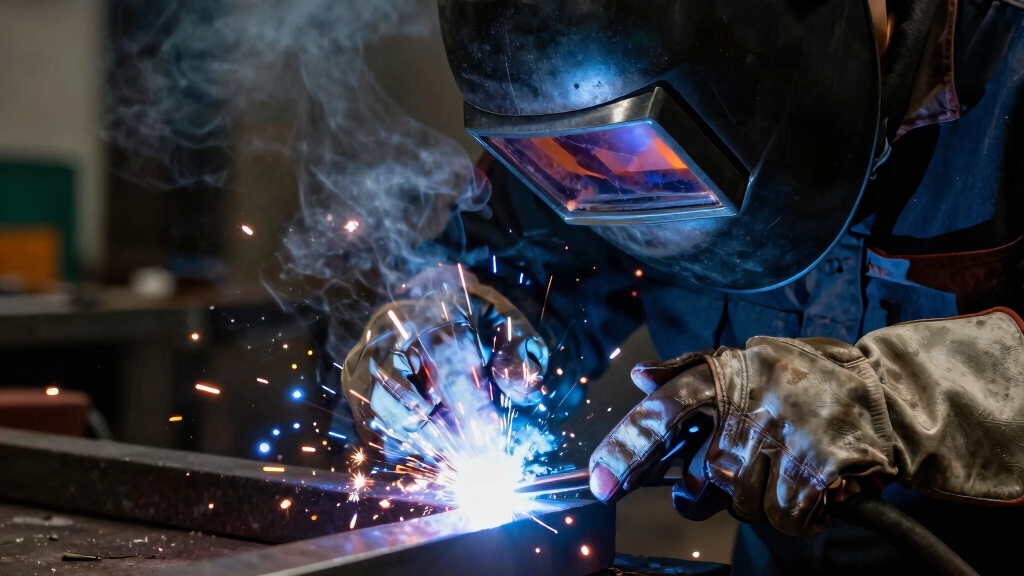
Welding is a fabrication process that joins materials, primarily metals or thermoplastics, by melting their surfaces and allowing atomic structures to intermingle.
Welding fuses metals or thermoplastics by melting surfaces and blending atomic structures for strong bonds.
Welding relies on true fusion, where the base metals must reach melting point to form a continuous atomic bond. Unlike brazing or soldering, which only melt filler metals, welding creates a joint by fully liquefying the base materials.
When you apply sufficient heat, the melted surfaces blend, enabling atomic diffusion across the interface. Typically, a filler material is added to reinforce the joint, generating a molten pool that solidifies into a bond often stronger than the parent metals.
Understanding these core principles is essential because proper fusion depends on achieving and controlling the precise melting and mixing of atomic structures. Controlling heat input and penetration is critical to ensure full fusion and avoid weak points in the weld.
When you weld, generating enough heat to melt the base metals is super important.
There are a few different methods to do this, each with its own approach.
For instance, electrical arc welding relies on an electric arc to focus heat right at the joint. It’s pretty effective!
Then there’s oxy-fuel welding, which creates a high-temperature flame by mixing oxygen with a fuel gas. It’s a classic method that many welders use.
And let’s not forget about resistance welding! This one works by using electrical resistance and pressure to produce localized heat between the metal surfaces.
Each technique has its unique benefits, and choosing the right one can make all the difference in your welding project.
Using an inert shielding gas like argon can also stabilize the arc and protect the weld from contamination, improving weld quality.
Generate intense heat by creating an electrical arc between an electrode and the base metal to melt both the workpiece and filler material. You initiate this arc by applying a high current across a small gap, ionizing the air and forming a plasma channel.
This concentrated energy input rapidly raises the temperature to thousands of degrees Celsius, melting the metals at the joint. By controlling the arc length, current, and electrode feed rate, you manage the molten pool size and penetration depth precisely.
The electrode may either melt to supply filler material or remain non-consumable, depending on the welding method. Maintaining arc stability and shielding the weld area from atmospheric contamination are critical to ensuring strong, defect-free fusion of the base and filler metals.
Most arc welding processes rely on direct current (DC) power sources, which provide steady, unidirectional current for stable arcs and precise control.
Mastering the oxy-fuel flame process requires controlling a high-temperature flame produced by burning a mixture of oxygen and a fuel gas, commonly acetylene.
You’ll adjust oxygen and fuel gas flow rates precisely to achieve the ideal flame type: neutral, carburizing, or oxidizing. Each type affects the weld quality and base metal properties differently.
The neutral flame, with balanced oxygen and acetylene, generates a stable, clean heat source essential for most welding tasks. Your goal is to focus this intense heat on the joint, melting the base metals and any filler rod to create a molten pool.
Controlling flame temperature and shape lets you avoid overheating or underheating. This ensures proper fusion without excessive oxidation or contamination.
This technique demands steady hand coordination and close monitoring for consistent, high-quality welds. Proper flame control is crucial to maintain the desired flame characteristics and welding performance.
Utilizing electrical resistance to produce heat, resistance welding joins metals by pressing them together and passing current through the contact area. The electrical resistance at the interface generates localized heat, which melts the metals to form a strong joint upon cooling.
You control pressure and current precisely to guarantee peak fusion without excessive deformation.
| Parameter | Effect on Welding |
|---|---|
| Current (Amps) | Higher current increases heat generation |
| Pressure (N) | Maintains contact, prevents expulsion |
| Time (seconds) | Controls heat input duration |
| Electrode Material | Affects conductivity and wear resistance |
| Metal Thickness | Influences required heat and pressure |
Mastering these parameters helps you achieve consistent, high-quality welds with minimal defects. Proper electrode maintenance is essential to ensure low contact resistance and consistent current flow during welding.
When you apply intense heat to metals during welding, their atomic vibrations increase until the solid structure breaks down, causing the metal to melt.
Applying intense heat during welding increases atomic vibrations until the metal’s solid structure breaks down and melts.
This phase change from solid to liquid is essential because it enables atomic mobility, allowing atoms from adjoining metals to intermingle.
The localized heat source concentrates energy in a narrow region, forming a molten pool without heating the entire workpiece.
This pool represents the fusion zone where metals lose their rigid lattice structure and become fluid.
As the molten metal flows, it facilitates metallurgical bonding by mixing atomic structures at the interface.
The molten pool’s size and stability depend on heat input, material properties, and welding parameters.
Understanding why metals melt and form this pool is vital for controlling weld quality and ensuring a strong, defect-free joint.
Controlling heat input through voltage and amperage settings is crucial to maintaining a stable molten pool and achieving proper weld penetration.
Adding filler materials during welding markedly enhances joint strength by supplementing the molten base metals with additional metal that fills gaps and reinforces the bond.
As you feed filler metal into the molten pool, it integrates atomically with the base metals, compensating for surface irregularities and discontinuities that could weaken the joint.
This deliberate addition guarantees uniform metallurgical continuity, reducing porosity and voids.
Furthermore, the filler metal’s composition is often selected to optimize mechanical properties, such as tensile strength and corrosion resistance, matching or exceeding those of the base metals.
By carefully controlling the filler feed rate and placement, you achieve a homogeneous weld bead, enhancing load distribution across the joint and minimizing stress concentrations.
This precise integration of filler material is essential for producing structurally sound, durable welds.
Proper selection of filler metals ensures compatibility with the parent metals and welding process, which is critical to avoid defects and maintain weld integrity.
Controlling the cooling rate immediately after welding critically influences the weld’s microstructure and mechanical properties.
As the molten pool cools, atoms from the base and filler metals intermingle and solidify, forming metallurgical bonds stronger than the original materials.
Rapid cooling refines grain structures, enhancing tensile strength and hardness, but excessive rates can induce residual stresses or cracking.
Conversely, slow cooling allows coarser grains, reducing mechanical performance. You must balance cooling to optimize joint integrity.
Solidification begins at nucleation sites and progresses until the entire weld solidifies, locking in the microstructure shaped by thermal gradients and cooling dynamics.
Ultimately, your control over cooling solidifies the weld’s durability and performance, ensuring a permanent and robust bond between the joined components.
Increased heat input during welding enlarges grain size and lowers impact toughness, making optimal heat input critical for ideal weld properties.
You’ll come across two main types of welding techniques: arc welding and gas welding.
Now, arc welding is pretty fascinating. It uses an electrical arc to create intense heat, which melts both the metals and the filler material. This method gives you a lot of control over the weld pool, making it easier to achieve precision.
On the flip side, we’ve gas welding. This technique relies on a controlled combustion flame to fuse metals together. One of the great things about gas welding is its versatility when it comes to applying heat and accessing joints.
Among arc welding methods, MIG welding is often recommended for beginners due to its simple setup and ease of control.
Mastering arc welding involves understanding its core methods, which rely on an electric arc to generate the intense heat needed for fusion.
Shielded Metal Arc Welding (SMAW) uses a consumable electrode coated with flux, melting both the electrode and base metal to form a strong joint.
Gas Tungsten Arc Welding (GTAW), or TIG, employs a non-consumable tungsten electrode and an inert gas shield. This method offers high precision and control for thin materials.
Metal Inert Gas (MIG) welding feeds a continuous wire electrode while shielding the weld pool with inert gas, enabling faster deposition rates.
Flux Core Arc Welding (FCAW) uses a tubular wire with flux, allowing welding without external shielding gas.
Each method demands precise control of arc length, current, and filler feed to guarantee metallurgical integrity and weld strength.
MIG and TIG welding require external inert gases to prevent oxidation and ensure clean welds.
You control the flame by adjusting oxygen and fuel gas flow rates, creating a temperature exceeding 3,000°C, enough to liquefy many metals.
This process demands steady hand coordination to maintain a consistent molten pool, enabling proper fusion and filler metal integration.
You feed the filler wire manually into the weld puddle, which solidifies to form a strong joint.
Gas welding excels in versatility and portability but requires precise flame control to avoid oxidation or insufficient penetration.
Understanding flame chemistry and heat distribution is critical to optimizing weld quality and structural integrity.
Although welding involves complex physical and chemical processes, achieving high-quality results boils down to controlling critical variables such as heat input, filler material feed, and joint preparation.
You must regulate heat precisely to maintain proper molten pool size, avoiding overheating that weakens the base metal or insufficient heat that leads to poor fusion.
Consistent filler feed rate is essential to guarantee uniform weld bead geometry and adequate reinforcement without causing porosity or inclusions.
Meticulous joint preparation, including cleaning, fit-up, and alignment, eliminates contaminants and gaps that compromise fusion integrity.
Additionally, you should consider welding parameters like travel speed, electrode angle, and shielding gas flow, as these influence arc stability and weld microstructure.
Mastering these factors optimizes atomic bonding and solidification, producing welds with superior mechanical properties and structural reliability.
When you neglect proper heat control, the quality of your weld can deteriorate rapidly, leading to weak joints or excessive distortion.
Neglecting heat control quickly weakens weld quality and causes distortion in your joints.
Managing heat input precisely is critical to maintain the molten pool’s stability and guarantee uniform fusion.
Avoid these common mistakes:
Inconsistent travel speed: Moving too fast causes incomplete fusion, while too slow generates excessive heat and warping.
Incorrect electrode angle: Misalignment disrupts arc stability, resulting in poor penetration and irregular bead formation.
Improper filler metal feed rate: Overfeeding causes slag entrapment, underfeeding weakens the joint strength.
Each mistake compromises the atomic bonding process fundamental to welding.
When you’re getting ready to weld, it’s super important to wear the right protective gear. This gear helps shield your skin, eyes, and respiratory system from intense heat, harmful UV radiation, and those nasty fumes that can come up during the process.
Also, make sure you’re in a well-ventilated area. Good airflow is crucial! It helps keep you safe from inhaling any toxic gases that might be generated while you’re working.
And hey, don’t forget to handle all your equipment with care. This isn’t just about being cautious; it’s key to avoiding electrical shocks and ensuring everything operates safely. Stay safe out there!
Three critical pieces of protective gear you must wear during welding are a helmet, gloves, and flame-resistant clothing. These safeguard you from intense light, heat, and molten metal splatter inherent in the welding process.
Specifically:
Helmet: Shields your eyes and face from ultraviolet and infrared radiation, preventing arc eye and burns.
Gloves: Provide thermal insulation and physical protection against sparks and sharp edges, ensuring dexterity without compromising safety.
Flame-resistant clothing: Minimizes burn risk by resisting ignition and limiting heat transfer to your skin.
Each component is engineered to withstand extreme conditions, vital for maintaining operational safety and preventing injury. Wearing this gear consistently enables you to focus on precise control during welding.
This reduces accidents linked to exposure to high temperatures, electric arcs, and spatter.
Amidst the intense heat and concentrated energy of welding, effective ventilation and fume control play a critical role in safeguarding your health.
Welding generates hazardous fumes and gases, including metal oxides and ozone, which can accumulate rapidly in confined spaces.
You must implement local exhaust ventilation systems, such as fume extractors positioned close to the weld zone, to capture contaminants at the source.
General ventilation alone is insufficient because it dilutes rather than removes toxic substances.
Additionally, using respiratory protective equipment becomes necessary when ventilation can’t maintain airborne contaminant concentrations below permissible exposure limits.
Monitoring air quality continuously helps you assess ventilation effectiveness and adjust controls accordingly.
Prioritizing fume control minimizes inhalation risks, preventing respiratory damage and ensuring a safer welding environment.
Controlling exposure to welding fumes and gases is only one aspect of maintaining safety during welding operations. Handling equipment properly is equally important to prevent accidents and guarantee effective performance.
You must make certain all welding tools and protective gear are inspected before use to identify wear or damage that could compromise safety. Proper grounding and cable management are critical to avoid electrical hazards.
Key safety practices include:
When selecting a welding method for your project, you must consider factors such as material type, joint configuration, and desired strength.
Choosing the right welding method depends on material, joint design, and required strength.
For example, TIG welding offers precision and is ideal for thin materials or complex joints. MIG welding suits faster production with moderate thickness.
Shielded metal arc welding (SMAW) works well for outdoor or heavy-duty applications but requires skill to control heat input.
If you need deep penetration with minimal distortion, electron beam or plasma arc welding may be appropriate, though they demand specialized equipment.
Additionally, consider operational constraints like power availability, environmental conditions, and filler material compatibility.
Analyze these parameters carefully to optimize weld integrity, minimize defects, and ensure the joint meets mechanical requirements efficiently.
Your choice directly impacts weld quality, productivity, and overall project success.
Welding consumes significant energy, especially in arc and electron beam methods, impacting environmental footprints.
High heat generation demands electricity or fuel, often sourced from fossil fuels, increasing emissions.
Additionally, welding produces fumes and gases that may harm air quality.
To reduce environmental impact, optimize energy efficiency, use cleaner power sources, and apply proper ventilation and filtration systems during welding operations.
You’ll find welded joints offer excellent long-term durability due to their strong atomic bonds formed during solidification.
However, you must regularly inspect for fatigue, corrosion, and stress cracks, especially in harsh environments.
Maintenance often involves cleaning, repairing minor cracks, or applying protective coatings.
Proper design and welding technique reduce frequent upkeep, but you should always monitor welded joints to guarantee structural integrity and prevent failure over time.
Plastics pose particular challenges, but yes, you can perform welding on thermoplastics.
Unlike metals, plastics require precise heat to soften, not melt, to avoid degradation.
Techniques like ultrasonic welding, hot plate welding, and laser welding use controlled heat and pressure to fuse plastic parts.
You must meticulously monitor temperature and timing, as plastics’ lower melting points and thermal sensitivities demand exacting control for durable, defect-free joints.
Different metals chemically react during welding based on their atomic structures and alloy compositions.
When heated to melting points, their atoms become mobile, allowing interdiffusion and atomic bonding.
You’ll notice some metals form stable intermetallic compounds, while others may experience oxidation or segregation if not shielded properly.
Understanding each metal’s reactivity and thermal properties helps you control weld quality.
This knowledge prevents defects like cracks or weak joints in dissimilar metal welds.
Picture yourself mastering intense arcs and molten pools. Becoming a professional welder demands formal training and certifications.
You’ll start with hands-on courses, learning techniques and safety protocols. Then, you’ll earn certifications like the AWS Certified Welder, validating your skill and precision.
Specialized certifications suit various welding methods. Your expertise grows through continuous testing and experience, ensuring you weld with accuracy, strength, and safety under diverse industrial conditions.
Welding might seem complex, but once you understand how heat generation, molten pools, and filler materials work together, it becomes manageable.
You might worry about mastering techniques or safety, but with proper knowledge and precautions, you’ll achieve strong, reliable joints.
Remember, controlling cooling rates and avoiding common mistakes are key. By choosing the right method and following best practices, you can confidently produce high-quality welds tailored to your project’s specific demands.