Phone:
(701)814-6992
Physical address:
6296 Donnelly Plaza
Ratkeville, Bahamas.

Phone:
(701)814-6992
Physical address:
6296 Donnelly Plaza
Ratkeville, Bahamas.

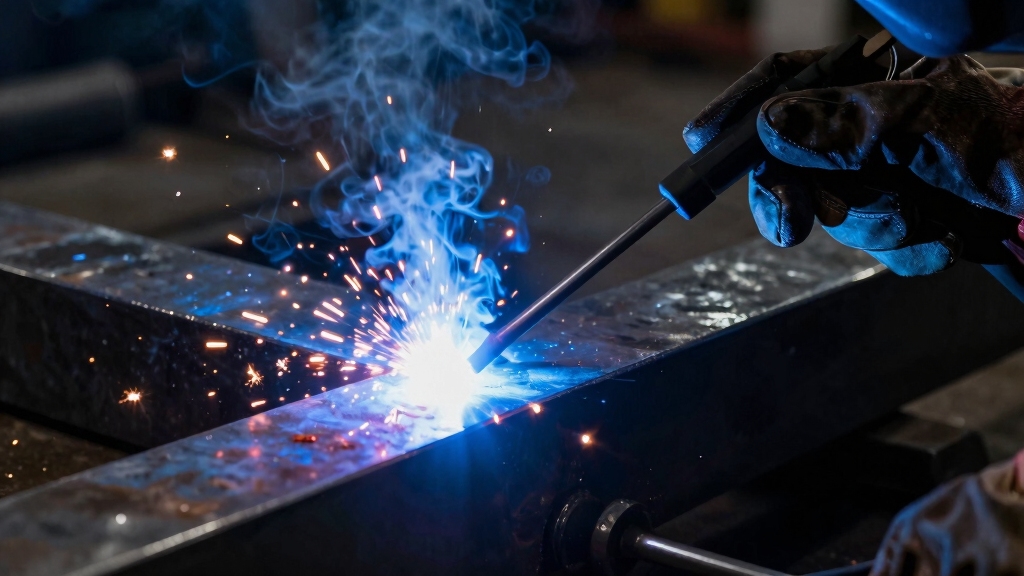
Electric arc welding joins metals by creating an intense electric arc between an electrode and the base material.
You use this arc, which heats up to 15,500 °C, to melt the metals and form a strong bond.
The welding power supply controls current and voltage, while electrodes may provide filler metal.
Shielding gases or flux protect the weld from contamination.
Understanding these fundamentals helps guarantee precise, high-quality welds.
Next, you’ll explore techniques, equipment, and applications in detail.
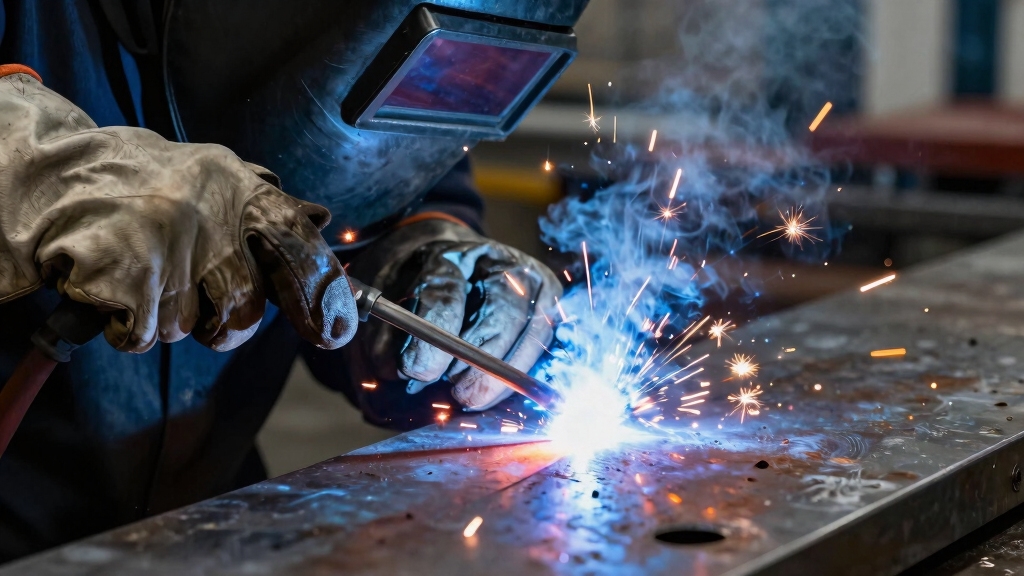
Electric arc welding fuses metals by creating an intense electric arc between an electrode and the base material. This generates temperatures between 3,500 and 15,500 degrees Celsius to melt the metals at the contact point.
You initiate the process by applying an electrical current, either AC or DC, through a welding power supply. The arc forms when voltage difference causes ionization of air, producing plasma that melts the metals.
Depending on the electrode type, the consumable electrode melts to add filler metal, while non-consumable electrodes only conduct current. You must use shielding gas or flux to protect the molten weld pool from oxidation and contamination.
Once the molten metals cool and solidify, they form a strong metallurgical bond. This delivers a durable and reliable joint. Controlling arc length and current is critical to ensure proper penetration and weld quality.
Different welding techniques employ specific electrode types and shielding methods to suit various applications and materials.
Welding methods use distinct electrodes and shielding to match diverse materials and project needs.
For instance, Shielded Metal Arc Welding (SMAW) uses a consumable electrode coated with flux. This melts to provide filler metal and shields the weld pool.
Gas Metal Arc Welding (GMAW) employs a continuous wire electrode along with an external shielding gas. This method offers high deposition rates and cleaner welds.
Submerged Arc Welding (SAW) immerses the arc in granular flux, protecting the weld and reducing spatter. It’s ideal for thick materials.
Atomic Hydrogen Arc Welding (AHAW) uses non-consumable tungsten electrodes with hydrogen gas at controlled pressure. This produces a stable, high-temperature arc.
GMAW’s semi-automatic process balances manual control of travel speed with automated wire feed and arc regulation for efficiency and quality.
Understanding these techniques helps you select the appropriate method for metal type, thickness, and joint configuration.
To get started with electric arc welding, the first thing you’ll need is a good welding power supply. It’s super important that it can deliver controlled AC or DC current effectively. This will set the stage for your welding success!
Next up, you’ll want to choose the right type of electrode. There are consumable and non-consumable options, and the best choice really depends on the specific welding process and materials you’re working with. So, think about what you need!
And don’t forget about the welding circuit components! Things like cables, connectors, and the electrode holder play a crucial role in ensuring that your arc stays stable and your weld quality is top-notch. Getting these pieces right can make a big difference in your overall results.
A key part of this setup is the welding transformer, which steps down high voltage to a low voltage, high current output essential for maintaining a stable arc during welding.
Power regulation plays a critical role in achieving consistent and high-quality welds. The welding power supply delivers either alternating current (AC) or direct current (DC) to form and maintain the electric arc.
It controls voltage and current precisely to stabilize the arc and regulate heat input. You’ll find that power supplies use transformers, rectifiers, or generators to provide the necessary energy, typically around 300 volts for arc initiation.
Adjusting the output guarantees proper penetration and weld bead shape, preventing defects. The power supply connects to the electrode and workpiece through cables, completing the welding circuit.
Understanding and managing these parameters lets you optimize welding performance across different materials and thicknesses, assuring strong metallurgical bonds every time. The choice between direct current and alternating current significantly influences arc stability and weld quality, depending on the metal and process used.
Electrodes serve as critical components in electric arc welding by conducting current and often supplying filler metal to the weld joint.
You’ll encounter two main types: consumable and non-consumable electrodes.
Consumable electrodes, like those used in Shielded Metal Arc Welding (SMAW), melt during welding to provide filler material. They’re often coated with flux to protect the weld from contamination.
Non-consumable electrodes, typically tungsten, conduct current without melting. These require separate filler metal, as seen in Gas Tungsten Arc Welding (GTAW).
Selecting the right electrode depends on base material, welding position, and desired weld properties.
Understanding electrode composition, coating types, and current compatibility guarantees effective arc stability and weld integrity.
Proper electrode choice directly influences weld quality, penetration, and mechanical strength.
Additionally, proper electrode selection involves understanding polarity requirements to optimize heat distribution and weld quality.
Understanding electrode types sets the stage for examining the full welding circuit, which comprises all components that deliver and control the electric arc.
You rely on a power supply to provide controlled AC or DC current to the electrode and workpiece. Connecting cables transmit current, while the electrode holder secures the electrode.
The arc forms between the electrode and base material, generating heat that melts metals. Proper circuit setup guarantees stable arc initiation and consistent weld quality.
Choosing the appropriate power supply mode, such as constant current or constant voltage, plays a crucial role in achieving optimal arc stability for different welding processes.
| Component | Function |
|---|---|
| Power Supply | Supplies controlled electrical current |
| Electrode Holder | Holds and positions the electrode |
| Work Cable | Connects power source to base material |
| Electrode | Conducts current, melts to form weld |
When you’re welding, shielding gas and flux play a crucial role in preventing oxidation damage. This is important because it helps to preserve the integrity of the metal you’re working with. If you think about it, without these components, the quality of your weld could really suffer.
Not only do they protect against oxidation, but they also help stabilize the weld pool. This stabilization is key because it ensures that heat is distributed evenly, which leads to a smoother solidification process. When you understand how these elements work together, you can really up your game and create stronger, defect-free welds. It’s all about mastering those details! Proper use of inert shielding gas also prevents contamination from atmospheric gases, which is essential for avoiding weld defects like porosity and embrittlement.
Protecting the weld pool from atmospheric gases like oxygen and nitrogen is crucial to prevent oxidation damage and guarantee weld integrity.
You achieve this by applying shielding gas or flux, which forms a protective barrier around the molten metal.
Shielding gases such as argon or carbon dioxide displace ambient air, preventing oxygen and nitrogen from reacting with the weld pool.
Flux serves a dual function: it not only shields the weld but also stabilizes the arc and forms a slag layer that further protects the solidifying weld metal.
Without this protection, oxidation can cause porosity, inclusions, and weak welds.
Selecting the appropriate shielding gas based on metal type and welding technique is essential for optimal arc stability and weld quality.
Although shielding gas and flux primarily prevent oxidation, they also play a critical role in stabilizing the weld pool during electric arc welding. By controlling the arc characteristics and heat distribution, they help maintain consistent molten metal flow and reduce spatter.
You’ll find that appropriate shielding gas mixtures or flux compositions improve arc stability, directly enhancing weld quality and penetration.
| Factor | Effect on Weld Pool Stability |
|---|---|
| Shielding Gas Type | Controls arc shape and heat input |
| Flux Composition | Regulates slag formation and arc steadiness |
| Gas Flow Rate | Prevents contamination, stabilizes arc |
| Flux Thickness | Guarantees uniform coverage and thermal balance |
Using the right shielding gas and flux combination assures a controlled weld pool and peak metallurgical bonding. Argon’s high ionization energy and inertness contribute significantly to arc stability, enabling smooth starts and steady heat input for optimal weld quality.
Many industries rely heavily on arc welding due to its exceptional strength and versatility.
You benefit from its ability to produce deep, consistent weld penetration, ensuring strong metallurgical bonds that withstand stress and fatigue.
The process accommodates a wide range of metals and thicknesses, letting you adapt it to diverse fabrication needs.
Arc welding’s cost-effectiveness and portability enable efficient on-site repairs and manufacturing without sacrificing quality.
You also gain from the variety of welding types, like SMAW, GMAW, and submerged arc, each optimized for specific tasks.
The protective shielding gases and fluxes minimize oxidation, maintaining weld integrity.
Multi-process welders integrate several welding methods into a single unit, offering operational versatility across different welding applications.
Electric arc welding finds extensive use across construction, manufacturing, and repair sectors to join metal components reliably.
You’ll apply it to fabricate structural steel frameworks, pipelines, and heavy machinery parts, where strength and durability are critical.
In manufacturing, it’s ideal for assembling automotive frames, shipbuilding hulls, and aerospace components due to its adaptability to various metals and thicknesses.
When repairing equipment, you can restore worn or damaged parts efficiently, minimizing downtime.
The process suits multiple joint designs and welding positions, enabling precise metal fusion in complex geometries.
By selecting appropriate electrodes and parameters, you guarantee consistent weld quality.
Selecting the appropriate arc welding process depends on the specific requirements of your application, including the type of metal, joint design, and production environment.
Choosing the right arc welding method hinges on your metal type, joint design, and work environment.
Begin by identifying the base metal and its thickness. For example, gas metal arc welding (GMAW) suits thin to medium steel and aluminum, while shielded metal arc welding (SMAW) excels in outdoor or field conditions.
Consider joint accessibility and position. Submerged arc welding (SAW) offers high productivity but requires flat or horizontal joints.
Evaluate your production scale. Continuous wire feed processes like GMAW enhance speed, whereas manual methods like SMAW provide flexibility.
Finally, account for shielding needs and equipment availability. By systematically analyzing these factors, you secure peak weld quality, efficiency, and cost-effectiveness tailored to your specific welding task.
You must always wear appropriate personal protective equipment, including a welding helmet with a proper filter lens, flame-resistant gloves, and protective clothing to shield from sparks and UV radiation.
Make sure adequate ventilation to avoid inhaling harmful fumes. Keep flammable materials away from the welding area.
Use insulated tools and check equipment regularly for damage. Never touch live electrical parts and maintain a dry working environment to prevent electric shock.
Like walking on thin ice, welding in extreme ambient temperatures demands your careful attention.
Cold environments slow metal cooling, risking brittle welds and cracking.
Heat accelerates cooling, causing weak fusion and distortion.
You must adjust heat input and preheat or cool materials accordingly to maintain weld integrity.
Controlling ambient temperature guarantees consistent penetration and proper bead shape.
It also prevents defects, safeguarding your weld quality throughout the process.
You should first check electrode condition and guarantee proper type and size.
Verify correct current settings and polarity to avoid defects like porosity or slag inclusion.
Maintain consistent arc length and travel speed for uniform welds.
Use appropriate shielding gas and confirm gas flow rates to prevent contamination.
Clean the base metal thoroughly before welding.
Inspect for cracks or undercuts, adjusting parameters accordingly to eliminate these issues.
The cooling time for a weld depends on factors like metal type, thickness, and ambient temperature, but typically ranges from several seconds to several minutes.
Thin materials cool faster, often within seconds, while thick sections may take minutes or longer.
You can speed cooling with air or water quenching, but controlling cooling rate is critical to avoid cracks or residual stress.
Always monitor weld temperature to guarantee proper solidification and metallurgical bonding.
You can absolutely automate electric arc welding for mass production; it’s the backbone of modern manufacturing lines.
Automated systems use robotic arms to precisely control the arc, electrode feed, and shielding gas flow, ensuring consistent weld quality and speed.
This method reduces human error, increases throughput, and lowers costs.
Think of it as a well-oiled machine where every move is calculated, delivering reliable, repeatable welds for industrial-scale fabrication.
Now that you understand electric arc welding’s core, you’re equipped to spark precision in your projects.
Like a conductor guiding an orchestra, mastering the right technique and equipment guarantees seamless, strong welds.
Remember, choosing the proper shielding and method isn’t just a detail; it’s the backbone of quality and efficiency.
With this knowledge, you can confidently tackle industrial or personal tasks, turning raw materials into reliable, lasting structures.