Phone:
(701)814-6992
Physical address:
6296 Donnelly Plaza
Ratkeville, Bahamas.

Phone:
(701)814-6992
Physical address:
6296 Donnelly Plaza
Ratkeville, Bahamas.

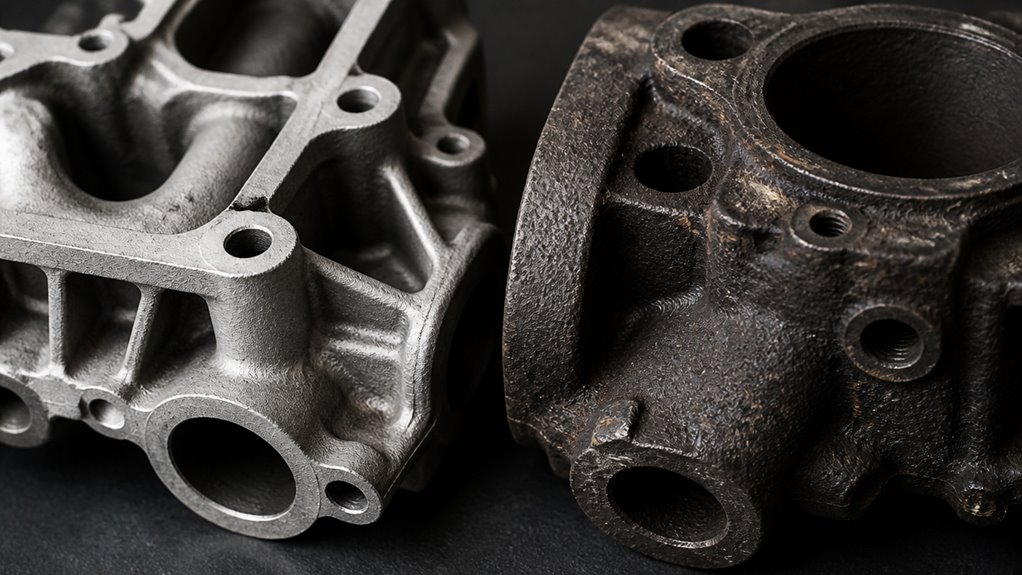
When choosing between cast aluminium and cast iron, consider that aluminium is much lighter, about one-third the density. This offers easier handling and better corrosion resistance due to its self-healing oxide layer.
Cast iron, however, excels in strength, stiffness, and vibration damping. It also retains heat longer thanks to its higher thermal mass.
Aluminium suits applications needing rapid heat dissipation and mobility. In contrast, iron works for heavy-duty, stable structures.
Exploring these trade-offs will clarify the ideal material for your engineering needs.
| Feature | Cast Aluminium | Cast Iron |
|---|---|---|
| Material Density | 2.6–2.8 g/cm³ | 7.0–7.4 g/cm³ |
| Weight | Much lighter, roughly one-third the weight | Much heavier |
| Portability | Excellent for lightweight and mobile components | Limited due to high mass |
| Compressive Strength | Generally lower | Superior |
| Tensile Strength | Typically 130–350 MPa | About 150–900 MPa, depending on type |
| Stiffness | Lower stiffness | Higher stiffness |
| Ductility | Better ductility and elongation | More brittle |
| Toughness | Better toughness and damage tolerance | More prone to sudden failure |
| Vibration Damping | Lower | Superior |
| Thermal Conductivity | 100–200 W/m·K | 30–60 W/m·K |
| Heat Retention | Lower | Higher |
| Heating/Cooling | Rapid | Slow |
| Corrosion Resistance | Excellent due to protective oxide layer | Lower; prone to rust |
| Moisture/Salt Environments | Generally better suited, though saltwater can cause pitting | Requires greater protection |
| Maintenance | Generally lower maintenance | Requires regular rust protection/coatings or seasoning |
| Machinability | Easier machining, higher machining speeds, less tool wear | More abrasive and slower to machine |
| Dimensional Stability | Good, but less rigid | Superior |
| Raw Material Cost | Typically higher alloying/processing costs | More cost-effective raw material |
| Transport & Installation Cost | Lower because of reduced weight | Higher because of greater mass |
| Typical Applications | Engine housings, heat sinks, lightweight frames, corrosion-resistant fittings | Engine blocks, brake rotors, machine bases, heavy-duty gears |
| Best For | Weight reduction, heat dissipation, portability, corrosion resistance | Heavy loads, rigidity, vibration control, wear resistance |
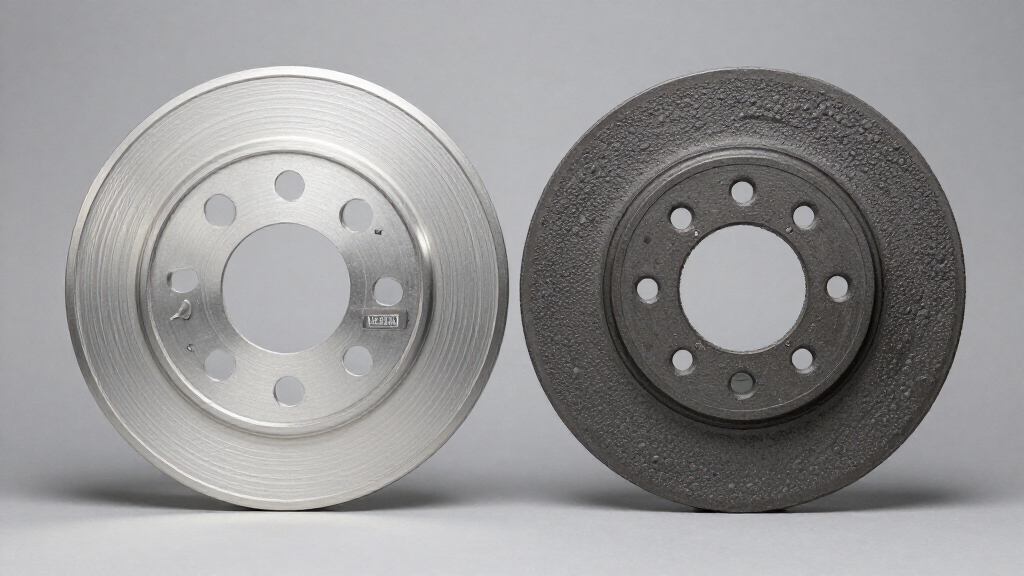
How much does weight influence your choice between cast aluminium and cast iron?
Given aluminium’s density of about 2.6–2.8 g/cm³, it’s roughly one-third the weight of cast iron, which ranges from 7.0 to 7.4 g/cm³.
This substantial difference means that for identical volumes, aluminium parts weigh markedly less.
This directly impacts handling, transport, and installation efficiency.
If your application demands portability or reduced structural mass, cast aluminium offers clear advantages.
Conversely, cast iron’s higher mass contributes to increased inertia and a heavier feel, which might be beneficial in contexts requiring stability rather than weight savings.
Understanding this density disparity enables you to optimize material selection based on operational needs.
This is especially important when weight constraints directly affect performance or logistics, without yet considering strength or stiffness properties.
Additionally, aluminum’s higher strength-to-weight ratio compared to cast iron can enable design optimizations where both weight and mechanical performance matter.
Cast iron tends to outperform cast aluminium when it comes to compressive strength and stiffness. This makes cast iron a go-to choice for those rigid, load-bearing applications.
But here’s the interesting part: when we talk about tensile strength, there’s some overlap depending on the specific alloy grades. In fact, aluminium often brings more ductility and toughness to the table, which can be a big advantage in certain situations. However, welding cast iron requires careful surface preparation and heat management to avoid cracking and ensure structural integrity.
Although cast aluminium offers notable advantages in weight and corrosion resistance, its compressive strength generally falls short compared to cast iron. When you subject components to compressive loads, cast iron typically withstands higher stresses due to its dense, graphite-rich microstructure. This enhances load distribution and resistance to deformation.
Cast aluminium’s lower density and relatively softer matrix result in decreased compressive capacity, even with alloying and heat treatment. For applications demanding substantial load-bearing under compression, like machine bases or structural supports, cast iron’s superior stiffness and strength provide greater stability and longevity.
However, if you need to balance weight reduction with moderate compressive strength, cast aluminium can suffice. Ultimately, your choice hinges on whether compressive load resistance or weight savings is the priority in your design criteria. Additionally, selecting materials with appropriate strength and hardness is critical to ensure durability under load.
When comparing tensile strength, cast aluminium and cast iron exhibit overlapping ranges that depend heavily on the specific alloy and grade used.
You’ll find cast aluminium tensile strength typically spans 130–350 MPa, while cast iron varies more widely, from 150 up to 900 MPa depending on its type.
This means your choice hinges on balancing strength requirements with other factors like weight and ductility.
Consider these key points:
Cast iron generally achieves higher maximum tensile strength but is more brittle.
Cast aluminium offers consistent strength with better toughness, especially when heat-treated.
Alloy selection and processing critically influence the tensile strength achievable in both materials.
Understanding these ranges helps you select the appropriate material for tensile load demands without compromising part performance.
For joining these materials effectively, choosing the right welding method and equipment, such as an AC/DC TIG welder with inverter technology, is essential to ensure strong, clean welds.
While cast iron generally exhibits greater stiffness due to its higher modulus of elasticity, cast aluminium offers superior ductility, allowing it to deform more before fracturing.
You’ll find cast iron’s rigidity ideal for load-bearing applications requiring minimal deflection, such as machine bases. However, its brittleness makes it prone to sudden failure under tensile or impact stress.
Cast aluminium, though less stiff, provides increased toughness and elongation, absorbing energy through plastic deformation. This ductility enhances performance in dynamic or impact-loaded components.
When selecting between these materials, consider that cast iron’s stiffness supports structural stability. Cast aluminium’s ductility offers resilience and damage tolerance.
Balancing stiffness and ductility depends on your application’s load conditions, required deformation limits, and failure mode priorities.
Effective welding of cast iron requires controlled cooling techniques to reduce thermal stresses and cracking risks.
Because load and vibration characteristics critically influence performance and longevity, you need to carefully consider material properties like strength, stiffness, and damping when selecting between cast aluminium and cast iron.
Cast iron’s higher stiffness and compressive strength make it ideal for heavy load-bearing applications.
Its superior damping reduces vibration transmission.
Cast aluminium, though lighter and more ductile, offers less vibration damping but can handle dynamic loads better due to toughness.
Keep these factors in mind:
Cast iron excels in vibration damping and structural rigidity for machine bases.
Cast aluminium benefits applications requiring reduced weight with moderate load demands.
Material selection depends on balancing load capacity, vibration control, and weight constraints.
Choosing appropriately guarantees optimized performance and extended component lifespan under operational stresses.
Additionally, understanding the hardness vs. brittleness relationship in materials can help optimize durability and resistance to cracking under stress.
Understanding thermal conductivity differences between cast aluminium and cast iron is crucial for selecting materials in heat-sensitive applications. Cast aluminium offers markedly higher thermal conductivity, typically between 100–200 W/m·K, enabling faster heat transfer.
Cast iron, with conductivity around 30–60 W/m·K, heats and cools more slowly but retains heat longer due to higher thermal mass. This impacts how quickly components respond to temperature changes.
| Property | Cast Aluminium | Cast Iron |
|---|---|---|
| Thermal Conductivity | 100–200 W/m·K | 30–60 W/m·K |
| Heat Retention | Lower | Higher |
| Cooling/Heating Speed | Rapid | Slow |
You’ll choose cast aluminium when rapid heat dissipation is critical. Cast iron suits applications needing sustained thermal stability. For repairs involving these metals, selecting an adhesive with strong steel-reinforced rigidity is essential to ensure durable bonding under thermal stress.
Frequently, engineers must balance the need for efficient heat dissipation against the requirement for structural heft when choosing between cast aluminium and cast iron.
Cast aluminium excels in thermal conductivity (100–200 W/m·K), enabling faster heat transfer and cooling. This makes it ideal for components like heat sinks.
Cast aluminium’s superior thermal conductivity (100–200 W/m·K) ensures efficient heat transfer, perfect for heat sinks.
Conversely, cast iron’s higher density (7.0–7.4 g/cm³) provides substantial mass, enhancing structural stability and vibration damping. This is critical for machine bases and heavy-duty parts.
When prioritizing your design goals, consider:
This trade-off guides optimal material selection based on heat management versus mechanical robustness. Additionally, understanding the thermal conductivity differences between metals is crucial when designing assemblies that combine dissimilar materials.
While thermal performance and structural heft often determine material choice, corrosion resistance plays an equally important role in many applications.
Cast aluminium naturally forms a robust oxide layer that protects it from corrosion, making it highly suitable for moist or salt-rich environments.
This passive film self-repairs if damaged, greatly reducing maintenance requirements.
In contrast, cast iron lacks this inherent protection and tends to rust when exposed to moisture or humidity.
Without coatings or surface treatments, cast iron degrades faster, especially outdoors or in corrosive atmospheres.
Consequently, you’ll find cast aluminium preferable where long-term exposure to corrosive conditions occurs, while cast iron demands more rigorous protection strategies.
This fundamental difference influences material selection, especially for parts where corrosion resistance directly impacts service life and performance.
However, it is important to note that chloride ions in saltwater can penetrate and disrupt aluminium’s oxide film, causing localized pitting corrosion that may compromise its integrity over time.
Because cast aluminium forms a protective oxide layer, its parts generally require less frequent maintenance compared to cast iron components.
You’ll find that cast aluminium resists surface degradation better, especially in moist or corrosive environments. This reduces the need for repeated treatments.
In contrast, cast iron demands regular upkeep to prevent rust and structural weakening.
When considering durability and maintenance, keep in mind:
Choosing cast aluminium reduces your maintenance burden and enhances part longevity. Cast iron’s brittleness and susceptibility to corrosion mean you’ll need to plan for more consistent care and inspection.
Additionally, proper post-weld corrosion protection is essential for maintaining the integrity of metal parts after welding or repair.
Cast aluminium typically machines more easily than cast iron, allowing you to achieve complex geometries with less tool wear and faster cycle times. Its lower hardness reduces cutting forces, minimizing tool degradation and enabling higher machining speeds.
You can efficiently produce intricate parts with tight tolerances, benefiting from aluminium’s ductility and thermal conductivity during manufacturing. Conversely, cast iron’s abrasive graphite content increases tool wear and demands slower, more deliberate machining.
While cast iron offers superior dimensional stability and vibration damping, you’ll face longer cycle times and increased tooling costs. Your choice hinges on part complexity, tolerance requirements, and production volume.
If you prioritize manufacturing efficiency and design flexibility, cast aluminium is advantageous. For applications valuing stability and wear resistance, cast iron remains preferable despite machining challenges.
Choosing between cast aluminium and cast iron involves balancing upfront material and manufacturing costs against long-term performance demands.
Selecting cast aluminium or iron requires weighing initial costs against ongoing performance and durability needs.
Cast aluminium’s lower density reduces weight-related expenses in transport and installation. However, it typically comes with higher alloying and processing costs.
Cast iron offers cost-effective raw material pricing and excellent strength. Yet, machining and corrosion protection can increase lifecycle expenses.
Consider these tradeoffs:
You’ll need to analyze total cost implications alongside performance needs to determine the best material choice.
When selecting materials for your components, understanding the distinct application strengths of aluminium and iron is essential. Cast aluminium excels in lightweight, corrosion-resistant, and thermally conductive parts. Cast iron offers superior strength, wear resistance, and vibration damping for heavy-duty uses.
| Application Area | Cast Aluminium Use | Cast Iron Use |
|---|---|---|
| Automotive | Engine housings, heat sinks | Engine blocks, brake rotors |
| Industrial Machinery | Lightweight frames, housings | Machine bases, heavy-duty gears |
| Cookware | Lightweight pans | Durable skillets, cookware bases |
| Infrastructure | Corrosion-resistant fittings | Structural supports, pipes |
Choose aluminium for portability and heat dissipation. Select iron when mass, rigidity, and wear resistance are critical.
You’ll find cast aluminium generally has a lower environmental impact due to its lighter weight, reducing transportation emissions.
It’s also highly recyclable with less energy required for recycling compared to primary production.
Cast iron, while durable, demands more energy to produce and transport because of its density.
However, cast iron’s longevity and recyclability partially offset this.
Your choice depends on balancing lifecycle emissions, application needs, and recycling infrastructure.
Imagine melting metals like liquid mirrors reflecting rebirth.
You’ll recycle cast aluminium by shredding, melting at about 660°C, then casting it anew.
This process benefits from its low melting point and high recyclability.
Cast iron requires crushing, then melting at a higher 1,150–1,300°C range.
This demands more energy but allows reuse in heavy-duty applications.
Both processes involve sorting, cleaning, and re-melting but differ mainly in energy needs and temperature controls due to their distinct thermal properties.
You’ll find cast iron absorbs sound better than cast aluminium due to its higher density and internal damping capacity.
Cast iron’s microstructure dissipates vibrational energy more effectively, reducing noise and vibrations.
In contrast, cast aluminium, being lighter and less rigid, transmits sound more readily and has lower damping.
Yes, you’ll find significant differences in electrical conductivity between the two.
Cast aluminium conducts electricity much better, roughly 30–40% of pure copper’s conductivity. This makes it suitable for lightweight electrical components.
Cast iron, with its higher carbon content and graphite inclusions, has much lower electrical conductivity, often less than 10% that of copper.
You mightn’t expect it, but safety risks differ sharply when casting aluminium versus cast iron.
With aluminium’s lower melting point, you’ll handle molten metal at around 660°C. This reduces heat hazard but increases oxidation and fire risk.
Cast iron demands much higher temperatures near 1,200°C, exposing you to intense heat and slag hazards.
You must use proper PPE, guarantee ventilation, and manage thermal shock carefully to prevent accidents in both processes.
When choosing between cast aluminium and cast iron, you’re balancing weight, strength, and thermal needs.
Cast aluminium offers lighter weight and better heat dissipation. Cast iron provides superior stiffness and durability.
But which material truly fits your specific load and vibration demands? The answer hinges on your priorities, whether it’s machinability, cost, or performance.
Dive deeper into your application’s nuances before deciding. The right choice could redefine your project’s success.