Phone:
(701)814-6992
Physical address:
6296 Donnelly Plaza
Ratkeville, Bahamas.

Phone:
(701)814-6992
Physical address:
6296 Donnelly Plaza
Ratkeville, Bahamas.

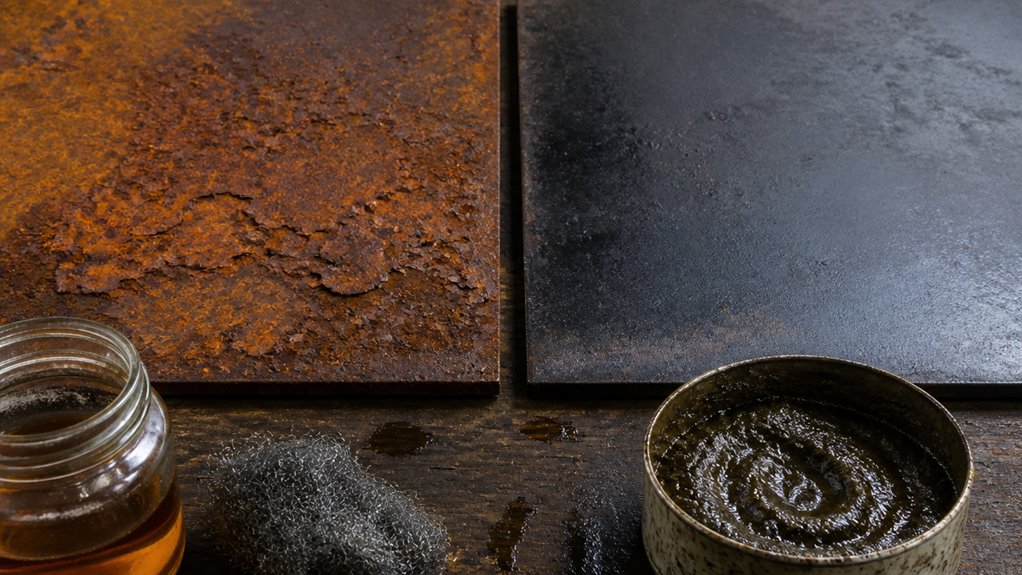
You’ll choose a rust converter to stabilize rust quickly, forming a black, primer-like layer ideal for large, fixed surfaces where removal is impractical.
Rust removers chemically dissolve rust, exposing bare metal needed for polishing, plating, or welding. However, they require more prep and immediate protection to prevent flash rusting.
Converters save labor but leave a non-bare-metal finish, while removers deliver pristine substrates with increased effort.
Understanding these differences helps optimize your surface treatment strategy.
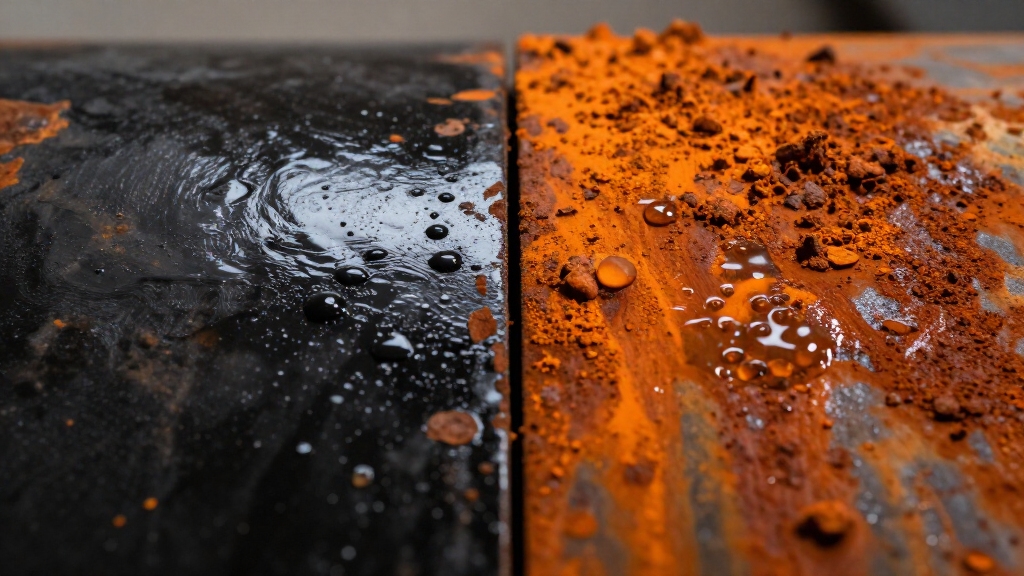
Deciding between a rust converter and a rust remover hinges on your project’s requirements for surface finish and labor intensity.
If you need a quick, labor-saving solution for large, fixed, or heavily pitted surfaces, a rust converter works by stabilizing rust into a paintable, primer-like layer without removing it.
For quick, labor-saving rust treatment on large or damaged surfaces, rust converters stabilize rust into a paintable layer.
However, if your goal demands bare metal, such as for polishing, plating, or welding preparation, you’ll want a rust remover that chemically dissolves rust, exposing clean metal.
Keep in mind, rust removers require more extensive prep and immediate protective coating to prevent flash rusting.
Choosing the right product balances convenience against finish quality.
Converters save time but leave a black coating, while removers deliver clean metal but increase labor and risk of rapid reoxidation if unprotected.
For optimal long-term corrosion resistance on galvanized steel, timely application of protective coatings within 12 hours is essential to minimize zinc oxidation and ensure strong adhesion to the metal surface, a critical factor when using rust removers or preparing metal for coating with powder coating.
When you apply a rust converter, it actually kicks off a chemical reaction with iron oxide. This process creates a stable, black primer-like layer, thanks to active ingredients like tannic or phosphoric acid. Pretty cool, right?
Instead of just scraping off the flaky rust, this reaction seals it up, transforming the surface and changing the metal’s appearance noticeably.
Understanding these chemical changes is really helpful. It allows you to see how effectively the converter gets rusted surfaces ready for painting or any other kind of treatment. So, next time you’re dealing with rust, you’ll know what’s happening beneath the surface!
Unlike rust converters, weld-through primers use sacrificial anode protection to prevent corrosion directly at metal joints, especially where welding occurs.
Although rust converter doesn’t remove rust, it initiates a chemical transformation by reacting directly with iron oxide to create a stable, inert compound. This conversion stabilizes the rust, preventing further oxidation while forming a black, primer-like surface ready for painting.
The reaction typically involves acids that bond with iron oxide, producing a protective layer that adheres firmly to the metal substrate. You should make sure loose rust is removed before application to maximize effectiveness.
| Process Step | Outcome |
|---|---|
| Reaction with iron oxide | Converts rust to stable compound |
| Formation of coating | Creates inert, black surface |
| Surface condition | Retains rust but stabilizes it |
This conversion process preserves the metal beneath while sealing rust, differing fundamentally from rust removal. For optimal results and to protect the galvanized metal’s integrity, it is important to follow proper surface preparation before applying any rust treatment.
Because rust converters rely on chemical reactions to transform iron oxide, understanding their active ingredients is essential for selecting the right product.
Most rust converters contain tannic acid or phosphoric acid as primary active components. Tannic acid reacts with iron oxide to form iron tannate, a stable, black compound that adheres tightly to the surface.
Phosphoric acid converts rust into iron phosphate, creating a corrosion-resistant, primer-like coating. These acids chemically stabilize rather than remove rust, effectively halting further oxidation.
Additionally, some formulations include polymer binders to enhance adhesion and durability of the converted layer.
When you choose a rust converter, focus on the acid type and concentration. These factors determine the conversion efficiency and suitability for your specific rust conditions and subsequent coatings.
For best results, applying a phosphate pretreatment after rust conversion can optimize adhesion and further reduce corrosion risk.
Understanding the active ingredients in rust converters helps clarify how these products alter the rusted surface at a molecular level. Rust converters chemically react with iron oxide, transforming it into a stable, inert compound.
This reaction creates a tightly bonded, black primer-like layer that seals the rust, preventing further oxidation. You’ll notice the surface darkens as the tannic or phosphoric acid converts loose rust into a protective coating.
| Surface Condition | Visual Change |
|---|---|
| Original Rust | Reddish-brown, flaky |
| During Conversion | Darkening, blackening |
| After Conversion | Matte black, sealed |
This visual transformation indicates chemical stabilization rather than rust removal, leaving you a paintable, corrosion-resistant surface. Proper surface preparation and control of oxidation byproducts are essential to ensure long-lasting protection.
Rust removers work by chemically breaking down iron oxide, effectively dissolving the rust layer and exposing the underlying bare metal. They employ acidic or chelating agents, commonly oxalic, citric, or phosphoric acid, that react with rust.
This reaction converts solid iron oxide into soluble compounds. The dissolution process strips rust entirely from the metal surface rather than altering it in place. As the rust dissolves, you reveal clean, unoxidized metal underneath, which is ideal for applications requiring a pristine substrate, such as polishing or welding prep.
However, this bare metal is highly reactive and can flash-rust quickly if not protected promptly. Depending on the formulation, rinsing or neutralizing the surface post-treatment may be necessary to halt further chemical reaction. This ensures a stable, rust-free metal surface ready for subsequent finishing. Applying a protective coating after treatment is crucial to prevent rapid re-corrosion and maintain metal integrity, as emphasized in final recommendations.
You’ll notice that rust converters work by chemically transforming rust into a stable, paintable layer. Pretty neat, right?
On the other hand, rust removers simply dissolve the rust, exposing the bare metal underneath.
This fundamental difference really impacts the surface finish you’ll get. So, converters leave behind a dark, primer-like coating, while removers give you clean metal that needs immediate protection.
Understanding these distinctions can really help you pick the right product based on what you want to achieve with your project.
Proper surface preparation, including cleaning and priming, is essential to ensure paint adhesion and prevent peeling or flaking after using either product.
Although both rust converters and rust removers address corrosion, their chemical actions differ fundamentally: converters transform iron oxide into a stable, inert compound that remains bonded to the metal surface.
Conversely, removers chemically dissolve and eliminate rust, exposing bare metal underneath.
Rust converters typically use tannic or phosphoric acid to convert iron oxide into a black, primer-like layer, preserving the rusted area in place.
Rust removers employ acids like oxalic or citric acid to break down and strip away rust entirely, revealing unoxidized metal.
This exposes the substrate but requires immediate protection to prevent flash rusting.
Understanding these distinct chemical mechanisms helps you select the appropriate product based on whether you need to stabilize existing rust or remove it completely for further treatment.
Additionally, applying a mild acid test such as vinegar can help detect zinc coatings underlying corrosion treatments, which is important for metal surface preparation.
Understanding how each product interacts chemically with rust sets the stage for examining the resulting surface finishes. Rust converters transform rust into a stable, black, matte coating. Rust removers dissolve rust, exposing bare metal. This fundamental difference affects your post-treatment steps and final appearance.
| Aspect | Rust Converter | Rust Remover |
|---|---|---|
| Surface Appearance | Black, primer-like, matte finish | Clean, bare metal, often shiny |
| Post-Treatment | Can be topcoated after curing | Requires immediate protection |
| Rust Residue | Rust remains chemically stabilized | Rust fully removed |
| Vulnerability | Low reoxidation risk | High risk without quick sealing |
Proper surface preparation and cleaning are essential to reduce fume production and improve weld quality when welding on treated metals, especially after rust removal or conversion, highlighting the importance of metal and surface preparation.
Choose based on whether you prioritize convenience or pristine metal finish.
When you treat rust with a converter, the surface develops a black, matte, primer-like coating that stabilizes the corrosion. This coating chemically bonds with the rust, preventing further oxidation but leaving the substrate non-bare metal.
Rust converters create a black, matte coating that stabilizes rust by chemically bonding without exposing bare metal.
In contrast, rust remover dissolves and strips rust entirely, exposing bare metal that demands immediate priming or painting to prevent flash rusting. Post-treatment with a remover often requires rinsing and neutralizing, increasing preparation steps.
The converter’s finish offers convenience and corrosion inhibition without polishing. The remover’s finish provides a clean metal surface suitable for high-gloss or precision finishes but requires faster follow-up protection.
Your choice affects not only surface aesthetics but also the necessary post-treatment protocols to maintain metal integrity. When working on metal surfaces, it is important to wear proper protective gear to prevent damage from UV radiation and other hazards.
Choosing between rust converter and rust remover involves weighing specific advantages and disadvantages tied to your project’s goals and constraints.
Rust converters reduce labor by chemically stabilizing rust. They’re ideal for large, fixed surfaces where full rust removal is impractical. However, they leave a black, non-bare-metal finish, which is unsuitable if you need a polished or factory-like surface.
Conversely, rust removers dissolve rust entirely, exposing clean metal perfect for precision work or high-quality finishes. This, however, demands more prep, rinsing, and immediate protection to prevent flash rust.
Ultimately, if you prioritize speed and sealing existing rust, a converter works best. If you require a pristine substrate and can manage post-treatment care, a remover is preferable. Your choice hinges on balancing convenience against finish quality.
You generally shouldn’t use rust converters on non-metal surfaces because they’re chemically designed to react with iron oxides specifically.
Applying them to wood, plastic, or painted surfaces may cause damage or ineffective results.
If you try it, you risk unwanted staining, surface degradation, or no chemical reaction at all.
Always test a small inconspicuous area first or consult product guidelines to guarantee compatibility with non-metal materials before proceeding.
Think of rust converter curing like concrete setting. You won’t rush it without risking weakness.
Typically, it takes about 24 hours to fully cure under ideal conditions.
This curing time allows the chemical reaction to stabilize the rust into a primer-like layer.
Factors like humidity or temperature might extend this.
You’ll notice the surface darken and harden, signaling readiness for topcoating or further treatment.
Don’t skip this essential wait for lasting protection.
Rust removers generally aren’t safe for painted metal parts because their acidic or chelating chemicals can dissolve or damage the paint layer.
If you use a rust remover on painted surfaces, you risk stripping the paint along with rust.
To protect the paint, you should mask off surrounding areas or avoid applying rust removers directly to painted metal.
Always test a small area first to assess compatibility before proceeding.
You can’t put a lid on rust forever with rust converters. They work like a temporary shield, chemically stabilizing existing rust into a paintable layer but don’t eliminate rust’s potential to return.
While they slow corrosion by sealing iron oxide, they don’t create a permanent barrier against future rust. Proper surface prep and topcoating are vital because without ongoing protection, moisture can eventually penetrate and reactivate rust beneath.
Yes, rust removers often emit strong odors during application because they contain acidic or chelating chemicals like oxalic, citric, or phosphoric acid.
These compounds can produce sharp, pungent smells that may irritate your respiratory system or skin if you’re not careful.
To minimize exposure, you should use rust removers in well-ventilated areas and wear proper protective gear like gloves and masks throughout the process.
Choosing between rust converter and rust remover is like deciding whether to seal a cracked foundation or strip it down to bare concrete.
Rust converter chemically stabilizes rust, turning it into a protective barrier, while rust remover dissolves rust to reveal raw metal for fresh treatment.
Your choice hinges on the project’s demands, whether you need immediate stabilization or a clean slate. Understanding this distinction guarantees you tackle rust with precision and lasting effectiveness.