Phone:
(701)814-6992
Physical address:
6296 Donnelly Plaza
Ratkeville, Bahamas.

Phone:
(701)814-6992
Physical address:
6296 Donnelly Plaza
Ratkeville, Bahamas.

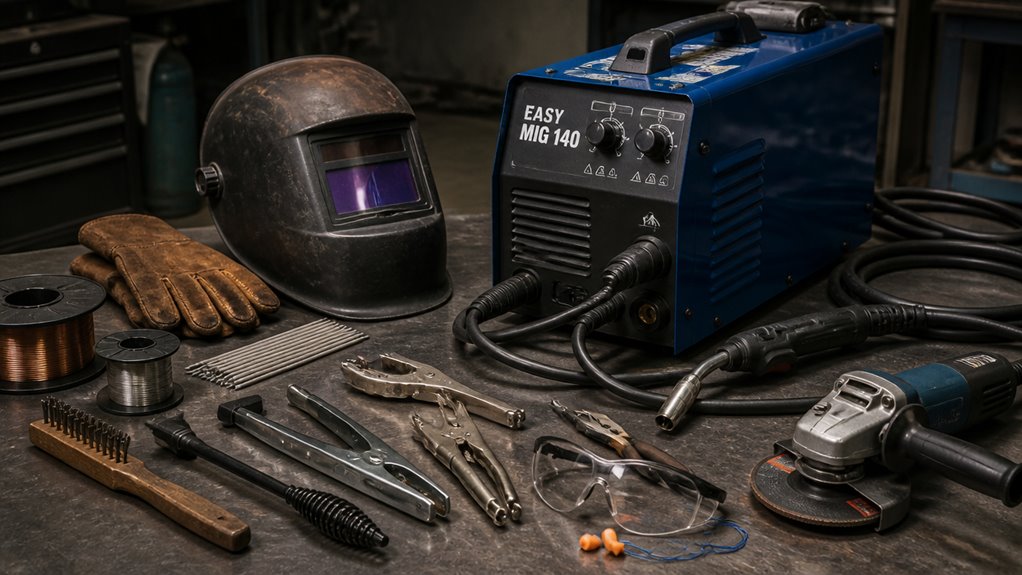
You’ll need a reliable welding machine, preferably MIG for ease and versatility, matched to your material thickness.
Equip yourself with an auto-darkening helmet, heat-resistant gloves, flame-resistant clothing, and safety glasses.
Prepare metals with an angle grinder, wire brush, and chipping hammer to guarantee clean, strong welds.
Secure materials using clamps or magnets and keep essential consumables like electrodes and wire stored dry.
Proper tool maintenance and workspace ventilation are crucial to weld safely and effectively.
Learn how to optimize each element for better results.
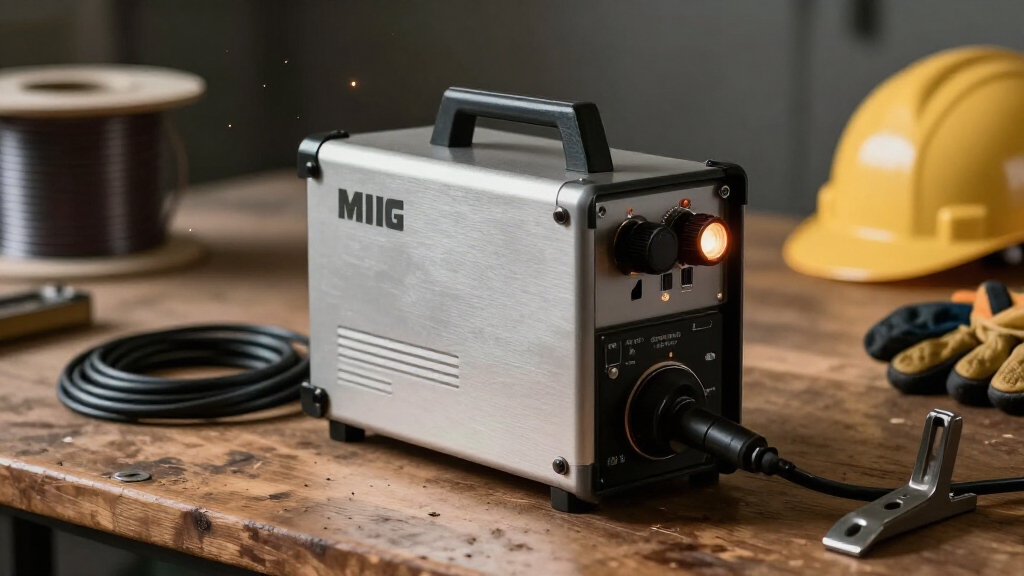
When selecting the right welding machine, you should first consider the welding process that best fits your projects, whether it’s MIG, flux-core, stick, or TIG.
MIG welding is often recommended for beginners due to its ease of use and versatility. Match your machine’s power supply and duty cycle to the thickness and size of materials you plan to weld.
Make certain your setup includes a proper ground clamp to complete the electrical circuit and an electrode holder or MIG gun, depending on the process. Choosing the appropriate machine avoids underperformance or damage during operation.
Focus on machines that offer consistent output and compatibility with consumables for your chosen process to streamline your workflow and improve weld quality from the start.
Always ensure thorough surface preparation, such as removing oxidation and contaminants, to improve strength and durability of your welds.
When you’re getting ready to weld, having the right protective gear is crucial. First off, a reliable auto-darkening welding helmet is a must. It keeps your eyes and face safe from those intense lights and flying sparks. You definitely don’t want to compromise on that!
Next up, let’s talk about gloves and clothing. Durable gloves are essential—they protect your hands from heat and any spatter that might come your way. And don’t forget about your clothing! Flame-resistant attire is a smart choice to keep your body safe during those welding tasks.
In short, prioritizing this gear isn’t just about safety; it’s also about staying comfortable while you work. So, gear up and get ready to tackle those projects with confidence! Always ensure your helmet meets industry standards to effectively block harmful UV and IR radiation.
Protect your vision with an auto-darkening welding helmet, the most essential piece of eye protection for any beginner welder.
This helmet automatically adjusts the lens shade to protect your eyes from harmful UV and IR rays while allowing clear visibility when not welding.
Alongside the helmet, you should use safety glasses during grinding and prep work to shield your eyes from flying debris.
| Equipment | Purpose |
|---|---|
| Auto-darkening helmet | Protects eyes from welding arc radiation |
| Safety glasses | Protects eyes during metal preparation |
| Welding cap/beanie | Shields hair and scalp from sparks |
Investing in quality eye protection enhances safety and comfort. It reduces eye strain and prevents long-term damage. The helmet’s instant darkening feature ensures your eyes are protected the moment the welding arc ignites.
Along with safeguarding your eyes and head, shielding your hands and body from heat, sparks, and molten metal is essential in welding.
You’ll need durable welding gloves made from heat-resistant leather to protect against burns and spatter. Choose gloves that fit well to maintain dexterity and control.
For your body, wear a welding jacket or apron constructed from flame-resistant materials like leather or treated cotton to shield your arms and torso.
Sleeves can provide additional coverage if your jacket doesn’t fully protect your arms. Avoid synthetic fabrics that can melt or ignite.
Work boots with steel or composite toes safeguard your feet from heavy objects and molten metal.
Proper gloves and protective clothing form a critical barrier, ensuring safety and enabling you to focus confidently on your welding tasks.
Be sure to inspect gear regularly and replace any damaged clothing to maintain effective protection.
To create a safe welding workspace, it’s super important to have the right safety gear on hand. Think welding curtains, respirators, and ear protection. These items play a crucial role in preventing injuries and keeping you safe from harmful fumes.
Now, let’s talk about ventilation. It’s essential for getting rid of those pesky welding fumes and ensuring the air quality stays good while you work. With proper ventilation in place, you’re not just protecting yourself for those long welding sessions; you’re also making sure that short ones are safe too. Using local exhaust ventilation devices as close as possible to the weld maximizes fume capture and significantly reduces inhalation risks.
Always prioritize wearing an auto-darkening welding helmet to safeguard your eyes and face from intense light and sparks. You’ll also need welding gloves to protect your hands from heat and spatter.
A welding jacket or apron shields your torso and arms, while safety glasses provide secondary eye protection during prep work. Durable work boots with steel toes complete your essential gear.
| Gear Type | Purpose | Key Feature |
|---|---|---|
| Welding Helmet | Eye/face protection | Auto-darkening lens |
| Welding Gloves | Hand protection | Heat and spark resistance |
| Protective Clothing | Torso and arm coverage | Flame-resistant material |
| Safety Glasses | Secondary eye protection | Impact-resistant lenses |
Equip yourself with this gear before welding to maintain safety and prevent injury. Always use proper shade filters in your helmet to protect your eyes from harmful light and debris during welding.
When setting up a welding workspace, guaranteeing proper ventilation ranks among the most critical safety measures. You need to remove fumes and gases generated during welding to protect your respiratory health.
Position your workspace near a window or install exhaust fans to pull contaminated air away from your breathing zone. Consider using a fume extractor with a flexible arm for localized ventilation when working indoors.
Keep fresh air flowing by opening doors or using intake vents to maintain positive airflow. Avoid confined spaces without ventilation, and always wear a respirator if adequate ventilation isn’t achievable.
Regularly inspect and maintain ventilation equipment to guarantee efficiency. Proper ventilation isn’t optional; it’s essential to meet safety standards and create a healthy environment for welding tasks.
Use local exhaust ventilation alongside respiratory PPE to effectively reduce exposure to toxic fumes and metal particulates.
Getting metal surfaces properly prepared sets the foundation for strong, clean welds. You’ll rely heavily on an angle grinder to remove rust, scale, and old paint. It’s also useful for beveling edges for improved weld penetration.
Properly preparing metal with an angle grinder ensures strong welds by removing rust and beveling edges.
A wire brush is essential for cleaning surfaces before and after welding to minimize contamination. For stick welding, a chipping hammer helps remove slag efficiently. Use a metal file to smooth sharp edges and refine fit-up, ensuring tight joints.
These handheld cleaning tools are indispensable because contaminants can cause weld defects like porosity or weak fusion. By maintaining clean, well-prepared metal, you improve arc stability and weld quality.
Regular cleaning of the torch and nozzle with appropriate tools also supports consistent arc stability and better overall weld results.
Prioritize these tools early to develop solid habits that consistently produce reliable, professional results.
For reliable welds, you need to secure and position metal parts firmly before starting. This guarantees proper alignment, minimizes movement, and improves weld quality. Use welding clamps, locking pliers, or C-clamps to hold pieces steady during fit-up and tack welding.
Welding magnets help maintain precise angles quickly, especially on steel.
Here’s a quick reference for common positioning tools:
| Tool Type | Purpose |
|---|---|
| Welding Clamps | Hold metals securely |
| Locking Pliers | Provide adjustable grip |
| Welding Magnets | Set and maintain angles |
Combining these tools with a sturdy welding table will stabilize your setup and improve accuracy. This allows you to weld with confidence and consistency. Always inspect your equipment and workspace thoroughly to ensure stable arc and safety before you begin.
Several essential consumables are critical to maintain welding efficiency and quality.
You’ll need welding wire for MIG welding, guaranteeing it matches your machine settings and base metal to avoid defects.
Choose welding wire for MIG that aligns with your machine and metal to prevent welding defects.
For stick welding, select electrodes compatible with your material to provide proper arc stability and penetration.
Shielding gas plays a crucial role in solid-wire MIG and TIG welding by protecting the weld pool from atmospheric contamination.
Pick the correct gas type and flow rate for your process.
Grinding discs are consumables you’ll frequently replace during metal preparation and weld cleanup, so have spares on hand.
Also, keep replacement tips, nozzles, and tungsten electrodes ready, as they wear out with use.
Managing these consumables properly guarantees consistent weld quality and reduces downtime.
Regularly inspecting and replacing worn parts like contact tips and nozzles helps maintain arc stability and reduces spatter buildup.
Although welding tools and gear often face harsh conditions, maintaining them properly guarantees consistent performance and extends their lifespan.
Regularly clean your MIG gun or electrode holder to prevent spatter buildup, which can impede electrical contact.
Inspect welding cables, ground clamps, and connectors for wear or damage to avoid unreliable arcs.
Keep your welding helmet lens free of dust and scratches to secure clear visibility.
Wash and condition welding gloves and jackets to maintain flexibility and protection.
Sharpen or replace grinding discs and wire brushes as needed for effective metal prep.
Store consumables like electrodes and wires in dry, sealed containers to prevent contamination.
Finally, check ventilation and safety equipment routinely to secure a safe working environment.
Consistent maintenance saves you time and money while improving weld quality.
You should dispose of used welding consumables by first separating metal scraps, electrodes, and grinding discs.
Collect metal pieces for recycling at a scrap metal facility. Place used electrodes and contaminated materials in a designated hazardous waste container, as they may contain harmful residues.
Never discard them in regular trash. Always follow local regulations for hazardous waste disposal to guarantee environmental safety and compliance with laws governing welding byproducts.
You should inspect your welding helmet before every use and perform a thorough maintenance check monthly.
Studies show 70% of helmet failures occur due to neglected lens damage or battery issues. Clean the lens with a soft cloth, check for cracks, and replace the protective cover regularly.
Test the auto-darkening feature and replace batteries or solar cells as needed. Keeping ventilation clear prevents fogging and guarantees reliable protection every time.
You shouldn’t use typical household extension cords with your welding machine because they often can’t handle the high current draw. This can lead to overheating or damage to your equipment.
If you must use an extension cord, choose one rated for heavy-duty use with a sufficient gauge, at least 10 AWG. Ensure it has the proper amperage rating that matches your welder’s requirements.
Always prioritize safety and verify the cord’s specifications before connecting it to your welding setup.
You can prevent welding fumes from affecting nearby people by ensuring proper ventilation in your workspace.
Use exhaust fans or fume extractors to remove fumes at the source.
Position welding curtains or blankets to contain sparks and fumes.
Encourage bystanders to stay upwind or outside the welding area.
Additionally, wearing a respirator protects you.
Keeping the workspace organized reduces fume buildup and exposure risks effectively.
Think of welding gas cylinders like valuable treasure chests. They need secure storage. Always keep them upright and chained to a sturdy wall or rack to prevent tipping.
Store cylinders in a well-ventilated area, away from heat sources or flames. Keep valve caps on when not in use.
Never store oxygen and fuel gas cylinders together. Regularly check for leaks and ensure clear access for emergency response.
As a beginner welder, investing in the right tools and protective gear sets the foundation for success.
Remember, “measure twice, cut once” applies beyond cutting. It emphasizes the importance of preparation and safety.
By selecting the appropriate welding machine, maintaining your equipment, and organizing a secure workspace, you’ll work efficiently and confidently.
Keep your metal prep and positioning precise, and always use quality consumables. This approach guarantees consistent, professional results every time.