Phone:
(701)814-6992
Physical address:
6296 Donnelly Plaza
Ratkeville, Bahamas.

Phone:
(701)814-6992
Physical address:
6296 Donnelly Plaza
Ratkeville, Bahamas.

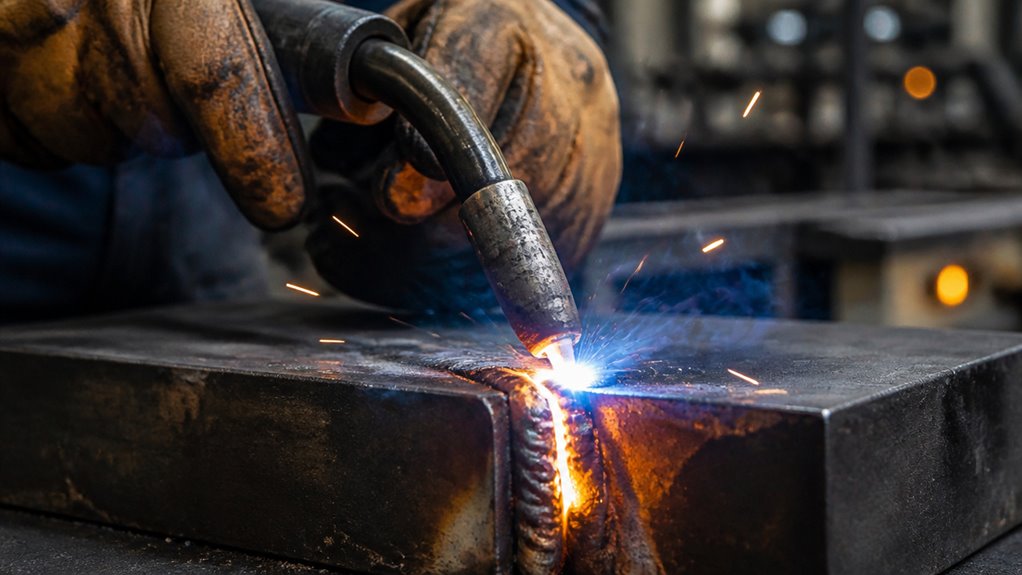
You can weld carbon steel effectively by managing its carbon content and heat input carefully.
Low-carbon steels weld easily with minimal preheat. Higher-carbon steels often need preheating around 300°F to reduce cracking risk.
Use low-hydrogen electrodes and proper filler metals matched to the base metal’s carbon equivalent to prevent brittleness.
Controlling cooling rates and heat input is critical to avoid hard, brittle microstructures.
Understanding these factors will help you optimize weld quality and durability for your project.
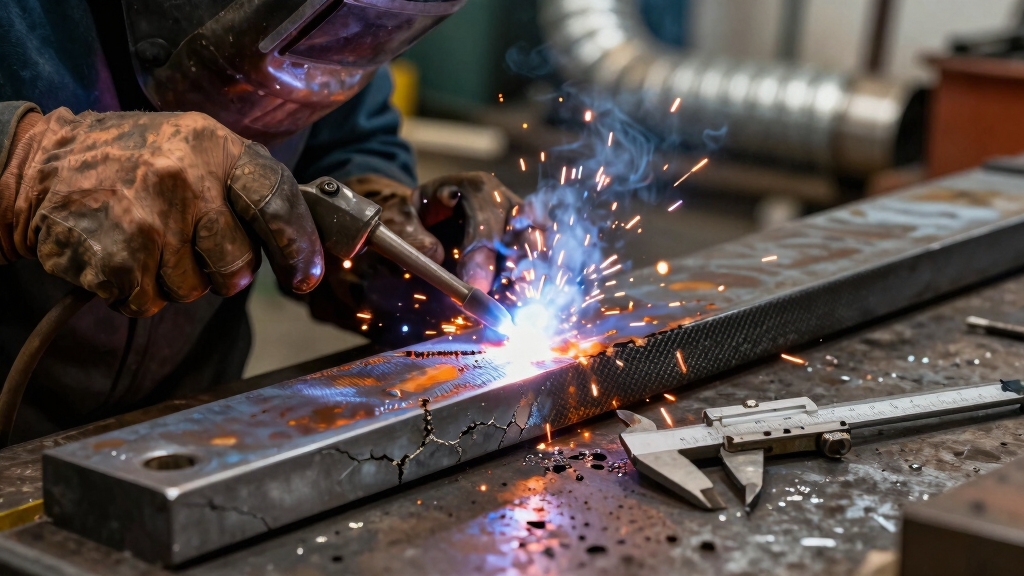
Although carbon steel is widely weldable, several factors directly affect its weldability and can signal when welding should be avoided or approached with caution.
Carbon equivalent (CE) is a critical metric; values above 0.4 typically reduce weldability due to increased crack susceptibility.
Elements like lead, sulfur, and copper severely impair weldability, sometimes making welding impossible.
Manganese and silicon may induce hot cracking and porosity issues, requiring skilled welding techniques.
Low-carbon steels present fewer challenges, often needing no preheat or postheat.
Higher carbon content demands careful heat control to avoid thermal stress and hydrogen-induced cracking.
You should avoid welding steels with high CE or problematic alloying elements without professional lab analysis and tailored welding procedures.
Improper approach increases defect risks and compromises joint integrity.
Using welding electrodes with a low-hydrogen flux coating such as E7018 can significantly reduce the risk of hydrogen-induced cracking in carbon steel welds.
As carbon content increases, you’ll notice that weldability takes a hit. This happens because higher carbon levels lead to increased hardness and a greater risk of cracking. So, it’s really important to keep an eye on preheat temperatures. A range between 300°F and 500°F is usually recommended. Why? Well, preheating helps slow down cooling, which in turn reduces thermal stress. Maintaining the preheat temperature throughout welding is crucial to stabilize the weld environment and minimize the risk of cold cracking.
Three key factors about carbon content directly affect how you approach welding carbon steel: weldability, preheat requirements, and crack susceptibility.
As carbon content rises, weldability decreases due to increased hardness and brittleness in the heat-affected zone. This means you’ll face higher risks of cracking and reduced ductility.
You also need to adjust preheat strategies accordingly; higher carbon steels demand elevated preheat temperatures to slow cooling rates and minimize thermal stresses.
Crack susceptibility intensifies with carbon content because rapid cooling can cause martensitic microstructures, leading to hydrogen-induced cold cracking.
To manage these effects, you must carefully select filler metals, control heat input, and apply appropriate preheat techniques.
Understanding carbon content’s role guarantees better weld integrity and reduces the chance of defects during fabrication or repair.
Adjusting preheat temperatures based on carbon content plays a critical role in ensuring weld quality for carbon steel. As carbon content rises, you must increase preheat temperature to slow the cooling rate and reduce thermal stresses.
For low-carbon steels (below 0.3% C), preheat is often unnecessary or minimal. However, when carbon content approaches or exceeds 0.4%, preheat between 300°F and 500°F becomes essential to prevent hydrogen-induced cracking.
You should tailor preheat not only to carbon content but also to material thickness and weld joint design. Proper preheat moderates the heat-affected zone microstructure, improving ductility and reducing hardness peaks.
For steels with a high carbon equivalent, such as AR500 with approximately 0.72, maintaining preheat in the range of 300–350°F is critical to mitigate hydrogen-induced cold cracking risks during welding.
Managing crack risk during welding hinges markedly on understanding how increasing carbon content affects steel’s behavior under thermal cycles. Higher carbon levels raise hardness and brittleness in the heat-affected zone, intensifying susceptibility to hydrogen-induced and thermal cracking.
You must increase preheat temperatures, typically between 300°F to 500°F depending on thickness and carbon equivalent, to slow cooling rates. This helps reduce residual stresses and minimize martensite formation.
Using low-hydrogen electrodes and controlling heat input are critical to prevent crack initiation. Avoid excessive amperage, as this can cause hot cracking.
Additionally, selecting filler metals with slightly lower strength than the base metal can improve crack resistance by promoting ductility within the weld.
Proper cable gauge selection with an adequate ampacity safety margin ensures stable current flow and consistent heat delivery during welding, which helps reduce thermal stress and cracking risk.
Choosing the right welding method for carbon steel projects hinges on balancing material properties, project requirements, and weld integrity. You need a process that matches the steel’s carbon content and the desired mechanical properties while minimizing defects.
Here are the top three welding methods for carbon steel:
1. MIG Welding
Offers versatility and efficient deposition with low hydrogen. It’s suitable for low to medium carbon steel.
2. TIG Welding
Provides precise heat control, making it ideal for thin sections and critical welds that require minimal distortion.
3. Stick Welding
Effective for thicker sections and fieldwork. It’s especially beneficial when using low-hydrogen electrodes to reduce cracking risk.
Selecting among these depends on your project’s complexity, access to equipment, and the steel’s carbon equivalent. This ensures strong, defect-free welds. Stick welding is additionally favored for its deep penetration and ability to weld on rusty or dirty surfaces, making it ideal for heavy-duty and outdoor applications.
To keep cracking at bay when welding carbon steel, you need to carefully control the heat input throughout the process.
Start by applying appropriate preheat, typically 300°F to 500°F depending on carbon content and thickness, to slow cooling and reduce thermal stresses.
Maintain a balanced heat input by using moderate amperage settings; high amperage can cause hot cracking and weld defects.
Control interpass temperature to prevent excessive thermal cycling, which increases crack susceptibility.
Use welding processes like TIG or MIG that allow precise heat regulation.
Additionally, avoid rapid cooling by employing postheat or controlled cooling methods when necessary.
Consistent heat management minimizes hydrogen entrapment and reduces residual stresses, both critical to preventing cracks in carbon steel welds, especially with higher carbon equivalents.
For joints involving different metals, selecting compatible filler materials is essential to accommodate thermal expansion differences and minimize cracking risk.
Selecting the appropriate filler metals and electrodes is essential for achieving strong, defect-free welds in carbon steel. You should focus on materials that complement the base metal’s carbon content and minimize cracking risks.
Choosing the right filler metals and electrodes is key to strong, crack-free carbon steel welds.
Low-hydrogen electrodes are particularly important for higher-carbon steels to reduce hydrogen-induced cracks. Additionally, matching filler metal strength with the base metal is critical. Overly strong fillers can make welds brittle.
Consider these key points when choosing:
Maintaining proper storage conditions for electrodes is crucial to preserving their low-hydrogen properties and ensuring weld quality.
Although welding high-carbon or alloyed steels offers structural advantages, it also presents significant challenges that can compromise weld integrity if not properly managed. You’ll face cracking risks due to rapid cooling and hard microstructures. Preheating and controlled heat input become critical to mitigate these issues.
Alloying elements like manganese and silicon can exacerbate hot cracking and porosity. High carbon equivalents reduce weldability drastically.
| Challenge | Cause | Impact |
|---|---|---|
| Hydrogen Cracking | Rapid cooling, hydrogen | Weld fractures |
| Hardness & Brittle Zones | High carbon content | Reduced ductility |
| Hot Cracking | Manganese, silicon | Weld discontinuities |
| Porosity | Alloy elements | Weak weld strength |
| Limited Filler Options | Alloy compatibility issues | Complicated procedure |
Careful process control is essential for sound welds on these steels. Using preheating and controlled cooling techniques, similar to those used in cast iron welding, helps reduce thermal stresses and cracking risks.
Welding carbon steel to stainless steel can be a bit tricky, but with the right approach, it’s definitely doable. You’ll want to choose your welding method wisely—MIG or TIG are often the best bets since they can handle the unique thermal and chemical properties of both materials.
Now, let’s talk about some of the challenges you might face. For starters, these two metals have different melting points and thermal expansion rates, which can complicate things. Plus, there’s the risk of forming intermetallic compounds that can weaken your joint. So, it’s really important to keep a close eye on these factors to ensure your weld stays strong and reliable.
Another key aspect is selecting the right filler metals. This can make a big difference in bridging the composition differences between the two materials. Using the right filler not only helps to reduce the risk of cracking but also minimizes corrosion at the joint interface. With careful planning and execution, you can achieve a solid weld between carbon steel and stainless steel! It’s also essential to perform thorough surface preparation to prevent contamination and maintain corrosion resistance at the weld zone.
Welding carbon steel to stainless steel requires careful attention to metallurgical differences and thermal behavior. You must account for dissimilar thermal expansion rates and differing alloy compositions to avoid weld defects.
The key to success lies in selecting appropriate welding methods and filler materials that accommodate these differences.
Consider these fundamental techniques:
Additionally, maintaining proper shielding gas flow is essential to prevent oxidation and ensure corrosion resistance in the weld area.
Since stainless steel and carbon steel have distinct metallurgical properties, joining them presents unique challenges that can impact weld quality and integrity.
You’ll face differences in thermal expansion, melting points, and chemical composition that can cause cracking, distortion, and intermetallic formation.
Managing heat input is critical; excessive heat can lead to carbide precipitation in stainless steel, reducing corrosion resistance.
You’ll need to select filler metals carefully, often using austenitic stainless filler, to bridge composition gaps and minimize brittle phases.
Controlling dilution is essential to avoid embrittlement in the weld zone.
Preheating carbon steel might be necessary to reduce thermal stresses, but overheating stainless steel risks sensitization.
You must wear appropriate personal protective equipment, including a welding helmet with proper filter shade, flame-resistant gloves, and protective clothing to prevent burns.
Secure adequate ventilation to avoid inhaling harmful fumes and gases generated during welding.
Keep a fire extinguisher nearby and clear the area of flammable materials.
Always check your equipment for damage and ground your work properly to prevent electrical shock.
Follow these precautions rigorously to maintain safety while welding carbon steel.
Welding carbon steel is like opening a window to corrosion risks.
When you weld, the heat-affected zone (HAZ) can lose protective properties, making it more prone to rust.
You can counter this by controlling heat input, using suitable filler metals, and applying post-weld treatments like coatings or passivation.
If you neglect these, you’ll weaken corrosion resistance, especially in higher-carbon steels or harsh environments where moisture and chemicals accelerate degradation.
Yes, you can automate carbon steel welding for large-scale production effectively. Processes like MIG and Flux Core are especially suited for automation due to their consistent arc stability and adaptability to robotic systems.
You’ll need to control heat input carefully to minimize cracking risks, particularly with higher carbon content. Automation improves repeatability, weld quality, and throughput.
This makes it ideal for fabricating carbon steel components at scale while maintaining precise process parameters.
Post-weld procedures provide protection and precision. You’ll typically perform post-weld heat treatment (PWHT) to relieve residual stresses and reduce brittleness.
Stress relieving involves controlled reheating around 1100°F to 1300°F, then slow cooling. You might also grind or machine weld spatter for smooth surfaces.
Additionally, non-destructive testing (NDT) like ultrasonic or dye penetrant inspection guarantees weld integrity.
Finally, applying corrosion-resistant coatings prevents deterioration and extends service life.
When welding carbon steel pipe versus plate, you’ll adjust heat input and travel speed to accommodate geometry and thickness differences.
Pipes require controlled heat to avoid distortion and maintain joint integrity in curved surfaces, often using lower amperage and faster travel speeds.
Plates allow higher heat input with slower travel due to flat geometry. Preheat requirements may differ; pipe welding often demands stricter heat control to prevent cracking, especially on thicker or higher-carbon grades.
You can weld carbon steel effectively, but understanding its carbon content and heat control is vital.
For example, when welding a structural beam with 0.3% carbon, you’d preheat to reduce cracking risk and select appropriate electrodes like E7018.
Ignoring these factors can cause brittle welds or distortion. So, analyze your steel’s composition and adjust your technique accordingly to ensure strong, reliable joints every time.