Phone:
(701)814-6992
Physical address:
6296 Donnelly Plaza
Ratkeville, Bahamas.

Phone:
(701)814-6992
Physical address:
6296 Donnelly Plaza
Ratkeville, Bahamas.

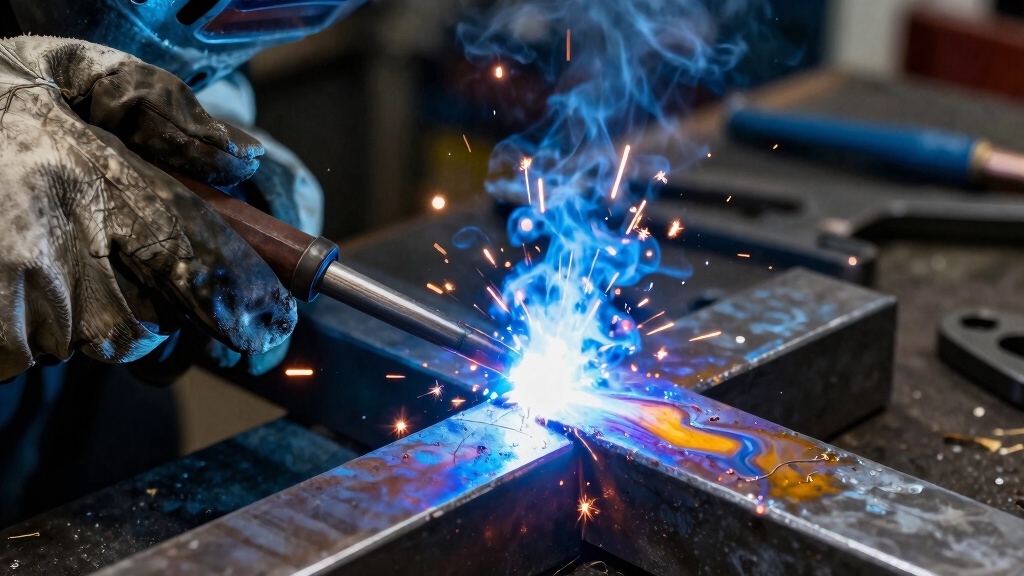
You can weld hardened steel, but it requires careful control of preheating between 400–600°F to reduce residual stresses and prevent cracking in the heat-affected zone (HAZ).
Use low-hydrogen electrodes matching your base metal’s strength. Maintain interpass temperatures and apply slow cooling to avoid brittle martensitic phases.
Post-weld heat treatment, including stress relief, is essential to restore mechanical properties. Understanding these factors guarantees weld integrity and durability.
Further insights reveal detailed techniques and applications.
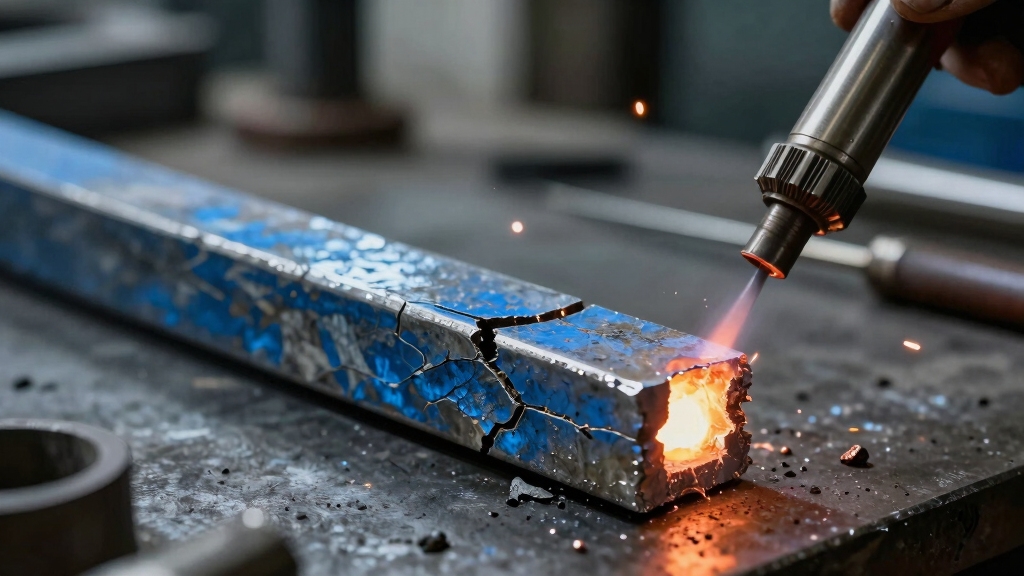
Welding hardened steel poses significant challenges due to its susceptibility to cracking and structural weakening during heating and cooling cycles.
Rapid thermal changes cause residual stresses and microstructural transformations, leading to brittle martensitic phases in heat-affected zones (HAZ).
These phases increase the risk of hydrogen-induced cracking and reduced toughness.
Additionally, uneven load distribution across weld joints can exacerbate structural weaknesses.
The welding process’s heat input and cooling rate critically influence the steel’s metallurgical stability, demanding precise control.
Without appropriate post-weld heat treatments and filler metal selection, you risk weld defects and compromised mechanical properties.
Consequently, welding hardened steel requires meticulous planning of welding parameters, joint design, and material compatibility to guarantee structural integrity and performance.
Preheating between 300–350°F is essential to reduce residual stresses and minimize the risk of hydrogen-induced cracking during welding.
When working with hardened steel, it’s really important to preheat it to a specific temperature range—usually between 400 and 600°F. Why is that? Well, preheating helps manage the thermal gradients in the heat-affected zone (HAZ). This means it can reduce residual stresses that often lead to cracking. Maintaining a controlled and uniform preheat temperature is essential to prevent stress cracking and ensure the material’s integrity.
Maintaining the correct preheat temperature plays a critical role in preventing cracking when working with hardened steel. You need to preheat the material to a controlled range, typically between 400°F and 600°F, to reduce thermal gradients and slow cooling rates.
This minimizes residual stresses that cause brittle fractures in the heat-affected zone and weld centerline. Without proper preheat, rapid cooling can transform the microstructure into hard, brittle martensite, increasing crack susceptibility.
Using tools like propane torches guarantees even heating to the target temperature before and during welding. Additionally, maintaining this temperature between passes stabilizes the weld environment. Controlled heating and slow cooling are essential to managing thermal stresses and ensuring weld integrity in high-carbon materials.
Although the heat-affected zone (HAZ) is a small region adjacent to the weld, it plays a critical role in weld integrity, especially with hardened steel.
Preheating helps control thermal gradients in the HAZ, reducing the risk of cracking by slowing cooling rates and preventing brittleness.
When you preheat properly, you can:
Proper storage and handling of welding consumables also play a crucial role in preventing weld defects related to hydrogen-induced cracking and ensuring overall weld quality through diffusible hydrogen control.
When you’re welding hardened steel, it’s really important to choose low-hydrogen electrodes. This helps to minimize cracking and keeps the weld integrity intact. You definitely want to avoid any issues that could compromise your work.
Another key point is to match the strength of the filler metal to the base materials. This ensures that the load is distributed evenly, which prevents weak points in your weld. Nobody wants a failure down the line, right?
Also, keep in mind that single-pass weld dilution can be beneficial. It helps you strike a good balance between the properties of the weld and the base metal, ensuring that everything performs reliably. So, take your time to consider these factors for the best results!
Using appropriate preheat and controlled cooling can further reduce the risk of cracking and improve weld quality when joining hardened steel.
When welding hardened steel, selecting a low-hydrogen electrode is essential to minimizing the risk of cracking and ensuring weld integrity. These electrodes reduce hydrogen-induced cracking by limiting moisture and hydrogen absorption during welding.
You’ll benefit from their stable arc and controlled mechanical properties, which maintain weld toughness under stress.
Key benefits include:
The low-hydrogen iron‑powder coating also enhances arc stability and deposition rate, contributing to consistent weld quality.
Selecting the correct filler metal strength directly impacts the weld’s mechanical performance and durability, especially when joining hardened steel to components of differing hardness.
You need to choose filler metals that complement the base materials’ tensile strengths to avoid localized stress concentrations or brittle zones.
For hardened steel welded to lower-strength carbon steel, use a filler metal matching the lower-strength material to guarantee ductility and prevent cracking.
Low-hydrogen electrodes with tensile strengths around 110,000 PSI typically balance strength and toughness effectively.
Avoid fillers exceeding the base metal’s strength, which can cause weld or heat-affected zone failures.
By carefully matching filler metal strength, you maintain structural integrity and distribute load evenly across the weld.
This is critical for long-term performance in hardened steel assemblies.
For example, using low-hydrogen electrodes like 7018 ensures superior ductility and impact resistance necessary for critical welds involving hardened steels.
Getting the right filler metal for single-pass welds on hardened steel hinges on understanding weld dilution. This is the mixing of weld metal and base material during fusion.
Dilution affects mechanical properties, so you need to select a filler that guarantees hardness and strength variations caused by fusion. When welding, consider that:
Selecting the correct electrode with appropriate flux coating composition is essential to stabilize the arc and protect the weld pool during the process.
Enhancing weld strength on hardened steel demands careful control of heat input, preheating, and filler metal choice to manage thermal stresses and prevent cracking.
Achieving strong welds on hardened steel requires precise heat control, effective preheating, and selective filler metals.
You should preheat the steel to 400-600°F, maintaining this temperature throughout welding to reduce the risk of heat-affected zone (HAZ) cracking.
Select low-hydrogen electrodes with tensile strength near 110,000 PSI to guarantee elasticity and minimize hydrogen-induced defects.
Use filler metals that either match or slightly undermatch the base material, especially when joining dissimilar steels, to balance mechanical properties and reduce stress concentrations.
Controlling welding speed and arc voltage also plays a pivotal role. Slower speeds and stable arc voltage help maintain uniform heat input, preventing softening or residual stresses.
Applying single-pass fillet welds can improve dilution and weld integrity, optimizing strength without compromising the hardened steel’s properties.
For thicker sections, employing multi-pass welding with controlled interpass temperature is essential to ensure full penetration and minimize distortion.
Although welding hardened steel requires careful preparation, applying the correct post-weld heat treatment is essential to restoring material properties and ensuring structural integrity.
You’ll need to control temperature, time, and cooling rate precisely to avoid cracking or softness in the heat-affected zone (HAZ).
Follow these best practices:
Proper control of preheat and post-weld heat treatment is critical to prevent HAZ cracking and brittleness.
Understanding the proper post-weld heat treatment sets the foundation for effectively joining hardened steel components in various practical applications.
You’ll encounter welded hardened steel parts in heavy machinery, such as snowplow edges and skid steer bucket bars, where durability and wear resistance are critical.
Repairing or fabricating small hardened gears and shafts also demands precise welding techniques combined with controlled preheat and post-weld tempering.
Additionally, restoring hardened steel racks or attaching new tooth holders requires even load distribution through proper weld joint design and heat treatment.
By applying these controlled welding strategies, you ensure structural integrity and minimize cracking risks in high-stress environments.
Your success depends on matching filler metals appropriately and adhering to temperature and time parameters during post-weld heat treatment to maintain hardness and toughness.
Because welding hardened steel involves strict temperature control, precise filler metal selection, and specialized preheat and post-weld treatments, you should call a welding professional when the task demands consistent structural integrity under high stress.
Professionals ensure correct preheat (400-600°F) and post-weld tempering (1100°F minimum) to prevent cracking and maintain strength. They select low-hydrogen electrodes with appropriate tensile strength and optimize welding speed for heat input control.
Call a professional if you encounter:
This expertise minimizes metallurgical risks and guarantees durable, reliable welds.
You’ll find TIG and Stick welding machines work best for hardened steel due to their precise heat control and compatibility with low-hydrogen electrodes.
TIG machines allow you to manage heat input carefully, minimizing cracking risks. Stick welders with low-hydrogen rods handle tougher conditions effectively.
Always preheat and maintain interpass temperatures. Use machines that support controlled heat input to preserve the steel’s hardness and avoid structural damage.
You might think welding hardened steel won’t change its magnetic properties, but it actually can.
The heat from welding alters the steel’s microstructure, especially in the heat-affected zone, which can reduce its magnetic permeability.
You’ll see variations in magnetic response near the weld due to phase transformations like tempering or partial annealing.
No, you shouldn’t weld hardened steel without specialized safety equipment. The process involves high temperatures, toxic fumes, and intense UV radiation, all requiring proper protective gear like welding helmets, gloves, and respirators.
Additionally, preheating and post-weld heat treatments demand careful handling to avoid burns or inhalation hazards. Skipping safety measures risks serious injury and compromises weld quality. Always use the appropriate equipment and follow strict safety protocols.
You’ll spot weld failure in hardened steel by cracks spiderwebbing through the heat-affected zone or along the weld bead, like fractures in frozen glass.
Look for porosity, tiny holes weakening the joint, and weld spalling, where chunks peel away under stress.
Distortion or uneven hardness also signals failure.
These defects arise from insufficient preheat, improper filler metal, or rapid cooling, disrupting the tempered microstructure essential for durable, crack-resistant welds.
The welding process for hardened steel parts typically takes from several minutes to a few hours, depending on part size, complexity, and preheat requirements.
You’ll preheat to 400-600°F before welding, maintain interpass temperatures, and perform post-weld heat treatment at 1100°F for at least 15 minutes.
Smaller parts weld faster, but you must account for controlled cooling and tempering to prevent cracking and guarantee strength, which extends overall process time.
Welding hardened steel isn’t a walk in the park, but with the right prep and techniques, you can avoid costly cracks and weak joints.
Preheating, choosing the proper filler metal, and post-weld heat treatment are your best bets to guarantee strength and durability.
When in doubt, don’t hesitate to call in a pro. Sometimes, it’s better to play it safe to keep your project structurally sound and reliable.