Phone:
(701)814-6992
Physical address:
6296 Donnelly Plaza
Ratkeville, Bahamas.

Phone:
(701)814-6992
Physical address:
6296 Donnelly Plaza
Ratkeville, Bahamas.

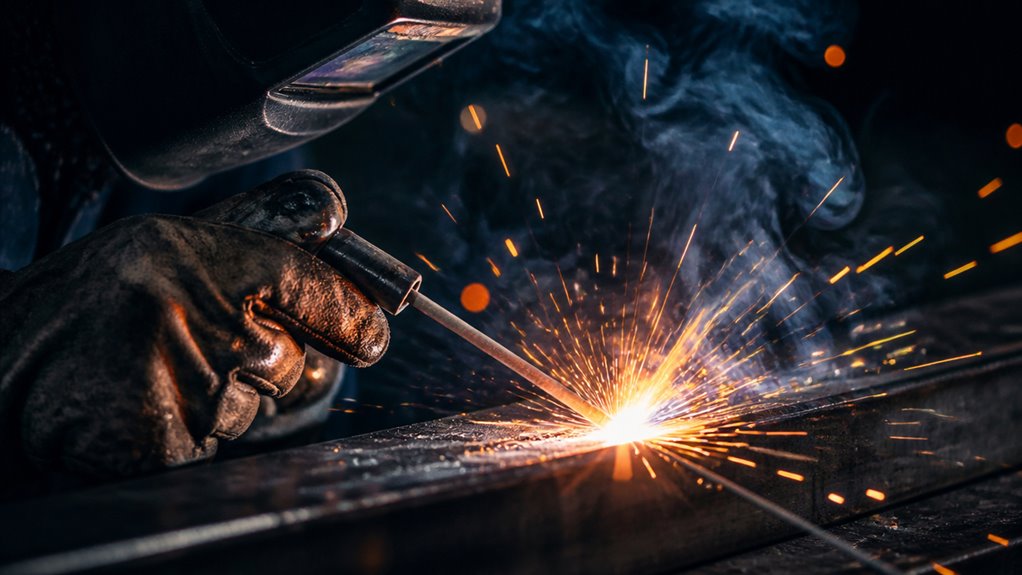
Welding technology lets you permanently join metals or thermoplastics by applying heat, pressure, or both to create strong, fused bonds.
You’ll find fusion welding melts materials for solid joints, while solid-state welding uses pressure without melting to preserve metal strength.
Choosing the right method depends on factors like material type, thickness, and joint design to guarantee durability and performance.
Understanding these basics prepares you to explore welding’s techniques, applications, and evolving automation.
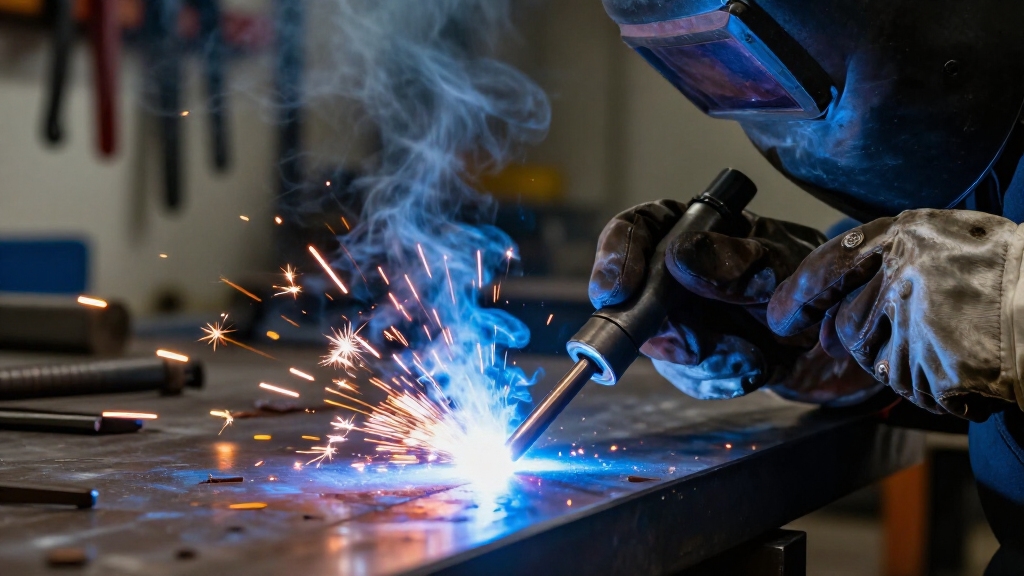
Welding technology joins materials, primarily metals or thermoplastics, by applying heat, pressure, or both to create a permanent, fused bond known as a weld.
Welding technology fuses metals or thermoplastics using heat and pressure to form a lasting, permanent bond.
When you engage in welding, you fuse base materials, often incorporating filler materials to enhance joint strength or bonding integrity.
This process is fundamental in fabrication, enabling you to construct or repair components with durable, continuous joints.
Welding methods vary by heat source and technique, including electric arcs or gas flames.
Your choice depends on material type, thickness, and design requirements.
Understanding welding technology means recognizing its role in manufacturing, construction, and maintenance, where it guarantees structural soundness and performance.
You must consider factors like equipment, process parameters, and material compatibility to achieve reliable, defect-free welds essential for industrial applications.
Control of heat input, travel speed, and electrode angle is critical to ensure proper fusion and penetration and high weld quality.
You know, when it comes to welding, there are some key differences between fusion welding and solid-state welding. Fusion welding is all about melting the base metals to create that strong joint. It’s fascinating how the heat plays such a crucial role in this process.
On the flip side, solid-state welding takes a different approach. Instead of melting the materials, it joins them without any melting at all! This method often uses pressure or friction to get the job done. So, while heat is super important in fusion welding, solid-state methods mix controlled heat with mechanical force to bond the surfaces together.
Understanding these differences really helps when you’re trying to figure out how each process affects joint strength and which one is best suited for your specific application. It’s all about knowing what works best for your needs! One of the biggest advantages of solid-state welding is that it preserves original microstructure, which minimizes heat-affected zones and helps maintain the base metal’s strength.
Although both fusion and solid-state welding aim to join materials permanently, they achieve this through fundamentally different mechanisms.
Fusion welding melts the base metals, creating a molten pool that solidifies into a strong joint. This process often requires filler material to reinforce the bond and relies on precise thermal control to guarantee proper fusion without defects.
In contrast, solid-state welding joins materials without melting, preserving the original microstructure by applying pressure, friction, or deformation. This method eliminates issues related to melting, such as solidification cracks or distortion, resulting in joints with distinct metallurgical characteristics.
Understanding the melting versus non-melting distinction helps you select the appropriate welding technique based on material properties, joint requirements, and performance criteria.
This differentiation is vital for optimizing weld quality and structural integrity.
Effective management of the heat-affected zone is crucial in fusion welding to maintain joint strength and minimize material degradation.
Distinguishing the roles of heat and pressure clarifies the fundamental differences between fusion and solid-state welding.
In fusion welding, you apply intense heat to melt the base metals, creating a molten pool that solidifies to form the joint. Pressure may assist but isn’t the primary factor.
Conversely, in solid-state welding, you rely mainly on pressure, sometimes combined with moderate heat below melting points, to bond materials through plastic deformation, diffusion, or recrystallization without melting.
This pressure facilitates intimate contact at the atomic level, enabling solid-state diffusion. Understanding these distinctions helps you select appropriate welding methods based on material properties and application demands.
This optimizes joint quality without unnecessary thermal distortion or melting-related defects.
Friction welding exemplifies a solid-state process that produces strong, defect-free joints through controlled mechanical friction and forging pressure.
Understanding joint strength mechanisms reveals how fusion and solid-state welding create durable bonds through fundamentally different processes. Fusion welding melts base metals, allowing atoms to intermingle and solidify into a continuous joint. In contrast, solid-state welding relies on pressure or friction to join metals below their melting points, preserving base metal properties and minimizing distortion. However, the presence of surface contaminants such as rust can significantly impact the strength and quality of fusion welds due to poor fusion and porosity issues.
| Aspect | Fusion Welding |
|---|---|
| Process | Melting and solidification |
| Joint Characteristics | Homogeneous microstructure |
| Strength Factors | Metallurgical fusion, filler metals |
| Aspect | Solid-State Welding |
| Process | Pressure and diffusion bonding |
| Joint Characteristics | Retains original metal structure |
| Strength Factors | Mechanical pressure, atomic diffusion |
You’ll select welding methods based on joint strength needs and material sensitivity.
You’ll come across a variety of welding techniques, including shielded metal arc, gas metal arc, and resistance spot welding. Each of these methods is tailored to specific materials and joint types, making it essential to choose the right one for your project.
So, how do you decide? It really comes down to a few key factors. First, consider the thickness of the base metal. Thicker materials often require different approaches compared to thinner ones. Then there’s the desired weld strength to think about. If you need a strong, durable weld, that can influence your method choice too.
And let’s not forget about production volume. If you’re working on a large project, efficiency becomes a big deal. Understanding all these criteria helps you not only optimize weld quality but also improve operational efficiency. So, take the time to evaluate your needs before diving in! Using the correct shielding gas or flux is also crucial to prevent oxidation and ensure weld integrity.
Common welding methods frequently determine the success and efficiency of a project. Each technique offers distinct advantages based on material type, thickness, and joint requirements.
When selecting a welding technique, consider factors such as material compatibility, joint geometry, and production speed.
Here are five popular welding techniques you should know:
Choosing the right method ensures strength, durability, and cost-effectiveness in your welding projects. GMAW welding is favored for its high deposition rates and minimal post-weld cleanup, making it a fast and clean option for many applications.
Selecting the appropriate welding process hinges on analyzing factors like material type, thickness, joint design, and production requirements.
You’ll want to match the welding method to these parameters for optimal strength, efficiency, and cost-effectiveness.
For instance, shielded metal arc welding suits thicker, robust steel joints.
Resistance spot welding excels on thin sheet metals requiring fast, automated cycles.
Gas metal arc welding balances speed and weld quality, ideal for medium-thickness materials with continuous filler needs.
MIG welding, also known as Gas Metal Arc Welding, uses an inert shielding gas to protect the weld pool from contamination, making it suitable for non-ferrous metals.
| Welding Method | Material Thickness | Prime Use Case |
|---|---|---|
| Shielded Metal Arc | Thick | Structural steel joints |
| Gas Metal Arc | Medium | Automotive assembly |
| Resistance Spot | Thin | Sheet metal in mass production |
| Gas Tungsten Arc | Thin to medium | Precision welds on stainless steel |
| Flux-Cored Arc | Varies | Outdoor construction, thicker metals |
When determining the best welding method for a specific application, consider the interplay between material characteristics, joint requirements, and production constraints.
Selecting an appropriate process guarantees structural integrity, cost efficiency, and operational feasibility.
You’ll evaluate factors such as material thickness, accessibility, and desired weld strength.
Common welding methods and their ideal uses include:
It is essential to ensure proper surface preparation before welding to improve strength and durability and prevent weak joints.
Evaluate the specific requirements of your project carefully to determine the most suitable welding method. Consider material type, thickness, joint design, and production volume.
For example, thin sheet metals favor resistance spot welding. Thicker materials often require arc welding techniques. Factor in automation needs and filler material use to optimize efficiency and joint strength.
| Material Type | Thickness Range | Recommended Method |
|---|---|---|
| Thin sheet metals | < 3 mm | Resistance Spot Welding |
| Medium thickness | 3–12 mm | Gas Metal Arc Welding (GMAW) |
| Thick materials | > 12 mm | Shielded Metal Arc Welding |
This matrix guides your choice based on technical parameters. It ensures precise, durable welds tailored to your project’s demands. Selecting the appropriate electrode and shielding gas is essential to achieve high-quality welds and compatibility with your chosen welding method.
Once you’ve determined the appropriate welding method based on material and design specifications, understanding how welding integrates into various industrial sectors becomes important.
Selecting the right welding method is key to effectively integrating welding into diverse industrial applications.
Welding technology underpins critical fabrication and assembly processes, ensuring structural integrity and durability across applications. You’ll find welding indispensable in:
In each sector, welding’s adaptability to diverse materials and joint designs streamlines production and enhances performance. Your choice of welding impacts efficiency, quality, and longevity, reinforcing its pivotal role in industrial manufacturing and repair workflows.
Because welding exposes you to intense heat, sparks, and harmful radiation, using proper equipment and safety gear is critical to protect yourself and maintain a safe work environment.
You need a welding helmet with an appropriate filter lens to shield your eyes from ultraviolet and infrared radiation.
Flame-resistant clothing, leather gloves, and long pants reduce burn risks from sparks and molten metal.
Safety glasses provide secondary eye protection.
Leather footwear guards against hot debris and electrical hazards.
Respiratory protection becomes essential when ventilation is insufficient, preventing inhalation of hazardous fumes and particulates.
Additionally, welding curtains or screens isolate the work area, minimizing risks to bystanders.
Fire safety equipment, such as extinguishers, must be readily accessible.
Your adherence to these safety measures directly influences operational safety and injury prevention.
While protective gear safeguards the welder, advancements in automation are reshaping how welding tasks are performed in industrial environments.
Automated systems now enhance precision and efficiency by reducing human error and increasing throughput. These changes impact workflow, equipment design, and quality control.
Key shifts include:
Countless industries rely on welding to create strong, permanent joints essential for structural integrity and durability. When you depend on welding, you guarantee that frameworks, machinery, and components maintain their mechanical strength under stress and load.
Welding enables you to join dissimilar metals and complex geometries with precision, optimizing design flexibility. It supports high-volume production in automotive and aerospace sectors by providing consistent, repeatable joints that withstand operational demands.
Welding also facilitates repair and maintenance, extending equipment lifespan and reducing downtime. By selecting appropriate welding methods, whether fusion, arc, or resistance, you tailor joint quality to specific material properties and application requirements.
Without welding, you’d struggle to meet modern industrial standards for safety, performance, and reliability across manufacturing, construction, and infrastructure projects.
As welding technology evolves, you’ll see increased integration of automation and advanced control systems that enhance precision and efficiency. You’ll rely more on robotic welding arms and AI-driven monitoring to reduce errors and improve consistency.
Automation and AI-driven systems will boost welding precision, efficiency, and error reduction.
Future developments will focus on minimizing human exposure to hazards while maximizing throughput and joint quality. Key trends shaping the future include:
Expanded use of machine learning for real-time process optimization.
Enhanced sensor technologies for defect detection.
Greater adoption of hybrid welding techniques combining multiple heat sources.
Increased connectivity enabling remote operation and diagnostics.
Development of environmentally friendly, energy-efficient welding processes.
Welding impacts manufacturing’s environmental footprint through energy consumption and emissions from heat generation and shielding gases.
You can reduce this by selecting efficient welding methods and optimizing parameters to minimize waste and rework.
Automated welding improves precision, cutting material use and defects.
However, welding fumes and slag require proper ventilation and disposal to prevent pollution.
Balancing productivity with environmental controls helps you lower overall manufacturing emissions and resource consumption effectively.
You’ll want to keep your welding equipment in tip-top condition by regularly checking consumables like electrodes and nozzles for wear.
Clean and inspect cables and connectors to avoid unexpected downtime. Calibrate machines periodically to guarantee precision.
Don’t forget to maintain cooling systems and replace filters to prevent overheating.
Routine inspection and timely replacement of worn parts will extend equipment life and maintain performance.
This assures your welding stays consistently reliable and efficient.
Yes, you can use welding technology on non-metal materials, mainly thermoplastics.
These materials respond well to heat and pressure, allowing you to create strong, permanent bonds.
However, most welding processes focus on metals. For non-metal applications beyond thermoplastics, alternative techniques like adhesive bonding or mechanical fastening are often more effective.
If you’re working with composites or ceramics, specialized methods outside conventional welding are typically required.
Welding certifications markedly enhance your career opportunities by validating your technical skills and compliance with industry standards.
Employers prioritize certified welders because they demonstrate proficiency in specific welding methods and safety protocols.
Certifications open doors to higher-paying jobs, specialized industrial sectors, and supervisory roles.
They also increase your eligibility for projects requiring strict quality assurance, boosting your credibility and marketability in competitive manufacturing, construction, and repair environments.
The most common welding defects you’ll face include porosity, cracks, undercut, and incomplete fusion.
You fix porosity by improving shielding gas coverage and cleaning the base metal.
Cracks require adjusting heat input and preheating thicker materials.
Undercut is corrected by controlling welding speed and technique.
Incomplete fusion needs proper joint preparation and correct welding parameters.
Consistent inspection and adherence to standards help you prevent and address these defects effectively.
Now that you understand the core of welding technology, you might wonder what’s next?
As automation and advanced materials evolve, welding isn’t just about joining metals anymore. It’s becoming a precision craft powered by innovation.
You’ll need to stay ahead, mastering new methods and equipment to keep pace. The future holds challenges and breakthroughs that could redefine industry standards.
Are you ready to weld your way into this transformative era?