Phone:
(701)814-6992
Physical address:
6296 Donnelly Plaza
Ratkeville, Bahamas.

Phone:
(701)814-6992
Physical address:
6296 Donnelly Plaza
Ratkeville, Bahamas.

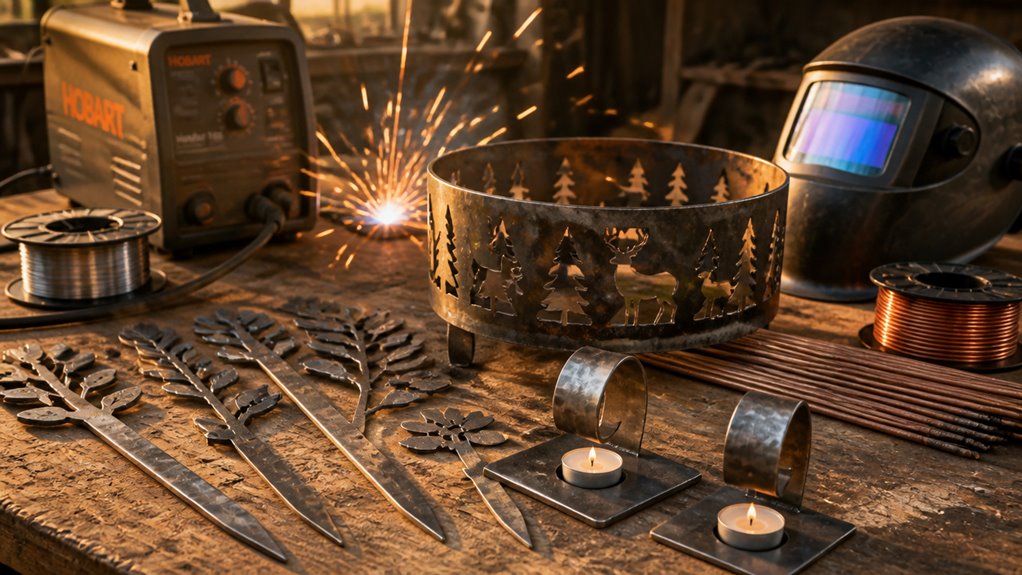
To build your welding skills, start with simple projects like straight bead practice on mild steel and basic lap or T-joints for alignment and fusion control.
Try small steel hooks, simple boxes, or short welds on thicker metal to develop precision and bead uniformity.
Use clamps for secure fit-up and prioritize clean surfaces for strong joints.
These practical tasks help you master fundamentals efficiently.
Exploring these projects further will guide you toward versatile, reliable welding techniques.
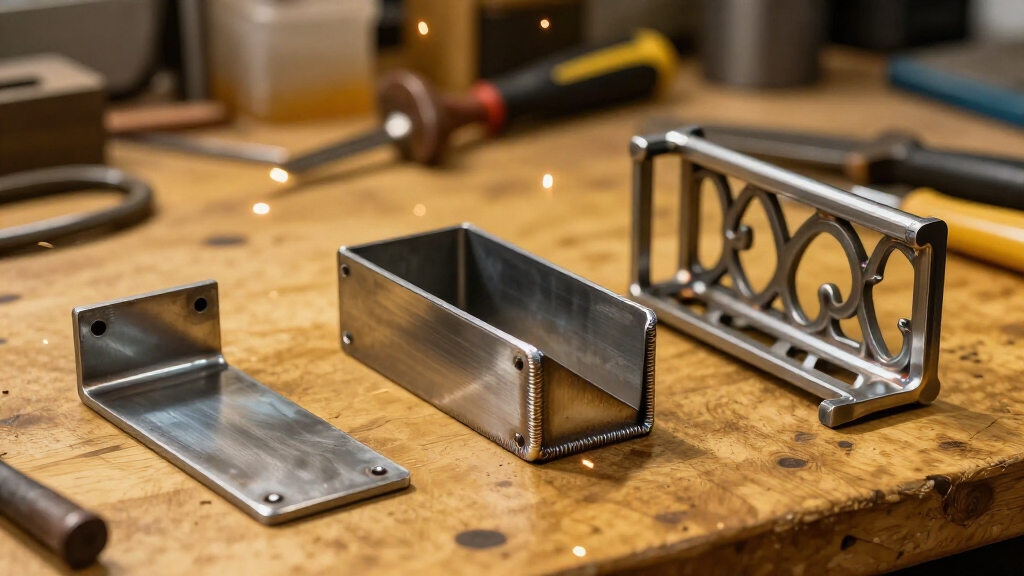
When you’re starting out in welding, progressing through projects by skill level helps build control and confidence efficiently.
Begin with simple straight bead practice on clean mild steel scraps to master steady hand movement and heat control.
Start with straight bead practice on clean mild steel to build steady hand and heat control skills.
Once comfortable, move on to lap and T-joint exercises, which teach alignment and proper metal fusion.
Tack welding small components like steel hooks further refines your precision.
After that, assembling basic shapes such as small boxes or square frames introduces you to measuring, clamping, and maintaining squareness.
Focus on short welds on thicker mild steel as they’re easier to manage.
Prioritize clean surfaces and consistent fit-up throughout.
This stepwise approach guarantees your foundational skills develop methodically before tackling larger, more complex fabrications.
Consistent hands-on practice is essential to develop muscle memory and proper techniques that build welding proficiency.
Building foundational welding skills through carefully chosen projects accelerates your progress and reinforces key techniques.
Start with straight bead practice on clean mild steel scrap to develop steady hand control and consistent heat input. Move on to lap-joint and T-joint exercises to master alignment, fusion, and penetration.
Small steel hooks offer a practical next step. They require minimal tacking and strengthen your positional welding. Construct simple metal boxes to practice square corners and clamping accuracy, which are critical for frame assembly.
You can also try making bookends or small square frames to hone your measuring and squaring skills. These projects emphasize short welds on thicker mild steel, ensuring easier control while improving bead uniformity.
Follow this progression to build a solid skill base before advancing to complex fabrications. Using a MIG welder is recommended for beginners due to its ease of use and consistent results during skill development.
Want to boost your workshop efficiency? One great way is by fabricating practical storage solutions like tool hangers and MIG gun holders. Trust me, compact wall hooks are super quick to weld and offer reliable support for those items you use all the time.
Plus, these projects aren’t just about getting organized—they’re a fantastic way to sharpen your welding skills. So, while you’re tidying up your space, you’ll also be enhancing your abilities. It’s a win-win!
Remember to maintain proper surface cleaning before each weld to ensure strong, reliable joints and avoid contamination.
Efficient storage solutions greatly enhance workshop organization and workflow.
When you weld your own storage units, you tailor them precisely to your needs, maximizing space and accessibility.
Focus on sturdy, functional designs that hold tools and materials securely while withstanding shop conditions.
Consider these practical storage projects:
Using materials like square steel tubing and angle iron ensures your storage units combine strength with weldability for long-lasting use.
Compact wall hooks offer a straightforward welding project that combines functionality with minimal material use and quick assembly.
You’ll start by cutting small steel pieces, usually flat bars or rods, and shaping them into a hook form. Tack weld the components first to guarantee proper alignment.
Then complete the welds with short, consistent beads, focusing on clean fusion and strong joints. These hooks mount easily on flat metal or wooden backings, secured with screws or welds.
Their compact size makes them ideal for organizing tools, keys, or small items in your home or shop.
Because the project requires only simple lap or T-joints and limited welding time, it suits beginners aiming to develop control and accuracy while producing practical storage solutions.
Be sure to work in a well-ventilated workspace to minimize inhalation of hazardous fumes during welding.
When diving into decorative welding projects for beginners, focus on simple shapes and repetitive patterns that build your skills without overwhelming complexity.
Start with projects that allow you to practice consistent weld beads while assembling straightforward geometric forms.
These projects help you develop control and precision on mild steel, a forgiving material for newcomers.
Consider these beginner-friendly decorative builds:
Metal flowers crafted from washers or sheet-metal cutouts involve tack welds and simple shaping.
Horseshoe coat racks combine curved elements with flat backing plates, reinforcing alignment skills.
Wall-mounted key holders are made by welding rods or hooks to a flat plate, improving tack welding and layout accuracy.
These projects emphasize repetition, straightforward joints, and manageable weld lengths, making them ideal for advancing your decorative welding proficiency.
Ensure you work in a well-ventilated workspace to maintain safety and comfort during your welding sessions.
Build small welding furniture and utility projects to strengthen your frame construction and joint consistency skills. Start with basic angle-iron frames or small plant stands to practice square layouts and tack welds.
Progress to simple tables or mobile welding carts, applying corner joints and load-bearing techniques. These projects enhance your ability to measure, clamp, and align components accurately.
Be sure to prepare metal surfaces properly by removing rust, oil, and dirt to ensure strong, clean welds and avoid contamination during your builds with metal preparation.
| Project Type | Key Skills Practiced | Material Focus |
|---|---|---|
| Small Plant Stands | Frame construction, tack welds | Mild steel angle iron |
| Mobile Welding Carts | Load-bearing design, square joints | Tube steel |
| Simple Outdoor Tables | Corner joints, measuring | Flat bar and plate |
Focus on precision and consistency to guarantee stability and functionality in these practical builds.
Expanding your welding skills to outdoor projects lets you apply frame construction and joint techniques in more rugged, functional contexts.
These builds often require repeated joints, sturdy frames, and weather-resistant designs, pushing your ability to maintain consistent welds in practical applications.
Start with projects that balance simplicity and utility, focusing on structural integrity and clean fit-up.
Consider these beginner-friendly outdoor welding projects to hone your skills:
Each project reinforces essential outdoor fabrication techniques, preparing you for more complex builds. Incorporating triangular gussets can significantly improve the structural stability and longevity of your outdoor metal projects.
If you’re just starting out with welding, clean, mild steel is a great choice. It’s super forgiving and makes it easier to get consistent welds.
Trust me, you’ll appreciate that as you’re learning!
Now, let’s talk about tools. You’ll definitely want to grab a MIG welder, along with some clamps and a wire brush.
These are essential for keeping everything lined up and ensuring your joints are nice and clean.
And please, don’t overlook safety gear! A good welding helmet with the right shade, gloves, and protective clothing are must-haves to keep you safe while you work.
Better safe than sorry, right?
Remember to always secure your workpiece with clamps or fixtures and use a proper copper ground clamp to ensure a safe and effective weld.
Choosing the right metals is essential when starting welding to guarantee manageable learning curves and successful results.
You’ll want metals that are easy to clean, weld, and handle without warping or excessive spatter. Mild steel is the best starter material due to its availability, affordability, and forgiving weld characteristics.
Avoid complex alloys or metals that require specialized equipment or shielding gases until your skills improve.
Focus on these beginner-friendly metals:
Mild steel: Offers consistent weld penetration and minimal distortion, ideal for most practice projects.
Low-carbon steel: Similar to mild steel but with slightly better weldability and reduced cracking risk.
Clean scrap steel: Provides inexpensive practice material; make certain it’s free from rust, paint, or contaminants.
Selecting these metals helps you build control and confidence before advancing to more challenging materials. For beginners, understanding the differences between stick and MIG welding can help in choosing the appropriate welding method for these materials.
Mastering welding starts not only with selecting the right metals but also with equipping yourself with the appropriate tools designed for beginner use.
You’ll need reliable tools that guarantee precision and ease during your initial projects. Focus on basic yet essential equipment that supports steady welds and efficient material handling.
| Tool | Purpose | Beginner Tip |
|---|---|---|
| MIG Welder | Provides controlled welds | Start with low settings |
| Welding Clamps | Secures parts in place | Use adjustable clamps for fit-up |
| Angle Grinder | Prepares and cleans metal | Use flap discs for smooth finish |
| Wire Brush | Removes slag and debris | Clean surface before welding |
| Measuring Tape | Guarantees accurate dimensions | Double-check measurements |
These tools form the foundation for welding success, making your learning curve smoother.
How do you guarantee protection while working on your welding projects? Prioritizing safety gear is essential to shield yourself from sparks, heat, and harmful UV rays.
You’ll need equipment designed for durability and comfort to maintain focus and control. Make sure to always use:
Selecting and consistently wearing this gear minimizes injury risk and lets you work confidently on your beginner projects. Safety isn’t optional; it’s part of mastering welding fundamentals.
You should store welding equipment in a dry, well-ventilated area away from flammable materials to prevent rust and fire hazards.
Keep gas cylinders secured upright with protective caps.
Organize tools on racks or in labeled containers to avoid damage and guarantee quick access.
Regularly inspect cables and hoses for wear, storing them coiled and off the floor.
Maintain a clean workspace to reduce clutter and improve safety during welding tasks.
You’ll want to avoid poor joint fit-up, which leads to weak welds.
Don’t neglect cleaning your metal; contaminants cause porosity.
Avoid running welds too fast or too slow. Maintain steady speed for consistent penetration.
Don’t hold the torch at the wrong angle; keep it between 10-15 degrees.
Also, don’t ignore proper safety gear or ventilation.
Finally, avoid skipping practice on scrap metal to build control before tackling real projects.
To clean your welding helmet, wipe the lens with a soft cloth and mild detergent, avoiding abrasive materials that cause scratches.
Remove and clean helmet shells with warm, soapy water, then dry thoroughly.
For gloves, brush off dirt and slag, then wash with mild soap and warm water if leather isn’t heavily soiled.
Regularly inspect both for cracks or damage, replacing parts as needed to guarantee peak protection and comfort during welding.
You shouldn’t weld outdoors in rainy or windy conditions.
Rain introduces moisture that can cause weld defects like porosity and contamination, compromising strength.
Wind blows shielding gas away, leading to poor weld quality and increased spatter.
If you must weld outside, use windbreaks or tents to protect the area and ensure dry surfaces.
Always check weather conditions beforehand to maintain safety and peak weld integrity.
Over 90% of welding-related respiratory illnesses result from inadequate ventilation.
You should always make sure your indoor welding area has strong exhaust ventilation to remove fumes at the source.
Use local exhaust systems or fume extractors positioned close to the weld zone.
Additionally, maintain general airflow with fans or open doors and windows if possible.
Wearing a proper respirator is essential when ventilation alone can’t fully clear hazardous gases.
Now that you’ve explored easy welding projects, you’re ready to ignite your skills like a welder’s torch cutting through steel.
Each project is a stepping stone, sharpening your precision and technique.
By choosing the right materials and tools, you’ll build practical, sturdy creations that stand the test of time.
Keep your focus sharp and hands steady. Your welding journey is a blueprint for mastery, one spark at a time.