Phone:
(701)814-6992
Physical address:
6296 Donnelly Plaza
Ratkeville, Bahamas.

Phone:
(701)814-6992
Physical address:
6296 Donnelly Plaza
Ratkeville, Bahamas.

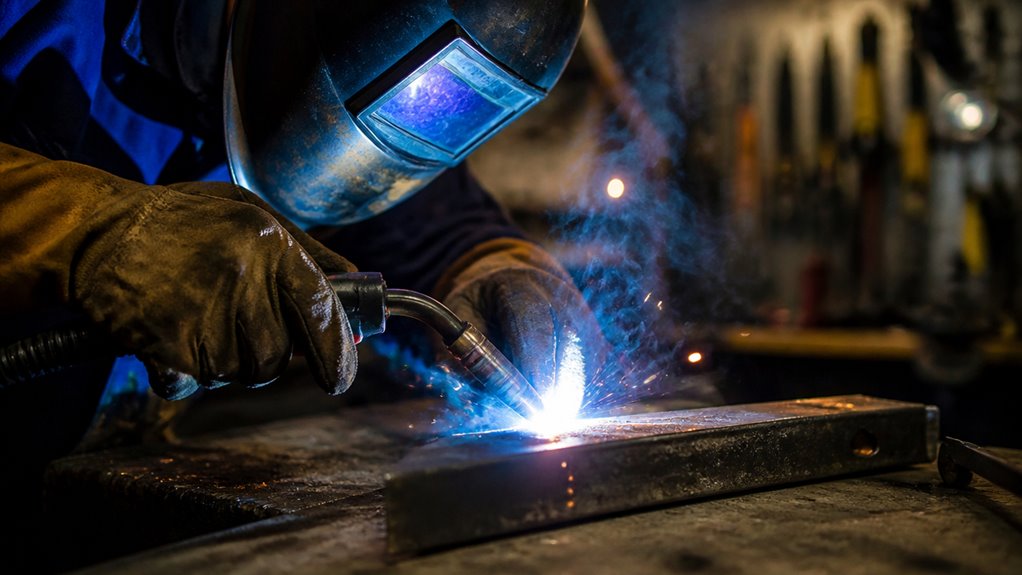
You can learn basic welding skills within a few months through focused, hands-on training in accelerated or fast-track programs.
These courses often run 10 to 18 weeks, emphasizing muscle memory and core techniques like stick and MIG welding.
Certificates take about 6 to 18 months, while degrees require longer.
Specialized methods and certifications extend training timelines.
If you want to understand how different paths and skill levels impact your welding journey, there’s plenty more to uncover.
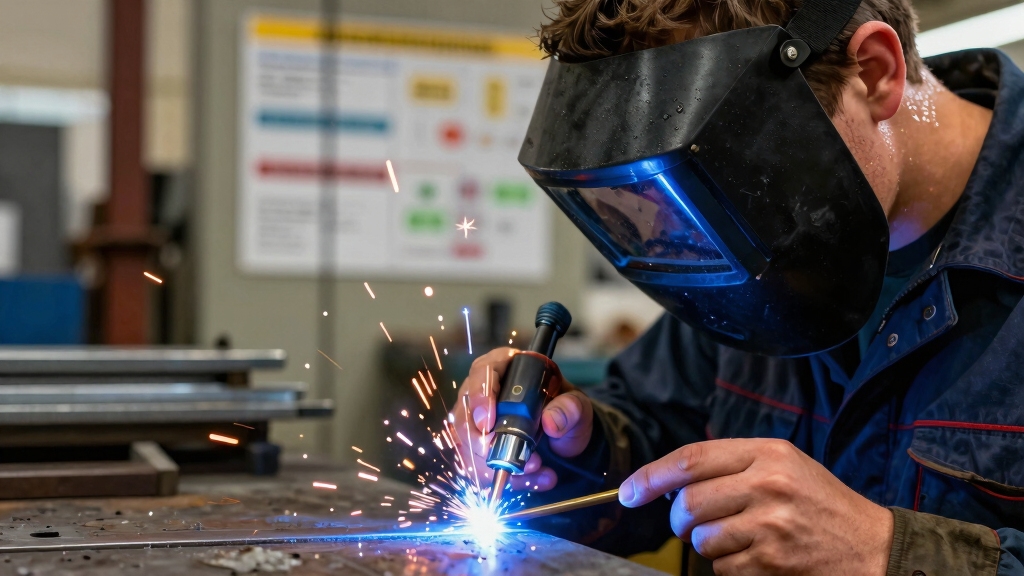
While the time it takes to learn welding varies widely, you can expect to acquire basic welding skills within a few months through focused training programs.
Basic welding skills can be gained in just a few months with dedicated training.
Certificate programs usually last between 6 to 18 months, whereas associate degrees take about 2 years and bachelor’s degrees around 4 years.
If you opt for short, intensive courses, some can be completed in as little as 10 to 18 weeks. Accelerated programs can prepare you for entry-level welding work in under a year.
Fast-track classroom options often include daytime fundamentals courses lasting about two weeks, with subsequent classes extending total training to 6 to 8 months.
The pace depends largely on program type, schedule, and class load, but hands-on training remains a consistent element essential to skill acquisition.
Many aerospace welders begin with certificate programs like Cochise College’s Aerospace Welding Technology Certificate to gain specialized skills in a condensed timeframe.
Your welding training time really hinges on your skill level.
If you’re just starting out, you can pick up basic welding skills in just a few months. That’s pretty exciting, right? But if you’re aiming to master those advanced techniques, well, that takes a bit more time—think extended practice and instruction.
Understanding this difference is key. It helps you set realistic expectations for your learning timeline.
Starting with a beginner-friendly welding method like MIG welding can accelerate your initial progress and build confidence.
Mastering basic welding skills typically takes a few months of focused training and practice. How quickly you progress depends on your prior experience, learning environment, and training program intensity. Here’s what influences your learning timeline:
Because welding involves a range of techniques from basic to highly specialized, advancing beyond entry-level skills requires additional time and focused practice.
When you move into advanced techniques like TIG welding on exotic metals or pipe welding, your training extends beyond the foundational months.
Mastery demands not only classroom theory and hands-on practice but also adherence to stricter codes and specifications.
Depending on your program, expect advanced skill acquisition to take several additional months or even years, especially if you pursue certifications or apprenticeships.
Your skill level directly impacts training duration. While basic welding might take under a year, refining complex skills requires sustained effort.
The more specialized your focus, the more time and practice you’ll invest to achieve proficiency and industry-recognized credentials.
Advanced welding methods such as Gas Tungsten Arc Welding (GTAW) require precise electrode maintenance and technique, which can extend learning time.
While certificate and degree programs both aim to equip you with welding skills, they differ markedly in duration and depth. Certificates focus on core skills and hands-on training, while degrees provide broader technical knowledge and theory.
Here’s a clear comparison:
Choosing between them depends on your career goals and how deep you want your expertise to be. Using a multi process welder during training can provide practical experience across multiple welding techniques.
If you’re looking to speed up your welding education, you might want to check out fast-track classroom programs and intensive welding courses. These are specifically designed to help you learn quicker, often condensing essential skills and hands-on practice into just a few weeks or months.
Choosing an accelerated program can really help you get job-ready faster. Plus, you won’t have to sacrifice any of that important technical knowledge along the way. So, if you’re eager to dive into the welding world, these options could be just what you need!
Many programs also prepare you for certifications like 3G and 4G, which are crucial for demonstrating your welding proficiency and advancing your career.
Choosing accelerated welding programs lets you gain essential skills in a fraction of the usual time. These options focus on intensive, hands-on training, compressing core welding theory and practice into a streamlined schedule.
You can expect programs that prepare you for entry-level welding work in under a year. To help you envision the process, consider these accelerated training characteristics:
Because fast-track classroom programs emphasize intensive, focused instruction, they help you acquire welding fundamentals more quickly than traditional routes.
These programs often condense essential topics, such as welding theory, safety protocols, and hands-on practice, into shorter timeframes, sometimes as brief as 2 to 8 months.
You’ll find daytime courses accelerate skill acquisition by offering longer sessions than evening classes.
Many fast-track options include sequential classes, each lasting 3 to 4 weeks, allowing you to build proficiency systematically.
Some programs partner with colleges to streamline certification preparation, cutting overall training time.
By immersing you in practical welding techniques and fabrication skills rapidly, fast-track programs speed your readiness for entry-level positions.
This is especially true if you’re motivated to dedicate focused hours and absorb core competencies efficiently.
Understanding proper torch technique and heat control early on can significantly enhance your welding skill development.
Fast-track classroom programs set a solid foundation.
Intensive welding courses take accelerated learning even further by focusing on condensed, high-impact instruction designed to maximize skill acquisition in minimal time.
These courses often run between 10 to 18 weeks, enabling you to gain practical skills rapidly.
To help you learn faster, consider programs that offer:
Additionally, mastering positional welding skills is crucial since shipyard welders must weld in flat, vertical, overhead, and horizontal positions.
While accelerated welding classes condense essential skills into a shorter timeframe, they can effectively prepare you for entry-level welding positions.
These fast-track programs focus on core techniques such as stick and MIG welding, safety protocols, and basic blueprint reading. This enables you to develop practical skills within weeks or a few months.
By immersing yourself in intensive hands-on sessions and targeted theory, you gain foundational competency quickly. However, mastery of complex welding processes requires extended practice beyond accelerated courses.
Employers often recognize fast-track graduates as job-ready for basic roles, especially when combined with certifications. To maximize your readiness, choose programs that balance rigorous skill-building with industry standards. This ensures you meet the technical demands of welding jobs without unnecessary delays.
Additionally, following safety precautions such as proper eye protection and surface preparation is critical to ensure strong and durable welds during your training and career.
Mastering welding demands combining hands-on practice with solid theoretical knowledge. You can’t rely on theory alone, nor can you skip understanding the science behind the process.
Hands-on practice develops muscle memory and control over the welding torch. Theory teaches you safety protocols, metallurgy, and blueprint reading. Together, they build a complete skill set.
Hands-on practice builds control, while theory covers safety, metallurgy, and blueprints for a well-rounded welding skill set.
Here’s how each contributes:
Balancing both accelerates your learning curve and guarantees you weld correctly, safely, and to industry standards.
Because welding skills require continuous refinement, apprenticeships and certifications play a crucial role in advancing your expertise beyond basic training.
An apprenticeship combines formal learning with on-the-job experience, allowing you to apply welding techniques under real-world conditions while mastering safety protocols, fabrication drawings, and industry standards.
This hands-on mentorship accelerates skill development and builds your confidence with various welding processes.
Certifications validate your competency by requiring you to pass rigorous tests aligned with recognized codes and standards.
Earning certifications not only proves your technical abilities but also enhances your employability and qualifies you for advanced or specialized welding roles.
Together, apprenticeships and certifications extend your learning timeline but markedly deepen your welding proficiency and prepare you for a more successful, long-term career.
If you want to advance beyond basic welding skills, specialized welding techniques will notably impact your learning time. Each method demands unique knowledge, equipment, and precision, extending your training period. Consider these factors:
Advancing in welding requires mastering unique techniques, equipment, and precision, significantly extending your training time.
You’ll spend more time on theory, safety protocols, and practice tailored to the technique. Expect specialized welding to take anywhere from several additional months to years, depending on your dedication and the technique’s complexity.
You can become job-ready in welding faster than you might think! There are some great accelerated training options that can have you ready for the workforce in less than a year. In fact, some programs are so efficient that they last only about 10 to 18 weeks.
With focused hands-on practice, you can pick up entry-level skills—like basic stick welding—in just a few months. Isn’t that amazing? If you choose a fast-track program that blends theory with practical training, you’ll be on your way to starting your career in no time. Just imagine how quickly you can dive into the world of welding!
While traditional welding programs can span months or years, accelerated training options let you gain essential skills in a fraction of the time.
These fast-track options focus on intensive, hands-on instruction to prepare you for entry-level welding roles quickly.
Consider these accelerated paths:
Accelerated training options provide a solid foundation. Understanding the fastest paths to becoming job-ready requires examining specific entry-level skill timelines.
You can complete short, intensive programs in as little as 10 to 18 weeks, focusing on fundamental welding techniques and safety protocols. Fast-track classroom courses often break down into two-week fundamentals followed by three- to four-week specialized classes. This totals about six to eight months for thorough entry-level readiness.
Many programs emphasize hands-on training, welding theory, and fabrication skills early to build competency quickly. If you select an accelerated college-partnership program or certificate track, you could enter the workforce in under a year.
However, mastering advanced techniques or obtaining industry certifications will extend your timeline beyond basic job-ready skills.
Beyond basic welding training, advancing your skills involves pursuing specialized techniques, gaining certifications, and accumulating practical experience through apprenticeships or on-the-job training.
Advancing welding skills requires specialized techniques, certifications, and hands-on experience through apprenticeships or on-the-job training.
To progress effectively, focus on:
Each step deepens your technical competence and enhances employability. These efforts typically extend your learning timeline beyond initial training but are essential for professional growth and specialization in welding trades.
You’ll need a welding machine suited for beginners, like a MIG welder, which is easier to control.
Grab essential safety gear: a welding helmet with an auto-darkening lens, flame-resistant gloves, and a protective jacket. Also, use welding boots and safety glasses.
Have clamps, a wire brush, and a chipping hammer ready for prep and cleanup. Starting with basic filler wire and metal sheets helps you practice welding techniques effectively.
Welding training typically costs between $2,000 and $15,000, depending on the program type and duration.
Short certificate courses tend to be more affordable, while associate or bachelor’s degrees cost more due to extended instruction and resources.
You’ll pay more for specialized classes or certifications.
Keep in mind, accelerated programs might’ve a higher upfront cost but save time.
Additionally, budgeting for safety gear and materials is essential.
Yes, welding training comes with health risks you need to manage carefully. You’ll encounter intense UV radiation, harmful fumes, and sparks that can cause burns or eye damage.
Proper ventilation, protective gear like helmets with filtered lenses, gloves, and flame-resistant clothing are essential to minimize exposure. Welding schools emphasize safety procedures to protect you, but staying vigilant and following protocols during training is vital to avoid long-term respiratory or skin problems.
You can’t put the cart before the horse when it comes to welding. While you can learn theory and safety online, welding skills demand hands-on practice.
Online courses cover basics like welding codes and equipment, but mastering techniques requires in-person training with real equipment.
To truly develop your welding skills, you’ll need access to workshops or schools offering practical, supervised sessions that build your muscle memory and technical precision.
After welding training, you can pursue jobs like welder, fabricator, or welding inspector.
You’ll find opportunities in construction, manufacturing, shipbuilding, and pipeline industries.
Specialized roles include underwater welding, robotic welding technician, and welding educator.
Certifications boost your chances for advanced positions and higher pay.
With experience, you might advance to welding supervisor or quality control roles.
Your skillset opens doors across many sectors requiring precise, hands-on metal joining expertise.
Learning to weld is like forging metal itself; each strike shapes your skill and sharpens your edge. Depending on your starting point and chosen path, mastering welding can take weeks to months.
Certifications and apprenticeships act as the heat that tempers your expertise. By selecting focused programs and embracing specialized techniques, you’ll accelerate your journey from novice to job-ready professional.
You’ll be ready to craft with precision and confidence in this demanding trade.