Phone:
(701)814-6992
Physical address:
6296 Donnelly Plaza
Ratkeville, Bahamas.

Phone:
(701)814-6992
Physical address:
6296 Donnelly Plaza
Ratkeville, Bahamas.

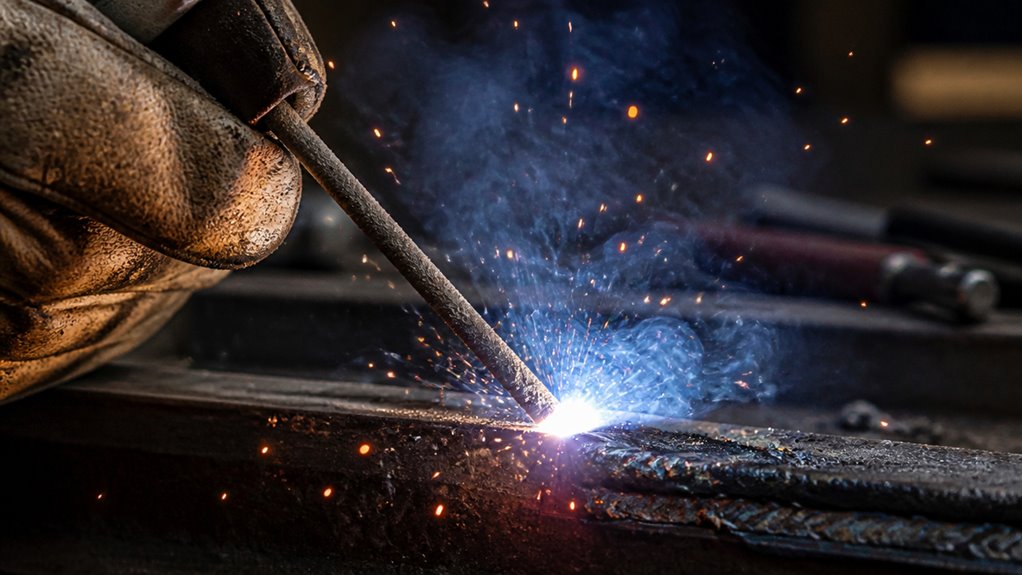
You should maintain an arc length equal to your electrode’s core diameter, typically around 1/8 inch for a 1/8-inch rod.
This precise gap minimizes spatter, undercutting, and porosity while supporting flux slag protection.
Adjust the gap as the electrode burns down to keep consistent performance.
Factors like electrode type, current, and welding position may require slight tweaking.
Understanding these details will help you master consistent, high-quality welds.
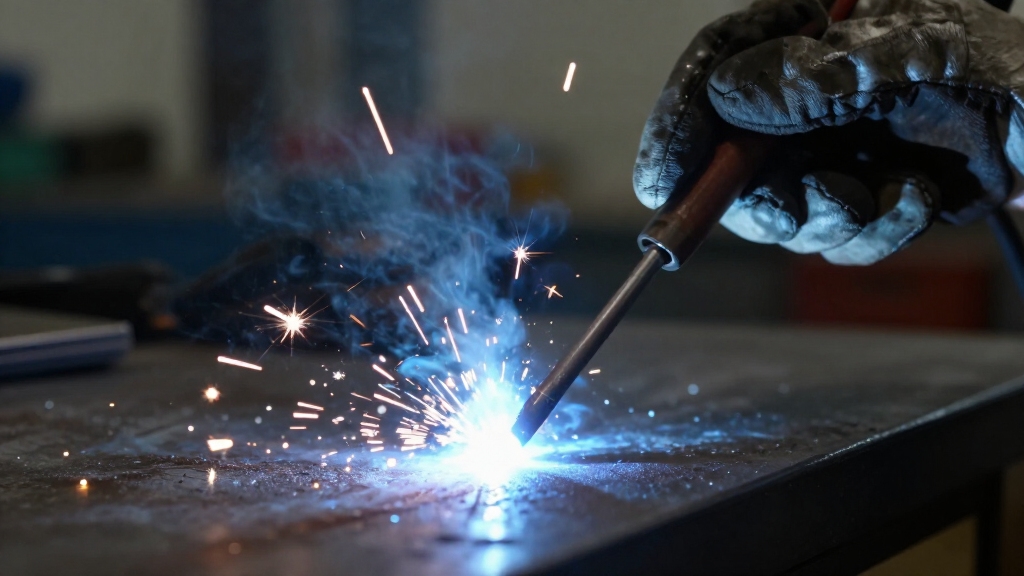
When you strike the arc in stick welding, the arc length is the distance between the electrode’s core tip and the workpiece surface. You should measure this gap carefully because it directly influences arc stability and weld quality.
Typically, the ideal arc length equals the electrode’s core diameter. For example, a 1/8 inch rod requires about a 1/8 inch arc length. This core arc-length rule helps maintain consistent electrical resistance and proper melting rates.
While practical ranges can vary from 1/16 inch to 3/16 inch depending on electrode size and type, exceeding the core diameter leads to instability and poor welds. As you weld, maintain this distance precisely by adjusting the rod position to guarantee consistent, controlled arc behavior throughout the process. Proper arc length control also minimizes defects like undercut and excessive spatter, ensuring a quality weld.
Although it may seem subtle, maintaining the proper arc length critically influences your weld’s stability, penetration, and overall quality.
If your arc length exceeds the electrode’s core diameter, you risk increased spatter, undercutting, and porosity, which degrade weld integrity.
Conversely, too short an arc length can cause the electrode to stick, interrupting your work and reducing efficiency.
Proper arc length promotes a stable, controlled arc, ensuring consistent heat input and optimal metal melding.
This balance helps you produce cleaner weld beads with strong penetration, essential for structural soundness.
Maintaining a short arc length also improves puddle control and minimizes slag inclusions during the welding process.
To measure the correct arc length, start by taking a good look at the gap between the electrode tip and the workpiece. You want that distance to be about the same as the diameter of the electrode core.
Now, pay attention to the sounds around you. A short, crisp crackling noise is a good sign—it means the arc conditions are stable.
Also, don’t forget to use your sense of touch. You should feel smooth movement of the rod, without it sticking or dragging too much. These little sensory cues can give you real-time feedback, helping you maintain the perfect arc length while you’re welding.
Maintaining a consistent arc length roughly equal to the rod diameter prevents instability and sticking during welding.
A visual gap inspection lets you quickly verify that your arc length matches the electrode core diameter, which is critical for peak weld quality.
To perform this, you hold the electrode at a distance where the gap between its tip and the workpiece equals the rod’s core diameter, commonly 1/8 inch for a 1/8-inch electrode.
Use your eye to measure this gap precisely, adjusting the distance as the electrode burns down.
Maintaining this proper gap prevents excessive spatter, undercutting, and porosity.
Visual cues include a consistent, stable arc with minimal flickering.
Avoid longer gaps that exceed the core diameter, as they degrade weld integrity.
Consistently applying visual gap inspection guarantees your arc length remains optimal throughout the weld, directly enhancing bead quality and penetration.
For best results, remember that the ideal arc length is roughly the diameter of the electrode, typically about 1/16–3/32 inch, which helps maintain arc control and proper heat input.
Frequently, sound and tactile feedback provide immediate, reliable indicators for maintaining the correct arc length during stick welding. You’ll rely on these sensory cues to ensure the arc length remains about equal to the electrode’s core diameter, optimizing weld quality.
To measure the correct arc length by sound and feel:
Mastering these feedbacks helps you avoid excessive spatter, undercutting, and electrode sticking. Maintaining the arc length equal to electrode diameter is critical to prevent sticking and ensure a stable welding arc.
To achieve prime weld quality, it’s important to match your arc length closely to the diameter of the electrode’s core. Generally, you’ll want to keep the arc length roughly equal to the size of the rod. For instance, if you’re using a 1/8-inch electrode, aim for about a 1/8-inch arc gap.
Now, while that’s a solid starting point, don’t forget to adjust it based on the type of electrode you’re using, the position you’re welding in, and your current settings. These factors can really affect arc stability and help minimize any defects in your welds. So, feel free to tweak it as needed to get the best results! Maintaining the correct short arc length is crucial for dig effectiveness and stabilizing the arc during welding.
Match the arc length closely to the electrode diameter to guarantee peak welding performance. The general rule is simple: maintain an arc length approximately equal to the electrode’s core diameter.
This keeps the arc stable, reduces spatter, and secures proper penetration. Here’s how to apply this rule effectively:
Maintaining the correct arc length also optimizes arc stability, which directly influences weld quality and penetration.
Maintain an arc length that closely corresponds to the electrode’s core diameter to guarantee peak weld quality and arc stability. For example, if you’re using a 1/8-inch electrode, keep your arc length near 1/8 inch. This alignment minimizes spatter, prevents porosity, and assures consistent penetration.
Avoid exceeding the core diameter, as longer arcs destabilize the arc and cause defects like undercutting. Conversely, too short an arc risks sticking. Match arc length precisely to the rod size.
3/32-inch rods require about 3/32-inch arcs, and 5/32-inch rods need roughly 5/32-inch arcs. Maintaining this proportion improves control and weld appearance. Use the electrode datasheet as a reference, but always monitor arc sound and bead formation to confirm proper length during welding.
Proper arc length also supports the flux-generated slag protection, which helps shield the weld bead from oxidation and defects.
While keeping arc length aligned with the electrode diameter sets a solid baseline, variations in electrode type, welding position, and current demand require subtle adjustments.
You must fine-tune the arc length to optimize weld quality and stability. Consider these key factors:
Adapt your technique by maintaining the arc length close to the electrode diameter while accounting for these variables. This approach will help you achieve consistent, defect-free welds. Additionally, using the appropriate flux-coated electrode ensures a stable arc and protective shielding for higher weld quality in varying conditions.
Determine the ideal arc length by aligning it closely with the electrode’s core diameter to guarantee peak welding performance.
For instance, a 1/8-inch electrode should have an arc length near 1/8 inch, while 3/32-inch rods require about 3/32 inch of arc length.
This core arc-length rule secures optimal arc stability and penetration.
Generally, a range between 1/16 inch and 1/8 inch suits most common electrode sizes, though some applications accept up to 3/16 inch without sacrificing weld quality.
You’ll want to maintain this distance consistently as the electrode burns down to avoid defects like excessive spatter or undercutting.
Following this precise matching of arc length to electrode diameter improves control and weld cleanliness, establishing a solid foundation for sound stick welding results.
Maintaining the proper arc length also helps ensure compatibility with the electrode’s flux coating type and current requirements for optimal welding performance.
Different electrode types demand adjustments in arc length to optimize weld quality and stability. You must recognize that the electrode’s core composition and coating influence the ideal gap. Here’s how different electrodes affect your arc length:
Electrode type and coating dictate arc length adjustments for optimal weld quality and stability.
Adjusting arc length per electrode type guarantees optimal penetration, minimal defects, and consistent weld performance.
Adjusting current and voltage directly influences the ideal arc length in stick welding by altering arc stability and heat input.
When you increase current, the arc becomes hotter and more forceful, allowing a slightly longer arc without sacrificing stability.
Conversely, lower current requires a shorter arc to maintain a consistent strike and prevent electrode sticking.
Voltage plays a complementary role: higher voltage supports a longer arc by sustaining the arc column, while lower voltage demands a shorter gap to avoid frequent arc extinguishing.
You need to balance these parameters carefully.
Excessive arc length at high current can cause spatter and undercutting, while too short an arc at low voltage risks sticking and poor penetration.
Mastering this balance guarantees optimal weld quality and control.
When you’re welding in various positions, it’s important to tweak your arc length a bit. This helps you keep things stable and avoid issues like undercutting or porosity.
Aim to keep the arc length pretty close to the diameter of the electrode core. However, don’t hesitate to adjust it—sometimes you’ll need to shorten or lengthen it, especially depending on gravity and how accessible the area is.
It’s all about consistency. By regularly monitoring and controlling that distance, you’ll set yourself up for success. This attention to detail is crucial for producing high-quality welds, no matter what position you’re working in.
Although the core arc-length rule provides a solid baseline, you’ll need to fine-tune your arc length depending on the welding position to maintain ideal arc stability and weld quality. Positions like vertical and overhead demand subtle adjustments to control molten metal and minimize defects.
Adapting arc length by position enhances weld consistency and structural integrity.
Consistently maintaining the correct arc length is essential for producing high-quality stick welds across all positions. You must adjust the arc length slightly to accommodate positional changes, ensuring stability and penetration without increasing spatter or porosity.
Keep the gap about equal to the electrode core diameter. Monitor the sound and bead appearance closely.
| Welding Position | Arc Length Adjustment |
|---|---|
| Flat | Core diameter (standard) |
| Horizontal | Slightly shorter for control |
| Vertical-up | Maintain or slightly shorten |
| Vertical-down | Slightly longer for coverage |
| Overhead | Slightly shorter for stability |
Adapting arc length per position prevents defects and maintains weld integrity.
You’ll often notice distinct signs indicating whether your arc length is too long or too short during stick welding. Recognizing these cues helps you maintain peak weld quality and control.
If your arc is too long, expect excessive spatter, a noisy, hissing sound, and bead undercutting or porosity due to unstable arc conditions.
A short arc length produces a crisp, crackling sound and stable arc but may cause the electrode to stick if too short.
Visually, a long arc creates a wider, erratic bead; a short arc results in a narrow, tightly controlled bead.
Monitor the gap between the electrode tip and the workpiece. It should roughly equal the electrode’s core diameter to avoid these issues.
Adjust promptly to these signs for consistent, quality welds.
Recognizing the signs of incorrect arc length is only part of maintaining weld quality. You must also keep that arc length steady throughout the process.
To do this, consistently hold the electrode tip close enough so the gap matches the electrode’s core diameter. As the rod burns down, adjust your hand position to maintain this distance precisely.
Keep the electrode gap equal to its core diameter, adjusting as the rod burns down for consistency.
Use a short, crisp crackling sound as an auditory cue for correct arc length. Avoid excessive gap variation, which causes spatter and undercutting.
Employ a slight scratch or lift motion to re-establish the arc without sticking. Monitor bead appearance continuously; consistent width and minimal spatter indicate proper arc length control.
Mastering these techniques secures stable arc performance, cleaner welds, and peak penetration.
Yes, ambient temperature can impact your ideal arc length.
In colder conditions, the metal and electrode cool faster, which might require you to slightly shorten the arc to maintain stable arc characteristics and proper penetration.
Conversely, warmer environments may allow a marginally longer arc without sacrificing weld quality.
You’ll need to adjust carefully, monitoring bead appearance and arc sound, ensuring the arc length stays close to the electrode core diameter for peak performance.
Electrode coatings can vary thickness by up to 30%, directly influencing your arc length choice.
Thicker coatings require you to maintain a slightly longer arc to allow proper melting and slag formation. If you keep the arc too short with a thick coating, you risk sticking and poor slag coverage.
Conversely, thinner coatings work best with an arc length closer to the electrode core diameter, ensuring ideal arc stability and weld quality.
Yes, you need to adjust arc length when welding different metals. Variations in metal conductivity, melting point, and joint design affect arc behavior and penetration.
For example, aluminum often requires a slightly shorter arc for better control, while steel may tolerate a standard arc length matching electrode diameter.
Always consider metal type, electrode specs, and welding position to optimize arc stability, minimize defects, and ensure proper fusion and bead quality.
You can’t cut corners when it comes to arc length safety. Keeping your arc length too long increases spatter and risks burns or eye damage from flying particles.
Too short, and you might stick the electrode, causing sudden sparks. Always match the arc length to the electrode core diameter to maintain a stable, controlled arc.
Use proper PPE and ensure good ventilation to avoid inhaling harmful fumes generated by improper arc settings.
Yes, digital welders can automatically maintain proper arc length by adjusting voltage and current in real time.
They use sensors and microprocessors to monitor the arc gap, compensating for electrode burn-off and movement. This ensures consistent arc stability, reducing spatter, undercutting, and porosity, which enhances weld quality.
However, you still need to set initial parameters and monitor conditions. Electrode type and welding position may require manual adjustments despite automation.
Mastering the proper arc length in stick welding means maintaining meticulous measurement, matching materials, and making minute adjustments.
When you consistently control your arc length, you guarantee strong, stable, and sound welds.
Avoid arc anomalies by aligning length with electrode diameter and welding position while factoring in current and voltage variations.
Stay sharp, stay steady, and secure superior structural strength by prioritizing precise, purposeful arc length practices every time you weld.