Phone:
(701)814-6992
Physical address:
6296 Donnelly Plaza
Ratkeville, Bahamas.

Phone:
(701)814-6992
Physical address:
6296 Donnelly Plaza
Ratkeville, Bahamas.

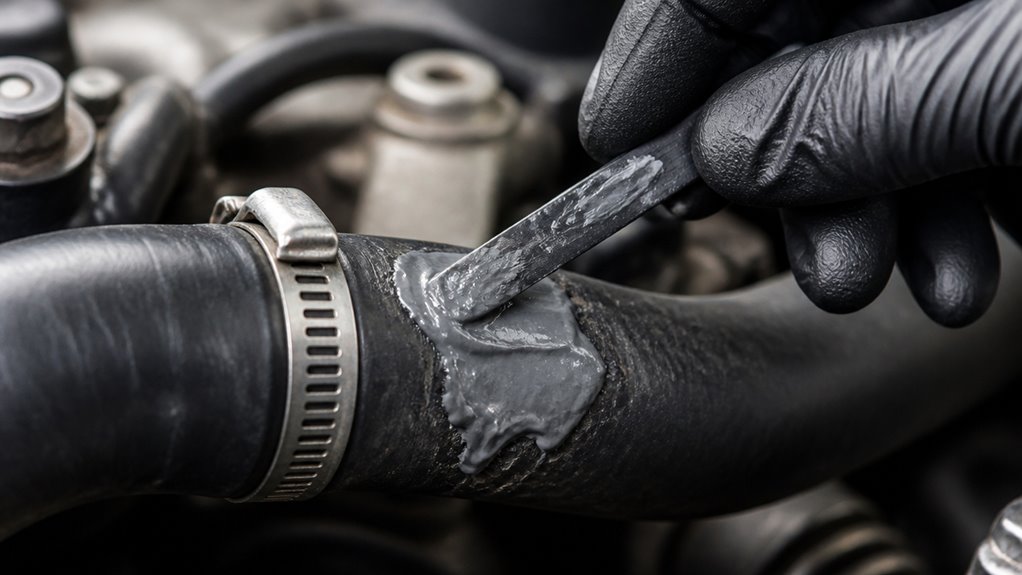
You won’t get a durable bond using JB Weld on rubber because its rigid epoxy can’t flex with rubber’s natural stretching and compression. While JB Weld sets firm and chemically resistant, it becomes brittle and cracks under dynamic stress.
Even thorough surface prep can’t prevent eventual delamination. Although SuperWeld bonds faster, it shares the same inflexibility issue. For flexible rubber repairs, specialized adhesives or silicones perform far better.
Explore how to optimize adhesive choice and preparation for lasting results.
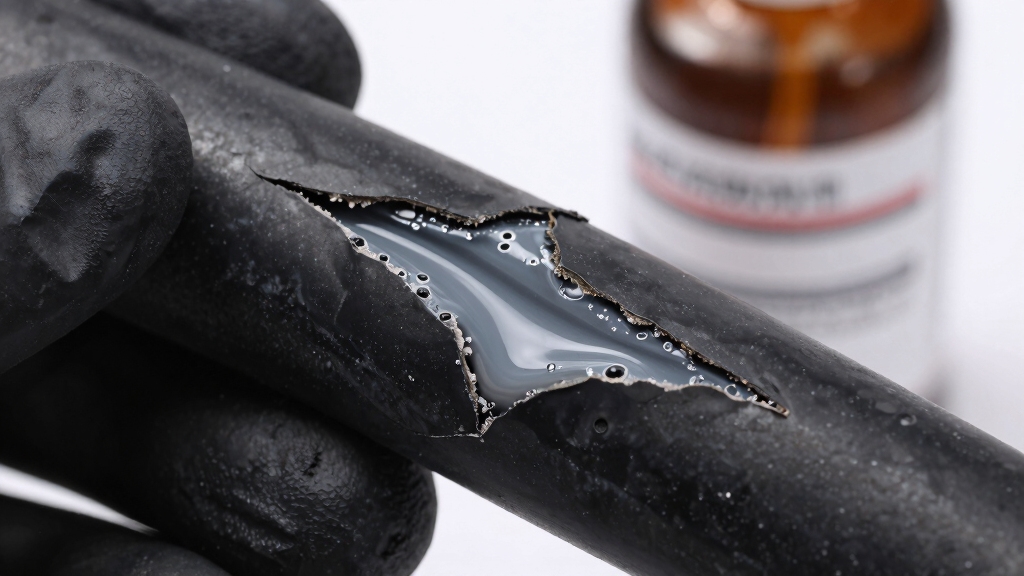
Although JB Weld is renowned for its strong bonding on rigid surfaces, it struggles to adhere effectively to rubber due to the material’s inherent flexibility.
JB Weld excels on rigid surfaces but struggles to bond effectively with flexible rubber materials.
Rubber’s capacity for continuous stretching, compression, and flexing conflicts with JB Weld’s rigid epoxy cure. This causes the adhesive bond to fail prematurely under mechanical stress.
You’ll notice that even if the bond appears solid initially, the epoxy can’t accommodate the dynamic deformation. This leads to cracks and delamination.
Additionally, rubber surfaces have low surface energy and often contain oils or plasticizers, which further hinder epoxy adhesion.
JB Weld’s manufacturer explicitly notes that their epoxy is incompatible with flexible rubber, gaskets, and similar materials.
For reliable performance, you need adhesives designed for flexibility rather than epoxy’s rigid, brittle bond.
Proper surface preparation and curing times, critical for JB Weld’s effectiveness on rigid surfaces, do not overcome the fundamental incompatibility with rubber’s flexibility and surface characteristics, as detailed in the preparing surfaces for JB Weld process.
When it comes to repairing rubber, you might notice that JB Weld creates a pretty rigid bond. While that’s great for some applications, it doesn’t really handle movement well.
Over time, that rigidity can lead to failure, especially if the rubber is constantly flexing or bending.
On the other hand, SuperWeld gives you a faster initial bond, which is definitely a plus. It also adheres better to rubber, making it a decent choice initially.
However, when you think about long-term durability, it still doesn’t quite hold up under repeated movement.
So, when you compare their adhesive strength and flexibility, it becomes clear that neither JB Weld nor SuperWeld is really the best option for dynamic rubber repairs.
If you’re looking for something that can withstand movement, you might want to explore other alternatives.
Additionally, specialty products that prioritize flexibility and gap filling are better suited for applications involving frequent movement.
Evaluate adhesive bond strength carefully when choosing between JB Weld and SuperWeld for rubber repairs.
JB Weld’s epoxy forms a rigid bond that adheres poorly to flexible rubber, failing under stretching or compression due to its inability to accommodate material movement. The manufacturer explicitly states it’s unsuitable for flexible rubber, gaskets, or seals.
In contrast, SuperWeld, a cyanoacrylate adhesive, creates an instant, strong initial bond on rubber surfaces, with compatibility explicitly listed. However, its rigid bond also lacks long-term durability under dynamic stress or vibration.
Both require meticulous surface preparation—cleaning, sanding, and drying—to optimize adhesion.
Ultimately, while SuperWeld offers better immediate bond strength on rubber than JB Weld, neither provides the necessary flexibility for durable rubber repairs, limiting their effectiveness in dynamic applications. Additionally, JB Weld’s mechanical strength prioritizes rigidity and durability rather than flexibility, making it unsuitable for applications involving flexible materials like rubber.
Because rubber components often undergo continuous flexing and stretching, the flexibility and durability of adhesives are critical factors for successful repair.
JB Weld’s rigid epoxy cures hard but fails under dynamic rubber stress, causing bond fractures over time.
SuperWeld’s cyanoacrylate bonds quickly and firmly but also lacks long-term flexibility, risking failure under vibration or repeated bending.
Neither provides ideal durability for flexible rubber parts.
It is important to note that JB Weld requires precise 1:1 resin-to-hardener ratio during mixing to achieve its maximum bond strength.
| Adhesive | Flexibility | Durability on Rubber | Cure Time |
|---|---|---|---|
| JB Weld | Low (rigid bond) | Poor under flexing | 15–24 hours |
| SuperWeld | Moderate (rigid bond) | Limited long-term | Seconds (initial) |
| Silicone RTV | High (elastic bond) | Excellent | 24 hours |
For reliable rubber repair, prioritize adhesives with high elasticity and durability.
Although rubber presents unique adhesion challenges, meticulous surface preparation markedly enhances bonding effectiveness.
You should start by thoroughly cleaning the rubber surface using acetone, lacquer thinner, or mild detergent to eliminate oils and contaminants.
Avoid alcohol or petroleum-based cleaners, as they leave residues that inhibit adhesion.
Next, lightly sand the surface with 200–300 grit sandpaper or roughen it using a wire brush or file to increase surface texture and mechanical grip.
Make certain the surface is completely dry before applying any adhesive, as moisture weakens the bond.
Proper surface roughening and cleaning optimize adhesive interaction, especially for rigid epoxy products like JB Weld, which require a mechanically receptive substrate for effective bonding despite rubber’s low surface energy.
This preparation is critical to achieve any meaningful adhesion on flexible rubber materials.
For the best results, maintain the precise 1:1 resin-to-hardener ratio during mixing to ensure proper curing and bond strength.
Preparing rubber surfaces properly can improve adhesion, but standard JB Weld epoxy still struggles to maintain a durable bond on flexible rubber materials.
You’ll want to weigh alternatives designed for rubber’s dynamic properties.
Silicone RTV sealants form flexible, resilient bonds ideal for hoses and gaskets, curing fully in about 24 hours.
Cyanoacrylate adhesives like SuperWeld offer rapid initial bonding but lack the long-term flexibility needed for parts under constant stress.
Specialized rubber adhesives incorporate primers and polymers engineered to accommodate rubber’s stretching and compression, ensuring sustained adhesion.
JB Weld’s own Black Silicone sealant is formulated specifically to seal uneven rubber surfaces, providing improved elasticity over standard epoxy.
Choosing these alternatives gives you superior performance on flexible rubber, avoiding the rigidity and bond failure typical with standard JB Weld epoxy.
Notably, standard JB Weld epoxy becomes non-conductive and rigid after curing, limiting flexibility needed for thermal expansion and vibration in flexible materials like rubber.
Sure! Here’s a more conversational version of the text:
So, when it comes to JB Weld, you’ll notice that its epoxy usually takes about 4 to 6 hours to set. Pretty straightforward, right? But if you’re looking for it to reach full cure strength, you’re looking at around 15 to 24 hours, especially on rigid surfaces.
Now, here’s where it gets a bit tricky. When you’re applying JB Weld to rubber, the bond tends to be less durable. That’s mainly because rubber is flexible, while the epoxy cures to a more rigid state. So, while you might’ve the cure times down, just keep in mind that the long-term adhesion on dynamic rubber components isn’t the best.
It’s good to be aware of this before diving into your project! JB Weld is not ideal for bonding plastic or rubber, so specialized adhesives are usually recommended for flexible materials.
When applying JB Weld epoxy to rubber, you should expect an initial set time of about 4 to 6 hours, provided the surface is thoroughly prepared.
Full curing strength typically occurs between 15 to 24 hours, though waiting 48 hours is recommended before exposing the bond to stress.
Proper surface preparation, including cleaning, sanding, and drying, is critical for adhesion despite JB Weld’s inherent rigidity.
The epoxy’s inflexibility limits its effectiveness on flexible rubber, but cure times remain consistent.
For best results, ensure the surface is roughened mechanically to create micro-abrasions before applying the epoxy.
| Cure Stage | Duration |
|---|---|
| Initial Set | 4–6 hours |
| Functional Cure | 15–24 hours |
| Recommended Wait | 48 hours |
| Surface Prep Time | Variable (10–30 min) |
| Stress Exposure | Post 48 hours |
This timeline guarantees ideal epoxy curing on rubber surfaces.
Although JB Weld epoxy begins curing within hours, its bond durability on flexible rubber remains limited due to the material’s dynamic nature.
You’ll see an initial set within 4–6 hours and full cure after 15–24 hours, though a 48-hour wait is advisable before applying stress.
However, the rigid epoxy can’t accommodate rubber’s stretching, compression, or vibration, causing premature bond failure.
Even with proper surface preparation, including cleaning and abrasion, the epoxy’s inflexibility leads to cracks and delamination under normal movement.
Consequently, while JB Weld cures in a day, its long-term adhesion on flexible rubber is poor.
For durable repairs, you should consider silicone-based sealants or specialized rubber adhesives designed to maintain flexibility and withstand mechanical stress over time.
J-B Weld’s effectiveness is highly dependent on proper surface preparation and curing conditions to improve resistance to failure under stress.
Choosing the right adhesive for flexible rubber parts hinges on understanding the material’s dynamic properties and the adhesive’s curing characteristics.
Since rubber stretches and compresses, you need a glue that maintains flexibility after curing.
Standard JB Weld epoxy cures rigidly, causing bond failure under movement, so it’s unsuitable for flexible rubber.
Instead, consider silicone RTV sealants, which cure into elastic films that accommodate rubber’s deformation.
Cyanoacrylate adhesives bond quickly and firmly but lack long-term flexibility, risking bond failure with repeated stress.
Surface preparation is critical: clean thoroughly, roughen lightly, and confirm dryness to maximize adhesion.
Specialized rubber adhesives or silicone-based products outperform rigid epoxies by maintaining bond integrity during flexing, vibrations, and temperature changes.
This makes them the best choice for repairing dynamic rubber parts.
However, unlike rubber adhesives, J-B Weld’s chemical makeup and curing process are optimized for rigidity and chemical resistance rather than flexibility.
You can use JB Weld on rubber for non-flexing repairs, but with caution.
Its rigid curing process adheres poorly to flexible rubber, so it works best on static, non-moving parts.
Make certain thorough surface cleaning and roughening for peak adhesion.
However, avoid applying it on rubber subject to stretching or compression, as the bond will likely fail over time.
For dynamic rubber repairs, consider flexible silicone-based adhesives instead.
Yes, temperature markedly affects JB Weld’s bonding strength on rubber. Higher temperatures can accelerate curing but also increase bond brittleness, causing premature failure on flexible rubber.
Conversely, low temperatures slow curing and reduce adhesive strength. Since rubber flexes with temperature changes, thermal cycling stresses JB Weld’s rigid epoxy bond, leading to cracking and delamination.
You’ll need temperature-stable, flexible adhesives for durable rubber repairs instead of JB Weld epoxy.
No, JB Weld isn’t reliably waterproof when applied to rubber surfaces.
Although the epoxy cures into a hard, water-resistant bond on rigid materials, its adhesion to flexible rubber is poor and prone to cracking under movement.
This leads to water infiltration over time.
For waterproof and flexible rubber repairs, you should use silicone-based sealants or specialized rubber adhesives designed to maintain watertight integrity under dynamic conditions.
You might expect a smooth finish, yet painting over cured JB Weld on rubber surfaces isn’t straightforward.
JB Weld epoxy cures rigidly and doesn’t bond well to flexible rubber, so paint adhesion often fails or flakes off.
If you attempt to paint, make certain the surface is fully cured, lightly sanded for mechanical grip, and use a primer compatible with both epoxy and rubber.
However, expect limited durability due to differential flexibility between materials.
You may experience mild health risks using JB Weld indoors on rubber due to volatile organic compounds (VOCs) released during curing.
Make certain adequate ventilation to minimize inhalation of fumes, which can irritate your respiratory system, eyes, and skin.
Wearing gloves and a respirator reduces exposure. Avoid prolonged or repeated contact, as epoxy resins can cause allergic reactions.
Following the manufacturer’s safety guidelines and working in a well-ventilated area protects your health effectively.
While JB Weld offers strong bonds on many materials, it struggles with rubber due to its flexibility and low surface energy.
Studies show that adhesives specifically designed for rubber can achieve bond strengths up to 50% higher than JB Weld.
Preparing rubber surfaces properly improves adhesion but doesn’t fully compensate.
For flexible rubber parts, choosing specialized adhesives like SuperWeld or silicone-based glues guarantees a more reliable, durable repair.
These options meet the technical demands of elasticity and movement.