Phone:
(701)814-6992
Physical address:
6296 Donnelly Plaza
Ratkeville, Bahamas.

Phone:
(701)814-6992
Physical address:
6296 Donnelly Plaza
Ratkeville, Bahamas.

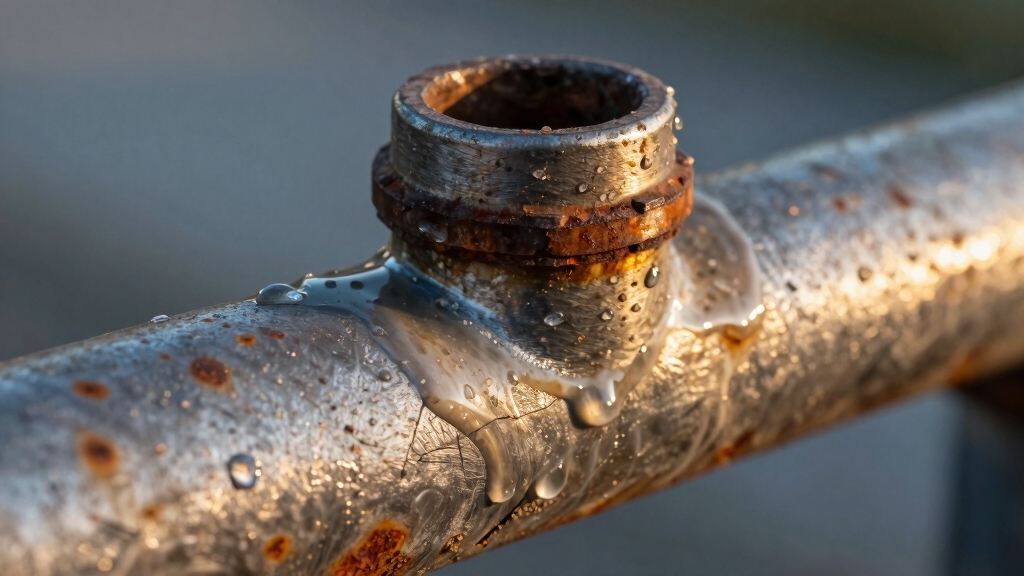
You can trust J-B Weld products to create strong, waterproof bonds that resist water ingress, pressure, and chemical exposure when applied correctly.
Variants like WaterWeld Epoxy Putty and WaterWeld Syringe cure underwater, forming durable, impermeable seals with tensile strengths up to 6,000 PSI.
Most products require dry surfaces, but WaterWeld options work wet. Their chemical resistance and curing process guarantee long-lasting protection.
Explore how different formulas and application tips can optimize your waterproof repairs.
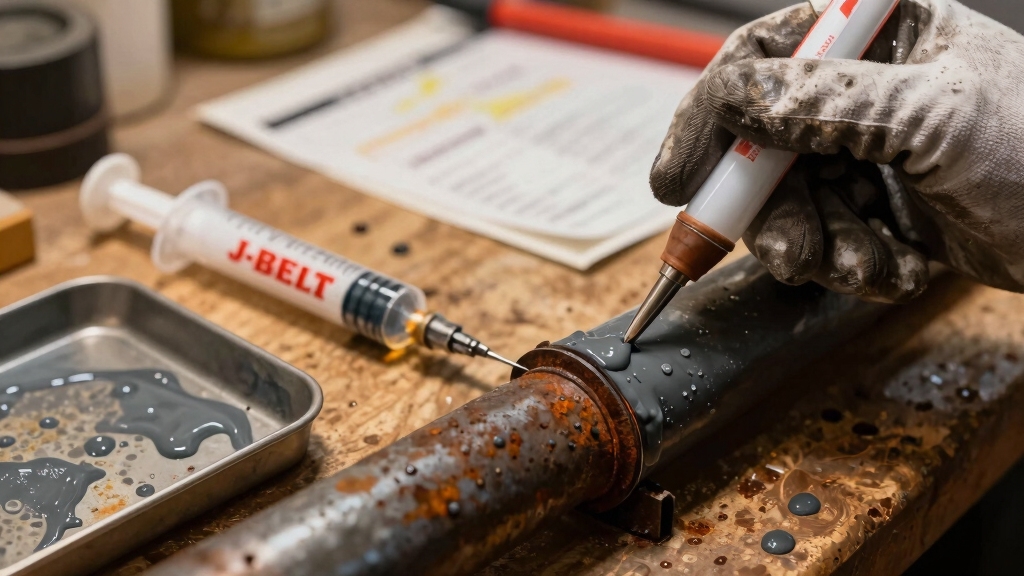
When you need reliable waterproof repairs, certain J-B Weld variants consistently outperform others due to their tailored formulations and curing properties.
Original J-B Weld offers 5,020 PSI strength and withstands temperatures up to 550°F. This makes it ideal for plumbing and automotive tasks requiring chemical resistance and an airtight seal.
Original J-B Weld delivers 5,020 PSI strength and resists heat up to 550°F for tough plumbing and automotive repairs.
WaterWeld Syringe sets rapidly in 5 minutes with 2,350 PSI strength, retaining durability above or below water.
WaterWeld Epoxy Putty delivers exceptional tensile strength (6,000 PSI) and can be applied underwater, making it suitable for potable water systems.
WaterWeld Putty 7-inch balances moderate strength (4,370 PSI) with fast cure times and underwater application for leak sealing.
J-B Kwik variant provides faster curing with medium-temperature resistance and robust adhesion.
Each variant addresses specific repair conditions, optimizing waterproof performance based on strength, curing time, and environmental resistance.
For best results, proper surface preparation before application ensures a durable, long-lasting waterproof bond.
Understanding what “waterproof” entails for J-B Weld products requires examining their chemical composition, curing process, and performance under exposure to water and moisture.
J-B Weld epoxies form a dense, cross-linked polymer matrix reinforced with steel or other fillers, creating impermeable barriers against water ingress.
Their curing transforms liquid resin into a solid thermoset, ensuring dimensional stability and chemical resistance.
Waterproof means these adhesives resist degradation, swelling, or loss of adhesion when submerged or exposed to moisture over time.
You can expect J-B Weld to maintain structural integrity and seal leaks effectively due to their high tensile and compressive strengths.
However, waterproof doesn’t imply indefinite exposure without limitations; factors like temperature extremes and mechanical stress influence durability.
Consequently, “waterproof” denotes reliable water resistance within specified environmental and mechanical parameters.
Proper surface preparation and curing conditions significantly improve resistance to failure under pressure, enhancing the bond strength in wet environments.
J-B Weld products have been engineered to maintain their waterproof integrity even in submerged conditions. This makes them suitable for underwater repairs.
You can apply specific J-B Weld variants directly underwater, like WaterWeld Epoxy Putty and WaterWeld Putty 7-inch. These cure without dry surface requirements.
Their chemical resistance and high tensile strength guarantee reliable seals in aquatic environments.
| Product | Set Time | Strength (PSI) | Underwater Use | Applications |
|---|---|---|---|---|
| WaterWeld Epoxy Putty | 15-25 minutes | 6,000 | Yes | Plumbing, pools, boats |
| WaterWeld Syringe | 5 minutes | 2,350 | Yes | Tile, fiberglass repairs |
| WaterWeld Putty 7-inch | 15-25 minutes | 4,370 | Yes | Leak sealing, fuel tanks |
| Original J-B Weld | 4-6 hours | 5,020 | Limited | Household, automotive repairs |
| J-B Kwik | ~5 minutes | Medium | Limited | Metal, PVC, wood bonding |
Although waterproof bonds must endure harsh conditions, J-B Weld formulations consistently deliver impressive strength and durability. When you apply J-B Weld, you’re relying on epoxy systems that form permanent, chemical-resistant seals with tensile strengths ranging from 2,350 to 6,000 PSI, depending on the product.
These bonds withstand extreme temperatures and resist shock and vibration, ensuring reliability in demanding environments.
Key performance highlights include:
Withstanding water pressure up to 900 PSI, critical for leak sealing under pressure. Curing to an airtight, waterproof seal within hours, ensuring quick restoration. Bonding effectively to metals, plastics, fiberglass, and underwater surfaces without surface prep.
This combination of mechanical strength and environmental resistance guarantees that your waterproof repairs maintain integrity under stress. Proper surface preparation and full curing are essential for achieving maximum adhesion and long-lasting waterproof bonds.
Achieving a reliable waterproof seal starts with proper surface preparation and correct application techniques.
You need to clean the repair area thoroughly, removing dirt, grease, and loose particles to guarantee optimal adhesion.
For most J-B Weld products, the surface should be dry unless using WaterWeld Putty, which allows underwater application.
Mix the epoxy components in the recommended ratio, assuring a uniform blend to activate the curing process effectively.
Apply the product evenly, avoiding air pockets that compromise the seal’s integrity.
Allow sufficient curing time, typically 15 to 24 hours depending on the variant, to achieve maximum strength and waterproofing.
Finally, consider environmental factors like temperature and moisture that might affect curing.
Avoid disturbing the bond during this critical phase for a durable, water-resistant seal.
It is also important to thoroughly sand and roughen the surface to expose fresh metal, ensuring the strongest possible bond.
You can expect J-B Weld to fully cure underwater in about 15 to 24 hours, depending on the specific product variant.
Some formulations, like WaterWeld Putty, set faster, within 15 to 25 minutes, and cure in approximately one hour even underwater.
Make sure you mix and apply it correctly for best bonding.
The curing time varies with temperature and water conditions, so allow the full recommended period for maximum strength and waterproof sealing.
Of course, you’d want to trust a random epoxy with your drinking water, but J-B Weld’s WaterWeld Epoxy Putty is actually NSF-approved for potable water.
This means it’s safe to use on drinking water pipes, resisting chemicals and water pressure without leaching harmful substances.
You can confidently repair leaks underwater, knowing the seal remains non-toxic and durable.
Yes, you can rely on J-B Weld to withstand saltwater exposure.
Its steel-reinforced epoxy and WaterWeld variants resist chemicals, petroleum, and extreme conditions, including underwater application.
The epoxy forms a waterproof, chemical-resistant seal that holds up against saltwater corrosion and pressure.
Whether you’re repairing boats, pools, or marine equipment, J-B Weld maintains structural integrity and adhesion without degrading.
This ensures long-lasting performance in harsh saltwater environments.
Before applying J-B Weld underwater, you’ll want to prep surfaces that are heavily coated with grease, oil, or loose debris.
Think of it like clearing a stage before the main act.
Although J-B Weld can bond without perfect dryness, cleaning and roughening smooth, glossy surfaces with sandpaper improves adhesion greatly.
Avoid surfaces with heavy corrosion or loose paint, as these can compromise the epoxy’s seal and strength underwater.
Yes, J-B Weld can change color after curing underwater, depending on the specific product variant.
For instance, WaterWeld Putty cures off-white, even underwater, while Original J-B Weld typically cures to a dark gray steel color.
The underwater environment doesn’t prevent full curing but may subtly affect final coloration due to moisture interaction.
You should expect slight variations but not significant discoloration that compromises the adhesive’s performance or appearance.
If you need a waterproof solution, know that J-B Weld’s original formula creates bonds with tensile strength up to 3960 PSI. This ensures durability in tough conditions.
However, not all variants perform equally underwater. To maximize waterproof effectiveness, you must select the right product and follow precise application steps.
With attention to detail, you can trust J-B Weld to deliver a strong, lasting seal that withstands water exposure and pressure over time.