Phone:
(701)814-6992
Physical address:
6296 Donnelly Plaza
Ratkeville, Bahamas.

Phone:
(701)814-6992
Physical address:
6296 Donnelly Plaza
Ratkeville, Bahamas.

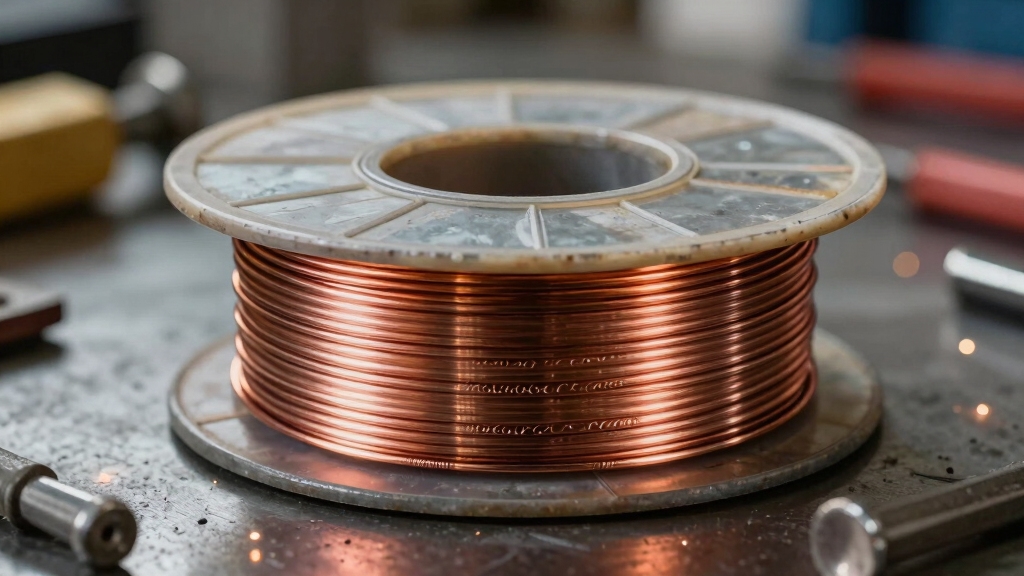
MIG welding wire consists of base metals like steel, stainless steel, aluminum, or specialized alloys tailored to your application.
It includes alloying elements such as manganese, silicon, chromium, and nickel that enhance strength, corrosion resistance, and weld quality.
Copper coatings improve electrical conductivity and protect the wire during feeding.
You’ll want to match wire composition with your base metal and shielding gas for peak performance.
Understanding these factors will enhance your welding outcomes and wire selection strategy.
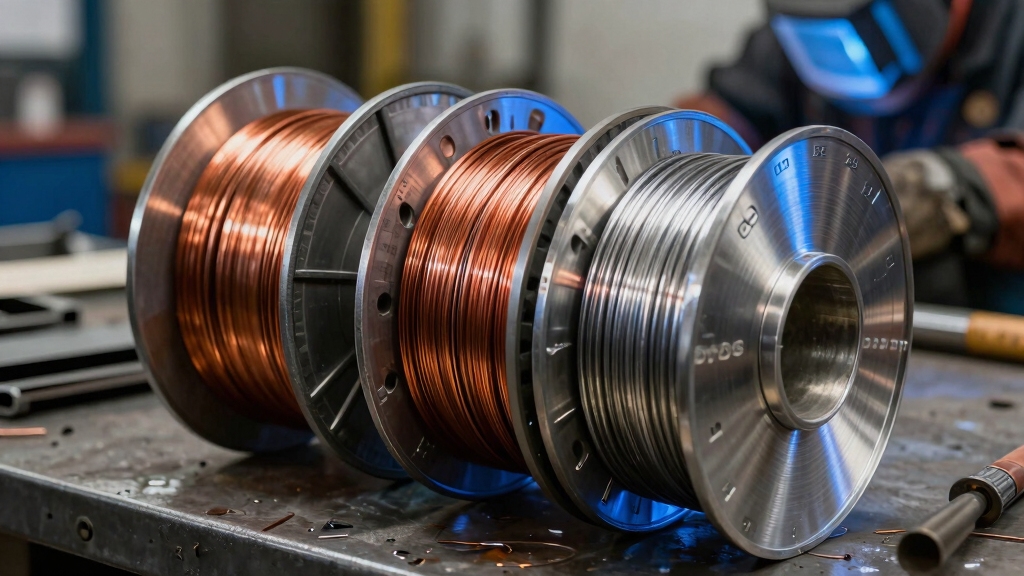
Base metals in MIG welding wire form the essential foundation for any weld’s strength and durability.
When selecting wire, you’ll find iron or steel commonly used to provide core strength and structural integrity.
For lightweight applications, aluminum serves as the base metal, offering reduced weight without sacrificing weld quality.
Stainless steel wires are designed for corrosion-resistant welds, essential in harsh environments.
Additionally, nickel-iron alloys, such as compositions with 55% nickel and 45% iron, are tailored for welding cast iron, ensuring compatibility and strength.
Other base metals include silicon bronze, which is used in specific non-ferrous welding tasks.
Understanding these base metal options helps you choose the appropriate wire for your welding application, ensuring peak performance and weld quality.
Selecting the correct wire type and composition, such as solid or flux-cored wire, is crucial to optimize weld quality and mechanical properties.
Although selecting the right MIG welding wire starts with the base metal, understanding the role of alloying elements is essential to optimizing weld performance. These elements modify mechanical properties, corrosion resistance, and weldability.
Choosing the right MIG wire means understanding alloying elements to enhance strength, corrosion resistance, and weld quality.
When you choose a wire, consider:
Additionally, matching the chemical composition of the wire to the base metal ensures weld homogeneity and prevents defects such as cracking or corrosion.
When welding, you’ll find manganese and silicon play essential roles in enhancing the performance of MIG wire. They act as deoxidizers that reduce impurities in the weld pool.
Manganese improves weld metal toughness and strength by combining with sulfur to prevent hot cracking and brittleness. Silicon contributes by removing oxygen from the molten weld, minimizing porosity and improving arc stability.
Together, these elements refine the weld microstructure, ensuring a cleaner, more uniform bead. For example, ER70S-6 wire contains elevated manganese and silicon levels, making it suitable for welding dirty or rusty steel where impurity control is critical.
The proper selection of shielding gas also complements the role of manganese and silicon by protecting the weld pool from atmospheric contamination and further reducing porosity.
Chromium plays a key role in forming a passive oxide layer, which significantly boosts the corrosion resistance of MIG welding wire. It’s fascinating how this layer acts as a protective shield, making the wire much more durable in harsh environments.
Now, let’s talk about nickel. This element really enhances weldability! It stabilizes the austenitic microstructure and increases toughness, which means your welds aren’t only easier to work with but also more resilient.
When you combine chromium and nickel, you get a winning formula. Together, they optimize both durability and performance, ensuring that the welding wire holds up well even in corrosive situations. It’s a great example of how the right elements can work together to improve the overall quality of a product!
Proper selection of filler metals like ER309L ensures compatibility with both carbon and stainless steel, enhancing corrosion resistance and weld integrity.
Because corrosion resistance is critical in many welding applications, chromium plays a pivotal role in enhancing the durability of MIG welding wires.
When you select a chromium-containing wire, you benefit from its ability to form a stable, passive oxide layer on the weld surface, which inhibits further oxidation.
Specifically, chromium:
However, welding with gases containing high levels of CO2 can promote chromium depletion and carbide precipitation, which compromises corrosion resistance despite the presence of chromium.
Nickel markedly boosts the weldability and corrosion resistance of MIG welding wires by stabilizing the microstructure of the weld metal.
When combined with chromium, nickel forms a passive oxide layer that significantly reduces oxidation and chemical attack. This enhances the wire’s durability in corrosive environments.
You’ll find nickel-iron alloys like ERNi55 specifically designed for challenging applications, such as cast iron welding, where nickel improves toughness and ductility.
Additionally, nickel refines grain structure during solidification, minimizing weld defects like cracking and porosity. This stabilization allows you to achieve consistent mechanical properties and superior resistance to stress corrosion cracking.
Using the correct filler metals and maintaining adequate shielding gas flow further ensures the corrosion resistance and integrity of the weld.
When selecting MIG welding wire, understanding the differences between steel, stainless steel, and aluminum types is essential for achieving peak weld performance. Each wire type suits specific applications due to distinct base metals and alloying elements.
You must match wire selection to the base metal and application requirements to guarantee prime weld quality, strength, and durability.
Additionally, adjusting wire diameter, voltage, and shielding gas based on material thickness is crucial for optimal heat input and weld integrity, especially when working with different metals and thicknesses, as explained in materials and thickness range.
Although MIG welding wire types vary widely, understanding their specific compositions and intended uses allows you to select the best-suited wire for your project.
Knowing the composition and purpose of MIG wires ensures the perfect choice for every welding job.
For carbon steel, ER70S-3 offers a reliable choice with manganese and silicon deoxidants enhancing weld quality. ER70S-6 performs better on rusty or dirty steel using pure CO2 shielding.
When working with aluminum alloys, ER4043 provides good wetting and crack resistance due to its 5% silicon content.
For stainless steel, ER308L’s low-carbon composition guarantees corrosion resistance and weld integrity on 304/304L bases.
Each wire’s alloying elements and tensile strength classifications, like the 70,000 PSI rating in ER70S wires, help you achieve peak mechanical properties and durability tailored to your specific metal and welding conditions.
Selecting the correct wire diameter is crucial since different wire sizes support specific amperage ranges that affect penetration and arc stability.
Flux-cored MIG wire stands out by incorporating a flux-filled tubular core that eliminates the need for an external shielding gas. This makes it ideal for outdoor or windy environments where gas shielding can be compromised.
This wire type offers specific advantages you should consider:
Additionally, the wire feeder ensures a steady supply of filler metal that melts and fuses with the base material, contributing to consistent welds with minimal spatter.
When selecting flux-cored wire, match it to your base metal and application requirements to guarantee optimal bonding and mechanical properties. This wire type is particularly effective for medium to heavy plate welding where shielding gas use is impractical.
Selecting the appropriate wire coating markedly influences welding performance and feeding reliability. Copper coatings are the most common, enhancing electrical conductivity and reducing contact resistance between the wire and contact tip.
This improvement stabilizes the arc and guarantees consistent wire feeding, minimizing burnback and feeding interruptions. Additionally, copper coatings protect the wire from oxidation during storage, preserving its surface quality.
Some specialty wires employ other coatings, such as nickel or zinc, to tailor corrosion resistance or improve feedability in specific environments. You should also consider the coating thickness, as excessive thickness can cause feeding issues, while insufficient coating may reduce electrical efficiency.
Ultimately, choosing the right coating optimizes weld quality and operational efficiency. This reduces downtime and enhances overall productivity in MIG welding applications. It is also important to adjust welding parameters when using different wire coatings to maintain arc stability and ensure consistent weld quality.
When you match MIG wire to the base metal and application, you guarantee peak weld strength, compatibility, and performance. To secure precise selection, consider these factors:
Matching MIG wire to your base metal ensures optimal weld strength, compatibility, and performance every time.
Adhering to these criteria optimizes weld integrity and service life.
When it comes to MIG welding, choosing the right wire isn’t just about picking what looks good on the shelf. You really need to consider the shielding gas you’re using. It’s all about compatibility, and trust me, it can make a big difference in the quality of your welds and how stable your arc is.
Different gases, like pure CO2, argon, or mixtures of argon and CO2, each have their own quirks when they interact with the wire. This can impact everything from how much spatter you get to how deep the weld penetrates.
Shielding gases play a critical role in determining the performance and quality of MIG welding. These gases protect the molten weld pool from atmospheric contamination, directly influencing arc stability, penetration, and spatter levels.
When selecting shielding gases, consider:
Understanding these gas types helps you choose compatible MIG wires and achieve optimal weld attributes for your specific application.
In selecting MIG welding wire, understanding its compatibility with shielding gases is essential to achieving peak weld quality and performance. You must match the wire composition to the shielding gas to guarantee proper arc stability, penetration, and bead appearance.
For instance, ER70S-3 wire pairs well with argon-CO2 mixes, delivering smooth arcs and clean welds on carbon steel. Conversely, ER70S-6 is designed for use with pure CO2, offering superior performance on rusted or dirty materials.
Aluminum wires like ER4043 require inert argon gas to prevent oxidation, while stainless steel wires such as ER308L benefit from argon or argon-helium blends to maintain corrosion resistance.
Selecting the appropriate wire and gas combination optimizes weld integrity and mechanical properties. This minimizes defects, critical for achieving consistent, high-quality MIG welds.
You manufacture MIG welding wire by first selecting appropriate base metals and alloying elements. Then, you melt and cast them into billets.
You hot-roll these billets into rods, followed by precise cold drawing to achieve desired diameters. The wire undergoes cleaning and coating, often with copper, to enhance conductivity and feedability.
Finally, you spool the wire carefully to guarantee consistent feeding during welding, maintaining strict quality control throughout the process.
Handling MIG welding wire is like walking a tightrope; you need balance and care. Always wear gloves to avoid cuts and prevent skin contact with contaminants.
Use proper ventilation to avoid inhaling harmful fumes. Store wire in dry, cool areas to prevent rust, and handle spools carefully to avoid tangling.
Make certain your workspace is free from flammable materials. Disconnect power before changing wire to prevent electrical shock or accidental arc strikes.
You should store MIG wire in a clean, dry environment to prevent contamination and rust.
Keep the wire sealed in its original packaging or use airtight containers with desiccants to control moisture.
Avoid exposure to humidity, dust, and oils, as these degrade wire quality and welding performance.
Rotate stock to use older wire first, and handle spools with clean gloves to maintain surface integrity and guarantee consistent weld quality.
When it comes to MIG welding wire, you know the devil’s in the details. Shelf life depends on storage conditions, exposure to moisture, and contamination.
Humidity and rust degrade wire quality, while improper packaging invites oxidation. Temperature fluctuations can cause condensation, accelerating corrosion.
Also, wire composition affects longevity; aluminum wires oxidize faster than steel. To maximize shelf life, keep your wire sealed, dry, and stored in a climate-controlled environment.
You generally can’t reuse MIG welding wire once it’s been welded because it undergoes metallurgical changes and contamination during welding.
Recycling is possible by collecting scrap wire and sending it to specialized facilities where it’s re-melted and refined to produce new wire.
However, direct reuse compromises weld quality and mechanical properties.
Proper disposal or recycling guarantees material integrity, maintains performance standards, and adheres to environmental regulations.
You’ll find MIG welding wire is a balance of base metals and alloying elements. Steel’s strength contrasts with aluminum’s lightness, while chromium and nickel enhance corrosion resistance.
Flux-cored wires offer versatility against solid wires’ simplicity. Coatings improve feeding but require matching gas for peak results.
Understanding these differences guarantees you select the right wire for your metal and application. This combination ensures precision with performance in every weld you make.
[…] welding cables often feature copper coatings that improve electrical conductivity and protect against oxidation, contributing to their […]