Phone:
(701)814-6992
Physical address:
6296 Donnelly Plaza
Ratkeville, Bahamas.

Phone:
(701)814-6992
Physical address:
6296 Donnelly Plaza
Ratkeville, Bahamas.

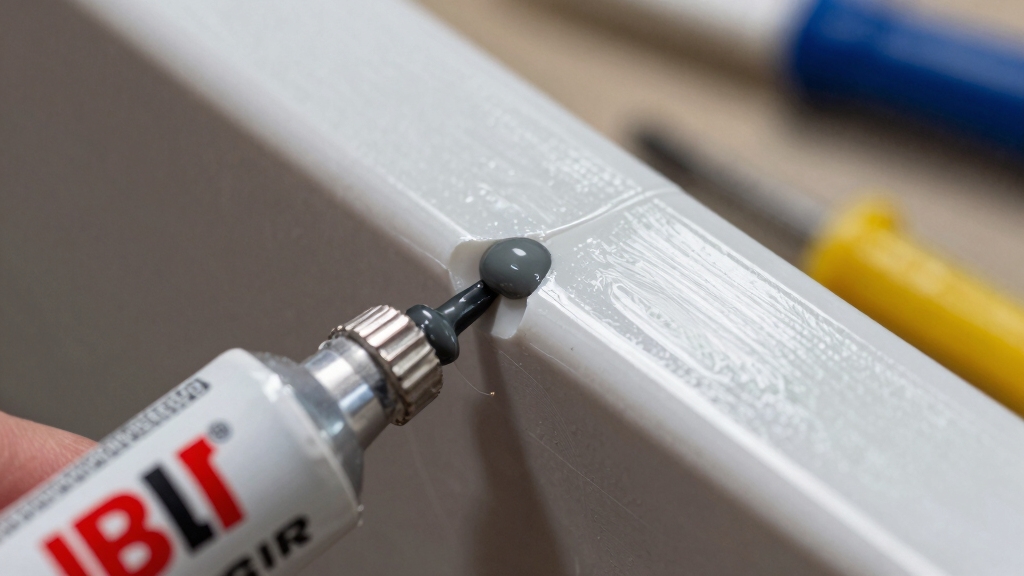
You can effectively bond many plastics with JB Weld by choosing the right variant and preparing the surface properly.
Plastic Bonder and PlasticWeld syringes offer strong adhesion on ABS, PVC, and composites. The epoxy putty handles shaping but provides less tensile strength.
Low surface energy plastics like polyethylene often resist bonding without special treatment. Proper cleaning, abrasion, and precise mixing are critical for durability.
Explore further to understand surface prep, curing times, and troubleshooting for best results.
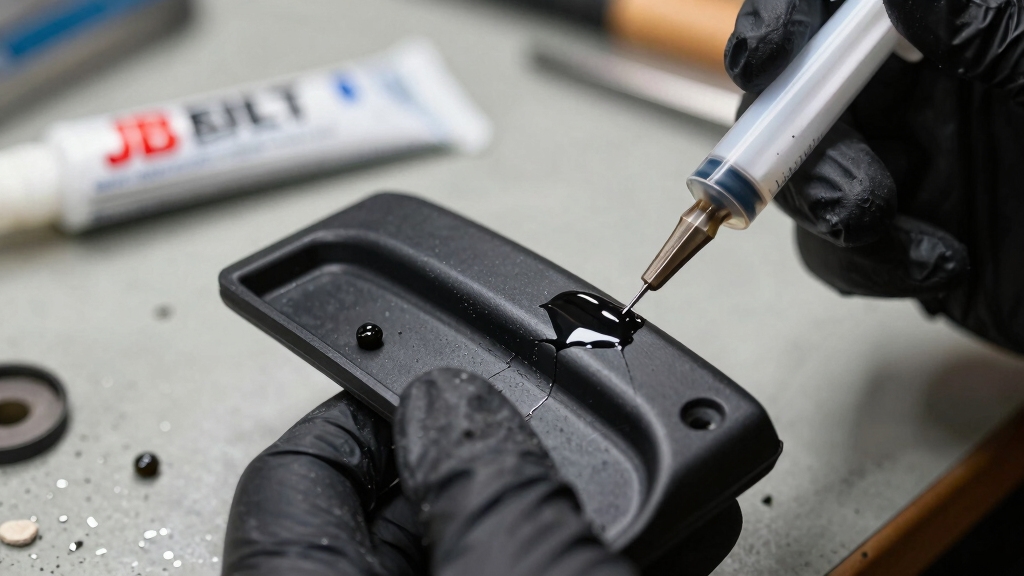
Choosing the right JB Weld for plastics hinges on plastic type and needed bond strength.
You’ll find Plastic Bonder Syringe ideal when you need a balance of quick setting (15 minutes) and strong adhesion, achieving 3770 PSI tensile strength.
For faster curing and higher strength, PlasticWeld Syringe sets in only 5 minutes and offers 3900 PSI, making it suitable for demanding repairs on thermoplastics and composites.
If you require moldable material for shaping or filling gaps, PlasticWeld Epoxy Putty sets in 25 minutes with a lower tensile strength of 700 PSI, but provides durable adhesion.
The putty stick variant offers versatility in application, bonding broadly across plastic types but with less measurable strength.
Select based on mechanical stress, cure time, and application method for best results.
Proper surface preparation, such as cleaning and roughening the plastic to create a textured profile, is essential for optimal adhesion.
Sure! Here’s a more conversational version of your text:
—
So, when it comes to bonding plastics with JB Weld, you’re in luck! It works really well with materials like ABS, PVC, and polyurethane.
You can count on it for strong adhesion on most thermoplastics and composites.
But here’s the catch: polyethylene and polypropylene can be tricky. They’ve low surface energy, which makes it tough for JB Weld to stick.
So, it’s a good idea to do some testing first before diving into your full application.
Just remember, checking compatibility with a small-scale test is key. That way, you can ensure you’ve got a reliable, lasting bond.
Keep in mind that JB Weld cures into a hard, inflexible mass, which may not be suitable for applications requiring flexibility and vibration resistance.
Happy bonding!
Although JB Weld offers strong adhesion on many plastics, its compatibility varies markedly depending on the plastic type. You’ll find the best results on these plastics:
1. ABS and PVC
JB Weld bonds effectively to these thermoplastics, providing durable, high-strength repairs suited for structural applications.
2. Polyurethane
The epoxy adheres well, delivering flexibility and impact resistance critical for dynamic parts.
3. Fiberglass and composite plastics
JB Weld’s formulation supports excellent mechanical interlocking, resulting in reliable adhesion on these substrates.
You should note that JB Weld variants like Plastic Bonder and PlasticWeld are optimized for thermoplastics and composites. Before proceeding, test adhesion on less common plastics like polypropylene, as their performance can vary.
This targeted compatibility guarantees you select the correct product for maximum bond strength and durability. Always ensure surfaces are thoroughly cleaned and sanded prior to application to achieve the strongest bond.
While JB Weld performs reliably on many plastics like ABS and PVC, certain materials pose significant bonding challenges.
Polyethylene and polypropylene, for instance, exhibit low surface energy, resulting in poor adhesion with standard JB Weld variants.
These thermoplastics resist chemical bonding, making it difficult for the epoxy resin to penetrate or adhere effectively.
Even specialized formulations like Plastic Bonder show limited success without surface treatment.
You’ll need to test adhesion before committing to a repair on these plastics, as failure is common.
Additionally, some plastic composites and coated plastics may inhibit curing or reduce bond strength.
To guarantee structural integrity, you must recognize these incompatible substrates early.
JB Weld’s performance varies dramatically based on plastic composition and surface characteristics, impacting durability and longevity of the repair.
Proper surface preparation is essential to improve adhesion and ensure a durable bond when working with challenging plastics.
Because plastic types vary widely in chemical composition and surface properties, performing adhesion tests before applying JB Weld is essential to guarantee a reliable bond.
You can’t assume compatibility, especially with plastics like polyethylene or polypropylene, which often resist adhesion.
To secure peak results, follow these steps:
This method helps you differentiate compatible plastics such as ABS, PVC, and polyurethane from incompatible ones.
You’ll avoid costly failures by confirming JB Weld’s effectiveness on your specific plastic substrate before committing to a full repair.
Adhesion testing isn’t optional; it’s a critical quality control step.
Keep in mind that JB Weld’s bonding strength relies heavily on proper surface preparation to maximize adhesion and durability.
Sure! Here’s a more conversational version of your text:
—
Before you dive into applying JB Weld to plastic, the first step is to clean the surface really well. You want to get rid of any oils, dirt, and other contaminants—these can really mess with adhesion. A clean surface is crucial!
Once that’s done, grab some fine-grit sandpaper and start roughening up the plastic. This might seem a bit tedious, but it’s super important because it increases the surface area and helps create a stronger bond.
Taking the time to prepare properly will ensure that you get the best curing results and maximize the epoxy’s tensile strength. Trust me, it’ll be worth it in the end!
Keep in mind that surface preparation is key to preventing adhesion failure, especially under thermal stress.
To achieve a strong and durable bond with JB Weld on plastic surfaces, you’ll need to thoroughly clean and prepare the material.
Residues like oils, dust, and mold release agents can inhibit adhesion, so eliminating them is critical.
Follow these steps:
This precise cleaning guarantees the epoxy can interact directly with the plastic substrate, maximizing mechanical and chemical bonding potential for a lasting repair. It is also important to avoid harsh abrasives or chemicals that could damage the surface and reduce adhesion strength, preserving the protective oxide layer where applicable.
Enhance adhesion by mechanically roughening your plastic surface prior to applying JB Weld.
Use fine-grit sandpaper (180-220 grit) to abrade the area gently but thoroughly, creating micro-abrasions that increase surface area and mechanical interlocking.
Focus on uniform roughening without compromising the plastic’s integrity.
For curved or hard-to-reach spots, a rotary tool with a sanding attachment can guarantee consistent texture.
After roughening, remove all dust and debris with a clean, dry cloth or compressed air to prevent contamination.
This step is vital, especially for thermoplastics like ABS or PVC, where surface smoothness can hinder epoxy bonding.
Proper surface preparation maximizes JB Weld’s mechanical grip, markedly improving tensile strength and durability in your plastic repair.
Additionally, avoid contamination by ensuring surfaces are free from oils or residues, as these contaminants prevent adhesion and weaken the bond.
Prepare the plastic surface thoroughly by cleaning it of any dirt, oil, or debris to guarantee peak adhesion. After roughening the surface, you’re ready to apply JB Weld precisely.
Following these steps ensures a strong, durable bond on compatible plastics. This optimizes the epoxy’s adhesive properties for reliable repair. Proper surface preparation techniques and curing conditions significantly improve the bond’s strength and durability.
Evaluating the strength and durability of JB Weld on plastic repairs reveals that its specialized variants deliver impressive tensile strengths ranging from 700 to 3,900 PSI, depending on the product type.
The PlasticWeld Syringe, for example, achieves up to 3,900 PSI, curing fully in an hour. The Plastic Bonder offers 3,770 PSI with a 15-minute set time.
The Epoxy Putty variant, although weaker at 700 PSI, provides a versatile, moldable option. These products adhere effectively to thermoset plastics, PVC, ABS, and composites.
They maintain durability under impact and exposure to oils or water. When applied correctly on clean surfaces, the bonds are sandable, drillable, and paintable, ensuring longevity.
However, the strength depends on proper surface preparation and compatibility with the plastic type. Selecting the appropriate wire composition is similarly crucial in welding to ensure strong and durable bonds.
When tackling plastic repairs with JB Weld, you may run into issues like poor adhesion, slow curing, or weak bonds.
To troubleshoot effectively, start by addressing surface preparation, as contamination or improper cleaning reduces bond strength.
Next, verify resin-to-hardener mixing ratios to guarantee consistent curing.
Finally, consider plastic compatibility since polyethylene and polypropylene often resist adhesion.
Although JB Weld offers strong adhesion for many plastics, you’ll need alternatives when working with materials like polyethylene or polypropylene that resist bonding.
These plastics have low surface energy, causing standard epoxies, including JB Weld variants, to fail without specialized primers or surface treatments.
Low surface energy plastics often cause standard epoxies like JB Weld to fail without special primers or treatments.
When dealing with polyethylene or polypropylene, always conduct adhesion tests first.
If bonding fails, consider using adhesives specifically formulated for low-energy plastics, such as certain cyanoacrylates or plastic-specific welders.
Additionally, thermoplastics with flexible, non-porous surfaces might require mechanical fastening or plastic welding techniques.
Opting for alternatives guarantees structural integrity and durability, especially in automotive or industrial applications where stress resistance matters.
Choosing the right adhesive depends on plastic type, surface preparation, and application conditions—factors where JB Weld’s limitations become clear, guiding you toward more effective solutions.
Recognizing JB Weld’s limitations on certain plastics, you can markedly improve bonding results by following specific preparation and application techniques.
First, thoroughly clean and roughen the plastic surface to increase mechanical adhesion, especially on thermoplastics.
Second, select the appropriate JB Weld variant: Plastic Bonder for high tensile strength and compatibility with ABS or PVC, or PlasticWeld Epoxy Putty for irregular shapes.
Third, mix resin and hardener precisely in a 1:1 ratio and apply evenly. Use the syringe dispenser for controlled application to avoid weak spots.
Yes, you can sand and paint JB Weld repairs on plastic once fully cured. After the epoxy sets, typically within 30 minutes to a few hours depending on the product variant, you’ll find the surface sandable and drillable.
This allows you to smooth the repair flush with surrounding areas. Painting is also effective, as cured JB Weld bonds well with most automotive and industrial paints, ensuring a durable, seamless finish.
You won’t believe how quickly JB Weld can harden on plastic!
Typically, it fully cures in about 2 to 3 hours for putty types, while syringe variants set faster, around 5 to 15 minutes, and reach full strength within an hour.
Remember, thorough mixing and clean surfaces speed up curing, ensuring peak adhesion.
Rushing it risks weak bonds, so patience pays off in durable, high-strength repairs that withstand stress and impact.
Yes, you can safely use JB Weld Plastic Bonder for automotive plastic panel repairs.
It’s OEM approved and designed for thermoplastics and composites common in vehicles.
Its high tensile strength (up to 3900 PSI) and water/oil resistance guarantee durability under automotive conditions.
Just clean the surface thoroughly and follow mixing instructions for peak adhesion and impact resistance.
However, test adhesion if panels contain polypropylene or polyethylene to guarantee bond reliability.
Like a knight’s armor in a relentless storm, JB Weld stands strong against water and oils.
You’ll find its cured epoxy water-resistant and oil-resistant, making it reliable for automotive and industrial repairs exposed to harsh elements.
Its chemical composition forms a durable, impermeable bond that won’t degrade with fluid contact.
This ensures your repaired parts maintain integrity even under moisture or oily environments.
Just clean surfaces well for maximum adhesion.
Yes, JB Weld plastic bonds can typically withstand temperatures up to about 300°F (149°C), depending on the product variant.
For example, Plastic Bonder and PlasticWeld Syringe maintain structural integrity within this range.
Exceeding these temperatures may weaken the bond or cause failure.
You should always consider the specific epoxy type and the plastic substrate’s heat tolerance to guarantee peak performance in high-temperature applications.
You might wonder if JB Weld truly bonds well with plastic. While it works effectively on rigid plastics like ABS and PVC, it struggles with flexible or low-surface-energy plastics such as polyethylene.
Proper surface preparation, including cleaning, sanding, and degreasing, is essential to achieve maximum adhesion. If you follow these steps precisely, JB Weld can provide a durable fix.
However, for certain plastics, exploring specialized adhesives might deliver better, longer-lasting results.
[…] best results, ensure proper surface preparation by cleaning and roughening the plastic before […]