Phone:
(701)814-6992
Physical address:
6296 Donnelly Plaza
Ratkeville, Bahamas.

Phone:
(701)814-6992
Physical address:
6296 Donnelly Plaza
Ratkeville, Bahamas.

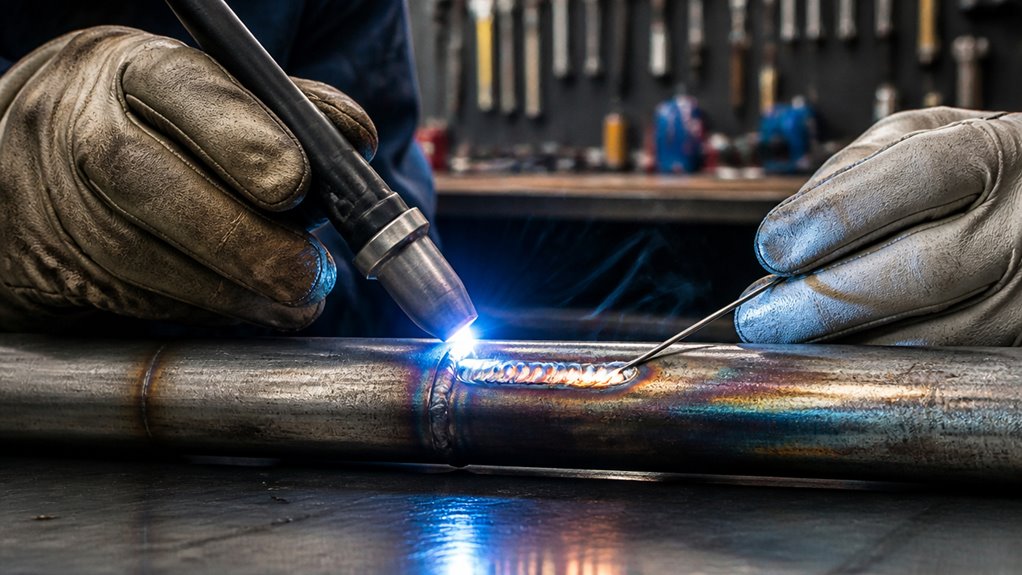
When you need slower welding that’s easier to control, gas welding and TIG welding stand out.
They let you precisely manage heat input through adjustable flames or amperage, offering fine-tuned bead shape and penetration.
These methods reduce thermal distortion and improve joint quality because you control every detail, albeit at slower speeds.
Stick welding balances moderate speed with manageable control, while MIG welding prioritizes speed over precision.
Exploring the trade-offs between these methods reveals how control impacts welding quality and efficiency.
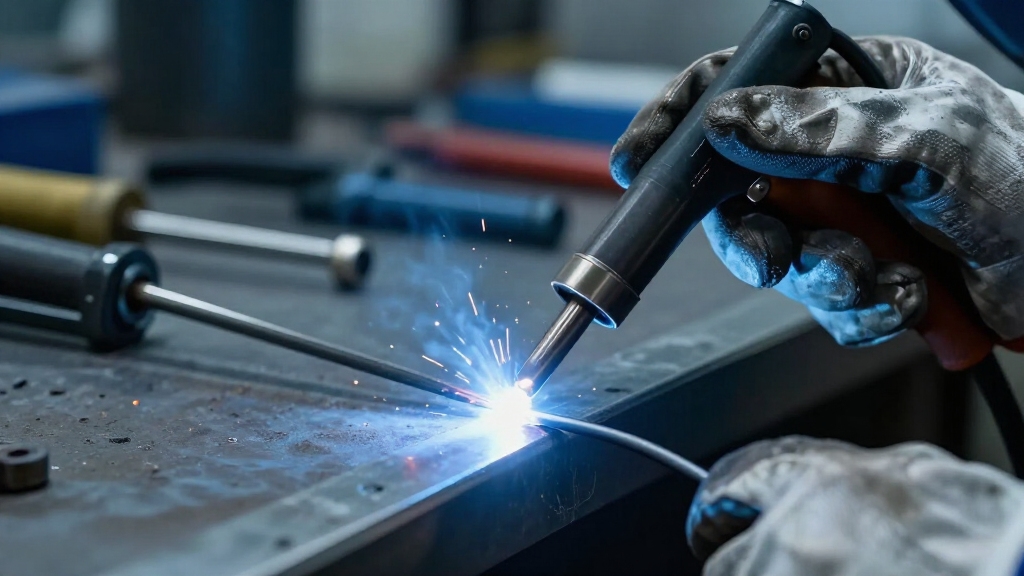
Although welding speed and control vary widely across methods, understanding what “slower and easier to control” means helps you select the right process for your project.
Slower welding methods typically allow more deliberate heat application and closer management of the molten metal puddle. This reduces thermal distortion and improves joint quality.
Slower welding methods enable precise heat control, reducing distortion and enhancing joint quality.
Easier control usually involves precise adjustment of heat input, flame size, or amperage. This enables you to fine-tune the weld’s thermal profile.
This means you can better maintain bead shape, penetration, and minimize defects. Slower speeds give you more time to respond to puddle behavior.
Control features like variable flame or amperage settings provide the necessary responsiveness. Recognizing these factors helps you prioritize precision and heat management over speed when selecting a welding method.
For example, TIG welding is often considered slower and easier to control due to its precise heat input and adjustable parameters.
Choosing the right welding method for your project requires balancing speed and control based on your specific needs.
Assess the material thickness, joint type, and precision requirements first. If fine heat control and slow travel speeds are critical, consider TIG or gas welding due to their deliberate heat input and puddle management.
For projects demanding faster deposition and moderate control, MIG welding offers efficiency with reasonable bead quality. Stick welding suits fieldwork where conditions vary, and control hinges on arc length and electrode angle.
Prioritize slower methods when minimizing distortion or working with thin materials, as they allow precise heat adjustments.
Ultimately, match your choice to whether speed or accuracy governs your workflow, ensuring ideal weld integrity and efficiency without sacrificing control.
Additionally, processes like Dual Shield Welding provide deep penetration and high deposition rates, making them well-suited for thick steel applications where speed and strong welds are required.
You know, one of the great things about gas welding is how it allows for gradual heat application. This really helps in preventing overheating and lets you maintain tight control over the joint. By adjusting the flame size and composition just right, you can regulate the heat input with impressive accuracy.
This kind of deliberate control is what makes gas welding perfect for tasks that require slow and careful metal fusion. Whether you’re working on delicate projects or need to ensure a solid bond, gas welding gives you the precision you need. Additionally, the neutral flame achieved by balancing oxygen and fuel gases minimizes oxidation and brittleness during welding.
Applying heat gradually is central to gas welding’s reputation for slow and precise control.
When you use a gas flame, the heat input is inherently less intense compared to arc welding, allowing the metal to warm steadily.
This controlled temperature rise reduces thermal shock and minimizes distortion, which is vital for delicate joints.
Because the flame heats a focused area slowly, you can monitor and adjust the weld puddle’s behavior in real-time.
This gradual heat application also gives you more time to manage filler metal integration and guarantee proper fusion without rushing.
Overall, the slow heat buildup characteristic of gas welding supports a deliberate, measured approach.
This makes it ideal when you need meticulous control rather than rapid deposition or high productivity.
The ability to precisely control the flame temperature and gas mixture ensures strong, clean welds with minimal distortion.
Mastering adjustable flame control is key to why gas welding offers such slow, precise heat management.
You can finely tune the flame’s size and temperature by adjusting the oxygen and fuel gas mix, allowing you to apply heat exactly where it’s needed.
This precise control slows the welding process but reduces the risk of overheating or warping the workpiece.
Unlike arc welding, where heat output is less variable, gas welding’s flame modulation lets you maintain a stable, consistent puddle.
This makes it ideal for delicate joints and thin materials.
By controlling the flame’s characteristics, you manage the thermal input gradually, improving fusion quality and minimizing distortion.
Ultimately, adjustable flame control defines gas welding’s reputation for deliberate, manageable heat application in precision welding tasks.
The ability to select and adjust the neutral flame is crucial for optimal weld quality and metal compatibility.
Although TIG welding operates at a slower pace compared to other arc welding methods, it offers unmatched control over heat input and puddle behavior.
TIG welding may be slower, but it delivers exceptional control over heat and weld puddle dynamics.
You benefit from this precision when working on thin materials or detailed joints. Here’s how TIG balances speed with control:
This deliberate pace sacrifices speed but maximizes your accuracy.
TIG is ideal for applications where weld quality is paramount and subtle heat management is required.
Mastering TIG welding requires simultaneous coordination of multiple variables to achieve consistent, defect-free welds.
While TIG welding prioritizes precision through careful heat and puddle management, stick welding offers a different balance of speed and control suited to field conditions and more forgiving environments.
You’ll find stick welding slower than MIG, but its manageable pace helps you maintain bead quality and penetration.
Control hinges on consistent arc length and electrode angle, which reduces defects even in less-than-ideal settings.
This method tolerates variable speed without compromising weld integrity, making it practical for outdoor or repair work.
Stick welding’s flux coating generates its own shielding gas and slag, allowing effective welding even in windy conditions.
| Aspect | Stick Welding |
|---|---|
| Speed | Moderate, slower than MIG |
| Control Factors | Arc length, electrode angle |
| Environment | Tolerant to field conditions |
| Penetration | Deep with slower travel speed |
| Application | Repair, structural, less precise work |
MIG welding really shines when it comes to speed.
Thanks to its continuous wire feed, you can achieve faster deposition rates. This can be a game-changer if you’re looking to get things done quickly!
But here’s the catch: that rapid metal addition can make it tricky to finely adjust the heat input while you’re welding.
Because of this, controlling the puddle’s precision and managing heat delicately can be a bit more challenging compared to slower welding methods.
However, the semi-automatic operation provides consistent welds with minimal spatter, reducing cleanup time and making the process more efficient.
MIG welding accelerates the welding process by continuously feeding wire into the weld pool. This enables faster deposition rates compared to other methods.
This continuous feed allows you to maintain a steady weld bead without frequent stops, boosting productivity. However, the increased speed comes with trade-offs in control.
Consider these key factors:
Although faster deposition rates boost productivity, they limit your ability to finely control heat input during welding.
In MIG welding, continuous wire feed guarantees rapid metal deposition but reduces your capacity to modulate heat precisely. Unlike TIG or gas welding, where you adjust flame size or amperage gradually, MIG’s fixed parameters constrain fine heat management.
This results in less control over puddle size and penetration depth, which can increase distortion or burn-through risk on thin materials.
While MIG is effective for high-speed production, its limited heat precision makes it less suitable for delicate, precision-critical welds.
You trade off the ability to make incremental heat adjustments for speed, which means you must carefully select when MIG’s efficiency outweighs the need for meticulous thermal control.
When you control heat input more precisely, welding speed often decreases, but the quality and accuracy of the weld improve markedly.
This trade-off is evident across welding methods, where finer heat management leads to better fusion and bead consistency at the cost of slower travel speeds.
Here’s how heat control influences welding speed and quality:
In particular, TIG welding on aluminum requires careful heat control and techniques such as pulse TIG to prevent distortion and ensure penetration.
Understanding this balance helps you select the best method for your project’s needs.
When you weld slowly, you’ll need to monitor heat buildup carefully to avoid warping and burns. Cooling breaks and heat shields are essential.
Fast welding demands more attention to sparks and spatter, requiring stronger protective gear and better ventilation.
You’ll also want to adjust your eye protection. Slow welding’s lower intensity means less risk of arc flash, but fast welding needs darker filters to shield your eyes effectively.
Welding position directly impacts your control and speed.
Flat positions let you weld faster with better control since gravity aids molten metal flow.
Vertical and overhead positions slow you down because you must fight gravity.
This makes puddle management trickier and requires steadier hand coordination.
You’ll need to adjust travel speed and heat input carefully to maintain bead quality in these challenging positions.
Expect slower, more deliberate welding when working overhead or vertically.
Filler flexibility fundamentally influences your welding velocity.
When you choose filler materials with faster melting points or better flow characteristics, you speed up deposition, hastening your process.
Conversely, fillers requiring precise handling or slower melting rates demand patience, reducing speed but enhancing control.
Your choice affects puddle stability and fusion quality, directly impacting how quickly and cleanly you weld.
Yes, slower welding methods can reduce post-weld distortion by allowing you to control heat input more precisely.
When you weld slowly, the metal heats and cools gradually, minimizing thermal stresses and warping.
Techniques like TIG or gas welding give you that fine heat control, so you can maintain stable puddle temperatures and avoid rapid expansion or contraction.
This controlled process helps preserve the dimensional integrity of your workpiece.
Environmental factors act like unpredictable winds that buffet your welding flame, forcing you to adjust heat and speed constantly.
Drafts cool the weld pool rapidly, reducing fusion quality and slowing your pace.
Humidity and contaminants can cause porosity, making control tougher.
You’ll need to shield your workspace carefully and fine-tune amperage to maintain stability.
Ultimately, these variables demand precise compensation, slowing welding but ensuring better control and stronger joints.
When choosing welding methods, consider that gas welding moves slower but offers precise control.
TIG welding balances slower speed with high accuracy, while stick welding provides manageable speed and control.
MIG welding runs faster but sacrifices some control.
You’ll find that slower welding methods let you manage heat better, improve quality, and reduce mistakes.
So, prioritize control when precision matters and speed when productivity takes precedence. Understanding these trade-offs sharpens your welding decisions.