Phone:
(701)814-6992
Physical address:
6296 Donnelly Plaza
Ratkeville, Bahamas.

Phone:
(701)814-6992
Physical address:
6296 Donnelly Plaza
Ratkeville, Bahamas.

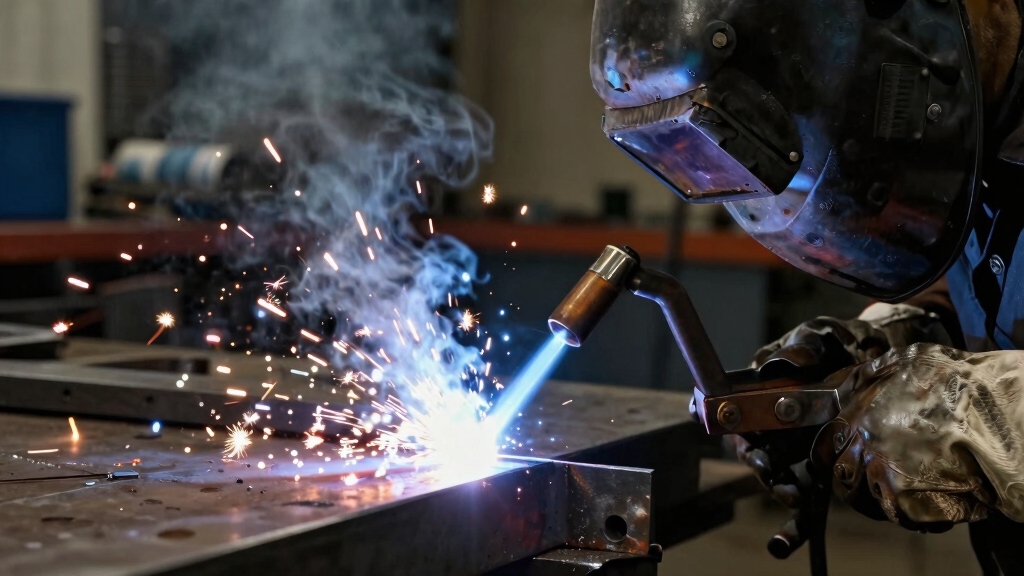
Gas welding joins metals by heating their edges with a controlled oxygen and fuel gas flame, usually acetylene, to melt and fuse the materials.
You’ll adjust gas flow with regulators to achieve a neutral flame around 5,600°F for clean, precise welds.
This method suits many ferrous and nonferrous metals and offers portability without electricity.
While slower than arc welding, its versatility and equipment simplicity make it ideal for various applications.
Explore further to understand its equipment, flame control, and uses.
When you engage in gas welding, you’re using a fusion welding process that joins metals by heating their edges with a flame generated from oxygen and a fuel gas, most commonly acetylene.
Gas welding fuses metals by heating edges with an oxygen and acetylene flame.
You control the oxygen and acetylene flow through pressure regulators and hoses into a welding torch. This torch mixes them to produce a high-temperature flame.
This flame melts the metal edges, creating a weld pool that solidifies to form a joint. You may add a filler rod to strengthen the weld.
Precise manipulation of the flame and torch movement minimizes oxidation and brittleness.
The entire process operates without electricity, relying solely on compressed gas cylinders. This makes it portable and cost-effective compared to other welding methods.
Mastering flame control is critical to producing strong, clean, and reliable welds.
Although gas welding is versatile, it excels particularly with both ferrous and nonferrous metals. This allows you to join a wide range of materials effectively. You’ll find this process especially well-suited for metals with moderate melting points and thermal conductivity, which respond predictably to the controlled flame temperatures.
Here are the key metal categories you can weld with gas welding:
This range makes gas welding a practical choice across diverse applications. However, for applications requiring precise heat input and contamination-free welds, other welding methods like TIG may be preferable.
Understanding which metals you can weld sets the stage for selecting the right equipment to handle those materials effectively.
Knowing the metals suitable for welding guides you in choosing the proper equipment for best results.
To start gas welding, you’ll need essential components: an oxygen cylinder, a fuel gas cylinder (commonly acetylene), pressure regulators for precise gas flow control, flexible hoses rated for high pressure, and a welding torch that mixes and ignites the gases.
The torch’s design must suit the metals’ thickness and type. Additionally, a filler rod may be necessary to reinforce the weld joint.
Since gas welding doesn’t require electricity, portability is enhanced, making the setup ideal for fieldwork.
Make certain all cylinders comply with safety standards for pressure containment. Properly calibrated regulators and leak-free hoses are critical for maintaining consistent flame stability and preventing hazardous gas leaks during operation.
Using the recommended regulator pressure settings ensures optimal flame control and welding performance.
To get the best weld quality, it’s all about fine-tuning that oxygen and fuel gas mix. You really want to create the right flame type for the job.
And don’t forget, controlling the flame size is just as important! If your flame is too big or too small, you might end up with not enough heat or, worse, too much oxidation.
Start by opening the acetylene valve slightly and igniting immediately, then carefully adjust oxygen to achieve the neutral flame essential for flawless fusion.
Mastering the adjustment of oxygen and fuel gas flow is essential for producing a stable flame that guarantees strong, clean welds.
Precise control over gas ratios directly influences flame temperature, shape, and chemical properties, affecting weld quality.
You adjust the oxygen and fuel flow using torch valves and pressure regulators to achieve the desired flame type.
To optimize your flame:
Adjusting these parameters keeps your welds strong and defect-free. Rosebud welding tips, for example, require maintaining oxygen and fuel pressures within 12–15 PSI to ensure a stable and efficient broad flame for heating applications.
Control the flame size carefully to guarantee peak heat input and weld quality.
You adjust the flame by regulating oxygen and fuel gas flow through the torch valves, ensuring the flame matches the weld joint’s dimensions.
A flame too large disperses heat inefficiently, causing excessive oxidation and weak welds.
Conversely, a flame too small fails to provide adequate penetration, resulting in poor fusion.
Use a neutral flame for most welding tasks, balancing oxygen and fuel for a clean, stable flame.
Monitor the weld pool closely; adjust flame size dynamically to maintain consistent heat input as joint geometry or material thickness changes.
Mastering flame size control optimizes energy use, reduces defects, and enhances weld strength and appearance.
Accurate flame management is essential for achieving precise, repeatable gas welding results.
Proper acetylene pressure settings between 1 and 3 PSI help maintain flame stability and prevent overheating during welding.
Gas welding encompasses several main types, each defined by the specific fuel gas combined with oxygen to generate the flame necessary for melting metals.
Gas welding involves various methods distinguished by the fuel gas paired with oxygen to create the melting flame.
You’ll encounter various gas welding methods depending on the fuel gas used, affecting flame temperature, control, and application suitability.
1. Oxy-acetylene welding: The most prevalent type, using acetylene with oxygen.
It offers high flame temperature and excellent control, making it versatile for many metals and thicknesses.
2. Oxy-gasoline welding: Combines oxygen and gasoline, providing a less common alternative.
It has a lower flame temperature and portability advantages.
3. Hydrogen gas welding: Employs hydrogen as fuel, yielding a clean flame with less soot.
This method is ideal for specialized or delicate applications.
In contrast, argon gas plays a crucial role in welding by providing an inert atmosphere that shields molten metal from contamination and ensures cleaner, stronger welds.
What makes oxy-acetylene welding stand out as the most popular gas welding method?
You benefit from its exceptionally high flame temperature, roughly 5,600°F to 5,800°F. This efficiently melts a broad range of ferrous and nonferrous metals.
Its equipment is relatively inexpensive, portable, and doesn’t require electricity, giving you flexibility in diverse environments.
The precise control over oxygen and acetylene flow allows you to adjust flame characteristics for specific welding tasks. This minimizes oxidation and brittleness.
Additionally, the versatility of oxy-acetylene welding supports various applications like fusion welding, brazing, and silver soldering.
This combination of high heat, adaptability, and cost-effectiveness explains why oxy-acetylene remains the preferred choice among gas welding methods for both industrial and fieldwork scenarios.
The ability to achieve a neutral flame by balancing oxygen and acetylene flow is key to reaching peak temperatures and ensuring clean combustion.
Across various industries, you’ll find gas welding commonly employed due to its versatility and portability.
You rely on gas welding when working with thin metal sections or when electrical power is unavailable. Its ability to join both ferrous and nonferrous metals makes it suitable for diverse applications.
Here are three common uses:
Gas welding remains valuable in settings where adjustable flame temperature allows controlled heat input for minimizing thermal distortion.
Gas welding equipment is often a budget-friendly option compared to many other welding systems out there. This makes it a smart choice for a variety of applications. Plus, the components—like the torch, cylinders, and hoses—are pretty compact and lightweight. This really boosts its portability, which is super handy for fieldwork.
And you know what’s great? That combination of affordability and ease of transport means you can work efficiently, even in places where there’s no electrical power. So, if you’re looking for a practical solution that won’t break the bank, gas welding could be the way to go! Welding is a critical step within fabrication processes that provides permanent metal bonds and structural integrity.
Gas welding offers a significant advantage in its low equipment cost, making it accessible for a wide range of users and applications.
You don’t need expensive machinery or electrical power, just basic components like cylinders, hoses, a torch, and regulators. This simplicity reduces initial investment and maintenance expenses.
Key factors contributing to low equipment cost include:
Low equipment cost often goes hand in hand with ease of transport, and gas welding exemplifies this connection. You can easily move the compact setup, including torch, oxygen, and fuel cylinders, without heavy machinery or electric power.
This portability benefits fieldwork and remote welding tasks, where access to electricity is limited. Gas welding’s lightweight and modular components allow quick assembly and disassembly, cutting downtime.
| Feature | Benefit | Impact |
|---|---|---|
| Compact cylinders | Reduced bulk | Easier handling |
| No electricity | Independent operation | Versatile locations |
| Lightweight torch | Simplified transport | Enhanced mobility |
| Modular setup | Quick assembly | Increased efficiency |
You’ll find gas welding ideal when portability reduces costs and boosts operational flexibility.
Although gas welding offers portability and cost advantages, it falls short in speed compared to modern welding methods like arc welding. Its flame temperature, typically around 5,600°F to 5,800°F, limits melting rates, resulting in slower weld cycles. This speed constraint impacts its suitability for high-volume industrial applications.
When evaluating gas welding’s industrial use, consider these limitations:
You’ll find gas welding best for small-scale, repair, or fieldwork rather than fast-paced industrial production.
You’ll notice that gas welding relies on a flame generated by combining oxygen and a fuel gas. On the other hand, arc welding uses an electric arc as its heat source. This fundamental difference really impacts how each method works, right?
For example, gas welding equipment tends to be lighter and more portable since it doesn’t need electricity. That can be a big advantage if you’re working in a location where power sources are limited.
Understanding the fundamental differences in heat sources between gas welding and arc welding is essential for selecting the right method for your project.
Gas welding uses a flame produced by burning oxygen and a fuel gas, typically acetylene, generating temperatures around 5,600°F to 5,800°F.
Arc welding relies on an electric arc between an electrode and the workpiece, reaching about 6,500°F, providing higher heat intensity.
Here’s a concise comparison:
You’ll choose based on heat requirements and material thickness.
Equipment setup and portability materially influence the choice between gas welding and arc welding.
With gas welding, you deal with a straightforward system: oxygen and fuel gas cylinders, pressure regulators, flexible hoses, and a torch. This setup requires no electricity, giving you significant portability advantages, especially in remote or power-limited environments.
The equipment is relatively lightweight and compact, making transport and field use practical. In contrast, arc welding demands electrical power sources, heavier cables, and more complex machinery, limiting its mobility.
However, arc welding setups often provide faster welding speeds and higher temperatures, albeit at the expense of portability.
When selecting between the two, consider whether your worksite conditions prioritize ease of transport and independence from electrical power. Gas welding suits these needs better, whereas arc welding favors stationary, high-efficiency applications.
You should store gas welding cylinders upright, secured with chains or straps to prevent tipping.
Keep them in a well-ventilated, dry area away from heat, sparks, and flames. Always close cylinder valves when not in use and use protective caps during transport.
Handle cylinders carefully; avoid dropping or striking them.
Separate oxygen cylinders from fuel gas cylinders by at least 20 feet or use a non-combustible barrier to reduce fire risk.
Imagine a workshop where gas welding emits carbon monoxide and unburned hydrocarbons, contributing to indoor air pollution.
You should know gas welding releases greenhouse gases like CO2 and nitrogen oxides from fuel combustion, impacting air quality and climate.
While its emissions are lower than some arc welding methods, improper ventilation or leaks can increase environmental risks.
You must guarantee efficient combustion and proper exhaust controls to minimize these environmental impacts effectively.
You can automate gas welding to some extent, but it’s mainly manual due to the need for precise flame control and filler rod handling.
Automation suits repetitive, simple joints but struggles with complex or variable welds.
You’d typically use robotic systems for consistent torch movement, yet manual intervention remains common for adjusting flame characteristics and filler addition.
You’ll need flame-resistant gloves, a welding helmet with a proper shade lens, and safety goggles to protect against sparks and intense light.
A flame-retardant jacket or apron shields your body from heat and molten metal splatter.
Respiratory protection is vital, especially in confined spaces, to avoid inhaling harmful fumes.
Neglecting any of these can lead to severe injuries or long-term health issues, so you must rigorously maintain your protective gear.
Altitude reduces oxygen density, which lowers gas welding flame temperature and combustion efficiency.
You’ll notice a weaker, less stable flame requiring adjustments. To maintain proper flame performance, you must increase oxygen flow rates or adjust fuel ratios carefully.
Failure to compensate can cause incomplete combustion, producing soot and weakening weld quality.
Always calibrate your torch settings based on altitude to ensure consistent heat output and peak weld integrity.
Gas welding remains a versatile technique, especially since it accounts for approximately 30% of all welding processes worldwide. You’ll appreciate its portability and cost-effectiveness, making it ideal for small-scale or fieldwork.
However, its slower speed limits industrial applications. Understanding these factors helps you choose the right welding method for your project, balancing precision, efficiency, and practicality. With this knowledge, you can optimize your welding approach for better results.