Phone:
(701)814-6992
Physical address:
6296 Donnelly Plaza
Ratkeville, Bahamas.

Phone:
(701)814-6992
Physical address:
6296 Donnelly Plaza
Ratkeville, Bahamas.

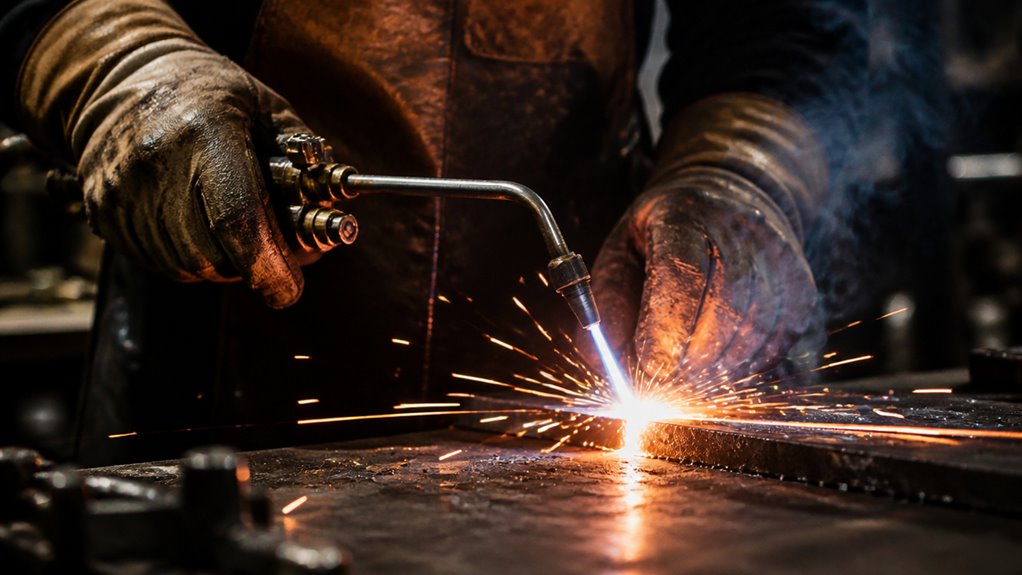
You use gas welding to join metals by heating their edges with a precise flame from oxygen mixed with a fuel gas, usually acetylene. This flame melts the metal edges, and you may add a filler rod for strength and gap filling.
Proper flame temperature control and equipment setup are essential to avoid distortion and contamination. This versatile method suits various metals and applications, offering portability and low-cost equipment.
Keep exploring to understand equipment, safety, and gas selection.
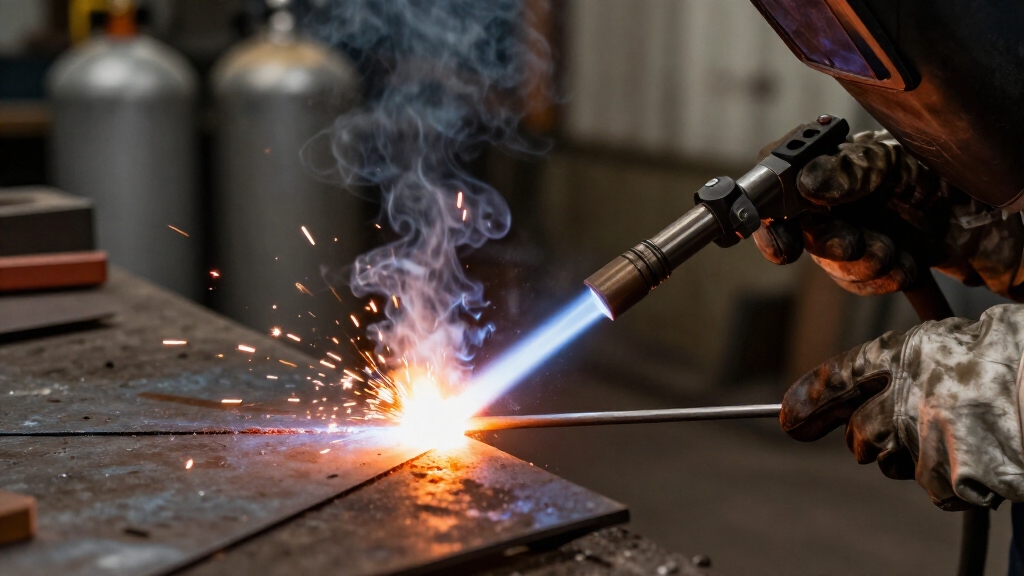
Gas welding is a fusion process that joins metals by heating their edges with a flame generated from oxygen and a fuel gas, typically acetylene.
You supply these gases from separate cylinders through pressure regulators to a welding torch. This torch mixes them and produces a high-temperature flame.
Direct this flame at the joint, heating the metal until the edges become molten enough to fuse. You may add a filler rod to strengthen the weld and fill any gaps.
As the molten metal cools, it solidifies, forming a permanent bond between the pieces. This precise control of flame temperature and gas mixture allows you to work efficiently on various metals.
It ensures a strong, clean weld with minimal distortion when handled correctly. Selecting the correct flame type is crucial for optimal weld quality and metal compatibility.
To perform effective welding, you’ll need a specific set of equipment designed to control and deliver the gases safely and accurately.
Effective welding requires specialized equipment to safely and precisely control gas delivery.
Start with oxygen and fuel-gas cylinders, typically oxygen paired with acetylene. Each is fitted with pressure regulators to maintain consistent gas flow.
The welding torch precisely mixes these gases and directs the flame to the workpiece. You’ll also require filler rods, selected based on the base metals, to reinforce the weld joint.
Hoses connect the regulators to the torch, constructed from materials resistant to heat and gas permeation. Proper gauges on regulators let you monitor pressure levels.
This setup guarantees a stable, high-temperature flame essential for melting the metals. Each component must be maintained and inspected regularly to guarantee peak performance and prevent leaks.
Safety devices such as flashback arrestors and check valves are crucial to prevent backflow and ensure operator protection during welding.
When you’re working with flammable gases like acetylene and oxygen, it’s super important to stick to some strict protocols. This helps prevent leaks and accidental ignitions, which can be pretty dangerous.
First things first—make sure you’re wearing the right protective gear. Fire-resistant gloves and goggles are a must! They’ll protect you from intense heat and flying sparks.
Also, don’t forget about ventilation. Your workspace should have good airflow to avoid any hazardous fume buildup. Keeping those oxygen levels safe is key throughout the welding process. So, take a moment to check your surroundings before you start. Safety first!
Always ensure that your torch is equipped with properly functioning flashback arrestors to prevent flame propagation and enhance overall safety.
Handling flammable gases demands strict attention to detail and adherence to safety protocols to prevent accidents during gas welding.
You must guarantee proper storage, handling, and use of oxygen and fuel gas cylinders to avoid leaks, fires, or explosions. Always inspect connections, hoses, and regulators before use.
Follow strict guidelines for cylinder positioning and secure them upright. Never use oil or grease on oxygen fittings, as this can cause violent reactions.
Key precautions include:
Store cylinders in well-ventilated, cool, dry areas away from combustible materials.
Open cylinder valves slowly and use correct pressure settings.
Use flashback arrestors to prevent flame from traveling back into hoses.
Keep ignition sources away from gas cylinders and connections.
Regularly check for leaks using approved detection fluids or electronic detectors.
Always perform cylinder depressurization in a well-ventilated area before disposal to ensure safety.
Making certain your safety doesn’t stop at managing flammable gases; wearing appropriate protective gear is equally important during gas welding.
You need flame-resistant gloves to shield your hands from extreme heat and molten metal splatter.
Wear a welding helmet equipped with a properly shaded lens to protect your eyes from intense ultraviolet and infrared radiation.
Use fire-retardant clothing that fully covers your skin to prevent burns, avoiding synthetic fibers that can melt.
Sturdy leather boots protect your feet from hot debris and accidental contact with hot surfaces.
Additionally, make certain your gear fits well to maintain dexterity and avoid snagging hazards.
Proper protective equipment minimizes injury risk, allowing you to focus on precise control of the torch and achieving strong, defect-free welds.
Always wear PPE that meets ANSI Z87.1 standards to ensure impact and UV/IR protection during welding.
Proper ventilation plays a critical role in gas welding safety by preventing the buildup of hazardous fumes and gases generated during combustion.
You must make certain that your workspace has adequate airflow to disperse toxic byproducts like carbon monoxide, nitrogen oxides, and ozone.
Without proper ventilation, these gases can accumulate to dangerous levels, posing health risks and potential fire hazards.
Use mechanical ventilation systems or natural airflow to maintain safe breathing conditions.
Monitor air quality regularly and avoid welding in confined spaces without specialized extraction equipment.
Key ventilation practices include:
Supplementing local exhaust ventilation with general ventilation to achieve at least six air changes per hour helps ensure sufficient dilution and removal of welding fumes.
Frequently chosen for its versatility, gas welding offers significant advantages that make it suitable for a wide range of applications.
You’ll appreciate its relatively simple equipment setup compared to electric welding systems, reducing initial costs and maintenance.
Its portability allows you to perform welding tasks in remote or confined locations without relying on electrical power.
The flame’s heat intensity is easily adjustable, giving you precise control essential for working on thin or delicate metals without causing distortion.
Additionally, gas welding accommodates a broad spectrum of ferrous and nonferrous metals, enhancing its utility.
Since it doesn’t require electricity, you can operate it safely in environments where electrical hazards exist.
Following a systematic approach to flame control and safety ensures strong, stable sparks and flawless fusion in your welding projects.
Gas welding is super handy when it comes to joining thin metals, especially where you really need to control the heat. You’ll see it a lot in industries like automotive repair, HVAC, plumbing, and even manufacturing. They all count on this technique for things like metal parts, tubing, and structural components.
But that’s not all! Gas welding is pretty versatile. It’s also used for cutting, brazing, and even in artistic metalwork. So, whether you’re fixing a car or creating a metal sculpture, gas welding is definitely a skill that comes in handy across a bunch of different applications. Ensuring the use of the correct torch tip design and proper flame adjustment is key to achieving reliable and safe welds in these applications.
Gas welding serves a vital role in joining thin metals where precision and controlled heat are essential. You rely on it to create strong, clean joints without excessive distortion, especially when working with delicate materials.
The controlled flame lets you heat metal edges just enough to melt and fuse them without compromising surrounding areas. This makes gas welding ideal for applications that demand accuracy and minimal thermal impact.
You’ll find gas welding particularly useful for:
Selecting the appropriate Victor tip series ensures the right heat control and flame stability for these precise applications.
Building on its effectiveness in joining thin metals, gas welding finds extensive use across various industries where controlled heat application and metal fusion are required.
In automotive repair, you’ll rely on gas welding to restore vehicle panels and fabricate parts with precision. HVAC and plumbing industries use it for pipe joining and maintenance, benefiting from its flame control and portability.
Manufacturing and metal fabrication sectors apply gas welding for assembling structural components and detailed work. Beyond welding, you can employ the process for cutting, brazing, and artistic metalwork.
Its ability to work with diverse metals without electrical power makes it ideal for field repairs and remote sites. By mastering gas welding, you gain a versatile skill set applicable in both industrial and specialized technical environments. Proper preparation and alignment are essential to ensure leak-proof joints and prevent defects in welded pipes.
Frequently, welders encounter challenges that stem from the precise control required over flame temperature and gas mixture in oxy-fuel welding.
If you don’t maintain the correct gas ratio, the flame can become too oxidizing or carburizing, compromising weld quality.
You’ll also face issues like excessive heat input causing distortion or metallurgical changes.
Achieving consistent penetration while avoiding undercut or incomplete fusion demands skillful flame adjustment and steady hand control.
Additionally, managing filler rod feeding without contaminating the weld pool is critical.
Safety hazards from handling flammable gases and pressurized cylinders require constant vigilance.
When selecting a fuel gas for welding, you’ll need to weigh factors such as flame temperature, ease of ignition, availability, and cost.
Acetylene remains the most popular choice due to its high flame temperature, approximately 3,200°C, enabling efficient melting of a wide range of metals.
Acetylene’s high flame temperature of about 3,200°C makes it ideal for melting many metals efficiently.
Propane offers a lower flame temperature but is more cost-effective and readily available, making it suitable for heavier metals and cutting applications.
Hydrogen provides a clean flame with minimal soot but requires specialized handling due to its high diffusivity and flammability.
When choosing, consider metal type, joint thickness, and operational environment.
Also, evaluate storage and safety requirements, as acetylene demands strict cylinder handling.
Gas welding equipment parts typically last several years with proper care.
You’ll find oxygen and fuel cylinders can last decades if maintained and inspected regularly.
Pressure regulators and torches may need replacement or servicing every 3-5 years, depending on usage and exposure to wear.
Filler rods, being consumables, are used per job.
Regular cleaning, leak checks, and storing equipment properly will extend their lifespan and ensure safe, reliable operation.
Yes, you can automate gas welding for industrial production, but it’s less common than other welding methods like MIG or TIG.
Automation requires precise control of gas flow, flame stability, and torch movement. This is technically challenging due to the flame’s variability.
If you set up robotic arms with sensors and closed-loop controls, you can achieve consistent welds in repetitive tasks. This is especially true for thin metals or repair work where gas welding excels.
Metals like cast iron and aluminum can be tricky, almost like trying to fit square pegs into round holes when gas welding.
Cast iron’s brittleness and high carbon content often cause cracking, while aluminum’s high thermal conductivity demands precise heat control you might struggle to achieve.
You’ll also want to avoid metals with low melting points or those prone to oxidation, as the flame’s intense heat can distort or weaken the weld markedly.
You should store acetylene cylinders upright, secured to prevent tipping, in a well-ventilated, cool, and dry area away from heat sources or direct sunlight.
Keep them at least 20 feet from combustible materials and electrical equipment.
Avoid storing near oxygen cylinders to prevent fire hazards.
Make certain valve protection caps are in place when not in use.
Regularly inspect for leaks or damage, and never store cylinders in basements or confined spaces.
You should perform maintenance on welding torches regularly, as 90% of torch failures stem from clogged tips or leaks.
Clean the torch tip with a tip cleaner to remove debris and guarantee proper gas flow.
Check hoses and connections for leaks using soapy water.
Replace worn or damaged parts promptly.
Also, inspect the regulators and guarantee proper gas pressure.
Proper maintenance prevents safety hazards and guarantees consistent flame quality.
Now that you understand gas welding’s core principles and equipment, note this: over 60% of metal fabrication workshops still rely on gas welding for its precision and cost-effectiveness.
You’ll appreciate how its controlled flame and versatility make it ideal for various metals and thicknesses.
However, always prioritize safety and choose your fuel gas wisely to optimize performance.
Mastering gas welding can markedly enhance your metalworking efficiency and quality.