Phone:
(701)814-6992
Physical address:
6296 Donnelly Plaza
Ratkeville, Bahamas.

Phone:
(701)814-6992
Physical address:
6296 Donnelly Plaza
Ratkeville, Bahamas.

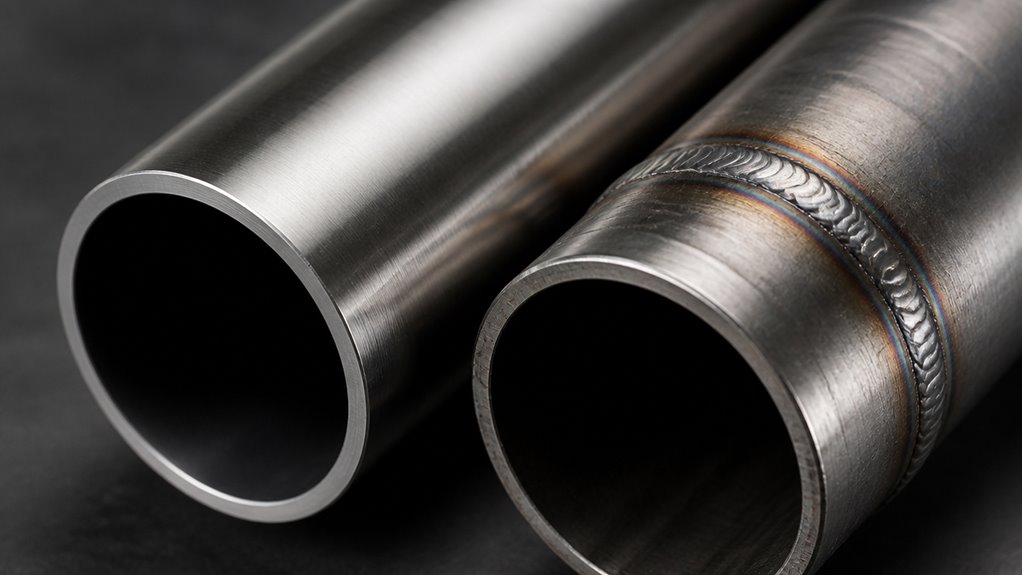
When choosing between seamless and welded pipes, consider your project’s pressure, size, and budget needs.
Seamless pipes, made without weld seams, offer superior strength and better pressure resistance. They are ideal for high-pressure or high-temperature uses up to about NPS 24.
Welded pipes provide greater size range, exceeding NPS 80, and cost efficiency with shorter lead times. They offer tighter dimensional control and easier inspection but have lower pressure ratings.
Exploring these differences further can clarify the best fit for your application.
| Feature | Seamless Pipe | Welded Pipe |
|---|---|---|
| Manufacturing | Pierced or extruded from solid steel billet | Rolled steel plate or strip joined by welding |
| Weld Seam | None | Present |
| Strength | Higher | Lower than seamless in demanding conditions |
| Pressure Resistance | Excellent | Good for moderate-pressure applications |
| High-Temperature Performance | Excellent | Good |
| Typical Size Range | Up to about NPS 24 | Can exceed NPS 80 |
| Wall Thickness | Can vary more | More uniform |
| Surface Finish | Often rougher | Generally smoother |
| Dimensional Control | Good | Excellent |
| Inspection | Detailed dimensional inspection | Weld-focused NDT plus dimensional checks |
| Cost | About 20–50% higher | More economical |
| Lead Time | Longer | Generally shorter |
| Availability | More limited | Wider stock availability |
| Large-Diameter Applications | Limited | Excellent |
| High-Pressure Applications | Preferred | Better for moderate pressures |
| Corrosion Considerations | No weld seam as a potential initiation point | Weld seam requires careful inspection/protection |
| Best Applications | Oil & gas, power generation, high-pressure and high-temperature systems | Water systems, utilities, structural work, large-bore and budget-sensitive projects |
| Main Advantage | Superior strength and pressure resistance | Lower cost, larger sizes, and faster availability |
| Main Drawback | Higher cost and limited size availability | Weld seam requires additional integrity testing |
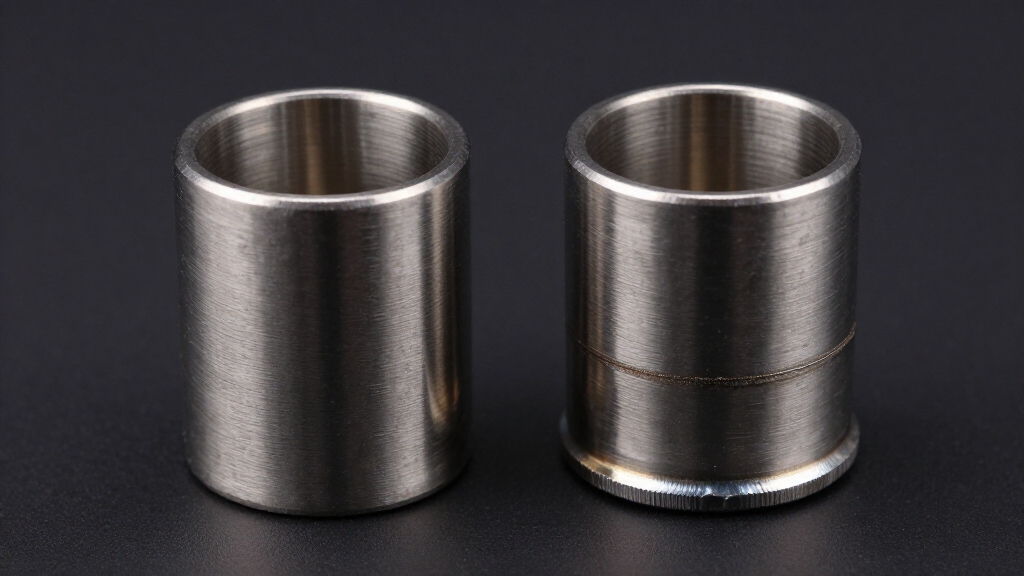
While both seamless and welded pipes serve similar purposes, their manufacturing processes differ fundamentally and impact their properties markedly.
Seamless pipes are produced by piercing or extrusion of a solid steel billet, eliminating any longitudinal weld seam. This absence of a seam defines seamless pipes and influences uniformity and integrity.
In contrast, welded pipes form from steel plates or strips rolled and joined via welding methods like ERW, LSAW, or SSAW. This seam introduces a distinct fabrication step, requiring rigorous quality control.
Seamless pipe processes often involve hot rolling or cold drawing, affecting surface finish and thickness variation. Welded pipes benefit from consistent wall thickness and dimensional control but demand weld integrity testing.
Understanding these manufacturing distinctions helps you assess suitability based on application requirements. Proper surface preparation and cleaning before welding are critical for ensuring weld quality and preventing defects.
Because seamless pipes lack a longitudinal weld, they inherently offer greater strength and superior pressure resistance compared to welded pipes. This absence of a weld seam eliminates a typical weak point, making seamless pipes ideal for demanding high-pressure and cyclic stress applications.
Seamless pipes, free of weld seams, deliver enhanced strength and pressure resistance for high-stress applications.
When you evaluate these pipes, consider:
You’ll find seamless pipes preferred in critical services where strength and pressure performance are paramount. Welded pipes suit moderate pressure applications with less stringent requirements. However, when welding is necessary, proper technique and filler materials are essential to minimize cracking risks and ensure joint durability.
Understanding the strength and pressure capabilities of seamless and welded pipes sets the stage for evaluating their size limits and availability.
Seamless pipes typically come in sizes up to NPS 24 (610 mm), constrained by their manufacturing methods like piercing and extrusion, which limit maximum diameter and length.
In contrast, welded pipes, formed from plates or coils, are available in much larger diameters, exceeding NPS 80, and can be produced in long continuous lengths.
This makes welded pipes easier to source for large-bore applications with wider stock ranges.
While seamless pipes excel in high-pressure scenarios, their size availability is more limited.
Welded pipes offer greater flexibility in size and length, making them preferable when project specifications demand large diameters or extended pipe runs.
The welding process used to join the pipes often involves fusion welding, which creates strong metallurgical bonds by melting the base metals at the joint.
Seamless pipes usually come with a price tag that’s about 20–40% higher than welded pipes. Why’s that? Well, it all boils down to their complex manufacturing process.
Plus, if you need larger diameters or specialized grades, be prepared for longer delivery times.
On the flip side, welded pipes are often the more economical choice. They’ve quicker lead times and are more readily available in inventory.
Additionally, welded pipes often use a continuous consumable electrode in processes like submerged arc welding, which improves efficiency and weld quality.
When evaluating pipe options, cost and lead time often play a decisive role in your selection process.
Seamless pipes typically carry a premium, costing about 20–50% more than welded pipes due to their complex manufacturing from solid billets.
Welded pipes, formed by joining steel plates or coils, are more economical and generally available with shorter lead times.
Consider these key points:
Understanding these factors helps you balance budget constraints against performance and delivery requirements. Using proper surface preparation can also improve weld strength and penetration, enhancing the reliability of welded pipes.
Although seamless pipes offer superior performance in demanding applications, their manufacturing process often extends delivery times compared to welded pipes.
Seamless pipe production involves piercing and hot working, which takes longer and limits size availability.
Welded pipes, formed from steel plates or coils, benefit from faster fabrication and broader stock options, resulting in shorter lead times and reduced costs.
| Factor | Seamless Pipe | Welded Pipe |
|---|---|---|
| Manufacturing | Piercing, extrusion, hot rolling | Rolling, ERW/LSAW/SSAW welding |
| Lead Time | Longer (specialized process) | Shorter (standardized process) |
| Cost | 20-50% higher | More economical |
| Size Availability | Limited (up to ~NPS 24) | Larger diameter options |
| Inventory | Limited stock | Readily available |
You should weigh these delivery factors carefully for project timelines. Proper material choice and maintenance can also influence overall project safety and longevity.
Since surface quality markedly impacts pipe performance and inspection protocols, understanding the differences between seamless and welded pipes is essential.
Seamless pipes often exhibit rougher surfaces and variable wall thickness due to hot-working processes. This can increase the need for detailed dimensional inspection.
Welded pipes provide more consistent wall thickness and smoother surfaces, simplifying internal inspections. However, they require rigorous weld integrity testing.
Key considerations include:
You must tailor inspection protocols accordingly for reliable performance in your application.
Additionally, employing appropriate non-destructive testing methods ensures early detection of surface and subsurface defects critical to weld quality.
Selecting the right pipe type hinges on analyzing your project’s pressure, temperature, diameter, budget, and delivery constraints.
Choose seamless pipes when you face high-pressure, high-temperature environments or when codes mandate eliminating longitudinal welds for safety.
Select seamless pipes for high-pressure, high-temperature conditions or when regulations require no longitudinal welds.
Seamless pipes excel in demanding conditions like oil and gas or power generation but come at a higher cost and longer lead times.
Opt for welded pipes when your project involves large diameters, moderate pressure, or requires tight dimensional control with shorter delivery times and lower budget.
Welded pipes suit structural, utility, and water systems where extensive lengths and economical solutions matter.
Ultimately, balance performance needs against cost and availability.
Ensure your selection aligns with inspection requirements and project specifications for best-in-class safety and efficiency.
Additionally, using certified welding processes ensures the welded joints meet the necessary strength and leak-proof standards for critical applications.
You’ll find seamless pipes generally offer better corrosion resistance, as they lack a weld seam that can act as a corrosion initiation site.
Welded pipes may require additional surface treatments or inspections to guarantee weld integrity against corrosion.
However, corrosion resistance also depends heavily on material grade and protective coatings.
Choosing the right alloy and proper maintenance is vital regardless of pipe type to maximize longevity in corrosive environments.
Yes, you’ll find differences in environmental impact between the two.
Seamless pipes generally consume more energy and raw material during production due to complex forging and hot-working processes.
This leads to a higher carbon footprint.
Welded pipes use less energy and allow recycling of steel coils, reducing waste.
However, welded pipes require additional inspection and testing, which may slightly increase resource use.
Your choice should consider these trade-offs alongside project demands.
You might assume welding in pipe manufacturing is a one-size-fits-all process, but it’s far more specialized.
Typically, you’ll find Electric Resistance Welding (ERW), Longitudinal Submerged Arc Welding (LSAW), and Spiral Submerged Arc Welding (SSAW) techniques.
ERW offers precision for smaller diameters, while LSAW and SSAW handle larger pipes with strong, consistent welds.
Each method guarantees structural integrity, but you must select based on pipe size, application, and stress tolerance.
Yes, you’ll repair seamless and welded pipes differently.
Seamless pipes, lacking a weld seam, require straightforward techniques like grinding or localized heat treatment for minor damage.
Welded pipes demand more careful weld seam inspection and often need weld repair or rewelding to restore integrity.
This includes nondestructive testing to verify quality.
You must consider the pipe’s construction to apply the proper repair method, ensuring safety and performance under service conditions.
You’ll find seamless pipes perform better in cryogenic applications due to their uniform structure, lacking weld seams that can become brittle at low temperatures.
Welded pipes may risk weld seam cracking unless carefully treated and inspected. If you need maximum toughness and resistance to thermal stress, seamless pipes are preferable.
However, with proper welding techniques and post-weld heat treatment, welded pipes can still meet cryogenic standards for less demanding uses.
When choosing between seamless and welded pipes, consider that seamless pipes can withstand pressures up to 30% higher than welded ones due to their uniform structure.
This difference can be critical in high-stress environments, ensuring safety and durability.
While welded pipes offer cost efficiency and size versatility, seamless pipes provide superior strength and reliability.
By carefully analyzing your project’s requirements, you can select the pipe type that most effectively balances performance, cost, and availability.