Phone:
(701)814-6992
Physical address:
6296 Donnelly Plaza
Ratkeville, Bahamas.

Phone:
(701)814-6992
Physical address:
6296 Donnelly Plaza
Ratkeville, Bahamas.

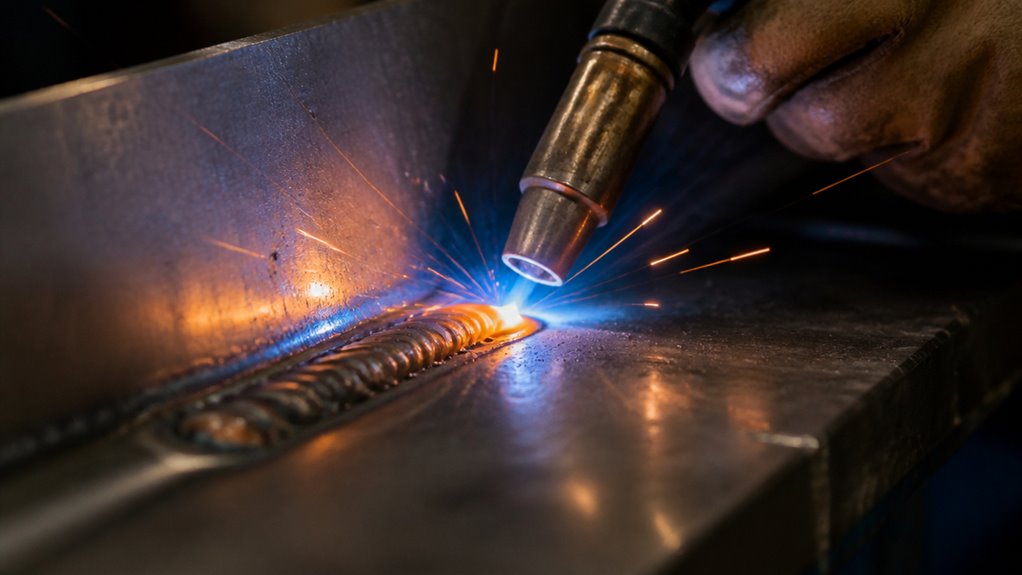
A hot pass in welding is the vital second bead you apply immediately after the root pass while the joint is still hot or semi-hot.
You’ll use it to clean out slag, refine the root weld’s shape, and improve fusion between layers. This strengthens the joint and reduces cracking risk.
Applying it with controlled heat and steady technique guarantees proper fusion and tempering. Understanding its role and precise application will help you achieve higher weld integrity and quality.
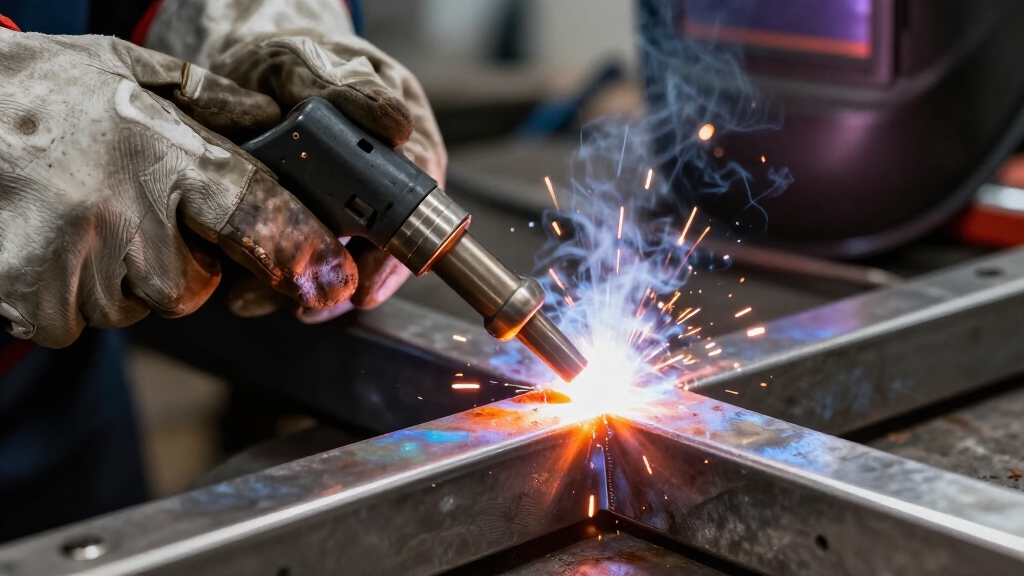
In welding, a hot pass is the second weld bead applied immediately after the root pass while the joint is still hot or semi-hot.
The hot pass is the second weld bead applied right after the root pass on a still-warm joint.
You use this pass to clean out slag and impurities left by the root pass, improving fusion between the initial weld and subsequent layers.
Applying the hot pass with slightly higher heat input helps refine the shape and contour of the root weld, reducing grinding and cleanup afterward.
Typically run as a stringer bead, it contributes to a uniform, even weld bead.
This step also adds thickness and may temper the heat-affected zone, lowering cracking risk.
Maintaining a consistent arc length during the hot pass is crucial to ensure proper fusion and prevent defects.
Understanding where the hot pass fits within the multi-pass welding sequence is essential for achieving peak weld integrity.
You start with the root pass, which forms the initial fusion of the joint.
Immediately after, you apply the hot pass while the root weld remains hot or semi-hot. This second bead cleans out slag, refines the root’s contour, and improves fusion for subsequent layers.
After the hot pass, you proceed with fill passes to build joint thickness, followed by cap passes to finish the weld surface. The hot pass acts as a critical intermediary step, especially in pipe welding, providing a cleaner, stronger foundation and reducing defects.
Skipping or mishandling it can compromise weld quality, so you must integrate it precisely within the welding sequence for optimum, durable results.
A properly executed hot pass supports the integrity of subsequent fill and cap passes by ensuring a defect-free transition from the root pass.
Applying the hot pass at the right moment can markedly enhance weld integrity and longevity. You should apply the hot pass immediately after the root pass while the weld is still hot or semi-hot.
This timing allows the hot pass to effectively clean out slag and impurities trapped by the root pass, improving fusion and refining the weld contour. Avoid delays that let the root cool excessively, as this diminishes the hot pass’s ability to temper the heat-affected zone and reduce cracking risk.
Use a slightly higher heat input than the root pass but control it to prevent burn-through. Employ the hot pass especially when the root pass shows minor imperfections or unevenness, ensuring a solid foundation for subsequent fill and cap passes in multi-pass welding operations.
Using IGBT inverter technology can help maintain precise heat control during the hot pass for optimal weld quality.
By performing the hot pass immediately after the root pass, you guarantee the weld joint gains critical improvements in fusion and cleanliness.
The hot pass effectively removes slag and impurities left by the root, ensuring a cleaner weld interface.
It also refines the weld contour, reducing the need for extensive grinding later.
You’ll notice enhanced fusion between the root and subsequent layers, which strengthens the joint’s structural integrity.
Additionally, the hot pass adds essential weld thickness, providing a stable base for fill and cap passes.
This step helps temper the heat-affected zone mildly, decreasing the risk of cracking during cooling.
Ultimately, incorporating a hot pass improves weld quality and durability, especially in demanding pipe and multi-pass welding applications where reliability is paramount.
Using a vertical-up welding direction during the hot pass maintains consistent penetration and bead quality essential for optimal results.
When you’re working on your hot pass, it’s a good idea to set the heat input just a bit higher than what you used for the root pass. This way, you can ensure proper fusion without the worry of burn-through.
Also, try using a stringer bead technique. It really helps you maintain control and gives you that nice, uniform weld bead you’re aiming for.
Keep in mind that precise heat input control is essential to prevent defects and can affect overall project timelines.
Achieving the ideal heat setting for a hot pass is essential to guarantee proper fusion and avoid defects like burn-through or insufficient penetration. You should increase amperage slightly above the root pass, typically by a few amps, to enhance weld fluidity and slag burn-out without compromising joint integrity.
Maintaining consistent voltage and travel speed is critical to prevent overheating, which can cause distortion or excessive penetration. Monitor the weld pool temperature closely; the hot pass must be applied while the root weld remains warm enough to ensure metallurgical bonding and tempering effects.
Avoid excessive heat input, as it risks burn-through and weakens the heat-affected zone. By precisely controlling your heat settings, you’ll optimize fusion, improve bead shape, and create a stable foundation for subsequent fill and cap passes. Understanding the impact of heat input on weld pool formation and the heat-affected zone is crucial for managing weld quality and minimizing distortion.
Controlling heat input sets the stage for an effective hot pass. Employing the stringer bead technique enhances this control.
When you use a stringer bead, you maintain a steady, narrow weld pool. This minimizes overheating and prevents burn-through.
This technique allows you to focus heat precisely, improving fusion between the root pass and subsequent layers.
Keep your travel speed consistent to avoid excessive heat buildup and assure uniform bead shape.
Avoid weaving motions; the stringer bead’s straight path supports better control and slag removal.
Applying the hot pass while the weld is still warm lets you refine the internal contour and burn out trapped impurities.
Mastering this approach strengthens the weld’s foundation, reduces cleanup, and promotes a sound, durable joint for critical applications like pipe welding.
Proper control of heat input and travel speed is essential to prevent defects such as lack of fusion and shallow penetration.
You know, the hot pass is a game changer when it comes to welding. It really helps prevent slag inclusions that can weaken your weld and lead to defects.
But that’s not all! It also plays a crucial role in reducing crack formation. By tempering the heat-affected zone early, you’re setting yourself up for success.
When you understand these benefits, it’s easier to ensure that your weld joint isn’t just strong, but also reliable. So, keep that hot pass in mind next time you’re welding!
Proper slag removal between passes is essential to avoid slag inclusion defects that compromise weld integrity.
When dealing with multi-pass welding, preventing slag inclusion is critical to maintaining weld integrity. The hot pass plays a pivotal role in this by cleaning out residual slag left from the root pass before it solidifies.
By applying the hot pass while the weld is still hot or semi-hot, you make certain the slag is effectively burned out or fused into the weld pool, minimizing trapped impurities. This process improves fusion between passes and eliminates common defects like slag pockets that can compromise strength and cause failure.
Running the hot pass at a slightly higher heat input helps refine the weld surface and promotes slag removal. By prioritizing the hot pass, you reduce the risk of slag inclusion, resulting in a cleaner, stronger, and more reliable weld joint.
Proper breaker sizing using the duty cycle multipliers ensures consistent heat input during the hot pass, which is essential to preventing slag inclusion and maintaining weld quality.
Although crack formation poses a significant threat to weld integrity, the hot pass effectively mitigates this risk by reinforcing the joint early in the welding sequence.
By depositing the second bead while the root weld remains hot, the hot pass refines the internal contour and reduces residual stresses that contribute to cracking.
This pass also provides a mild tempering effect on the heat-affected zone, which helps alleviate brittleness and susceptibility to crack initiation.
Applying controlled heat input during the hot pass prevents rapid cooling, further minimizing thermal stresses.
You’ll find that the hot pass improves fusion between layers, eliminating micro-gaps where cracks could propagate.
Maintaining proper welding procedure specifications during the hot pass is essential to ensure consistent weld quality and prevent defects.
Enhancing weld quality and strength hinges markedly on the effective use of the hot pass.
You’ll find that this pass cleans out slag left by the root pass, improves fusion, and refines the root weld’s contour.
By applying the hot pass while the weld is still hot, you reduce defects and create a sound base for subsequent passes.
This step also tempers the heat-affected zone, reducing residual stresses and cracking risk.
| Benefit | Mechanism | Result |
|---|---|---|
| Slag Removal | Burns out trapped slag | Cleaner weld interface |
| Fusion Improvement | Higher heat input | Enhanced metallurgical bond |
| Contour Refinement | Stringer bead technique | Uniform, even weld bead |
Using the hot pass, you guarantee a durable, high-integrity joint that meets strict welding standards.
Mastering the hot pass not only improves weld quality but also sets the stage for effective inspection and evaluation.
To inspect your hot pass, begin with a thorough visual examination. Look for uniform bead shape, consistent width, and absence of slag inclusions or undercutting. Use proper lighting and magnification to detect surface irregularities.
Next, perform non-destructive testing methods such as dye penetrant or ultrasonic inspection to identify subsurface defects like cracks or incomplete fusion.
Measure bead reinforcement to guarantee it meets specifications without excessive build-up that could cause stress concentrations.
Document all findings and compare them against welding procedure specifications (WPS).
You’ll commonly find a hot pass in multi-pass welding processes like Shielded Metal Arc Welding (SMAW), Gas Tungsten Arc Welding (GTAW), and Flux-Cored Arc Welding (FCAW), especially in pipe welding.
These methods benefit from the hot pass to clean slag, improve fusion, and refine weld shape after the root pass.
Using a hot pass guarantees stronger joints and reduces defects, making it essential in structural and pipeline welding applications where reliability is key.
Skipping a hot pass is like leaving a puzzle half-done. You might get by, but the fit won’t be perfect.
In some simple, single-pass welds or non-critical applications, you can skip it. However, in multi-pass or high-stress welds, especially pipe welding, skipping the hot pass risks slag inclusion, poor fusion, or cracking.
You should only omit it when weld integrity is less critical and root quality is excellent.
The hot pass affects post-weld heat treatment (PWHT) by providing a mild tempering effect on the heat-affected zone (HAZ).
Since you apply it while the weld is still warm, it reduces thermal stresses and helps refine the microstructure.
This early reinforcement lowers the risk of cracking during cooling, making PWHT more effective.
Fundamentally, the hot pass creates a more uniform base, improving the weld’s response to subsequent heat treatment processes.
You’ll find a hot pass most beneficial with carbon steels, low-alloy steels, and stainless steels, especially in pipe welding.
These materials often require solid fusion and slag removal between passes to avoid defects.
The hot pass helps refine the root pass, improving weld integrity and reducing cracking risk.
It’s critical when working on structural or pressure-containing components where durability and soundness are paramount.
This process ensures a stronger foundation for subsequent weld layers.
You absolutely must respect safety during a hot pass. One wrong move and the weld can turn into a fiery disaster!
Always wear proper protective gear: gloves, helmet, and flame-resistant clothing. Keep your ventilation strong to avoid toxic fumes from slag and flux.
Be mindful that the weld is still hot, so avoid burns and maintain control to prevent spatter. Staying alert guarantees both your safety and weld integrity during this critical pass.
In welding, a hot pass is your critical step to guarantee strength and integrity. It bridges the root and fill passes, reducing defects and refining the weld pool.
Remember, “measure twice, cut once” applies here. Taking care with your hot pass prevents costly rework and failure.
By mastering heat control and technique, you’ll enhance weld quality, avoid common issues, and produce durable, reliable joints every time.
Don’t underestimate this essential pass.