Phone:
(701)814-6992
Physical address:
6296 Donnelly Plaza
Ratkeville, Bahamas.

Phone:
(701)814-6992
Physical address:
6296 Donnelly Plaza
Ratkeville, Bahamas.

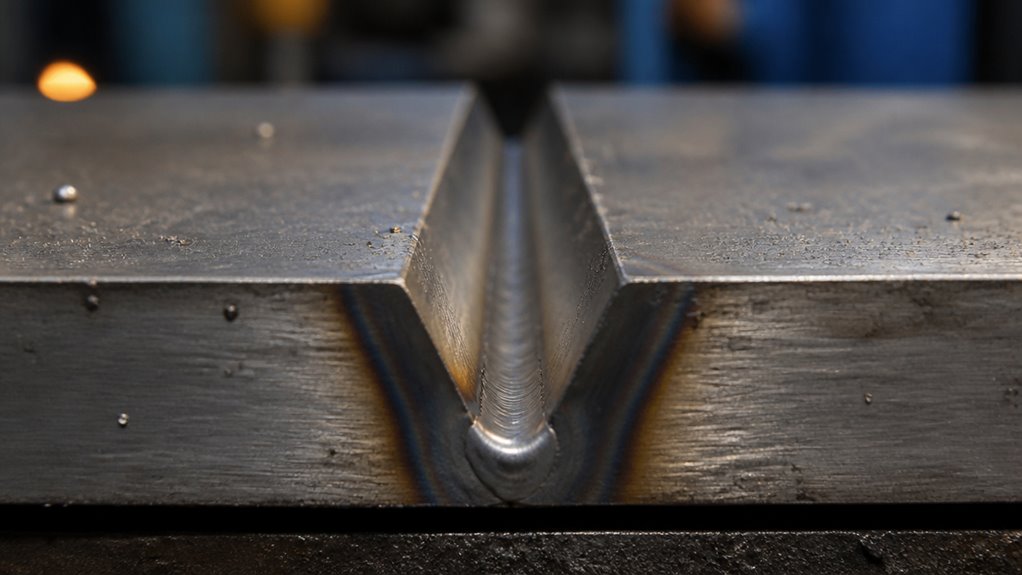
A root pass in welding is the first weld layer you deposit to secure full penetration and solid fusion at the joint’s root. It forms the foundation for all later weld passes and prevents leaks or structural failure, especially in pipe or pressure applications.
You’ll need precise joint preparation, proper torch angles, and controlled heat input to avoid defects. A strong root pass is vital for the entire weld’s integrity and strength. Exploring its techniques and quality control will enhance your welding outcomes.
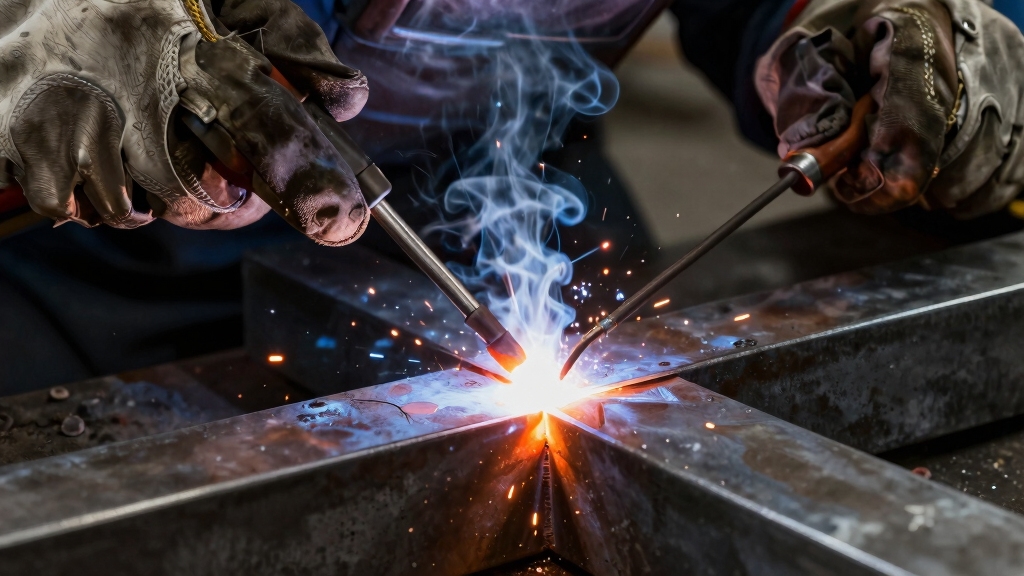
Understanding the root pass is crucial for achieving a strong, reliable weld joint.
Grasping the root pass is key to creating durable and dependable weld joints.
You place the root pass as the first weld bead in a multi-pass weld, laying the foundation for subsequent layers like fill and cap passes.
It fills the pre-formed root opening, ensuring full penetration at the joint’s base, which is critical when welding materials thicker than 1/2 inch.
According to AWS, the root pass produces the root bead that bonds the metal pieces securely.
A proper root pass prevents leakage, especially in pipe welding, and establishes structural integrity.
If this initial bead is weak or flawed, it compromises all following weld layers, increasing the risk of failure under pressure.
Hence, mastering the root pass is essential for weld quality and durability.
Precise control of heat input and sequential passes are key to building a robust root pass in pipe welding applications.
The root pass secures the weld joint by establishing the initial metallurgical bond between the base metals. It ensures complete penetration at the joint’s root.
This foundational weld bead fuses the metal pieces, providing structural integrity and preventing failure under stress.
When you execute a proper root pass, you create a defect-free base that supports all subsequent weld layers. This pass also seals the joint against leakage, which is especially critical in pressure-containing applications.
Key factors include:
Following a carefully prepared Welding Procedure Specification ensures that these critical parameters are consistently met for optimal root pass quality.
When you’re getting ready to prepare the joint, it’s super important to set those bevel angles just right. This ensures that you get proper weld penetration and a good fit-up.
Now, let’s talk about the root opening. You’ll want to control it really carefully, usually keeping it between 1/16″ and 1/8″. This range strikes a nice balance between making it accessible and managing the heat input effectively. Controlling heat input is critical to preserve weld integrity and prevent distortion during fillet weld formation, as outlined in heat input control practices.
When preparing a joint for welding, selecting the correct bevel angle plays a vital role in guaranteeing proper penetration and weld integrity.
The bevel angle controls access to the root and impacts how well the root pass fuses the metals together. Common bevel angles range from 30° to 45°, depending on material thickness and welding process.
Key points to take into account include:
Smaller bevel angles reduce weld volume but require precise fit-up. Larger bevel angles improve access but may increase heat input.
Consistent angle guarantees uniform root penetration. Deviations can cause incomplete fusion or excess reinforcement.
Proper bevel angle selection supports mechanical strength and minimizes defects. Accurate bevel preparation is foundational to achieving a sound root pass and durable multi-pass welds.
Bevel angle choice is often influenced by the groove design selected based on material thickness and type to ensure optimal weld bead profile and penetration.
Selecting an appropriate root opening size complements the bevel angle to guarantee proper access and fusion during the root pass.
Typically, you’ll set the root opening between 1/16″ and 1/8″, with 1/8″ being standard for TIG welding.
This gap guarantees adequate penetration without requiring excessive heat or large electrodes.
If the opening is too narrow, you risk incomplete fusion and poor weld integrity.
Conversely, an overly wide root opening demands higher amperage and can cause excessive reinforcement or burn-through.
You must balance these factors based on material thickness and welding process.
Correct root opening size facilitates optimal weld pool control, consistent keyhole formation, and full penetration.
These are critical for a defect-free root pass and overall joint strength.
Symmetrical root openings on both sides of a double groove weld help balance heat input and reduce distortion.
You typically use a root pass when you’re working with materials thicker than 1/2 inch. This helps ensure you get full penetration and maintain joint integrity.
For pipe welding, the root pass is crucial because it prevents leakage by creating a strong initial bond right at the joint root.
So, when you’re setting up for a multi-pass weld, think of the root pass as your first step. It lays down a solid foundation for the fill and cap passes that follow.
This way, you’re building a reliable structure from the ground up!
Proper qualification of the root pass procedure, including adherence to governing welding codes, is essential to ensure weld quality and compliance.
Welding thick materials demands careful application of the root pass to guarantee joint integrity and penetration.
When working with plates thicker than 1/2 inch, the root pass establishes a solid foundation, assuring full fusion at the joint’s root.
You must control heat input and maintain a precise root opening to avoid undercutting and incomplete fusion.
Proper execution prevents defects that weaken the weld and compromise structural strength.
Key considerations for applying root passes in thick materials include:
Following these practices secures durable, defect-free welds in thick metal assemblies. Additionally, operators should wear flame-resistant clothing and use proper PPE to protect against burns and radiation hazards during welding.
Make certain the root pass is properly executed when joining pipes, as it establishes the essential bond and prevents leaks in pressurized systems.
In pipe welding, the root pass fills the root opening with full penetration, securing the joint’s integrity. You’ll typically use it in pipes thicker than 1/2 inch, where proper fusion at the root prevents failure.
Prepare beveled pipe ends with a controlled root gap around 1/8 inch to optimize penetration and minimize excessive heat input.
During welding, maintain correct torch angle, travel speed, and heat to avoid internal undercutting. Techniques like the “whip and pause” help stabilize the keyhole and ensure a sound root bead.
A defect-free root pass is critical, as it forms the foundation for all subsequent weld layers in pipe assemblies.
Use 100% argon for shielding and back purge to ensure stable arcs and prevent contamination during the root pass.
In multi-pass joints, the root pass always initiates the welding sequence, providing the essential foundation for subsequent layers.
You position the root pass at the joint’s root opening, ensuring complete penetration and fusion between base metals. Accurate placement here prevents defects and strengthens the overall weld.
Use the root pass when welding thick materials, especially over 1/2 inch. Proper beveling and gap control are vital for best positioning.
Consider these points when placing the root pass:
Correct positioning guarantees joint integrity throughout the multi-pass weld. Proper control of heat input and welding parameters during the root pass is critical to manage the weld pool, penetration, and minimize the heat-affected zone.
Mastering the whip and pause technique is essential for producing a strong root pass, especially when working with 6010 electrodes on pipe or plate joints.
You’ll manipulate the electrode by whipping it up and down while advancing steadily, maintaining control over the molten keyhole at the joint root.
The pause occurs as you press the electrode into the leading edge of the keyhole, stabilizing penetration and ensuring full fusion without undercutting.
This method helps you regulate heat input and weld pool size, critical for complete root penetration and joint integrity.
Listening for the characteristic “wind noise” during the pause confirms correct pressure.
Applying this technique precisely prevents defects and establishes a robust foundation for subsequent weld passes, optimizing strength and durability in pressure-critical applications.
Using a high dig setting with 6010 electrodes supports deep penetration and keyhole maintenance during the root pass.
After applying the whip and pause technique to establish a solid root pass, you must focus on preventing common defects such as undercutting.
Undercutting compromises weld strength by creating grooves along the weld toe, which can lead to failure under stress.
Undercutting weakens welds by forming grooves along the toe, increasing risk of stress-induced failure.
To avoid this, you should:
Control heat input carefully during the root pass to ensure adequate penetration without causing excessive distortion or burn-through.
You should adjust amperage and travel speed precisely to achieve full fusion at the root while avoiding overheating.
Maintaining a consistent torch angle and steady travel speed helps control the weld pool size and penetration depth.
Excessive heat can lead to burn-through or warping, while insufficient heat can cause lack of fusion or incomplete penetration.
Use appropriate electrode diameter and root opening to balance heat input effectively.
Monitoring the keyhole during pipe welding or visual cues in plate welding will guide your adjustments.
Proper heat and penetration control guarantees a strong root bead, forming a solid foundation for subsequent weld passes without compromising joint integrity.
You begin the welding process with the root pass, which is crucial for anchoring the joint. This pass aims for full penetration into the root, ensuring a solid foundation. It’s important to have precise control here to avoid defects and maintain structural integrity.
Once the root pass is complete, you move on to the fill pass. This step is different, as it adds material to the joint but doesn’t require the same level of precision. Instead, it focuses on building up the weld.
Finally, you finish with the cap pass. This pass seals and smooths out the weld, but it’s essential to remember that it relies entirely on the strength established by the root pass. If that initial pass isn’t strong, the entire weld can be compromised.
Distinguishing the root pass from the fill and cap passes is essential for understanding its critical role in weld integrity.
The root pass forms the foundational bond, ensuring full penetration at the joint’s root and securing the base for subsequent layers. Without a sound root pass, the overall weld strength and leak resistance are compromised.
When you focus on the root pass, consider that:
While the root pass establishes the foundational bond and guarantees full penetration at the joint’s root, the fill pass focuses on building up the weld volume by filling the joint cavity.
You rely on the root pass to secure complete fusion at the joint base, preventing leaks and ensuring strength.
In contrast, the fill pass adds layers to reinforce the weld and prepare for the cap pass.
Unlike the root pass, which demands strict control of penetration and fusion, the fill pass prioritizes volume and consistency.
The cap pass, following the fill, provides a smooth finish and additional protection.
Understanding these distinctions helps you control weld quality, ensuring structural integrity and compliance with technical standards throughout multi-pass welding operations.
When root passes exhibit weakness or defects, they undermine the entire weld joint’s integrity and can lead to premature failure. You need to systematically identify the root cause to correct issues effectively.
Common problems include incomplete penetration, porosity, and internal undercutting, each compromising strength and durability.
Consider these troubleshooting points:
Verify root opening and bevel angle match specifications to guarantee proper penetration.
Adjust travel speed and electrode angle to avoid lack of fusion or excessive undercut.
Inspect for contamination such as oil or rust that causes porosity.
Confirm welding parameters meet required amperage and voltage for material thickness.
Use non-destructive testing (NDT) to detect hidden internal defects early.
Addressing these factors promptly helps restore root pass quality and weld reliability.
Because the root pass establishes the foundation for all subsequent weld layers, maintaining consistent quality is critical to assuring joint integrity and preventing failures.
You should control travel speed carefully to achieve full penetration without undercutting.
Maintain the correct torch angle, typically between 10° and 15° from vertical, to optimize fusion at the root.
Use the appropriate root opening, usually 1/16″ to 1/8″, to facilitate proper weld pool formation.
Monitor heat input closely; excessive heat causes burn-through while insufficient heat compromises fusion.
Employ techniques like the “whip and pause” to stabilize the keyhole and control weld bead geometry.
Finally, inspect the root pass for complete fusion and absence of internal defects before proceeding with fill passes to assure structural soundness.
For root pass welding, you’ll want machines that offer precise control and stable arcs.
TIG welders are ideal for thin materials and root passes requiring a narrow, clean bead with low amperage.
For thicker metals, stick welders with 6010 electrodes are common, providing deep penetration and keyhole control.
MIG machines can be used but often lack the fine control needed.
Choose machines with adjustable amperage, good arc stability, and reliable heat control for quality root passes.
Electrode material shapes your root pass quality like a sculptor’s chisel defines stone.
You’ll get peak penetration and fusion when you choose electrodes compatible with the base metal and welding process.
For example, cellulose electrodes offer deep penetration for pipe roots, while low-hydrogen types reduce cracking risks.
Using the wrong electrode can cause porosity, undercutting, or weak bonding.
This compromises the weld’s integrity and can lead to failure under stress.
Yes, root pass techniques vary with different metals because each metal’s thermal conductivity, melting point, and oxidation tendencies affect weld behavior.
You’ll need to adjust parameters like heat input, electrode type, and travel speed accordingly.
For example, aluminum demands higher heat and specialized filler rods, while stainless steel requires controlled heat to avoid warping.
Tailoring your technique guarantees proper penetration, fusion, and joint integrity for the specific metal you’re welding.
When you perform a root pass on a high-pressure pipeline, you must wear flame-resistant clothing and ensure proper ventilation to avoid toxic fumes from deep penetration welding.
Unique safety precautions include monitoring for root-side undercutting that can cause weld failure. Protect yourself with face shields and respiratory gear.
Additionally, you should use insulated gloves to manage the precise heat control needed, preventing burns from the intense focus on the root opening gap.
You’ll find ambient temperature directly affects root pass welding by influencing metal cooling rates and weld penetration.
Cold conditions increase cooling speed, risking incomplete fusion and cracking.
High temperatures slow cooling, potentially causing excessive grain growth.
You must adjust heat input and travel speed accordingly to maintain proper penetration and fusion.
Controlling ambient temperature helps you avoid defects and guarantees the root pass provides a strong, reliable weld foundation.
Mastering the root pass is like laying the foundation of a skyscraper. If it’s flawed, the whole weld risks collapse.
You can’t afford weak penetration or poor fusion here; your entire joint’s strength depends on it.
By controlling heat, using proper bevel angles, and perfecting your technique, you guarantee a solid start that supports every fill and cap pass that follows.
Nail the root pass, and you build welds that stand the test of time.