Phone:
(701)814-6992
Physical address:
6296 Donnelly Plaza
Ratkeville, Bahamas.

Phone:
(701)814-6992
Physical address:
6296 Donnelly Plaza
Ratkeville, Bahamas.

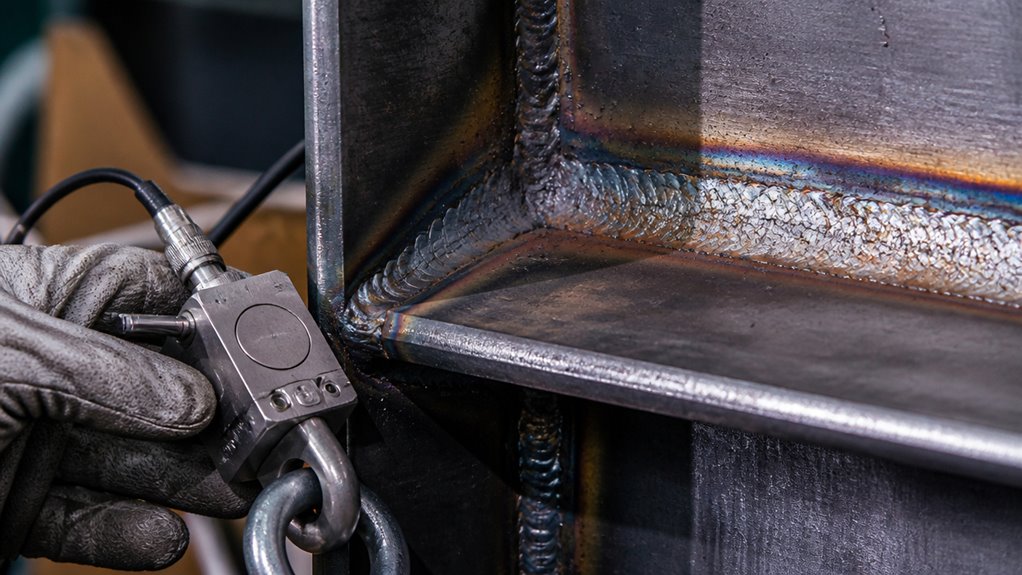
You should know weld strength depends on more than just size; material properties, joint type, and loading direction all play vital roles.
Effective throat area, roughly 0.707 times the fillet weld leg, defines the load-bearing zone. Increasing weld length and throat area directly boosts capacity but watch for distortion or residual stresses from oversized welds.
Design codes apply safety factors that reduce theoretical strength to guarantee reliability. Understanding these variables lets you predict weld performance more accurately and optimize joint design.
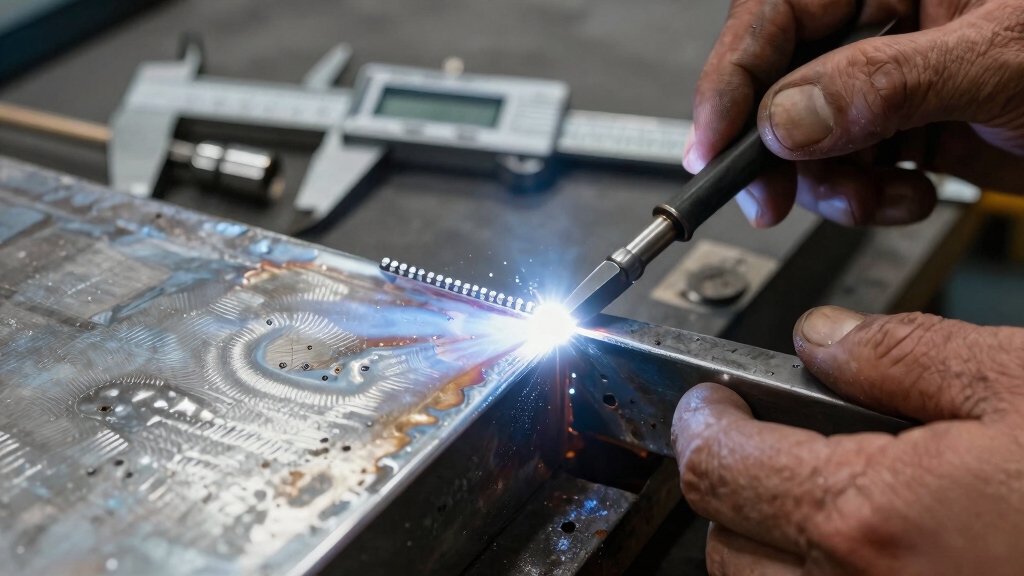
When evaluating weld strength, you need to take into account several key factors that directly influence a joint’s capacity to carry loads.
Evaluating weld strength requires considering key factors that directly impact a joint’s load-carrying ability.
First, the joint type, whether fillet, butt, or a combination, affects load transfer paths and stress distribution.
Material strength is critical since the weld and surrounding base metal must resist applied stresses without premature failure.
Weld length influences strength by increasing the load-bearing area; longer welds generally improve capacity.
Loading direction matters because welds handle shear and tensile stresses differently, impacting failure modes.
Control of heat input and process consistency also affect the heat-affected zone’s integrity.
Finally, adherence to design specifications and codes guarantees safety factors and effective weld lengths are properly considered, preventing overestimation of joint strength.
Proper management of heat input and welding parameters is essential to minimize distortion and maintain the metallurgical properties of the weld and heat-affected zone.
When it comes to calculating the strength of a fillet weld, the throat size is a key factor. For equal-leg fillet welds, the throat size is typically about 0.707 times the leg length. So, if you know the leg length, you can easily find the throat size.
Now, here’s where it gets interesting: increasing the weld size can really boost the effective throat area. This means that the load capacity gets enhanced, which is great for your overall design. But, just remember, you need to use the right formulas to assess that strength accurately. According to AWS D1.1, the minimum leg length must be specified based on base metal thickness to ensure compliance and weld strength.
The throat of a fillet weld plays a critical role in determining its strength. It defines the effective load-bearing area.
For equal-leg fillet welds, the throat thickness equals approximately 0.707 times the leg size. This reflects the weld’s actual shear plane.
This throat dimension directly affects the weld’s shear capacity. Weld strength calculations multiply throat size by allowable shear stress and weld length.
You must understand that increasing leg size increases throat thickness. This enhancement improves load resistance.
However, focusing on the visible weld bead width alone can mislead. The critical parameter is the effective throat area, not external dimensions.
Managing throat size guarantees proper stress distribution. It also prevents premature failure along the smallest shear plane, which governs fillet weld performance under typical loading conditions.
Proper weld bead profiles around the weld circumference are essential to ensure strong, leak-proof connections and prevent failure.
Increasing fillet weld size directly enhances the throat thickness, which is the critical dimension for load transfer and shear capacity.
Since the effective throat equals approximately 0.707 times the weld leg size, even small increases in weld size substantially boost the weld’s shear area.
You’ll notice this directly raises the load-bearing capacity because shear strength correlates strongly with throat cross-sectional area.
However, weld length and orientation also influence overall strength, so optimizing size alone isn’t sufficient.
Keep in mind that excessive weld size can introduce residual stresses or distortions, potentially weakening the joint.
Therefore, you must balance weld size with practical fabrication limits and code requirements to achieve reliable strength without compromising material integrity or introducing defects.
Ultimately, proper sizing guarantees the weld effectively resists applied loads through an adequate throat dimension.
Accurate assessment of weld size and throat thickness using a fillet weld gauge is essential to ensure compliance with specifications and weld quality.
Although fillet weld size visibly influences strength, calculating weld capacity requires focusing on the effective throat area, which is approximately 0.707 times the weld leg size.
This throat dimension represents the shortest distance through the weld cross-section that resists shear. To determine weld strength, multiply the throat area by weld length and allowable shear stress, often derived as a fraction of the filler metal’s tensile strength.
For example, single fillet weld strength is (P = 0.707 times s times sigma_t times l), where (s) is weld size, (sigma_t) is allowable shear stress, and (l) is weld length. Ignoring throat size leads to overestimating capacity, since the visible leg length doesn’t directly translate to load resistance.
You must also consider joint configuration and loading direction for accurate strength calculations. Proper selection of welding consumables ensures that the filler metal’s mechanical properties align with the required weld strength.
Because weld strength depends heavily on how forces are applied, you must carefully consider loading direction when designing welded joints. Loads aligned longitudinally along the weld tend to distribute stresses more evenly, enhancing capacity.
Weld strength varies with force direction; aligning loads along the weld improves stress distribution and joint capacity.
In contrast, transverse loading subjects the weld throat to higher shear stresses, often reducing effective strength.
For fillet welds, the throat area resists shear, but its orientation relative to load direction critically influences stress distribution.
You should note that welds loaded perpendicular to the weld axis experience complex stress states, increasing vulnerability to failure along the smallest shear plane. Consequently, understanding the load path and applying it relative to weld geometry guarantees accurate strength predictions.
Ignoring loading direction risks overestimating capacity, leading to unsafe or inefficient designs. A well-formed weld bead with uniform load distribution plays a crucial role in managing these stresses effectively.
When selecting materials and designing joints, you directly influence the strength and durability of welds. Material choice affects weld toughness, ductility, and susceptibility to cracking, especially in the heat-affected zone. Joint configuration dictates load transfer paths and stress concentration points, impacting shear and tensile capacity.
Consider these key factors:
Additionally, employing double groove welds can enhance penetration and balance residual stresses, significantly improving joint strength and reducing distortion in thick materials.
Understanding how weld length and throat area influence strength is essential to designing reliable joints.
Grasping the impact of weld length and throat area is key to creating strong, dependable joints.
You’ll find that weld strength scales directly with the effective throat area, the critical load-bearing cross-section. For equal-leg fillet welds, the throat is approximately 0.707 times the leg size.
Increasing weld length linearly increases the total load capacity by enlarging the shear area. However, very short welds may need effective-length reductions due to non-uniform stress distribution.
You should make certain weld length exceeds four times the throat dimension for full capacity. Remember, the controlling shear plane often governs failure.
Maximizing throat thickness and weld length improves strength. Precise calculation of these parameters lets you predict weld capacity accurately and avoid over- or under-design in critical structural connections.
For joints requiring maximum load capacity, specifying a Complete Joint Penetration (CJP) weld ensures full-thickness fusion and base-metal-equivalent strength.
Although welds can theoretically carry loads based on their calculated throat area and material strength, design codes and safety factors intentionally reduce allowable weld strength to guarantee reliability under real-world conditions.
When you design welds, you must consider these limitations to ensure safety and performance. The codes apply partial safety factors, reducing nominal strength to a design strength that accounts for uncertainties.
Here’s how design codes and safety factors limit weld strength:
Additionally, maintaining compliance with WPS and PQR ensures that welding procedures are qualified and executed consistently to meet these design and safety requirements.
Heat input during welding directly affects weld durability by influencing the heat-affected zone’s (HAZ) microstructure.
If you apply excessive heat, you risk grain growth and reduced toughness, weakening the HAZ.
Too little heat can cause incomplete fusion or lack of penetration, undermining joint strength.
Controlling heat input precisely guarantees prime microstructure, balancing hardness and ductility.
This ensures your weld maintains durability under load and resists cracking or brittle failure.
You can’t accurately assess weld strength just by looking at it. Visual inspection reveals surface flaws or obvious defects but misses critical factors like throat size, effective weld area, and internal continuity.
Strength depends on material properties, joint design, and loading direction, none of which are visible externally. To truly evaluate weld strength, you need destructive tests or non-destructive evaluations like ultrasonic or radiographic inspection methods.
Visual checks are necessary but insufficient alone.
Oh sure, just let your welds cool and magically get stronger.
Because post-weld treatment is just that simple!
In reality, it plays a vital role by relieving residual stresses, reducing brittleness, and refining microstructure.
Processes like stress relief annealing or peening improve toughness and fatigue resistance.
So, if you skip these steps, you’re basically betting your weld’s strength on luck, not science.
That’s a gamble you don’t want to take.
Different welding processes produce varying weld strengths due to heat input, penetration, and microstructure.
For instance, TIG welding offers precise control and strong, clean welds with minimal defects.
MIG welding provides faster deposition but may have slightly lower strength in some applications.
Stick welding (SMAW) can yield strong welds but is more sensitive to operator skill.
You should select a process that balances joint design, material, and loading conditions to optimize strength.
The most common weld defects that reduce joint strength are porosity, lack of fusion, cracks, and slag inclusions.
You should avoid porosity because trapped gas weakens the weld’s integrity.
Lack of fusion creates incomplete bonding, severely reducing load capacity.
Cracks act as stress concentrators, causing premature failure.
Slag inclusions interrupt the metal matrix, lowering tensile and shear strength.
Controlling these defects is essential for maintaining effective throat area and overall weld durability.
You might be surprised to learn that increasing the fillet weld throat by just 1 mm can boost weld strength by up to 20%. This highlights how critical precise weld sizing is to overall joint integrity.
By carefully considering factors like weld size, loading direction, materials, and joint design, you can optimize strength and safety.
Remember, adhering to design codes and safety factors guarantees your welds perform reliably under real-world conditions.
[…] Additionally, controlling heat input during welding is essential to prevent defects like undercut and maintain heat-affected zone integrity. […]