Phone:
(701)814-6992
Physical address:
6296 Donnelly Plaza
Ratkeville, Bahamas.

Phone:
(701)814-6992
Physical address:
6296 Donnelly Plaza
Ratkeville, Bahamas.

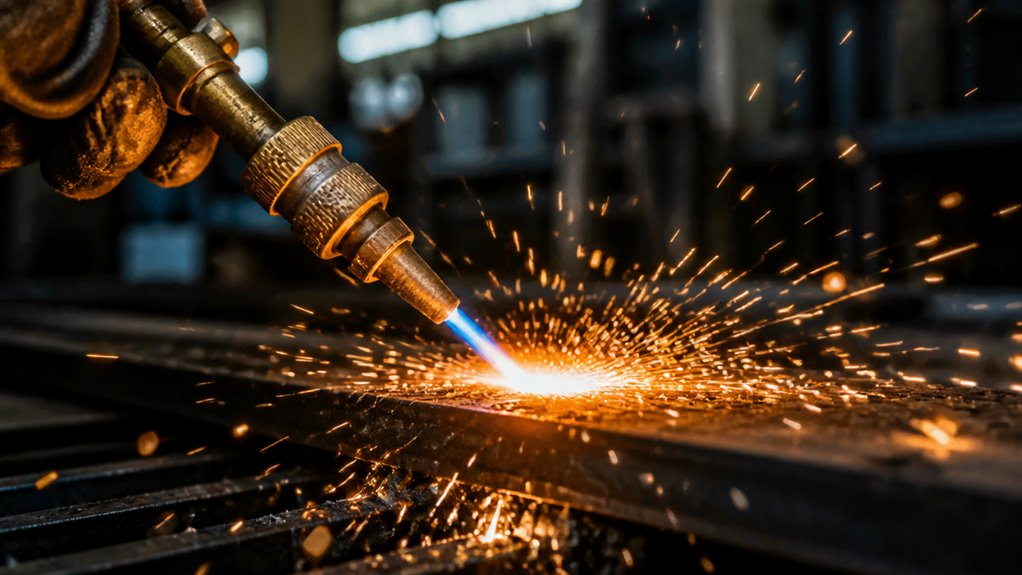
When selecting welding cutting tips, match the tip type and size to your fuel gas and metal thickness.
Use one-piece tips for acetylene and two-piece tips for natural gas, MAPP, or propane.
Make certain proper fit and flow capacity to avoid inefficient cuts or tip damage.
Maintain recommended oxygen and fuel pressures for a neutral preheat flame.
Keep the tip clean and secure for safety.
Understanding these basics improves cut quality and safety.
Advanced techniques enhance precision and durability.
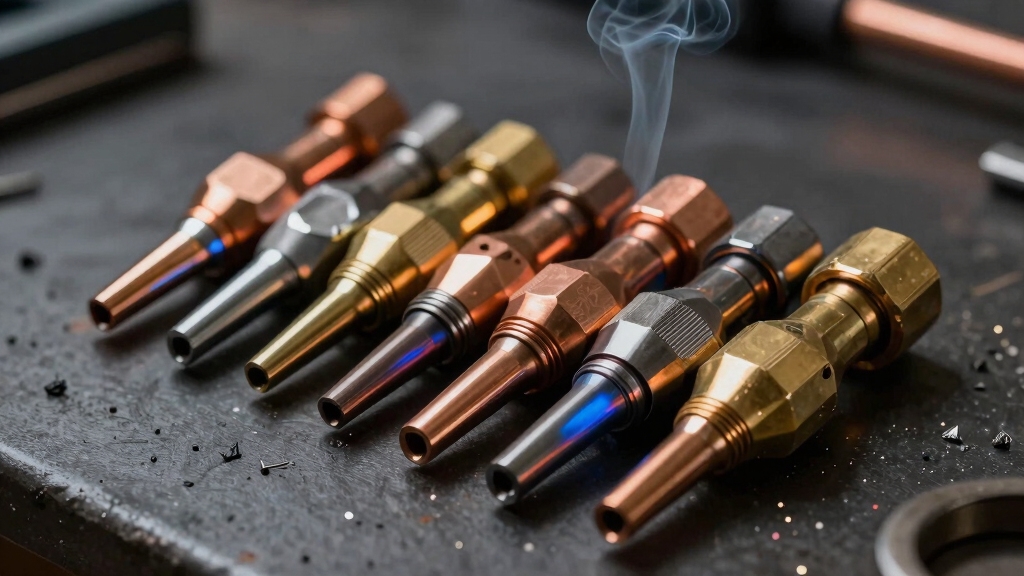
When selecting a cutting torch tip, you’ll find they generally come in either one-piece or two-piece designs, each suited to specific fuel types and applications.
One-piece tips are typically used with acetylene and feature four or six preheat holes to guarantee effective heating.
One-piece tips, ideal for acetylene, include multiple preheat holes to ensure optimal heating efficiency.
Two-piece tips are preferred for natural gas fuels like propylene and MAPP gas due to their ability to handle different flow characteristics effectively.
You might also encounter specialized tips such as rivet washing or scarfing tips, designed for unique cutting tasks beyond standard operations.
Understanding these types helps you match the tip to your fuel source and cutting needs, securing peak performance and safety during operation.
It is important to select tip size based on metal thickness and task to ensure optimal cutting efficiency and safety.
When it comes to picking the right cutting torch tip, the first step is to figure out what type you need based on your fuel. If you’re using acetylene, go for one-piece tips. On the other hand, if you’re working with natural gas or MAPP, two-piece tips are the way to go.
Next up, you’ll want to match the tip size to the thickness of the material you’re cutting. It’s super helpful to consult the manufacturer charts for this—trust me, they make it a lot easier!
Finally, don’t forget to check for fuel compatibility and ensure the tip is seated properly. Doing this will really help optimize your cut quality and keep everything safe while you’re working on your project.
For optimal performance and safety, maintain oxygen and fuel pressures within recommended ranges to avoid backfire or popping during operation.
Although selecting the right cutting torch tip might seem straightforward, understanding the distinctions between one-piece and two-piece designs is essential for peak performance.
One-piece tips are common with acetylene and feature multiple preheat holes, typically four or six, to guarantee consistent flame heating.
Two-piece tips, by contrast, suit natural gas fuels like propylene and MAPP, allowing better gas mixing and flame control.
Specialized tip types exist for tasks such as rivet washing and scarfing, addressing nonstandard cutting needs.
When selecting your tip, consider the fuel type compatibility and the specific application.
Matching the tip design to your fuel and task guarantees efficient flame characteristics, improves cut quality, and reduces hazards like backfire or tip damage.
Proper tip choice is foundational for effective, safe cutting operations.
Victor cutting tips are designed with durable brass and copper construction to ensure optimal thermal conductivity and durability under heavy use.
Selecting the right cutting torch tip goes beyond fuel compatibility and application type; it must align precisely with the material you’re working on.
Start by assessing the metal thickness, as tip sizes range from 000 to 8, covering approximately 1/8 inch to 12 inches.
Use manufacturer charts to match tip size with material thickness for optimal cutting efficiency.
Smaller tips offer precision on thin metals, while larger tips provide the power needed for thick sections.
Make certain the tip’s flow capacity suits the metal’s heat requirements to avoid overheating or poor cuts.
Also, consider the tip’s design. Acetylene tips with multiple preheat holes enhance ignition for steel, while specialized tips handle nonstandard materials.
Proper tip selection directly influences cut quality, kerf width, and finishing ease, so choose carefully.
For best results, maintain a steady torch angle and speed to complement the tip selection and achieve clean cuts with minimal distortion, as emphasized in operational controls for oxy-acetylene welding.
Fuel compatibility plays a vital role in choosing the right cutting torch tip for your job. Different fuels require specific tip designs to ensure optimal performance and safety.
For instance, acetylene tips typically have multiple preheat holes, while natural gas and MAPP fuel work better with two-piece tips. Using a mismatched tip can lead to inefficient cuts, tip damage, or hazardous backfires.
| Fuel Type | Recommended Tip Design | Typical Application |
|---|---|---|
| Acetylene | One-piece, 4-6 preheat holes | Precision cutting, heating |
| Natural Gas | Two-piece | General cutting, gouging |
| MAPP Fuel | Two-piece | Higher heat cutting |
| Propylene | Two-piece | Heavy-duty cutting |
Match the tip design to your fuel for safe, efficient cutting results. Proper selection also ensures compatibility with the welding position, which influences cutting effectiveness and safety.
When it comes to cutting tips, it’s really important to match your design to the fuel gas you’re using. Why? Because compatibility plays a huge role in both performance and safety.
For instance, if you’re working with natural gases like propylene or MAPP, two-piece tips are generally a better fit. On the other hand, if acetylene is your fuel of choice, you’ll notice that those tips usually have multiple preheat holes.
Compatibility plays a crucial role in guaranteeing peak performance and safety when choosing cutting torch tips. You must match the tip design to the fuel gas type to prevent inefficiency or hazards.
For example, acetylene tips typically feature four or six preheat holes, optimized for acetylene’s combustion properties. Natural gas fuels like propylene require two-piece tips designed to handle their lower flame temperature and different combustion characteristics.
Similarly, MAPP gas performs better with two-piece tips, providing stable preheating. Using the wrong tip for your fuel gas can cause poor cut quality, tip damage, or dangerous backfires.
Always consult manufacturer guidelines to select tips compatible with your specific fuel gas. This guarantees proper flow rates, flame stability, and cutting precision while maintaining safe operation.
Because propane burns hotter than natural gas, selecting tips designed specifically for propane can improve combustion efficiency and cutting performance.
Because different fuel gases have distinct combustion properties, selecting the appropriate cutting torch tip design is critical to achieving peak performance and safety.
You’ll find that two-piece tips work best with natural gas fuels like propylene and MAPP. Acetylene tips usually feature four or six preheat holes for optimal flame characteristics.
Matching the tip design with your fuel gas ensures proper flame control, efficient cutting, and reduces risks like backfire.
| Fuel Gas | Tip Design | Key Feature |
|---|---|---|
| Acetylene | One-piece | 4 or 6 preheat holes |
| Natural Gas | Two-piece | Suited for lower flame temp |
| MAPP | Two-piece | Enhanced durability |
Always confirm tip compatibility with your torch brand and flow capacity for safe, effective operation. Proper flame ratio adjustment is essential to achieve stable combustion and optimal cutting quality.
When selecting a cutting tip, matching its size to the metal thickness is essential for achieving best results. Tip sizes range from 000 to 8, corresponding roughly to metal thicknesses from 1/8 inch up to 12 inches.
Using a tip too small for the material results in slow cutting and excessive wear. An oversized tip can cause overheating and tip damage. Consult the torch manufacturer’s size charts to select the correct tip based on your metal’s thickness.
Smaller tips offer greater precision and control, ideal for thin metals. Larger tips deliver the heavier cutting power needed for thick sections. Once you’ve matched the tip size to thickness, you’ll optimize cut quality, minimize kerf width, and reduce finishing time. This ensures efficient and safe operation.
Understanding the role of cutting techniques within the broader fabrication process can further improve your workflow and material handling.
Although selecting the correct tip size is pivotal, setting the proper fuel and oxygen pressures is equally important to achieve clean cuts.
You must adjust these pressures based on the tip size, fuel type, and metal thickness. Typically, fuel gas pressure ranges from 3 to 7 psi, while oxygen pressure varies between 20 and 50 psi.
Always consult your torch manufacturer’s chart for exact recommendations. Improper pressures can cause poor preheating, rough kerfs, or excessive oxidation.
Make certain the preheat flame is neutral, with a sharply defined inner cone, before initiating the cut. Use a regulator capable of fine pressure adjustments and check for leaks.
Correctly balanced pressures optimize flame temperature and cutting oxygen flow, producing precise, clean cuts with minimal slag and reduced finishing time.
When handling oxygen cylinders, always ensure to follow depressurization procedures and safety to prevent accidents and maintain proper equipment function.
Mastering precise, clean cutting starts with proper torch handling and setup.
Maintain a consistent stand-off distance of about 4–6 mm from the material to guarantee peak flame focus.
Position the torch at a steep angle to the workpiece to enhance cut quality and minimize dross formation.
Begin cutting only after the edge reaches a bright red preheat, signaling adequate temperature.
Use steady, controlled torch movement matched to the tip size and material thickness to avoid irregular kerfs.
Start cuts at the plate edge when possible; use piercing cautiously to prevent slag inclusions.
Employ a roller guide for straight cuts on thicker materials, reducing operator fatigue and improving finish.
Clean the material surface beforehand with a stiff wire brush to remove scale, guaranteeing consistent flame contact and cutting accuracy.
Adjusting the torch height and amperage helps optimize arc stability and cut quality for different material thicknesses.
Maintaining your cutting torch tip properly directly impacts the quality and safety of every cut you make. You must inspect the tip regularly for damage, especially at seating surfaces, to prevent malfunction.
Use the correct-size tip cleaner or cleaning drill to remove any debris without altering the tip’s shape. Always tighten tip nuts to about 9 pounds of torque for a secure seal. Avoid using oversized tips for small jobs, as this causes overheating and may lead to backfire or flashback hazards.
Discard damaged tips instead of attempting repairs. Key maintenance and safety steps include:
When you properly care for your cutting torch tip, you markedly reduce the risk of backfire and flashback incidents.
Proper maintenance of your cutting torch tip significantly lowers the chances of backfire and flashback hazards.
Start by inspecting the tip seating surfaces for damage or distortion. Any imperfections compromise the gas seal and can lead to dangerous flame reversal.
Always use the correct-size tip cleaner or drill to remove debris from preheat holes, maintaining peak gas flow.
Avoid overtightening the tip nut; apply about 9 pounds of torque to guarantee a secure, leak-free fit without damaging the seating.
Never reuse damaged tips; discard them to prevent compromised performance.
Using the proper tip size for your material thickness and fuel type also minimizes overheating, which can promote backfire.
Consistent, meticulous tip maintenance is essential for safe, efficient cutting operations.
Although most cutting applications use standard torch tips, certain tasks demand specialty tips designed for unique functions.
When you encounter nonstandard applications, choosing the right specialty tip guarantees efficiency and quality.
These tips accommodate specific cutting or heating profiles that standard tips can’t handle. Consider these specialty options:
Rivet washing tips: Designed to clean rivet holes without damaging surrounding metal.
Scarfing tips: Ideal for precise surface cleaning and edge preparation.
Two-piece tips: Used primarily with natural gas fuels like propylene or MAPP for specialized flame control.
Multi-preheat hole tips: Provide consistent preheating for thick or irregular material shapes.
Custom-shaped tips: Tailored for tasks requiring atypical flame shapes or angles.
Selecting specialty tips matching your fuel type and application enhances cut quality and safety.
Environmental factors like wind, humidity, and temperature directly affect your cutting torch tip’s performance.
Wind can cool the flame, reducing cutting efficiency and causing inconsistent heating.
High humidity may cause condensation, leading to tip corrosion or clogging.
Cold temperatures can cause gas pressure fluctuations, impacting flame stability.
You need to adjust your fuel and oxygen pressures accordingly and protect the work area to maintain consistent, clean cuts.
You might think cutting torch tips work only on metals, but they’re generally unsuitable for non-metal materials.
These tips rely on oxygen-fueled combustion to oxidize metals, which non-metal substances don’t undergo.
Using a cutting torch on materials like plastics or wood can cause melting, burning, or toxic fumes, not clean cuts.
For non-metal materials, specialized tools like plasma cutters or laser cutters are safer and more effective.
You’ll notice internal tip damage through symptoms like frequent backfires or flashbacks, even when the tip looks fine externally.
Inconsistent flame behavior, difficulty maintaining proper flame shape, or reduced cutting performance can also indicate internal issues.
If your tip overheats unexpectedly or causes irregular gas flow, it’s a sign internal damage exists.
Don’t rely solely on visual checks; replace the tip if these signs appear to guarantee safe, efficient cutting.
Your torch handle design directly affects tip compatibility by defining the seat type and flow capacity.
You need to match tip brands with your torch to ensure proper seating, preventing leaks or backfires.
The handle’s gas delivery system also limits which tip sizes and types you can use safely.
Using mismatched tips may cause poor sealing, damage, or unsafe operation.
Always verify compatibility based on your torch handle’s specifications and manufacturer guidelines.
Think of tip lifespan like the mileage on a tire. Some brands and materials simply go the distance better.
Yes, you’ll see differences. Higher-quality materials resist wear, heat, and corrosion more effectively, extending tip life.
Brands using precise manufacturing and durable alloys often deliver longer-lasting tips.
You should always choose tips matched to your fuel and application to avoid premature damage. This ensures consistent performance and safety throughout their lifespan.
Think of choosing the right cutting torch tip like selecting the perfect key for a lock. One wrong fit, and you’re stuck.
Just last week, a welder I know switched to the correct tip size for a thicker metal and cut through smoothly in half the time.
By matching tip type, size, and fuel gas precisely, you guarantee clean cuts, safety, and efficiency.
Keep your tips maintained to avoid backfire, and your work will always release professional results.