Phone:
(701)814-6992
Physical address:
6296 Donnelly Plaza
Ratkeville, Bahamas.

Phone:
(701)814-6992
Physical address:
6296 Donnelly Plaza
Ratkeville, Bahamas.

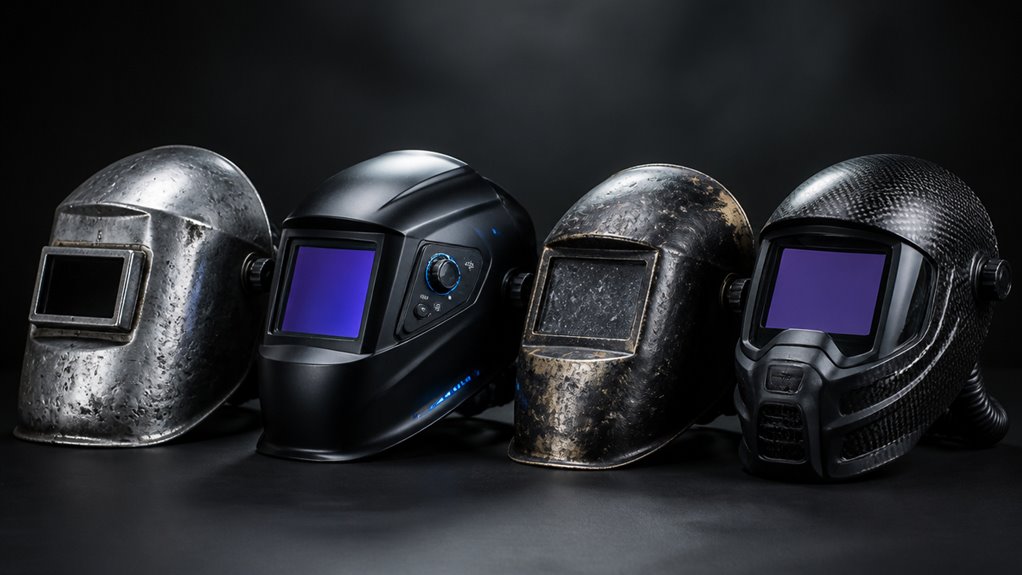
You’ll find welding helmets mainly come in passive, auto-darkening, pancake, grinding, and respirator types.
Passive helmets offer simplicity for consistent tasks, while auto-darkening helmets adjust lens shades instantly for better visibility and precision.
Pancake helmets favor lightweight comfort in fieldwork, and grinding helmets have clear lenses for dual use.
Respirator helmets protect against hazardous fumes but add weight.
Each type balances protection, comfort, and features uniquely, so understanding these will help optimize your welding safety and efficiency.
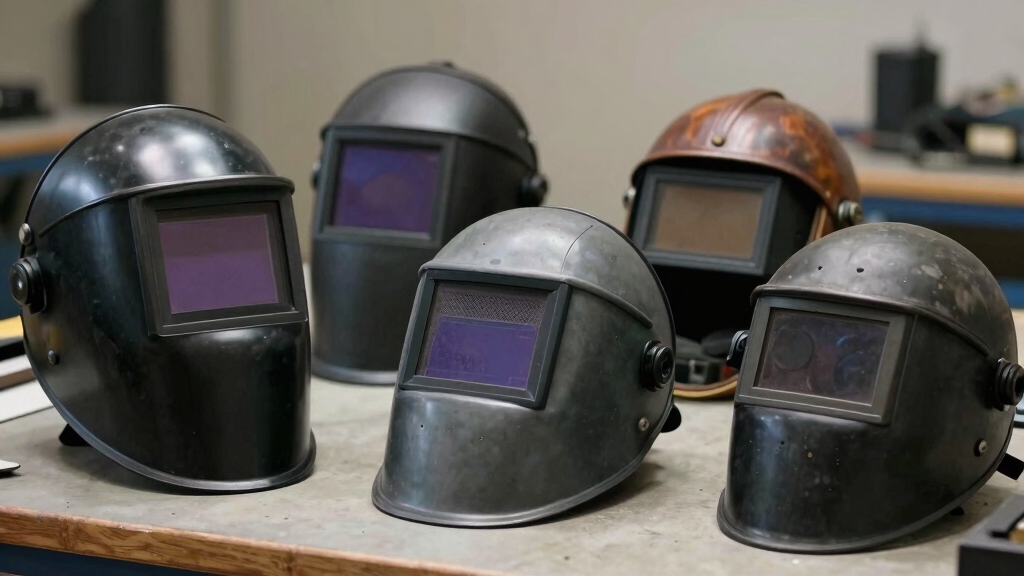
When selecting a welding helmet, you need to take into account several key factors that affect both safety and performance.
First, consider the lens type, whether fixed-shade or auto-darkening, as it influences visibility and convenience during welding.
Shade range is critical; it must match the welding process and amperage to provide adequate eye protection.
Viewing comfort depends on the clarity of the lens in its light state, reducing eye strain between welds.
Helmet weight also plays a role, especially during prolonged work sessions, as heavier helmets increase fatigue.
Finally, identify your specific application—standard welding, grinding, pipeline, or high-fume environments—to choose features that best support your tasks.
Balancing these factors guarantees peak protection and efficiency on the job.
It is also important to ensure the helmet carries the ANSI Z87.1 certification to meet essential safety and impact resistance standards.
Although welding helmets vary widely, understanding their main types helps you select the right protection for your specific tasks.
You need to take into account lens technology, weight, and intended use to optimize safety and comfort.
The four primary welding helmet types include:
Passive helmets: Fixed-shade lenses, simple design, cost-effective for basic welding.
Auto-darkening helmets: Automatically adjust shade, improve visibility before and after welding.
Grinding helmets: Clear lenses for combined welding and grinding without helmet changes.
Pancake helmets: Lightweight, flat design, ideal for pipeline and outdoor field work.
Choosing helmets with adjustable shade levels ensures optimal protection and visibility tailored to different welding applications.
Understanding the specific applications for passive welding helmets helps you match their fixed-shade, simple design to appropriate welding tasks.
You’ll find them best suited for consistent, straightforward welding processes like stick or MIG welding where a shade #10 lens offers adequate protection.
Since they lack auto-darkening features, you must lift the helmet between welds to inspect your work.
Use the table below to visualize scenarios where passive helmets perform well:
| Welding Type | Shade Requirement | Helmet Feature |
|---|---|---|
| Stick Welding | Shade #10 | Fixed shade lens |
| MIG Welding | Shade #10 | Simple, durable design |
| TIG Welding | Not ideal | Helmet must be lifted |
Choose passive helmets when you prioritize durability and cost-effectiveness over convenience or variable shade control.
However, keep in mind that shade #10 is generally recommended for MIG welding currents under 100 amps to ensure adequate eye protection and visibility.
Auto-darkening welding helmets are a game changer for welders. They really improve your visibility before, during, and after the welding process.
The lenses switch from light to dark in an instant, which is pretty impressive.
Plus, these helmets come with versatile shade options, usually ranging from #8 to #13. This means they can accommodate different welding processes and amperages.
It’s all about enhancing your safety and precision while you work, making your job a lot easier.
Additionally, many auto-darkening helmets are designed to meet ANSI Z87.1 standards, ensuring reliable impact and UV/IR radiation protection.
Auto-darkening welding helmets frequently enhance visibility by automatically switching the lens from a light to a dark state the moment an arc is struck.
This immediate adjustment lets you clearly see the work area before welding, improving precision and safety.
Unlike passive helmets, you won’t need to lift the helmet to inspect your welds, which minimizes interruptions and maintains focus.
With better visibility, you can:
These benefits make auto-darkening helmets indispensable for tasks that demand both precision and continuous visibility without sacrificing protection.
Additionally, using helmets with appropriate shade levels is crucial to block harmful UV and IR radiation effectively while maintaining visibility.
Several welding tasks demand varying shade levels to accommodate different arc intensities and materials.
Auto-darkening helmets provide the versatility you need by offering adjustable shade ranges.
Typically, these helmets allow you to select shades from #8 to #13, ensuring optimal eye protection across diverse welding processes such as MIG, TIG, and stick welding.
This adjustability not only protects your vision but also enhances precision by improving visibility before, during, and after welding.
Unlike fixed-shade helmets, you don’t have to remove or lift your helmet to inspect your work.
This increases efficiency and safety.
By choosing an auto-darkening helmet with versatile shade options, you adapt seamlessly to changing welding conditions.
This makes it a practical, professional-grade tool for various applications.
It is also important to use a welding helmet that fits securely and shields from UV and infrared rays to ensure complete protection during welding.
With a variable shade range, you really get a boost in visibility before you even strike the arc. This means you can better prepare and inspect your work area, which is super helpful.
Plus, it’s adaptable for all sorts of welding processes and amperages, so you can easily switch tasks without the hassle of changing helmets each time.
And let’s not forget about the flexible eye protection. Variable shades adjust to different light intensities, which helps reduce strain on your eyes.
Using a welding helmet with the correct filter shade meeting ANSI Z87.1 standards ensures proper impact and UV/IR protection for your eyes.
Frequently, welders face challenges seeing their work clearly before striking the arc. This can affect weld accuracy and safety.
Auto-darkening helmets with variable shade ranges let you adjust the lens to a lighter state. This improves visibility before welding begins.
This precise control lets you inspect your weld joint and surroundings without lifting the helmet. It reduces interruptions and enhances workflow.
With enhanced visibility, you can:
This advantage directly supports safer, more precise welds by ensuring you start each pass with full visual clarity. It is also important to wear certified welding lenses beneath the helmet to protect your eyes from harmful UV and IR radiation during welding.
Adjusting your helmet’s shade to match different welding tasks enhances both safety and efficiency. Variable shade ranges in auto-darkening helmets let you customize protection based on welding type and amperage.
This adaptability minimizes eye strain and prevents over-darkening, maintaining peak visibility before and after welding.
| Welding Task | Recommended Shade Range |
|---|---|
| MIG Welding | #10 – #13 |
| TIG Welding | #8 – #12 |
| Stick Welding | #10 – #13 |
| Grinding | #3 – #5 |
| Plasma Cutting | #8 – #13 |
With precise shade adjustment, you reduce helmet lifts and interruptions. This flexibility supports diverse work environments, improving workflow and safety without changing helmets. Always ensure your helmet meets ANSI Z87.1 standards to guarantee proper UV and IR protection during all welding tasks.
Understanding how variable shade ranges enhance your welding helmet’s performance reveals their significant role in protecting your eyes more effectively.
With an auto-darkening helmet that adjusts between shades #8 to #13, you gain precise control over lens darkness, adapting to different welding amperages and processes instantly.
This flexibility minimizes eye strain and maximizes visibility before, during, and after welding.
By customizing the shade, you can maintain peak protection without compromising on clarity, reducing the risk of arc flash injuries.
Benefits include:
Variable shade ranges elevate both safety and efficiency in your welding tasks. Additionally, using helmets with the correct shade number blocks both UV and infrared rays, providing essential UV radiation protection that prevents long-term eye damage.
Switching between welding and grinding tasks becomes much more efficient when you use a grinding and welding helmet designed with a clear lens.
This helmet lets you perform grinding without swapping gear, saving time and reducing interruptions. It combines face protection with visibility, streamlining your workflow in fabrication or repair settings.
| Feature | Benefit |
|---|---|
| Clear lens | Enables grinding without helmet change |
| Dual function | Supports welding and grinding tasks |
| Face protection | Guards against sparks and debris |
| Time efficiency | Reduces task-switching downtime |
While grinding and welding helmets offer versatility in the shop, pancake welding helmets provide a distinct advantage when you’re working in the field. Their flat, circular design with a side shield enhances mobility, letting you maneuver easily in tight or uneven outdoor spaces.
The wooden box-style eye covering and strap system guarantee secure fitment, reducing helmet shifts during extended tasks. Pancake helmets weigh markedly less than conventional helmets, minimizing fatigue during long pipeline welds or outdoor projects.
You’ll appreciate their durability and simplicity, which withstand rugged conditions without unnecessary electronic components prone to damage.
Key benefits include:
When you’re welding in tight or poorly ventilated spaces, it’s super important to think about respiratory protection. That’s where respirator welding helmets come into play. These helmets come with built-in filters that help cut down on harmful fumes and particulates. It’s a pretty smart way to keep your lungs safe while you’re working.
Plus, with this extra layer of protection, you can breathe easier, knowing that the air quality around you is better. And don’t worry—these helmets don’t skimp on eye and face shielding. You get the best of both worlds!
Because welding produces hazardous fumes and particulates, respirator welding helmets integrate specialized filtration systems to protect your respiratory system.
These helmets combine eye, face, and respiratory protection to filter out toxic airborne contaminants generated during welding. They use powered air-purifying respirators (PAPRs) or supplied air systems to maintain clean breathing air.
Key respiratory protection features include:
High-efficiency particulate air (HEPA) or P100 filters that trap fine welding fumes and particulates.
Battery-powered blowers that supply filtered air, preventing inhalation of harmful contaminants.
Sealed helmet design to ensure contaminated air can’t enter the breathing zone.
Adjustable airflow controls for user comfort and sustained protection during extended welding sessions.
These features enable you to weld safely in environments where fumes pose significant health risks.
Although working in confined spaces poses significant challenges, respirator welding helmets offer critical protection against hazardous fumes and airborne contaminants.
When you’re welding in tight or poorly ventilated areas, fumes can accumulate rapidly, posing serious health risks.
Respirator helmets integrate filtration systems that actively reduce your exposure to toxic particulates and gases, maintaining air quality around your breathing zone.
This dual protection, combining eye, face, and respiratory shielding, ensures safer operation where standard helmets fall short.
By using a respirator welding helmet, you minimize inhalation hazards without sacrificing visibility or mobility.
The helmets’ design supports prolonged work sessions, reducing fatigue and enhancing safety compliance in environments where ventilation is limited or non-existent.
This makes them indispensable for confined-space welding applications requiring stringent respiratory protection.
Since welding demands clear visibility and eye protection, lens features play a crucial role in enhancing both safety and work quality. You need a lens that adapts quickly to arc conditions while providing a clear view of the workpiece before and after welding.
Clear, adaptive lenses are essential for safe and precise welding visibility before, during, and after work.
Auto-darkening lenses with variable shade ranges (#8–#13) optimize visibility and reduce eye strain. Look for high optical clarity ratings to minimize distortion. Additionally, lenses with adjustable sensitivity and delay settings let you customize performance for different welding processes and environments.
Key lens features to improve visibility and safety include:
Auto-darkening technology for instant adaptation to arc brightness.
Variable shade control to match welding amperage and process.
High optical clarity to reduce eye fatigue and improve detail.
Sensitivity and delay adjustments for customized protection and comfort.
When you wear a welding helmet for extended periods, its weight directly impacts your comfort and fatigue levels. Heavier helmets increase neck strain and muscle fatigue, reducing your endurance during long welding sessions.
Pancake helmets, known for their lightweight design, minimize this strain. They’re ideal for pipeline welding or outdoor fieldwork where mobility is vital.
Conversely, respirator helmets add weight due to integrated filtration systems, which can accelerate fatigue but provide essential protection in high-fume environments.
Passive helmets generally weigh less than auto-darkening models, which include electronic components.
When selecting a helmet, consider the balance between protective features and weight. Prioritizing a lighter helmet can help maintain focus and reduce physical exhaustion, enhancing your overall welding performance and safety during prolonged tasks.
You should clean your welding helmet regularly by wiping the lens with a soft, lint-free cloth and mild soap solution to avoid scratches.
Remove dust and debris from vents and sensors using compressed air or a soft brush.
Inspect for cracks or wear in the headgear and replace damaged parts promptly.
Store your helmet in a cool, dry place away from direct sunlight to preserve lens clarity and electronic components.
You might be surprised, but yes, many welding helmets can also be used for plasma cutting if they’ve the right lens shade.
Plasma cutting produces intense light similar to welding arcs. Your helmet needs a shade rating typically between #8 and #13 to protect your eyes properly.
Auto-darkening helmets with variable shades work best, allowing quick adjustment and clear visibility. This ensures safety and precision during cutting tasks.
The average lifespan of a welding helmet lens typically ranges from 1 to 5 years, depending on usage intensity and maintenance.
If you weld frequently or in harsh environments, expect shorter lens life due to scratches, heat damage, and electronic wear in auto-darkening lenses.
You should inspect your lens regularly for cracks or reduced clarity and replace it promptly to maintain peak protection and visibility during welding tasks.
Imagine trying to thread a needle while wearing bulky gloves. Frustrating, right?
Welding helmets compatible with prescription glasses solve this by offering extra interior space or adjustable lens brackets.
You’ll find many auto-darkening helmets designed with this in mind, ensuring your glasses fit comfortably without compromising protection or visibility.
Look for helmets labeled “over-the-glasses” (OTG) to maintain clear vision and safety during welding tasks.
To adjust your welding helmet for comfort, start by loosening the headband’s tension knob or ratchet.
Position the helmet so it sits evenly on your head without pressure points.
Adjust the vertical height and tilt angle to keep the lens centered and your neck relaxed.
Tighten the headband securely but not too tight to avoid discomfort.
Make sure the helmet balances well to reduce fatigue during long welding sessions.
Choosing the right welding helmet is like picking the perfect lens for a camera. You want clarity, protection, and comfort all in one.
Just as a photographer adjusts settings for different scenes, you’ll benefit from helmets with variable shades and respirators tailored to your environment.
Remember, a lighter helmet reduces fatigue, letting you focus longer.
With the right gear, you’re not just welding; you’re mastering precision and safety every time you strike an arc.