Phone:
(701)814-6992
Physical address:
6296 Donnelly Plaza
Ratkeville, Bahamas.

Phone:
(701)814-6992
Physical address:
6296 Donnelly Plaza
Ratkeville, Bahamas.

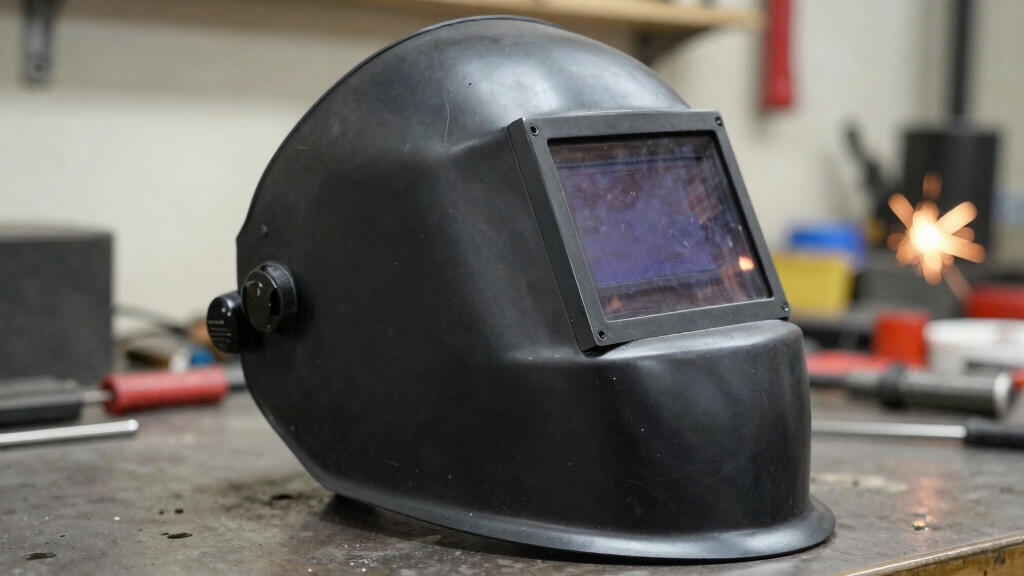
Your welding mask’s protection level is indicated by its shade number, which matches welder amperage and process to block harmful UV and IR rays.
You should also check for ANSI Z87.1 certification, ensuring impact resistance and optical quality.
Clarity ratings reveal lens precision to reduce eye strain.
Many masks have auto-darkening features that adjust shade instantly for safety.
Understanding these factors helps you pick the right mask for your welding needs and safety standards.
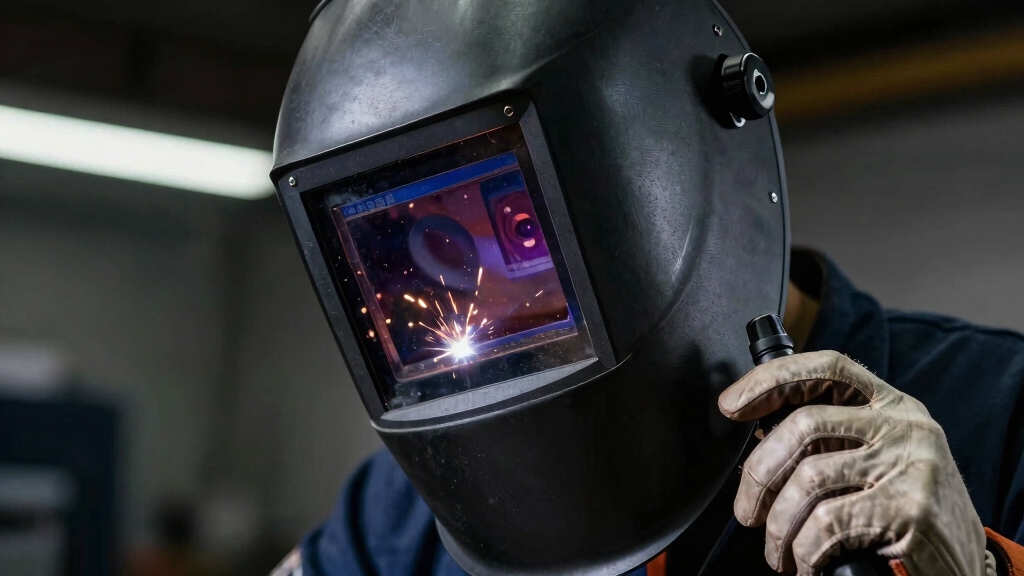
Understanding shade numbers is essential when selecting a welding mask because they directly indicate the level of protection against harmful ultraviolet (UV) and infrared (IR) radiation.
Knowing shade numbers is key to choosing a welding mask that protects against harmful UV and IR radiation.
These numbers range from 4 to 14, with higher values representing darker lenses that block more intense radiation.
For instance, shade 4 suits low-amp plasma cutting under 20A, while shade 10 is common for MIG welding between 60 and 250A.
If you’re working with high-amperage processes like FCAW or GMAW above 250A, shades 12 or 14 are necessary.
Each shade level corresponds to specific amperage ranges and welding methods, ensuring your eyes stay protected without sacrificing visibility.
Choosing the correct shade number optimizes safety by preventing eye damage from UV and IR exposure during welding operations.
It is also important to select lenses that meet ANSI and OSHA standards to ensure adequate protection and compliance with safety regulations.
Selecting the right shade number protects your eyes from harmful radiation.
Guaranteeing your welding mask meets ANSI Z87.1 certification ensures it meets strict U.S. safety standards for impact resistance and optical quality.
This certification guarantees your mask provides reliable protection against flying debris and intense light exposure.
It also regulates light transmittance, balancing visibility and reducing eye strain.
Here’s why ANSI Z87.1 certification matters:
Choosing a certified mask means you don’t compromise on essential safety features during welding tasks.
Additionally, using the correct lens shade based on welding amperage ensures optimal protection from UV and IR radiation.
Clarity ratings consistently provide critical insight into the optical quality of welding mask lenses. They help you gauge how clearly you’ll see the arc and workpiece during welding.
Clarity ratings reveal the true optical quality of welding lenses, crucial for clear arc and workpiece visibility.
These ratings, often expressed as EN 1/1/1/1 or 1/1/1/2, measure factors like optical distortion, light diffusion, and color recognition through standardized tests.
A 1/1/1/1 rating represents the highest level of clarity, ensuring minimal visual strain and accurate arc perception. Lower clarity ratings can cause eye fatigue and reduce precision.
Understanding these ratings allows you to select a helmet that balances protection with visibility. This is especially important when working with variable light intensities.
Prioritizing lenses with superior clarity ratings enhances your safety and efficiency without compromising optical performance.
Additionally, the performance of an auto darkening welding helmet depends heavily on its liquid crystal technology, which controls light transmission precisely for optimal visibility and protection.
Because each welding process generates different intensities of light and heat, you need to match the welding mask shade level precisely to the amperage and method used.
Using the correct shade protects your eyes from harmful ultraviolet and infrared radiation without compromising visibility.
Here’s a breakdown of common welding processes and their typical shade requirements:
Matching these shade levels guarantees peak eye protection tailored to your welding conditions. It is also important to consider ambient lighting when selecting the appropriate shade to ensure both safety and visibility.
To match shade numbers accurately to welding amps and processes, you need to understand the specific light intensity and radiation levels each method produces at given amperages.
For example, SMAW below 60 amps requires shade 7, while 160–250 amps calls for shade 10.
MIG welding under 60 amps fits shade 7, but between 60 and 250 amps, shade 10 is necessary.
TIG welding demands shade 8 for amperages under 150, increasing to shade 10 up to 500 amps.
Plasma cutting at low amps (below 20) uses shade 4, escalating to shade 10 for 100–400 amps.
Always consult ANSI Z87.1-compliant charts to ensure your helmet’s shade number corresponds correctly to your welding process and amperage.
This safeguards your eyes from harmful UV and IR radiation without compromising visibility.
Consistent use of certified welding helmets with the correct shade number is essential to prevent welding eye injuries caused by intense UV radiation exposure.
When you use an auto-darkening welding helmet, you benefit from instant eye protection triggered by sensors that detect the arc’s brightness in as little as 1/20,000 of a second. This rapid response prevents harmful UV and IR radiation from reaching your eyes, reducing injury risk.
Auto-darkening helmets also feature adjustable shade settings, letting you tailor protection to your welding process and amperage. Additionally, multiple sensors guarantee reliable arc detection even in confined spaces or awkward angles.
Key benefits include:
These features collectively enhance safety and improve your welding precision. It is important to use helmets with ANSI Z87.1 certified lenses to ensure proper protection against UV, IR, and visible light radiation during welding.
Auto-darkening helmets markedly enhance your eye safety by adjusting lens darkness instantly. However, relying solely on these features doesn’t guarantee full protection.
You need to consider additional safety indicators like ANSI Z87.1 compliance. This guarantees helmets meet strict transmittance and impact standards.
These markings confirm your mask blocks harmful UV and IR radiation effectively while maintaining visibility to reduce eye fatigue.
OSHA tables specify minimum shade requirements based on arc intensity and welding process. This helps you select the correct lens darkness for your task.
Combined protection using safety goggles beneath your helmet adds another safety layer against sparks and molten metal.
Ignoring these indicators risks burns, inflammation, or welder’s flash. Always verify all safety ratings and certifications before use.
Consistent use of properly rated PPE, including helmets and goggles, significantly reduces the risk of eye injuries and burns during welding, as emphasized in welding safety protocols.
You should replace welding mask lenses whenever you notice scratches, cracks, or reduced clarity, as these impair protection against UV and IR radiation.
For peak safety, inspect lenses before each use and replace them immediately if damaged.
Auto-darkening lenses have a limited lifespan, often recommended every 1-2 years depending on usage.
Regularly maintaining your lens guarantees consistent shade performance and compliance with safety standards, protecting your eyes effectively during welding.
Welding masks primarily protect your eyes and face from UV and IR radiation, sparks, and molten metal.
However, they don’t filter airborne particles or fumes.
To guard your respiratory system, you’ll need a respirator or a welding helmet with integrated air-purifying features.
Always use proper ventilation and respiratory protection alongside your welding mask to prevent inhaling harmful fumes and particles generated during welding processes.
You’ll need a specialized underwater welding helmet that withstands pressure and water intrusion, often rated for depths beyond 100 feet.
These helmets combine auto-darkening filters with enhanced sealing and corrosion-resistant materials.
They feature higher shade levels, typically around 10-12, to handle intense arc light underwater and comply with strict safety standards.
Regular welding masks won’t cut it; underwater helmets guarantee visibility, pressure endurance, and protection against electric hazards unique to submerged welding.
Welding masks generally perform well in extreme temperatures if made from heat-resistant materials like fiberglass or thermoplastics.
You’ll want to make sure your mask’s lens and housing can withstand high heat without warping or discoloring, maintaining consistent protection.
Auto-darkening masks with quality sensors also resist temperature fluctuations, ensuring reliable arc detection.
In cold environments, consider masks with fog-resistant coatings and insulated headgear to prevent discomfort and maintain performance.
You need to regularly clean the sensors using a soft cloth to remove dust, dirt, and welding spatter that can block arc detection.
Check sensor alignment and replace damaged sensors promptly. Test the auto-darkening response frequently to guarantee instant tinting at arc strike.
Replace batteries as needed to maintain consistent power. Following manufacturer guidelines for calibration and storage helps maintain sensor accuracy and prolongs your welding mask’s reliable performance.
Understanding the protection level of your welding mask hinges on recognizing shade numbers, ANSI Z87.1 certification, and clarity ratings.
These indicators guarantee your eyes stay safe against intense light and sparks. Matching shade levels to specific welding amps and processes optimizes protection.
Auto-darkening features offer real-time safety adjustments. Always check these factors carefully; your vision depends on it.
Visualizing this, think of your welding mask as a dynamic shield, adapting precisely to your welding environment’s demands.