Phone:
(701)814-6992
Physical address:
6296 Donnelly Plaza
Ratkeville, Bahamas.

Phone:
(701)814-6992
Physical address:
6296 Donnelly Plaza
Ratkeville, Bahamas.

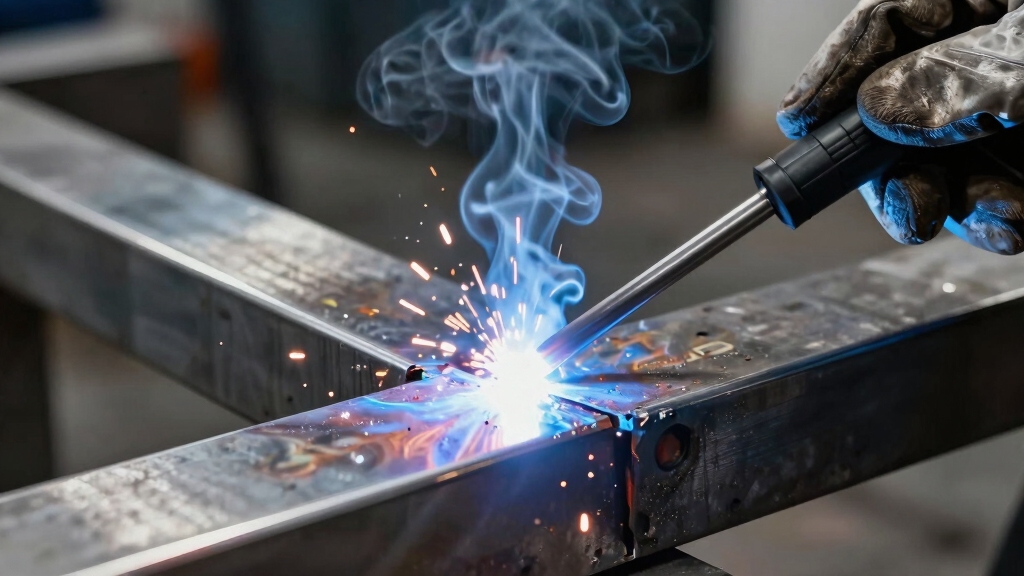
Yes, you can stick weld stainless steel effectively by selecting the correct electrodes, like 316L for 300 series or 309L/312L for dissimilar grades, and matching amperage ranges precisely.
Proper joint prep with clean, beveled edges prevents contamination and guarantees solid fusion. Control heat input carefully, especially in vertical or overhead positions, to avoid defects.
Consistent technique and thorough cleaning after each pass maintain weld integrity. Explore these essentials to master stainless steel stick welding successfully.
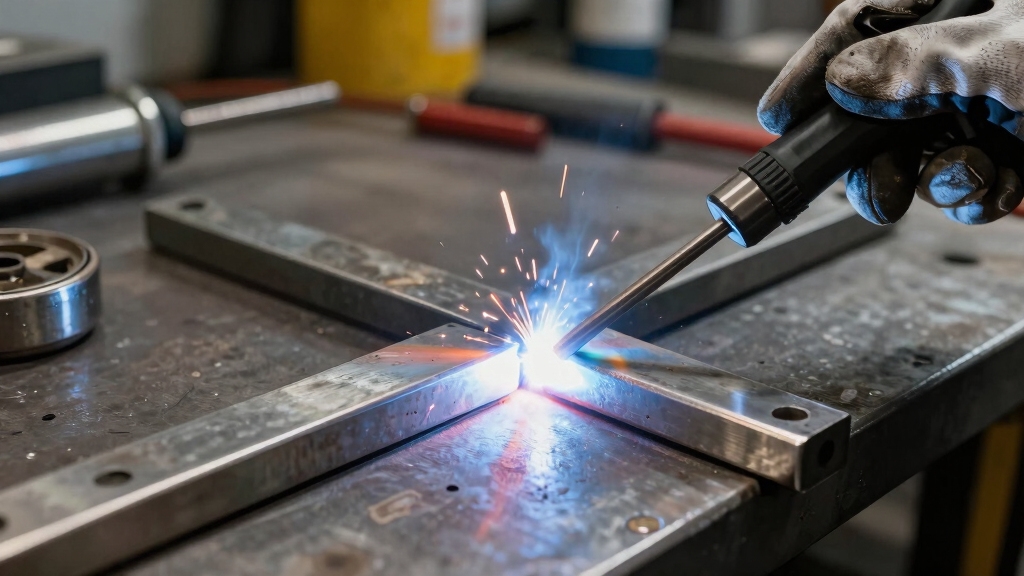
Although stick welding stainless steel requires careful electrode selection, you can effectively weld several common stainless grades using the right rods.
The 300 series austenitic stainless steels, such as 304 and 316L, are the most weldable with stick welding methods. For these, 316L electrodes provide excellent corrosion resistance and proper fusion.
When working with dissimilar stainless steels or unknown grades, 309L or 312L electrodes offer versatility and good penetration, accommodating differing thermal expansion rates.
You’ll find that matching the electrode to the stainless grade guarantees optimal weld quality, minimizing cracking and distortion.
Keep in mind that ferritic and martensitic stainless steels require specific rods and careful technique due to their metallurgical properties, often making them less suitable for stick welding compared to the more common austenitic grades.
For optimal weld quality and to prevent contamination, it is also crucial to use dedicated stainless steel tools exclusively during the welding process.
When stick welding stainless steel, choosing the right electrode is vital for achieving proper fusion, penetration, and corrosion resistance. You need to match the electrode type, coating, and diameter to the stainless steel grade you’re working with.
For 300 series austenitic stainless steel, 316L electrodes provide optimal results. When welding dissimilar stainless steels or unknown grades, opt for 312L or 309L electrodes to guarantee compatibility.
Pay close attention to the recommended amperage ranges printed on electrode packaging. These ranges help you maintain proper heat input and bead quality. For example, Lincoln Electric’s X Caliber 309L-16 rods are widely used for stainless stick welding due to their consistent performance.
Selecting the right electrode guarantees weld integrity and longevity in corrosive environments. Additionally, controlling heat input is crucial to prevent weld defects and ensure strong, crack-resistant joints when stick welding stainless steel.
Before you dive into stick welding stainless steel, it’s a good idea to bevel the edges to a 60-degree angle. This helps create a solid joint. And if you’re working with thicker sections, make sure the root opening matches the root face for a better fit.
Next up, don’t forget to clean those surfaces thoroughly! You want to get rid of any contaminants that could mess with your weld quality. A clean surface really makes a difference.
Lastly, securing a proper fit-up is crucial. Use clamps or magnets to keep everything in place. This will help you maintain consistent gaps that align with your electrode diameter, making your welding process smoother and more effective. Happy welding!
Proper cleaning and preparation of the base metal are essential steps to minimize weld defects and ensure a strong bond.
In preparing stainless steel for stick welding, edge beveling plays a crucial role in ensuring proper penetration and fusion. You’ll typically bevel edges to a 60-degree angle for thicker materials, creating a root opening equal to the root face. This setup facilitates multi-pass welds, improving joint integrity and minimizing defects.
Precise bevel geometry also helps control heat input and weld pool behavior.
| Bevel Angle | Root Opening | Application |
|---|---|---|
| 60° | Equal to root face | Thick stainless steel |
| 45° | Minimal | Thin sheets |
| 70° | Larger gap | High-strength joints |
Use grinders or beveling tools to achieve clean, consistent edges. Proper beveling supports effective fusion and reduces welding defects in stainless steel stick welds. Controlling heat input during welding is essential to minimize distortion and prevent carbide precipitation in the heat-affected zone.
Removing contaminants from stainless steel surfaces is critical to achieving strong, defect-free stick welds. You should begin by thoroughly grinding or wire brushing the weld area to eliminate oils, dirt, rust, and mill scale.
Use a dedicated stainless steel wire brush to avoid cross-contamination from carbon steel residues. After mechanical cleaning, wipe the surface with a solvent like acetone to remove any remaining grease or fingerprints.
Avoid using harsh abrasives that can damage the stainless steel’s protective chromium oxide layer. Proper cleaning not only guarantees optimal electrode fusion but also reduces the risk of weld defects such as porosity and inclusions.
Maintaining these surface preparation standards will help you achieve a consistent, high-quality weld and prevent post-weld corrosion issues. Additionally, ensuring the joint is free of burrs and maintaining a consistent gap during fit-up are essential for proper fusion and to avoid defects associated with improper joint preparation, such as consistent gap control.
Achieving proper fit-up is essential for consistent penetration and strong fusion when stick welding stainless steel. You need to prepare edges and position parts accurately to avoid defects and guarantee uniform weld beads.
For thicker pieces, bevel edges to about 60 degrees and maintain a root opening equal to the root face. Use clamps or magnets to hold components securely, especially for T-joints. Keeping consistent gaps matching the electrode diameter helps control arc stability and penetration.
Key fit-up strategies include:
Bevel edges with precise angles and root openings for thick materials.
Secure workpieces firmly to prevent movement during welding.
Maintain consistent gap widths aligned with electrode size for uniform fusion.
These steps reduce contamination risk and promote reliable weld integrity in stainless steel stick welding. Proper heat input control is also essential to minimize distortion and preserve corrosion resistance during welding heat input control.
When setting up your welder for stainless steel, you’ll need to carefully adjust the amperage to match the electrode specifications and the material’s thickness.
Use the lower amperage range for vertical or overhead welding to avoid overheating and rod burnout. Make sure your machine settings align with the electrode type: 316L for 300 series and 309L for dissimilar steels.
Control heat input to prevent distortion or burn-through, especially on thicker materials. Maintain a clean workspace and verify all connections before welding.
Proper amperage adjustment ensures stable arc characteristics and consistent weld quality.
| Electrode Type | Diameter (in) | Recommended Amperage (A) |
|---|---|---|
| 316L | 1/8 | 90–130 |
| 309L | 5/32 | 120–160 |
| 312L | 3/16 | 160–200 |
| Lincoln X Caliber | 1/8 | 90–125 |
Mastering effective stick welding techniques for stainless steel requires maintaining a tight, short arc length without letting the electrode touch the puddle. This assures precise control and consistent fusion.
Start the arc by tapping the electrode, then pull back to stabilize the arc length. Use steady travel speed and maintain a consistent angle to achieve proper penetration and fusion.
Employ shorter stringer beads on thin materials and a J-weave pattern for thicker, multi-pass welds. Always fill craters to prevent defects and guarantee bead continuity.
Keep these key points in mind: control heat input to avoid distortion and burn-through. Maintain steady travel speed and tight arc length. Use appropriate weld patterns like stringer beads or J-weave for thickness.
Practicing these techniques will improve weld quality and reliability. For stainless steel vertical stick welding, use lower amperage with DCEN polarity to stabilize the arc and reduce puddle fluidity.
When you’re tackling vertical or overhead welding, it’s really important to keep an eye on rod heating. If you don’t, you might end up with rapid burnout, which can mess with your arc control. That’s definitely not what you want!
Also, managing the fluidity of the weld pool is key. You want to avoid any dripping or sagging, as that can really compromise the quality of your bead. So, lowering your amperage and using steady techniques can make a big difference. This way, you’ll maintain the proper fusion and get that nice bead shape, even in those tricky positions.
Preheating the material can help stabilize the weld pool and improve fusion in challenging positions by reducing rapid heat loss and improving arc stability, a technique especially important in heat control and technique.
Frequently, rod heating presents a significant challenge during vertical and overhead stick welding on stainless steel. Rapid heating can cause the electrode to become excessively hot and difficult to control.
To manage this, you need to carefully balance heat input and technique. Lower your amperage to the minimum recommended for the electrode to reduce overheating. Use shorter arc lengths and maintain a steady, controlled travel speed to limit rod temperature buildup.
Incorporating pauses between weld passes helps cool the rod without compromising weld quality. Key strategies include:
Additionally, selecting low-hydrogen electrodes minimizes hydrogen-induced defects and maintains weld integrity.
These steps help maintain rod integrity and improve weld consistency in challenging positions.
Controlling the weld pool in vertical and overhead stick welding requires precise manipulation of heat and technique to prevent sagging and guarantee proper fusion.
You should lower amperage to reduce weld pool fluidity, preventing drip or sag. Maintain a tight, short arc length and use a steady travel speed with a slight upward angle in vertical positions.
Employ the J-motion technique to control bead shape and minimize crown buildup. In overhead welding, keep your weld pool small by using short stringer beads and frequent pauses to let the metal solidify.
Always watch rod temperature to avoid excessive melting. By balancing heat input and employing position-specific motions, you’ll achieve consistent penetration and a stable weld pool.
This reduces defects and ensures strong, clean stainless welds.
Cleaning and inspecting stainless steel welds guarantees the integrity and longevity of your work. After each weld pass, remove slag and spatter with a stainless steel wire brush to avoid contamination and assure proper fusion visibility.
Inspect the bead for uniformity, smoothness, and consistent sidewall fusion to detect undercuts or porosity early. Use visual inspection combined with non-destructive testing methods for critical applications.
Focus on these key steps:
Following these protocols assures a defect-free, durable stainless steel weld.
You need to control heat input carefully during stainless steel stick welding to maintain corrosion resistance. Excessive heat can cause carbide precipitation, leading to sensitization and reduced corrosion resistance.
Using proper electrodes like 316L or 309L and cleaning surfaces before welding helps preserve the stainless’s protective oxide layer. Post-weld cleaning to remove slag is essential, preventing crevice corrosion.
With correct technique, you’ll ensure welded joints retain strong corrosion resistance.
Yes, stick welding stainless steel can induce magnetic properties, especially in austenitic grades like the 300 series.
The welding heat and rapid cooling can cause partial transformation of the crystal structure from non-magnetic austenite to magnetic martensite.
To minimize magnetism, use low-carbon electrodes like 316L and control heat input carefully.
Proper technique and electrode choice help maintain corrosion resistance while reducing unwanted magnetic effects in your welds.
You need a welding helmet with proper shade to protect your eyes from intense arcs.
Wear flame-resistant gloves and a long-sleeve jacket to shield your skin from sparks and heat.
Use respiratory protection, like a respirator or mask, because stainless steel fumes can be hazardous.
Make certain proper ventilation in your workspace.
Also, wear safety boots and ear protection to guard against physical hazards and noise during stick welding.
To prevent weld discoloration on stainless steel, you need to control heat input carefully and minimize oxidation.
Use proper amperage settings and avoid excessive preheating.
Shield the weld area with adequate shielding gas or flux to protect from air exposure.
Clean the base metal thoroughly before welding and remove slag immediately after each pass.
Post-weld, pickling or passivation helps restore corrosion resistance and eliminates any discoloration or heat tint.
Oh, you’ll love dealing with chromium carbide precipitation and intergranular corrosion, stainless steel’s special party crashers during stick welding.
You’ll also face hot cracking and warping due to its high thermal conductivity and expansion.
Lack of fusion is common if you don’t match electrodes perfectly or control heat input.
Remember, slag inclusions can sneak in if you rush cleaning between passes.
Steady technique and proper prep are your best defenses.
You can definitely stick weld stainless steel if you choose the right grades and electrodes, prepare your metal carefully, and set your welder properly.
Remember to master your technique, especially for vertical and overhead welds. Always clean and inspect your work thoroughly.
Like a knight wielding a trusty sword, your skills and tools together will produce strong, precise welds.
Stick welding stainless steel isn’t just possible; it’s a reliable method when done right.