Phone:
(701)814-6992
Physical address:
6296 Donnelly Plaza
Ratkeville, Bahamas.

Phone:
(701)814-6992
Physical address:
6296 Donnelly Plaza
Ratkeville, Bahamas.

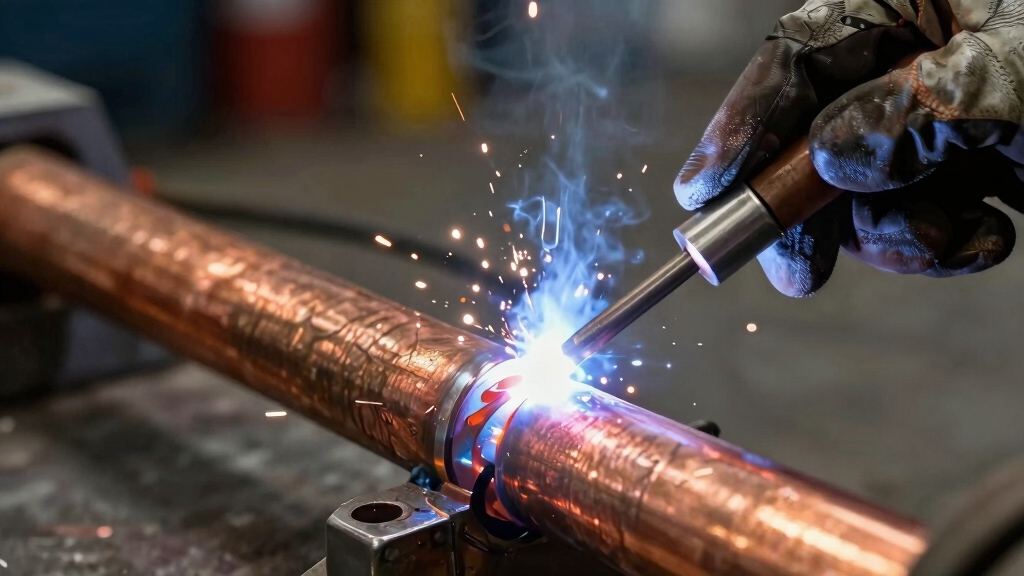
You can TIG weld copper effectively by controlling heat input and using DC electrode negative polarity with thoriated tungsten electrodes for stable arcs and deep penetration.
Thoroughly clean the copper surface to remove oxides and preheat thicker sections to about 650°F to reduce thermal shock and oxidation.
Maintain a high travel speed to minimize distortion and avoid burn-through. Matching filler rods to the copper alloy guarantees weld integrity and conductivity.
Understanding these factors will help you achieve strong, clean copper welds.
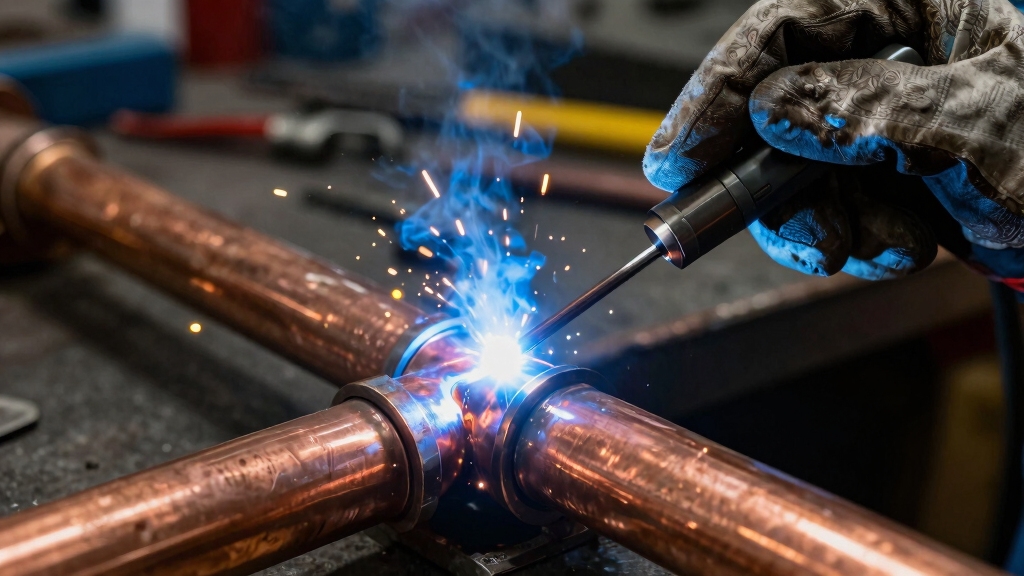
When welding copper, you’ll find TIG welding offers unmatched control over the weld puddle and exceptional arc visibility. This makes it the preferred method for most copper applications.
TIG welding provides superior control and visibility, making it ideal for welding copper.
You can precisely manage heat input, which is vital given copper’s high thermal conductivity that demands rapid heat dissipation. TIG’s narrow heat affected zone limits distortion and maintains material integrity better than MIG or stick welding.
It’s especially effective on thin to medium thickness copper, up to about 1/2 inch. Thicker sections require preheating to avoid cracking.
TIG welding’s DC electrode negative polarity enhances arc stability and penetration, providing stronger, cleaner welds. The process also supports consistent cleaning and filler material integration, optimizing weld quality.
Careful assembly of the torch components, including the tungsten electrode known as the heart of the torch, is essential to achieve the precision and control TIG welding demands.
Because copper’s high thermal conductivity demands careful control, selecting the right equipment and settings is critical for successful TIG welding. You’ll want to use DCEN polarity with thoriated tungsten electrodes shaped to a fine point for precise arc control.
Set your current higher than you’d for steel of similar thickness to compensate for copper’s rapid heat dissipation, but balance it to avoid burn-through. Employ 100% argon shielding gas to prevent oxidation and pitting.
Maintain a high travel speed to control heat input and weld pool size, minimizing the heat affected zone. For copper-aluminum alloys, consider AC TIG output to disrupt aluminum oxides.
Constant current settings require careful adjustment to prevent excessive oxidation and guarantee a stable, clean weld pool throughout the operation. Maintaining a consistent argon flow during welding is essential to avoid oxidation and ensure high-quality welds.
Maintaining a clean, properly preheated surface is essential for successful TIG welding of copper due to its rapid oxidation and high thermal conductivity.
Before welding, thoroughly remove surface oxides using brass or bronze wire brushes and scotch brite pads to guarantee peak arc stability and weld integrity.
Thoroughly removing surface oxides with brass brushes and scotch brite pads ensures optimal arc stability and weld quality.
Preheat the copper to around 650°F for thicker sections to minimize thermal gradients and reduce oxidation during welding.
Consistently check surface cleanliness between passes, as copper rapidly forms new oxides that degrade weld quality.
Proper surface care prevents porosity and weak bonding, while preheating improves heat distribution, limiting weld defects.
By controlling these preparation steps precisely, you’ll establish a stable welding environment that supports consistent puddle formation and superior joint strength.
Neglecting cleaning or preheating risks compromised welds due to oxidation and uneven heat dissipation.
Additionally, securely clamping workpieces is critical to prevent warping and distortion caused by copper’s high thermal expansion during welding.
Although copper’s excellent thermal conductivity poses significant challenges during TIG welding, you can manage heat effectively by controlling current, travel speed, and preheating.
You’ll need higher current levels than with steel to maintain adequate penetration, but avoid excessive heat that causes burn-through.
Increasing travel speed helps minimize the heat-affected zone, yet too fast a pace risks lack of fusion.
Preheating parts, especially thicker sections, to around 650°F stabilizes temperature, reducing thermal shock and oxidation.
Monitor weld puddle size carefully; copper’s rapid heat dissipation demands precise heat input adjustments.
Use DC electrode negative polarity and maintain a stable arc to optimize energy transfer.
Finally, consistent cleaning between passes is essential to prevent oxidation buildup that impairs weld integrity and can cause porosity or cracking.
Applying controlled heat input and maintaining interpass temperature can further reduce residual stresses and improve weld quality in copper welding.
When you’re picking filler rods for different types of copper, it’s really important to match them to the specific copper alloy you’re working with. This helps maintain weld integrity and ensures you get the mechanical properties you want.
So, for instance, you might come across options like RCuSi-A and RCu rods. Each has its own strengths, depending on whether you’re prioritizing strength or conductivity.
Using nickel-silver alloys as fillers can offer good wetting on copper and steel, enhancing joint quality in dissimilar metal welding.
Selecting the right filler rod is critical when TIG welding copper, as it directly affects the weld’s mechanical strength and electrical conductivity. Common options include RCuSi-A (silicon bronze) rods, which provide good weldability and corrosion resistance.
RCu (deoxidized copper) rods maintain high electrical conductivity and strength. Your choice depends on the copper alloy’s composition and intended use. For example, phosphor bronze and cupro-nickel alloys require rods formulated to match their unique properties.
Using inappropriate filler material can cause weak joints, reduced conductivity, or cracking. You must also consider the rod’s melting characteristics and compatibility with the base metal’s thermal behavior.
Precision in selecting filler rods guarantees that welds meet performance criteria, whether for structural integrity or electrical applications. Matching filler chemistry to the base alloy is essential to prevent cracking and maintain weld quality.
When working with different copper alloys, matching filler rods to the specific base metal guarantees peak weld strength and conductivity. For pure or deoxidized copper, use RCu filler rods, which maintain electrical conductivity and mechanical integrity.
Silicon bronze rods, like RCuSi-A, are ideal for copper alloys containing small amounts of silicon or other alloying elements. They improve fluidity and reduce porosity.
When welding phosphor bronze or aluminum bronze, select rods formulated for those alloys to accommodate their distinct thermal expansion and melting characteristics. Using a mismatched filler rod can lead to weld defects, reduced strength, or compromised conductivity.
You must precisely identify the base metal composition and choose filler rods with compatible chemical and thermal properties to secure weld consistency and performance. Proper selection and use of filler wires are essential to prevent contamination and ensure optimal weld quality.
Matching filler rods to the base copper alloy directly influences the final weld’s mechanical strength and electrical conductivity. When you select RCuSi-A rods for silicon bronze alloys, you guarantee peak strength and good corrosion resistance.
For deoxidized copper, RCu rods maintain conductivity and mechanical integrity, critical for electrical applications. Using incompatible filler materials can cause weak joints, increased porosity, or reduced conductivity.
You must also consider the copper alloy’s thermal characteristics. For example, aluminum bronze requires filler rods that accommodate its higher heat conductivity and oxide layer. Precise filler selection minimizes weld defects, controls dilution, and balances hardness with ductility.
Ultimately, your choice impacts the weld’s durability and function. Making informed filler rod selection is essential for high-quality TIG welds on varied copper types. Additionally, maintaining clean/prep surfaces before welding helps prevent contamination and ensures optimal weld quality.
Mastering TIG welding on copper demands a keen understanding of its unique thermal properties and meticulous control over welding parameters.
You’ll start by preheating the copper to about 650°F for thicknesses near 1/2 inch, minimizing oxidation and thermal shock.
Use DC electrode negative polarity with a thoriated tungsten electrode to guarantee arc stability and penetration.
Maintain a high travel speed to counter copper’s rapid heat dissipation, preventing burn-through or excessive softening.
Clean each pass thoroughly with a brass brush to remove oxidation.
Select filler rods like RCuSi-A for mechanical strength and conductivity.
Control heat input precisely to maintain a narrow heat-affected zone, and adjust current to avoid overheating.
Consistent practice is essential since copper’s thermal conductivity complicates weld pool control and demands precise, repeatable technique.
Like welding cast iron, employing strict temperature control during TIG welding of copper helps minimize thermal stresses and cracking.
Yes, TIG welding copper can affect its electrical conductivity if you don’t control heat input precisely.
Excessive heat or oxidation reduces conductivity by altering copper’s microstructure and increasing impurities.
You must maintain proper preheating, use clean surfaces, and select appropriate filler rods like RCu or RCuSi-A to minimize conductivity loss.
Careful technique guarantees welds retain electrical performance, especially critical in applications demanding high conductivity.
Yes, TIG welding is suitable for copper alloys like brass and bronze, but you must adjust your technique.
These alloys have different thermal conductivities and melting points, requiring precise heat control to prevent distortion or cracking.
Use appropriate filler rods specific to each alloy, and guarantee thorough cleaning to remove oxidation.
You’ll also want to manage preheating and welding parameters carefully to maintain mechanical strength and avoid compromising electrical or corrosion resistance properties.
When it comes to cost, TIG welding copper isn’t exactly a walk in the park.
You’ll face higher expenses due to the need for specialized equipment, thoriated tungsten electrodes, and pure argon gas.
Plus, preheating and meticulous cleaning add time and labor costs.
However, TIG’s precision reduces waste and rework, potentially saving money on material and improving quality compared to MIG or stick welding.
You’ll pay more upfront but gain superior control and weld integrity.
Yes, you can automate TIG welding for copper fabrication, but you’ll face challenges due to copper’s high thermal conductivity and oxidation tendencies.
Automation requires precise control of heat input, travel speed, and preheating to maintain weld quality.
You’ll need specialized equipment with advanced monitoring and cleaning systems to handle continuous oxidation.
Proper programming and parameter optimization are critical to successfully automate copper TIG welding in production environments.
When TIG welding copper, you must manage intense heat buildup and rapid thermal conduction to avoid burns and warping.
Use proper ventilation since copper fumes and oxides can be hazardous.
Always preheat the workpiece to reduce oxidation and pitting risks.
Wear heat-resistant gloves and eye protection with high UV filtering to guard against bright arcs.
Also, maintain clean surfaces to prevent toxic oxide inhalation during welding.
You can definitely TIG weld copper effectively by controlling heat and preparing the surface meticulously.
For example, a HVAC technician restored a copper condenser coil by preheating and using an ERCu alloy filler rod, preventing warping and ensuring a strong joint.
Mastering these steps, cleaning, correct settings, and appropriate filler choice helps you avoid common pitfalls like cracking or oxidation.
This makes TIG welding copper a reliable, precise method for durable results.