Phone:
(701)814-6992
Physical address:
6296 Donnelly Plaza
Ratkeville, Bahamas.

Phone:
(701)814-6992
Physical address:
6296 Donnelly Plaza
Ratkeville, Bahamas.

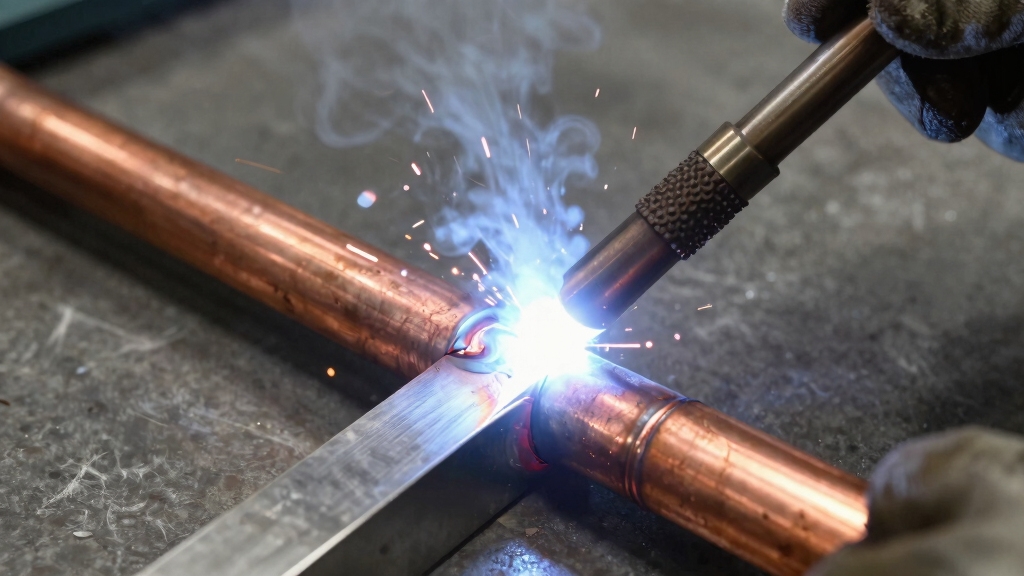
You can weld copper to stainless steel, but it’s challenging due to their different melting points, thermal conductivities, and metallurgical behaviors.
Copper’s high reflectivity and thermal conductivity require precise heat management. This often favors electron beam welding for better control and defect reduction.
Fusion welding risks cracking and porosity, so solid-state methods or brazing might suit specific needs. Managing parameters and joint design is critical to avoid failures.
Explore further to understand the best techniques and common pitfalls.
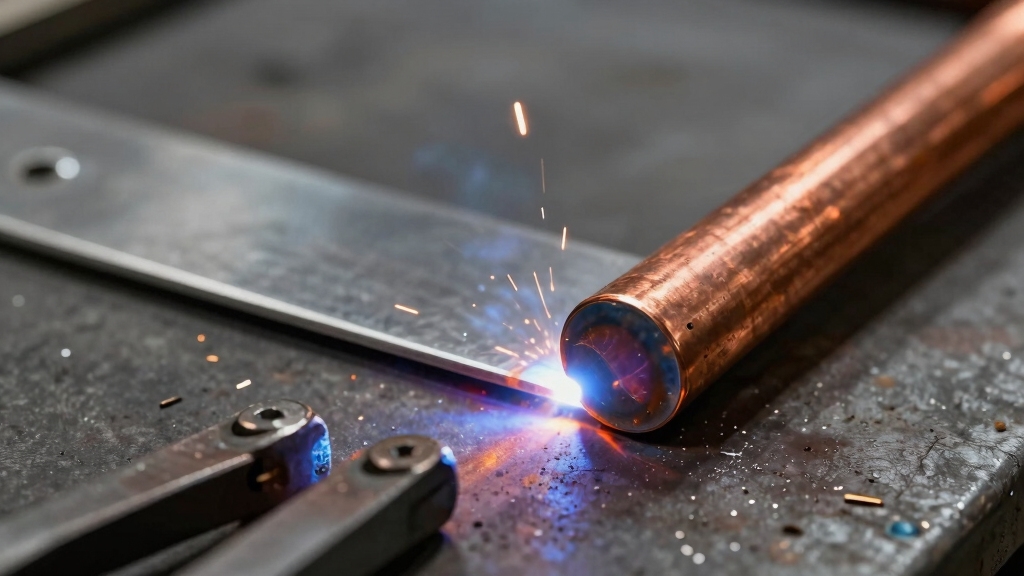
Although copper and stainless steel are widely used metals, joining them poses significant challenges due to their differing metallurgical properties.
Joining copper and stainless steel presents complex challenges due to their distinct metallurgical characteristics.
You face issues like solidification cracking and porosity, primarily because copper’s low viscosity disrupts stable fusion. The heterogeneous liquid metal flow between these metals complicates weld pool control, demanding precise process parameters to avoid defects.
Additionally, copper’s high thermal conductivity rapidly dissipates heat, making it difficult to maintain consistent welding temperatures.
You must also contend with copper’s reflectivity and stainless steel’s higher melting point, which cause uneven energy absorption and thermal gradients.
These factors produce a narrow parameter window for successful fusion, requiring careful heat input management and joint design to minimize thermal stresses and guarantee metallurgical compatibility without compromising joint integrity.
Using solid-state welding methods can help avoid brittle intermetallic formation and improve joint robustness when welding dissimilar metals like copper and stainless steel.
Mastering the welding of copper to stainless steel demands selecting methods that address their contrasting thermal and metallurgical behaviors.
Electron beam welding stands out, delivering high energy density unaffected by copper’s reflectivity. This enables deep, narrow weld pools with precise penetration control.
Directing the beam through stainless steel first prevents blowouts and limits the heat-affected zone.
Laser beam welding, particularly with pulsed Nd:YAG lasers, can handle smaller joints but remains less effective due to copper’s high reflectivity.
Fusion welding poses challenges like solidification cracking and porosity, requiring tight process control and torch oscillation to manage heterogeneous liquid flow.
Solid-state welding offers defect-free, robust joints by avoiding fusion issues, though more research is needed.
Careful heat management is critical to minimize thermal stresses and avoid cracking when joining dissimilar metals like copper and stainless steel.
When your project demands joining copper to stainless steel without the complexities of fusion welding, brazing or solid-state welding can offer practical alternatives.
For copper to stainless steel joints, brazing or solid-state welding provides effective alternatives to fusion welding complexities.
Choose brazing when joint strength requirements are moderate and precise control over heat input is critical to prevent copper melting.
Brazing excels in applications involving tubing or plate-to-tubing bonds, where broad, even heating of stainless steel and flux-assisted filler flow guarantee reliable joints.
Opt for solid-state welding when you need defect-free, robust structures without the risks of solidification cracking or porosity inherent in fusion.
Solid-state methods provide favorable processing conditions and design flexibility, especially suitable for critical or high-integrity assemblies.
Your choice hinges on balancing joint strength, thermal sensitivity, and process complexity to optimize copper-stainless steel compatibility.
Preheating copper components thicker than 3 mm to at least 150°C is often necessary to manage thermal expansion and reduce the risk of cracking during joining.
Balancing joint strength and thermal sensitivity often leads you to weigh advanced fusion techniques for copper to stainless steel.
Electron beam welding (EBW) excels here because its high-energy density penetrates copper’s reflective surface efficiently, unaffected by copper’s thermal conductivity.
By directing the beam through stainless steel first, you minimize risks of blowouts or excessive heat-affected zones in copper.
This approach creates a narrow, deep weld pool with controlled penetration depth, ensuring metallurgical integrity.
EBW uses less overall energy, leveraging copper’s heat-sink effect to prevent thermal distortion.
Compared to laser welding, EBW offers superior joint quality and reproducibility for larger, complex copper-stainless assemblies.
Its precise energy delivery and vacuum environment reduce contamination, making EBW the best choice when you need reliable, defect-minimized copper to stainless steel welds.
Additionally, maintaining plasma suppression during welding enhances beam efficiency and weld consistency in these challenging joints.
Consistently preventing defects in copper-stainless steel joints requires meticulous control over heat input and joint preparation.
Meticulous heat control and thorough joint preparation are essential to consistently prevent defects in copper-stainless steel joints
You must pre-clean surfaces thoroughly to remove oxides and contaminants, ensuring intimate contact between metals.
Control heat application carefully; apply more heat to the stainless steel side, since copper’s high thermal conductivity dissipates heat rapidly.
This minimizes overheating and reduces porosity risk.
Use precise welding parameters, avoiding excessive energy that causes solidification cracks or blowouts in copper.
Employ oscillating torch motion or pulsed energy to stabilize molten pools and improve fusion.
Post-weld cooling should be gradual to prevent thermal stresses and cracking.
Finally, promptly remove flux residues after brazing to prevent corrosion.
Following these steps enhances joint integrity and minimizes metallurgical incompatibilities inherent to copper-stainless steel fusion.
When joining dissimilar metals like copper and stainless steel, using silver-based filler metals can improve joint strength and corrosion resistance.
You need to wear proper PPE, including welding helmets with correct shade lenses and heat-resistant gloves, to protect from intense UV radiation and heat.
Make sure adequate ventilation to avoid inhaling toxic fumes from flux, silver fillers, or metal vapors.
Control heat input carefully to prevent copper melting or stainless distortion.
Use fire-resistant clothing and keep a fire extinguisher nearby.
Always clean joints pre-welding to minimize contamination-related defects and spatter hazards.
Repairing copper-stainless steel welds isn’t a walk in the park; it’s like untangling a knot with delicate threads.
You’ll need precise heat control due to copper’s high thermal conductivity and stainless’s differing melting points.
Fusion weld repairs demand meticulous parameter adjustments to prevent cracking or porosity.
Solid-state or brazed joints can be reworked, but cleaning flux residues and ensuring consistent metallurgical compatibility remain critical for reliable restoration.
You must design the joint to manage thermal differences and control heat flow carefully.
Directing energy through stainless steel first avoids copper overheating and melt-through.
Narrow, deep weld pools reduce porosity and cracking risks.
Increasing contact area supports better mechanical interlocking.
Precise joint geometry minimizes heterogeneous liquid metal flow, improving fusion quality.
Overall, your design dictates energy distribution, penetration depth, and stress concentration.
This directly impacts weld integrity and success.
When you combine copper and stainless steel, you’re crafting a dynamic duo used in heat exchangers, plumbing systems, and electrical connectors.
These welded parts handle intense thermal loads and corrosive environments, shining in HVAC units and chemical processing plants.
You’ll find them where durability meets conductivity, like in refrigeration or medical equipment.
Their unique fusion leverages copper’s thermal prowess and stainless’s strength, making your designs both efficient and resilient under demanding conditions.
Yes, you should consider environmental concerns when welding copper to stainless steel.
Copper fumes can be toxic, requiring proper ventilation and respiratory protection.
Also, managing waste flux and cleaning residues prevents soil and water contamination.
Energy-intensive methods like electron beam welding consume significant power, impacting your carbon footprint.
Adopting solid-state welding can reduce emissions and defects, making your process more sustainable and eco-friendly while maintaining joint integrity.
Welding copper to stainless steel may seem like merging two worlds, one highly conductive, the other corrosion-resistant, but it’s far from simple. You’ll need precise methods like electron beam welding or solid-state techniques to overcome their differing properties.
While brazing offers an alternative, it sacrifices strength for ease. By understanding these contrasts and applying the right approach, you can achieve reliable joints without defects. This turns complexity into a manageable engineering solution.