Phone:
(701)814-6992
Physical address:
6296 Donnelly Plaza
Ratkeville, Bahamas.

Phone:
(701)814-6992
Physical address:
6296 Donnelly Plaza
Ratkeville, Bahamas.

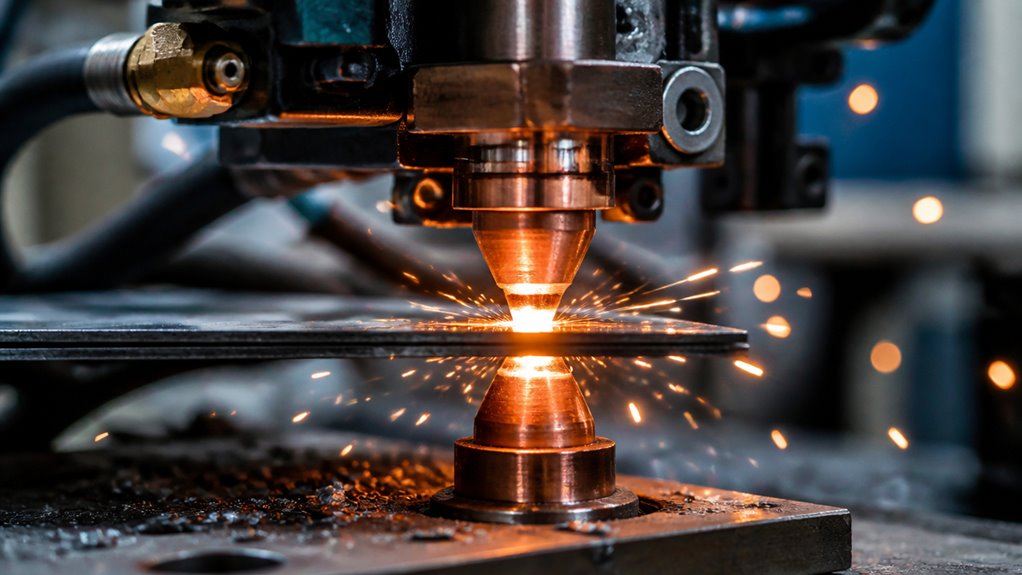
You use a resistance welder to join metal parts by clamping them with electrodes and passing a controlled electric current through the joint.
This current creates localized heat at the interface due to electrical resistance, softening or melting the metal to form a strong bond without filler materials.
The process offers rapid cycle times, precise heat control, and minimal emissions, making it ideal for repetitive, efficient manufacturing.
Exploring further uncovers diverse welding methods, materials, and automation advances that optimize performance.
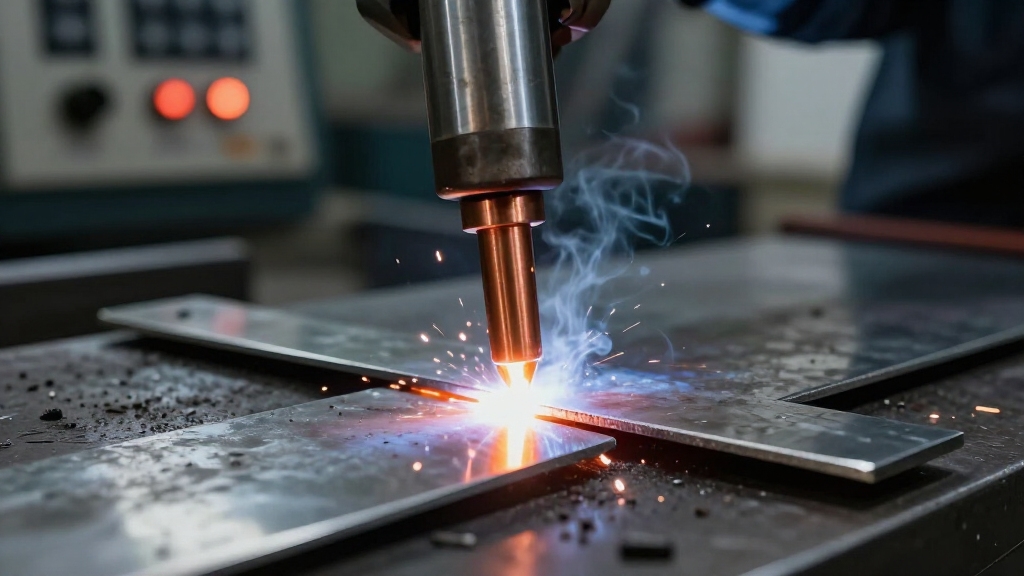
Although you mightn’t see it directly, a resistance welder joins metal parts by clamping them together with electrodes and passing a high electric current through the joint area.
You apply controlled pressure via the electrodes to hold the workpieces firmly. The electrical resistance at the interface converts the electric energy into heat, precisely at the contact zone.
This localized heat softens or melts the metal, allowing the pieces to fuse under pressure. To achieve consistent weld quality, you must carefully control the force, current magnitude, and duration of current flow.
This thermo-electric process avoids filler metals and focuses on metal-to-metal fusion, making it efficient for repetitive production. Understanding these operational fundamentals enables you to optimize weld strength and reliability. Rapid cycle times enable weld formation within fractions of a second, boosting production efficiency.
To create strong resistance welds, it’s really important to choose the right electrode materials. You want ones that can handle high current and resist wear while still keeping a good, consistent contact. Plus, you’ve got to be precise with the current magnitude and timing. This helps generate just the right amount of heat—enough to form a solid joint without damaging either the joint or the electrode.
And don’t forget about the electrode force! Applying the correct amount of pressure is key for metal fusion. It helps secure everything in place and prevents issues like expulsion or weak bonding. So, when you get all these elements right, you’re on your way to making strong, reliable welds! Maintaining proper electrode pressure throughout the squeeze, weld, and hold times is essential to avoid weak welds or expulsion.
When you select electrodes for resistance welding, their material composition and shape directly influence the quality and strength of the joint. Electrodes must conduct current efficiently while withstanding high pressure and heat without deforming.
Copper alloys, especially copper-chromium and copper-tungsten, are common due to their excellent electrical and thermal conductivity combined with durability. The electrode tip shape, such as flat, domed, or truncated, affects heat concentration and weld consistency.
| Electrode Material | Key Property |
|---|---|
| Copper-Chromium | Good conductivity, wear resistance |
| Copper-Tungsten | High strength, heat resistance |
| Copper-Zirconium | Excellent arc stability |
| Pure Copper | Superior conductivity, low strength |
| Silver-Copper | Enhanced thermal conductivity |
Choosing the right electrode balances conductivity, strength, and tip geometry for optimal weld performance. Ensuring electrodes and grounding clamps are properly rated and maintained is essential for safe current flow and reliable weld quality.
Selecting the appropriate electrodes sets the stage for effective current delivery during resistance welding. You must make certain that electrode materials have low electrical resistance and high thermal conductivity to focus heat precisely at the joint without excessive dissipation.
Controlling current magnitude is critical; too low, and the weld won’t reach the required temperature. Too high, and you risk expulsion or electrode damage. Timing the current pulse precisely allows you to generate sufficient heat to soften or melt the interface metals while avoiding overheating.
Typically, current flows only for milliseconds to seconds, depending on material thickness and type. By synchronizing current magnitude and duration, you control weld nugget formation, ensuring strong, consistent joints with minimal thermal distortion and ideal mechanical properties. Advanced welding processes like Regulated Metal Deposition use microsecond control of current and voltage to enhance weld quality and consistency.
Although current and timing control are essential, you can’t achieve a strong, consistent weld without applying the correct electrode force and pressure. This force guarantees intimate contact between the workpieces, minimizing interface resistance fluctuations and promoting uniform heat generation.
Insufficient pressure can cause weak joints or expulsion. Excessive force may deform electrodes or workpieces.
| Parameter | Effect on Weld Quality |
|---|---|
| Low Force | Porosity, weak fusion |
| Prime Force | Uniform nugget, strong bond |
| High Force | Electrode wear, metal deformation |
| Force Stability | Consistent weld size and strength |
You must calibrate electrode force precisely for each material and thickness. Balance current and pressure to create robust, reproducible welds without damaging components. Maintaining steady pressure during the weld and holding it briefly after current stops is critical to maximizing nugget formation and strength.
Since resistance welding encompasses several methods tailored to different joint configurations and materials, understanding the key types is essential for maximizing weld quality and production efficiency.
You’ll encounter these primary resistance welding processes:
Spot welding: Joins overlapping thin sheets at discrete points using electrode tips. It’s ideal for rapid, repeatable joints.
Spot welding efficiently joins thin sheets at precise points, perfect for quick, consistent production.
Projection welding: Focuses current through raised projections on one workpiece, enabling strong localized welds.
Seam welding: Employs rotating wheel electrodes to create continuous, leak-tight seams in sheet metal assemblies.
Flash welding: Heats and forges aligned ends of components by creating an arc flash, suitable for rods or pipes.
Each method uses controlled electrode force and timing to guarantee precise heat generation and joint integrity.
Select the process based on material thickness, joint design, and production demands for peak results. Like friction welding, controlling parameters such as pressure and duration is crucial to achieve solid-state bonds without melting the materials.
Understanding the key types of resistance welding processes helps you recognize where each method fits best in industrial applications.
For instance, spot welding dominates automotive body assembly due to its efficiency in joining thin sheets at discrete points.
Projection welding suits fastening nuts and bolts, leveraging concentrated current flow through raised projections for secure attachments.
Seam welding provides leak-tight joints in tanks and boilers by creating continuous welds with roller electrodes.
Flash welding excels in joining pipes and large-section components by heating and forging ends together.
Beyond these, resistance welding finds roles in electrical, aerospace, furniture, construction, and shipbuilding industries where precise, repeatable metal-to-metal joints are essential.
Each application demands specific process control to guarantee weld integrity and meet industry standards.
Seam welding in particular is essential when airtight, leak-proof joints are required for reliable performance.
When it comes to resistance welding, one of the standout benefits is its incredibly fast cycle times. This means you can boost your production efficiency significantly since there’s less downtime between welds. Pretty great, right?
Plus, the process is super clean. It generates minimal fumes and doesn’t need shielding gases or filler materials. This not only makes the work environment safer but also more pleasant for everyone involved.
All these advantages really make resistance welding a top choice for high-volume manufacturing, especially in setups with strict environmental controls. It’s a win-win!
Additionally, the use of low secondary voltage and high current ensures precise heat generation for strong and consistent welds.
Experience rapid production cycles when using resistance welders, as their design enables welds to form in mere fractions of a second.
This speed stems from the direct conversion of electrical energy into heat at the joint interface without preheating or filler application.
You benefit from:
Additionally, the process benefits from stable arc conditions that ensure consistent weld quality throughout production.
Fast cycle times not only boost productivity but also contribute to a cleaner working environment.
Because resistance welding generates heat precisely at the joint through electrical resistance, it minimizes spatter, fumes, and smoke compared to conventional welding methods.
You avoid the need for filler metals, shielding gases, and fluxes, all of which can produce contaminants requiring extensive ventilation or cleanup.
The localized heating reduces thermal distortion and prevents widespread oxidation, further controlling environmental impact.
Additionally, the solid-state nature of the weld creates minimal waste, making your workspace less cluttered and safer.
By integrating resistance welding, you gain a process that supports stringent environmental controls, reduces hazardous emissions, and simplifies maintenance.
Ultimately, this fosters a sustainable, compliant, and efficient production environment.
This process rarely requires external pressure, which simplifies equipment design and reduces energy consumption.
Although resistance welding offers efficient and repeatable joints, several challenges can compromise weld quality and process reliability.
You must manage variables like electrode condition and surface cleanliness meticulously to avoid defects.
Inconsistent process parameters often lead to weak or irregular welds.
Additionally, the method’s limited thickness range restricts its use in certain applications.
Accessibility is another constraint, as many setups require access from both sides.
Key challenges include:
Addressing these challenges is critical for maintaining weld integrity and operational efficiency.
When selecting a resistance welder, you need to carefully evaluate your specific application requirements, including material types, thicknesses, and production volume.
Identify the welding method: spot, projection, seam, or flash that best matches your joint design and throughput demands.
Consider the electrode configuration and force capacity to guarantee proper clamping for your material gauge.
Power supply and current control precision are critical. Choose equipment that provides consistent amperage and timing to optimize weld quality.
Factor in ease of maintenance and electrode replacement to minimize downtime.
Assess the welder’s adaptability to your production environment, including cycle time and automation capability.
Because resistance welders operate with high currents, intense heat, and moving electrodes, you must follow strict safety protocols to prevent injury and equipment damage.
Resistance welders require strict safety measures due to high currents, intense heat, and moving parts.
Always wear insulated gloves and protective eyewear to shield yourself from electric shock and radiant heat.
Make certain the work area is clear of flammable materials to avoid fire hazards.
Use machine guards and lockout/tagout procedures to prevent accidental activation during electrode adjustments.
Maintain proper grounding of the equipment to minimize electrical risks.
Verify electrode alignment before starting to avoid mechanical pinch injuries.
Keep hands and body parts clear of the electrode force zone during welding.
Monitor cooling systems to prevent overheating of the welder and workpieces.
Follow manufacturer safety guidelines and emergency shutoff procedures rigorously.
To make certain consistent weld quality and extend the lifespan of your resistance welder, you must perform regular maintenance on key components such as electrodes, cooling systems, and electrical contacts.
Routinely inspect electrodes for wear and deformation; replace or dress them to maintain proper contact area and pressure.
Check the cooling system for leaks, blockages, and adequate flow rate to prevent overheating.
Clean and tighten electrical contacts frequently to reduce resistance and guarantee efficient current flow.
Monitor cable insulation and connections for damage or corrosion.
Additionally, calibrate force and timing controls to preserve process accuracy.
Document maintenance activities systematically to identify trends and preempt failures.
Keeping these components in prime condition directly impacts weld consistency, reduces downtime, and maximizes operational reliability.
You know, one exciting trend in resistance welding is the growing integration of automation and robotics. This shift isn’t just about making things faster; it’s also about boosting precision and throughput. Imagine a world where machines do the heavy lifting, allowing for more consistent results!
But that’s not all. As we see advancements in materials, like high-strength alloys and composites, the way we approach welding is changing too. We’ll need to adapt our equipment to handle these new materials, which means rethinking our process parameters. It’s going to be a game-changer!
And with these developments, there’s a clear need to optimize control systems and electrode designs. Consistent quality is key, after all. So, as these trends unfold, it’ll be interesting to see how we rise to the challenge!
As resistance welding evolves, automation and robotics are playing an increasingly critical role in enhancing precision, repeatability, and throughput. You benefit from robotic arms that consistently position electrodes and workpieces with high accuracy, reducing human variability.
Automated systems monitor and adjust welding parameters in real time, ensuring ideal joint quality. Integration with factory control systems allows seamless data collection and process optimization.
Key advantages include:
While traditional resistance welding has primarily focused on common metals like steel and aluminum, advancements in material science now challenge you to adapt welding processes for emerging alloys and composites.
You must optimize parameters such as current, force, and time to accommodate differing electrical resistivities and thermal conductivities.
Innovative electrode materials and cooling techniques also become essential to prevent electrode wear and safeguard weld integrity.
| Material Type | Welding Challenge |
|---|---|
| High-strength steel | Increased heat input needed |
| Aluminum alloys | Oxide layer complicates weld |
| Titanium alloys | Sensitive to contamination |
| Composites | Non-conductive layers |
| Advanced alloys | Variable resistance profiles |
Mastering these complexities guarantees you maintain weld quality and expand resistance welding’s applicability in future manufacturing.
Resistance welding offers faster cycle times and is ideal for high-volume metal-to-metal joints without filler.
Laser welding provides higher precision and deeper penetration with minimal heat-affected zones.
You’ll find resistance welding better for thicker or overlapping sheets needing strong, repeatable welds.
In contrast, laser welding suits delicate, complex geometries or materials sensitive to heat.
Both require careful parameter control, but laser welding demands more expensive equipment and skilled operation.
You can’t effectively join metals with extremely low electrical resistance, like copper and aluminum alloys, using resistance welding. They dissipate heat too quickly.
Metals with vastly different melting points or thermal conductivities, such as titanium paired with steel, pose challenges.
Highly oxidized or coated surfaces hinder proper contact and heat generation.
You can automate resistance welding for custom projects as easily as programming a precise machine tool.
Automation lets you control current, force, and timing with high accuracy, ensuring consistent weld quality even in complex or low-volume runs.
By integrating sensors and CNC systems, you tailor the process to unique designs, improving repeatability and reducing human error.
However, upfront costs and programming complexity may rise with customization demands.
Resistance welding electrodes typically last between several thousand to tens of thousands of welds, depending on factors like material type, current level, welding frequency, and maintenance.
You’ll need to monitor electrode wear closely, as degradation affects weld quality and consistency.
Regular dressing or reshaping extends their lifespan, but high current or improper cooling reduces durability.
Optimizing welding parameters and maintaining electrode surfaces helps you maximize electrode longevity efficiently.
Imagine a car factory cutting emissions by switching to resistance welding. You’ll find this method produces minimal fumes and uses no filler metals or shielding gases, reducing environmental pollutants.
Its short cycle times lower energy consumption compared to traditional welding. However, you must consider the electricity source’s carbon footprint.
Think of a resistance welder as the spark that forges unbreakable links in your projects.
By mastering its precise control of heat and pressure, you guarantee every joint is a strong foundation, not just a connection.
Choosing the right welder and maintaining it well keeps your work seamless and efficient.
Embrace these tools and techniques to weld your path toward innovation, where strength meets precision in every bond you create.