Phone:
(701)814-6992
Physical address:
6296 Donnelly Plaza
Ratkeville, Bahamas.

Phone:
(701)814-6992
Physical address:
6296 Donnelly Plaza
Ratkeville, Bahamas.

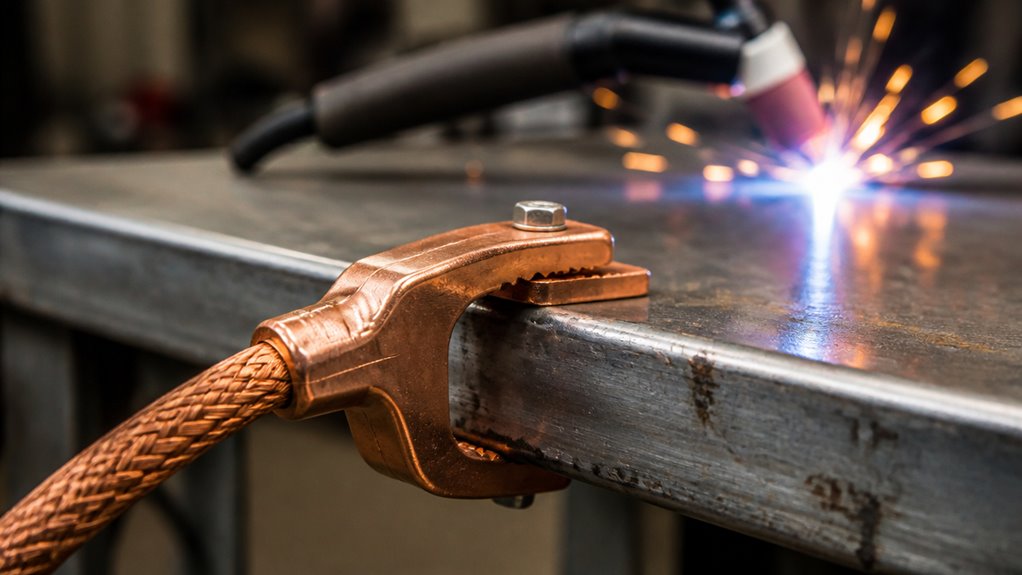
To ground a welder, first clean the workpiece surface by removing paint, rust, or coatings to bare metal for optimal conductivity.
Use a heavy-duty clamp rated above 200 amps, attaching it tightly as close to the weld area as possible.
Choose thick, short cables matched to your welder’s amperage and inspect all connections for damage.
Test ground resistance with a multimeter to guarantee near zero ohms for safety and stability.
Proper grounding setup is essential; explore techniques tailored for different welder types and safety practices.
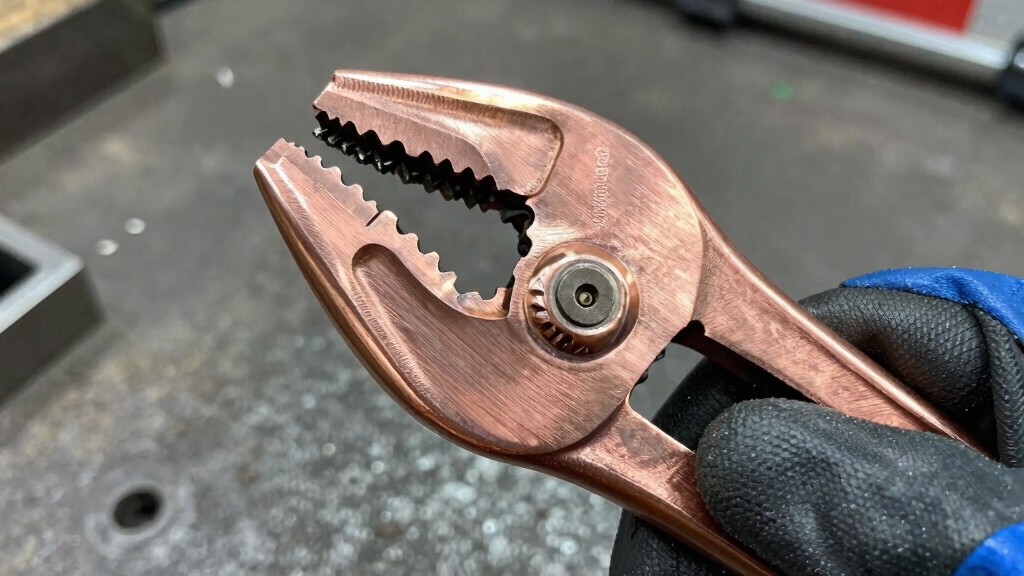
Before attaching the ground clamp, you should always prepare the workpiece surface by removing any paint, rust, or coatings. This ensures you expose clean, bare metal, which is essential for peak electrical conductivity.
Use a grinder or wire brush to create a small patch of bare metal where the clamp will contact. Position the clamp as close to the welding area as possible to minimize circuit resistance.
When attaching the clamp, verify that its jaws make direct, metal-to-metal contact without interference from insulation, debris, or coatings.
Using a heavy-duty clamp rated above 200 amps guarantees safe handling of typical welding currents. Proper surface preparation reduces resistance, prevents arc instability, and maintains a consistent ground path. This is critical for weld quality and operator safety. Maintaining a clean welding area also helps prevent contaminants that can weaken weld strength and cause defects.
When it comes to ground clamps, it’s super important to choose ones that are rated well above your welder’s amperage. This helps manage electrical loads safely and keeps things from overheating.
Now, let’s talk about cables. Picking the right cable gauge is key. It helps maintain proper current flow and cuts down on voltage drop while you’re working.
And don’t forget about your connections! Using secure and durable options—like soldered wire ends or wire clamps—can really make a difference. These choices ensure consistent conductivity and help reduce the risk of connection failures.
Remember to maintain a 25–30% safety margin in power delivery to prevent voltage drops and increased cable heating during extended welding operations.
Select ground clamps and cables that match or exceed the amperage rating of your welder to guarantee safe and efficient performance.
Using clamps with insufficient amperage capacity risks overheating, increased resistance, and potential failure during operation.
Always verify the clamp’s rated amperage, typically marked by the manufacturer, ensuring it handles the maximum welding current your machine produces.
For instance, if your welder runs at 200 amps, choose clamps rated for at least 200 amps or higher to maintain stable conductivity and prevent voltage drops.
Properly rated clamps also enhance durability and reduce maintenance frequency.
Neglecting amperage ratings compromises weld quality and operator safety, so prioritize clamps and cables designed specifically for your welding amperage to maintain a reliable, low-resistance ground connection.
Additionally, ensure your clamps and cables comply with the NEC 200% rule for safe and effective current handling during welding operations.
Matching the amperage rating of your ground clamps is just one part of ensuring a reliable welding circuit. The cable gauge plays an equally important role in maintaining proper current flow.
Using an undersized cable can cause excessive voltage drop, overheating, and reduced welding quality. To select the right cable gauge, consider these critical points:
Choose cable thickness rated for your welder’s maximum amperage to prevent resistance build-up.
Keep cable length as short as possible to minimize voltage loss.
Inspect cables regularly for damage or exposed conductors that compromise conductivity.
Use heavy-gauge cables for high-amperage applications to maintain stable current flow and avoid heat generation.
For longer cable runs, upgrading to 6 AWG wire helps reduce voltage drop and maintain welder performance.
Make sure your welding setup uses ground clamps and cables rated to handle the maximum amperage of your welder.
Select heavy-duty clamps designed for over 200 amps to guarantee they withstand typical welding loads without overheating or losing grip.
Use thick-gauge cables matched to your welder’s amperage to maintain consistent current flow and minimize voltage drop.
Secure clamp jaws must make direct metal-to-metal contact on clean, bare surfaces. Grind off paint or rust before attaching.
Keep cables as short as possible and inspect them regularly for cuts, exposed strands, or wear. Properly solder or clamp wire ends to prevent connection failures.
These durable connection methods guarantee stable electrical contact, reduce resistance, and improve overall welding performance and safety.
Always double-check cable connections before welding to ensure peak arc stability and prevent equipment damage.
Attach the ground clamp directly to a clean, bare metal surface on your workpiece to guarantee peak electrical conductivity. Any paint, rust, or coatings must be removed by grinding a small patch to expose raw metal.
Position the clamp as close to the welding area as possible to reduce circuit resistance and improve weld consistency. Make certain the clamp jaws make firm metal-to-metal contact without interference from insulation or debris.
Keep these points in mind:
Grind off contaminants to bare metal before clamping.
Use a heavy-duty clamp rated over 200 A for reliability.
Avoid clamping on painted or coated surfaces.
Secure the clamp tightly to prevent movement during welding.
Proper attachment ensures a stable, low-resistance ground path critical for safe, efficient welding. Always inspect cables and grounding connections before starting to maintain electrical safety.
Once you’ve secured the ground clamp to clean metal, focus on connecting and managing the ground cables to maintain a reliable electrical path.
Attach the ground cable firmly to the welding machine’s grounding terminal, ensuring it’s often the green-coded post. Use thick-gauge cables for high-amperage jobs and keep them as short as possible to reduce voltage drop.
Connect the ground cable securely to the green-coded terminal using thick, short cables for optimal performance.
Before each use, inspect cables for cuts, wear, or exposed strands. Prevent loose copper strands by soldering wire ends or using wire clamps.
Route cables away from sharp edges, heat sources, and moving parts to avoid damage during operation.
Secure cables with clamps or ties to prevent unnecessary tension or movement, preserving connection integrity and ensuring efficient current flow throughout your welding setup.
Always match the wire gauge to the expected current load to prevent overheating and maintain ampacity compliance.
To ensure safety while welding, it’s a good idea to check the ground connections. Start by measuring the resistance between the ground clamp and the workpiece with a multimeter. You’re looking for a reading close to zero ohms—that’s a solid indicator of strong conductivity.
Next, take a close look at the clamp itself. Are there any signs of wear, damage, or corrosion? These issues can really compromise the connection and put you at risk. Keeping that clamp clean and in good shape is crucial for safe and efficient welding. So, make it a habit to inspect it regularly!
Proper grounding stabilizes voltage levels and prevents unexpected voltage differences between metal parts, reducing the risk of electric shock hazards during welding operations and ensuring electrical safety.
Verify the integrity of your ground connection by measuring its resistance with a multimeter before starting any welding task. A low resistance reading guarantees a solid electrical path, preventing potential safety hazards and welding defects.
Connect the multimeter probes between the ground clamp and the workpiece, then observe the reading. Ideally, resistance should be near zero; anything above 0.1 ohms indicates poor conductivity that needs correction.
To accurately measure resistance levels:
Use a quality digital multimeter set to the lowest ohm range. Guarantee all connections are clean and tight before testing. Avoid touching metal parts with your hands during measurement to prevent false readings.
Repeat measurements periodically to confirm consistent ground integrity throughout the job. Proper grounding is essential to reduce electric shock risks and ensure operator safety during welding.
Inspect the ground clamp thoroughly before each welding session to guarantee reliable electrical contact and operator safety.
Check for visible wear, corrosion, or deformation on the clamp jaws, as these impair conductivity and can cause overheating.
Make certain the clamp’s contact surfaces are clean and free from paint, rust, or debris.
Use a wire brush or grinder to expose bare metal if necessary.
Verify the clamp’s spring tension is sufficient to maintain firm contact with the workpiece without slipping.
Inspect the cable connection point for secure attachment and check for frayed or exposed wires that may lead to electrical hazards.
Replace any clamp showing damage or compromised contact points immediately to maintain a stable ground path and prevent weld defects or shock risks.
Regular maintenance, including cleaning with wire brushes for spatter removal, helps ensure consistent conductivity and prolongs clamp lifespan.
When grounding different types of welders, understanding the specific requirements of each process guarantees a safe and efficient electrical circuit.
Proper grounding techniques tailored to each welder type ensure safety and optimal electrical performance.
For MIG welders, connect the ground clamp to clean bare metal on the workpiece, matching polarity as per the wire and material.
Flux-core welders typically require direct connection to the workpiece or welding cable without a separate clamp.
TIG welders need a grounding clamp linking the cable to a designated ground point.
Stick welders demand a firm clamp on the workpiece, assuring a solid circuit path.
Keep these key points in mind:
Attach clamps to clean, bare metal near the weld area. Use heavy-duty clamps rated for over 200 A. Make sure cables are short and secure to minimize resistance. Confirm grounding points are reliable and properly connected.
Always prioritize electrical safety by maintaining clean, secure grounding connections and using properly rated equipment.
Avoid shock hazards by mounting clamps on bare metal, inspecting cables for damage, and preventing loose copper strands.
Never lean against the workpiece while welding. Use multiple grounding points on large surfaces to stabilize the circuit.
Test resistance regularly to make certain it stays near zero ohms.
| Safety Tip | Reason |
|---|---|
| Clean metal contact | Prevents arcing and poor conductivity |
| Inspect cables each use | Detects wear or exposed wires |
| Use rated clamps (200+A) | Handles welding current safely |
| Avoid leaning on workpiece | Eliminates shock risk |
| Multiple grounds on large parts | Stabilizes electrical path |
Following these tips keeps your welding operation safe and reliable.
Maintaining your grounding equipment directly impacts the safety and efficiency of your welding setup. Neglecting this can cause poor conductivity, increased resistance, and potential electrical hazards.
You need to regularly inspect and service your grounding components to guarantee reliable operation.
Focus on these key maintenance actions:
Clean the clamp’s contact surfaces to remove rust, paint, or debris that impair conductivity.
Check the ground cable for cuts, wear, or exposed wires. Replace damaged cables immediately.
Test ground resistance with a multimeter; aim for readings close to zero ohms.
Replace clamps showing visible wear or degraded contact points to maintain a secure connection.
You can’t rely on a magnetic clamp for aluminum or other non-ferrous metals because magnets only stick to ferromagnetic materials like iron or steel.
Using a magnetic clamp on aluminum won’t assure a secure, low-resistance electrical connection. Instead, you should attach the ground clamp directly to clean, bare aluminum to guarantee good conductivity.
Always prepare the surface by removing any coatings to avoid poor contact and potential welding defects.
When working outdoors in wet conditions, you’re negotiating a minefield of electrical hazards. Ground your welder meticulously. Clamp the ground to clean, bare metal close to the weld, guaranteeing no moisture or rust disrupts contact.
Use heavy-duty, insulated cables rated for high amperage. Keep them dry and short to minimize resistance. Test with a multimeter to confirm near-zero resistance.
Always ensure the grounding point is securely connected to a true earth ground for safety.
Grounding directly impacts your welding arc stability by ensuring a consistent electrical circuit with minimal resistance.
When you attach the ground clamp to clean, bare metal close to the weld, you reduce voltage drops and prevent arc fluctuations.
Poor grounding increases resistance, causing unstable arcs, spatter, and weak welds.
Proper grounding enhances current flow, resulting in smooth, controlled arcs and quality welds.
This is especially critical in high-amperage or delicate welding tasks.
About 65% of wireless or battery-powered welders use internal grounding systems rather than external clamps.
You’ll find these welders often rely on built-in conductive paths that eliminate the need for traditional grounding clamps.
However, you still need to verify the metal workpiece or frame is properly grounded according to safety standards.
Grounding thin or delicate materials properly prevents excessive heat buildup and distortion during welding.
You should attach multiple grounding points close to the weld to stabilize current flow and reduce resistance.
This minimizes arcing and uneven penetration, preserving material integrity.
Use clean, bare metal surfaces for clamp contact and avoid distant grounds that cause voltage drops.
Proper grounding helps you control weld quality and avoid damaging fragile components.
Grounding your welder properly isn’t just important; it’s absolutely critical to your safety and weld quality.
By preparing the surface, choosing the right clamps, and ensuring secure connections, you minimize electrical hazards and maximize efficiency.
Whether you’re working with MIG, TIG, flux-core, or stick welders, following these precise steps guarantees reliable operation.
Remember, maintaining your grounding equipment is like giving your welder a heart. Without it, nothing runs smoothly or safely.