Phone:
(701)814-6992
Physical address:
6296 Donnelly Plaza
Ratkeville, Bahamas.

Phone:
(701)814-6992
Physical address:
6296 Donnelly Plaza
Ratkeville, Bahamas.

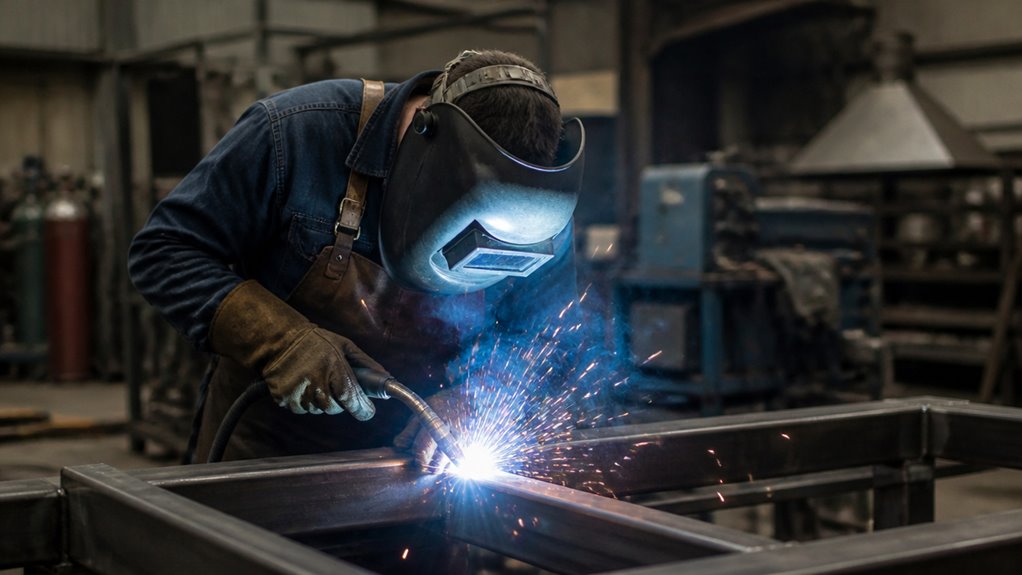
A journeyman welder is a fully qualified professional who can complete welding work independently, accurately, and safely.
You typically earn journeyman status through an apprenticeship or equivalent training, documented work experience, and practical evaluations. Requirements vary by employer and trade program.
You interpret drawings and welding procedures, prepare joints, select suitable equipment, and inspect completed welds.
Journeyman status isn’t a universal license or certification.
Learn how the role differs from apprenticeship, what skills it requires, and what qualifications may apply.
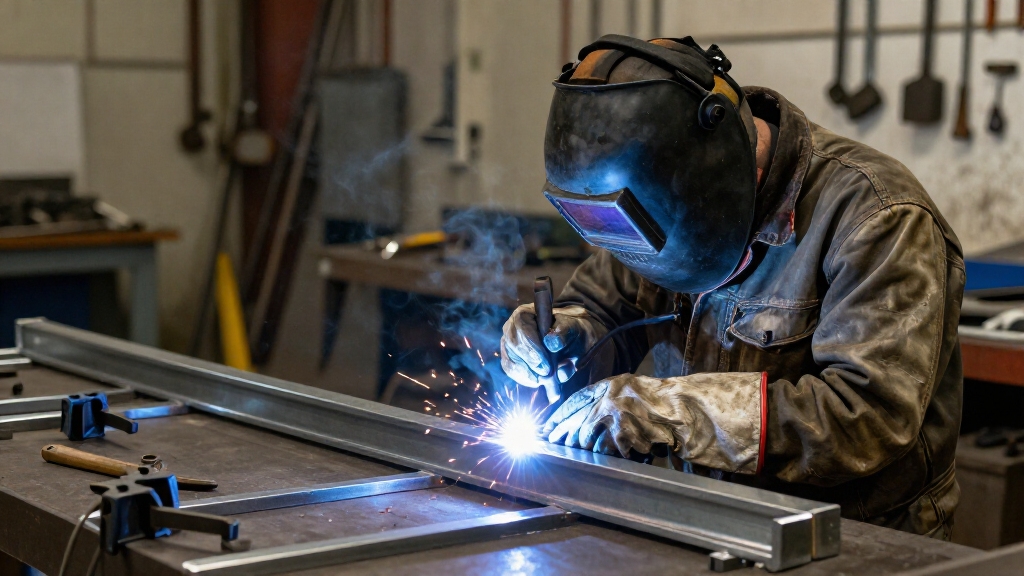
A journeyman welder is a fully qualified professional who’s completed an apprenticeship or equivalent training and can perform welding work independently.
When you hold this status, you’ve demonstrated practical competence under real job conditions; elapsed training time alone doesn’t establish readiness.
Trade programs or unions may require documented work hours, classroom coursework, and competency evaluations before recognizing your qualification.
Employers may also request an AWS Certified Welder credential or another relevant certification.
You’ll typically interpret blueprints, shop drawings, and welding procedure specifications, then fabricate or repair components to stated dimensions and quality standards.
Your work may involve GMAW, FCAW, GTAW, or SMAW, depending on the process and application.
You must follow approved procedures, inspect welds, and use required protective equipment.
Many apprenticeship programs combine classroom instruction with supervised on-the-job training to develop practical skills.
Journeyman status signals that you can manage assigned work safely and reliably.
The key difference is independence: an apprentice develops welding skills under supervision, while a journeyman can complete assigned work without routine oversight.
As an apprentice, you follow instructions, practice approved techniques, and ask for guidance when a task or procedure isn’t clear. A supervisor checks your setup, technique, and finished welds, especially when work involves unfamiliar processes or positions.
As a journeyman, you’re expected to interpret drawings and welding procedure specifications, select suitable equipment, and produce work that meets required quality standards.
You still follow site rules, procedures, and inspection requirements; independence doesn’t mean working unsafely or beyond your qualifications.
You’re also accountable for identifying hazards, using protective equipment, and stopping work when conditions are unsafe.
Both roles require precision, but a journeyman applies proven judgment with less direct supervision and greater responsibility for each completed weld. Journeymen also use visual inspection to check for cracks, porosity, undercut, and incomplete fusion.
To become a journeyman welder, complete an apprenticeship or equivalent training path that combines supervised, paid work with classroom instruction. Most apprenticeships take three to five years.
Journeyman welders typically complete three to five years of paid, supervised work and classroom training.
You’ll build documented work hours, study welding theory, and complete practical evaluations; programs set the specific requirements.
During training, follow shop safety procedures and use required personal protective equipment. Learn to control hazards such as fumes, heat, and electrical current.
Your instructors or supervisors will assess your technique and ability to meet applicable procedures and quality standards.
If you’ve completed a vocational certificate or associate degree, ask whether it can reduce your apprenticeship hours. Some employers or programs also require an AWS Certified Welder credential or similar qualification.
Consistent hands-on practice helps build the muscle memory needed to develop precise welding techniques.
Once you’ve met the required hours, coursework, and competency assessments, your employer, union, or trade program can recognize your journeyman status.
On the job, a journeyman welder reads blueprints and welding procedure specifications. You’ll prepare materials and join or repair metal parts to required standards.
You’ll verify dimensions, fit-up, and joint preparation before work begins, then follow approved procedures and drawings. You may fabricate structural components, fixtures, or custom parts for construction, manufacturing, or repair projects.
You’ll inspect completed work for visible defects and confirm it meets specified quality requirements. When results fall short, you’ll report the issue and make authorized corrections.
You’ll also maintain welding equipment and troubleshoot basic faults to keep work reliable. Throughout each task, you’ll use required protective equipment, control fire and fume hazards, and keep your work area orderly.
You’re expected to work independently, coordinate with supervisors and other trades, and stop when conditions make the job unsafe. You may also follow a qualified Welding Procedure Specification to ensure consistent, code-compliant work.
Working independently requires you to select and apply the right welding process for the material, joint, and procedure. You should understand SMAW, GMAW, FCAW, and GTAW, including each process’s equipment, consumables, limitations, and suitable applications.
Read blueprints, shop drawings, and welding procedure specifications to confirm joint design, dimensions, filler metal, and required parameters before striking an arc. You’ll also need precise fit-up, sound metal preparation, and control of travel speed, arc length, heat input, and bead placement.
For example, SMAW’s portability makes it well suited to fieldwork where shielding gas is impractical.
Inspect your work for defects and verify it meets applicable quality requirements. Set up, maintain, and troubleshoot welding equipment, and use the correct personal protective equipment. Control fire hazards, protect nearby workers from arc radiation, and provide adequate ventilation.
Follow approved procedures; don’t weld unidentified materials or alter specified parameters without authorization.
Where you work depends on the projects and materials involved. Journeyman welders are employed in fabrication shops, manufacturing plants, construction sites, and industrial facilities.
In a shop, you may cut, fit, and join components at fixed workstations. You’ll use drawings and welding procedure specifications to meet tolerances.
On construction sites, you’ll work outdoors or at height, assembling structural steel, pipelines, or equipment. Industrial facilities may require maintenance or repair welding around machinery, confined spaces, or operating systems.
Each setting brings different hazards. You’ll select appropriate protective equipment, control sparks, and check ventilation before welding.
At a site, you’ll also follow access rules, fall-protection requirements, and hot-work permits. Employers may assign you to a crew or let you work independently, depending on the task, qualifications, and safety procedures. Before welding, workers should clear debris and check for flammable materials to reduce fire risks.
How much you earn as a journeyman welder depends on your specialty, experience, location, and work setting.
U.S. salary estimates place average annual pay near $56,093, or about $27 per hour. The middle 50 percent typically earn $50,863 to $61,323.
U.S. journeyman welders earn about $56,093 annually on average, with most making between $50,863 and $61,323.
Entry-level pay may start near $46,101, while top earners reach about $66,085. Actual offers vary by employer, overtime, and project demand.
Your welding process can also affect your rate. Reported averages are about $27 per hour for FCAW, $29.02 for SMAW, and $32.55 for MIG skills.
Late-career hourly compensation may reach roughly $31.93. Compare wages alongside shift length, travel, benefits, and exposure controls.
Don’t judge an offer by its hourly rate alone; verify that the employer provides appropriate ventilation, PPE, and safe procedures for the work.
Specializing in multiple welding processes can improve earning potential and open doors to higher-paying roles.
Pay can depend on your credentials, but there’s no single certification required for every journeyman welder. Your employer, trade program, and work scope determine which qualifications you need.
Journeyman status usually confirms that you’ve completed required training, work hours, and competency evaluations; it isn’t a universal welding license.
An AWS Certified Welder credential may be preferred or required, especially when a job specifies a process, material, position, or code.
You may also need employer- or project-specific qualification tests under applicable welding procedures and standards. For example, pressure, structural, and pipeline work can impose distinct testing and documentation requirements.
Check the governing code and job specification before welding. Keep qualifications current where required, follow approved procedures, and verify that your test scope matches the work.
Certification doesn’t replace safe practices, inspection, or employer authorization.
Journeyman welder status can transfer between employers, but you may need to prove your qualifications and meet the new employer’s requirements.
Across states, recognition varies. You might need to document apprenticeship hours, training, competency evaluations, or hold a relevant certification, such as AWS.
Check local licensing rules, union agreements, and project specifications before starting work.
Never assume your status authorizes every welding process. Follow approved procedures and verify safety credentials for each assignment.
Treat your journeyman card as a rung, not the ceiling: you can advance by building leadership, planning, and safety skills.
Volunteer to coordinate crews, review drawings and welding procedures, track production, and coach apprentices.
Strengthen your knowledge of quality control, inspection standards, hazard assessments, and equipment maintenance.
Ask your supervisor for lead assignments, document results, and pursue relevant certifications or management training.
Consistent communication and sound safety decisions prepare you for supervisory responsibility.
You don’t always need to renew journeyman status; requirements depend on your employer, union, jurisdiction, and credentialing body.
However, you may need to renew specific welding certifications, such as AWS qualifications, by meeting continuity, testing, or recertification rules.
Check each credential’s expiration date and governing standard, and confirm requirements with your employer or certifier.
Don’t perform work requiring a lapsed qualification. Arrange renewal and verify your authorization before welding.
You should expect prolonged standing, walking, bending, kneeling, crouching, and working in confined or awkward positions.
You’ll lift and carry welding equipment, materials, and components, sometimes repeatedly, so strength and stamina matter.
Fine motor control helps you handle torches and tools precisely.
Heat, sparks, fumes, noise, and bright arc light add strain; use required PPE, ventilation, lifting techniques, and rest breaks.
Follow site procedures and report pain or unsafe conditions promptly.
You can verify a welder’s journeyman status by checking apprenticeship completion records, required work hours, coursework, and competency evaluations with the issuing program, union, or employer.
Confirm any trade certificates directly with the credentialing body, such as AWS, and match the welder’s identity to the records.
Review references and documented work history, then conduct a practical weld test against your procedures and quality standards.
Don’t rely on job titles alone.
As a journeyman welder, you turn training into steady, precise work.
You read plans, choose processes, and join metal that must hold under pressure.
Your experience can take you from shops to construction sites, where each weld demands skill, focus, and strict safety habits.
Build your credentials, keep learning, and protect yourself with the right equipment and procedures.
In this trade, a sound weld is more than a finished joint: it’s the strong link between craftsmanship and reliability.