Phone:
(701)814-6992
Physical address:
6296 Donnelly Plaza
Ratkeville, Bahamas.

Phone:
(701)814-6992
Physical address:
6296 Donnelly Plaza
Ratkeville, Bahamas.

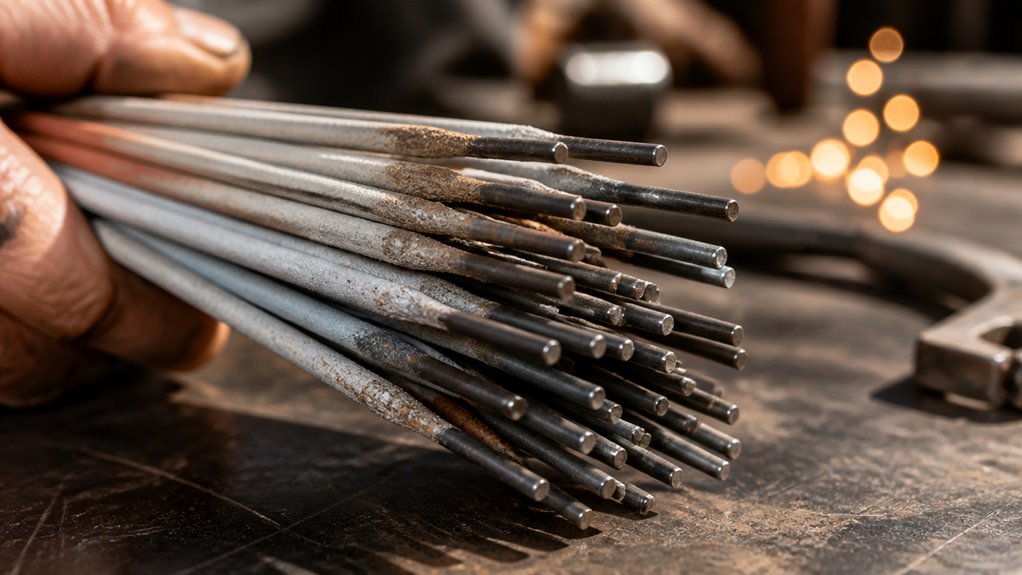
Welding rods have a metal core, typically low-carbon steel, stainless steel, aluminum, or bronze, matched to your base metal for strong, corrosion-resistant bonds.
This core melts to fuse parts together while a flux coating surrounds the weld pool with protective gases. It stabilizes the electric arc and forms slag to prevent oxidation and cracking as it cools.
Flux ingredients like cellulose, rutile, and iron powder influence weld quality and penetration.
Understanding rod composition helps you optimize welding performance and results.
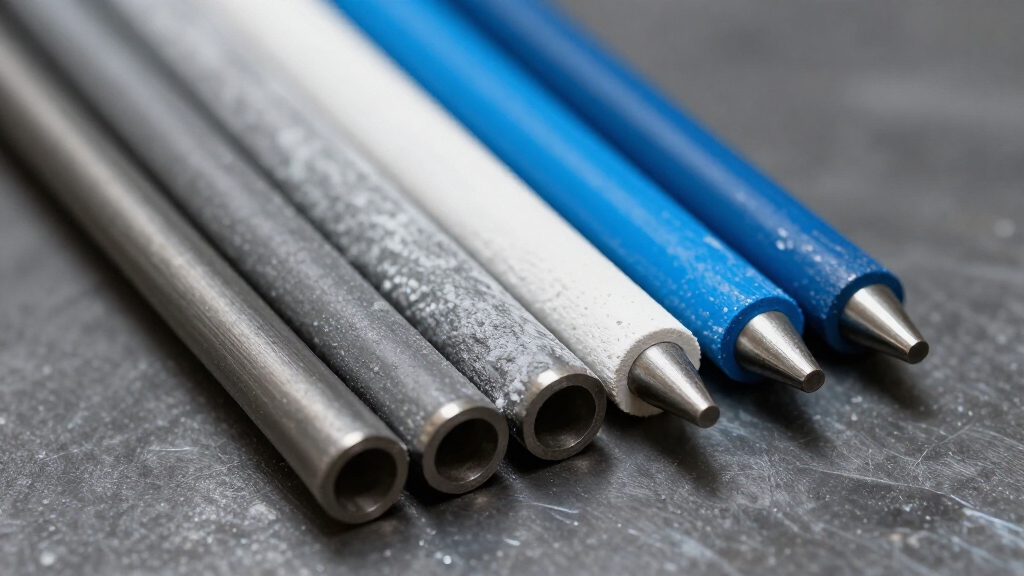
Although welding rods may seem simple, their composition is carefully engineered to guarantee strong, clean welds. Each rod consists of a metal core wire and a flux coating.
Welding rods combine a metal core and flux coating to ensure strong, clean, and reliable welds.
The core wire acts as the filler metal, melting into the joint to fuse base metals effectively. Meanwhile, the flux coating surrounds the molten weld pool with a protective gas shield, preventing atmospheric contamination like oxygen and nitrogen from causing defects.
It also stabilizes the electric arc, ensuring consistent heat and penetration. After welding, the flux forms slag, which shields the cooling weld from oxidation and slows cooling to reduce cracking.
Understanding this dual function helps you select rods that optimize weld quality, arc stability, and overall performance in shielded metal arc welding processes. Selecting electrodes with the correct coating types based on welding position and base metal type further improves weld integrity and reduces defects.
When you’re on the hunt for welding rods, you’ll notice that steel cores are the go-to choice. They come in different varieties, like low-carbon and alloyed steels, which are designed for strength and ductility. Pretty handy, right?
But it doesn’t stop there! You’ll also find nonferrous metals like copper, bronze, and aluminum being used for more specialized applications. These materials bring their own unique properties to the table, which can be super beneficial depending on what you’re working on.
Just remember, it’s really important to match the core metal to the base metal. Doing so ensures you get the best weld integrity and performance possible. So, keep that in mind when you’re making your selection!
For example, low-hydrogen rods like E7018 electrodes are preferred for welding thick structural steel because they provide enhanced toughness and crack resistance.
Understanding the variations in steel cores for welding rods is essential when selecting the right filler metal for your project. Most steel-core rods use low-carbon steel, typically containing 0.05% to 0.25% carbon, balancing weldability and strength.
You’ll often find manganese included to enhance toughness and ductility. Silicon acts as a deoxidizer, preventing porosity in the weld. Some specialized rods incorporate alloying elements like molybdenum or nickel to improve corrosion resistance and mechanical performance.
Choosing the appropriate steel core depends on matching the base metal’s composition and the weld’s mechanical requirements. By understanding these core variations, you can guarantee optimal fusion, minimize defects, and achieve the desired structural properties in your weld joint. The metal core also provides essential mechanical properties such as strength and corrosion resistance critical to weld performance.
Beyond steel, welding rods often incorporate nonferrous core metals such as copper, bronze, brass, and aluminum to address specific welding requirements.
Copper cores offer excellent electrical conductivity and corrosion resistance. They’re ideal for welding copper alloys and electrical components.
Bronze rods provide strength and wear resistance, commonly used in joining bronze parts or overlay welding.
Brass core rods, containing copper and zinc, enable welding of brass components with good mechanical properties and corrosion resistance.
Aluminum core rods are lightweight and corrosion-resistant, suited for joining aluminum and its alloys. They require precise control of heat input and filler composition due to aluminum’s high thermal conductivity.
When you select nonferrous core metals, you guarantee compatibility with the workpiece’s properties. This enhances weld integrity and performance in specialized applications.
Additionally, choosing the correct shielding gas compatibility is essential to optimize weld quality and reduce defects when working with nonferrous metals.
Selecting the appropriate welding rod core metal depends largely on matching it with the base metal you’re joining. Using a rod core material compatible with the base metal guarantees peak fusion, mechanical integrity, and corrosion resistance.
For steel bases, low-carbon steel cores are common due to their strength and ductility. Stainless steel bases require stainless steel rods to maintain corrosion resistance. Nonferrous metals like copper or aluminum rods are tailored for their respective base metals to avoid metallurgical incompatibilities.
| Base Metal | Common Welding Rod Core |
|---|---|
| Carbon Steel | Low-carbon steel |
| Stainless Steel | Austenitic stainless steel |
| Cast Iron | Cast iron or nickel alloy |
| Aluminum | Aluminum or aluminum alloy |
| Copper | Copper or copper alloy |
Matching metals reduces defects and improves weld quality. Wire composition and classification, such as those defined by AWS codes, are essential for selecting the right welding rod for specific applications.
Steel dominates as the core metal in welding rods because it offers a balanced combination of strength, ductility, and compatibility with a wide range of base metals.
Steel leads as the core metal in welding rods due to its strength, ductility, and broad compatibility.
When you weld with steel-core rods, you benefit from their mechanical properties that closely match many structural and fabrication steels, guaranteeing reliable fusion and joint integrity.
Steel’s metallurgical characteristics allow it to accommodate variable welding conditions and flux coatings, facilitating stable arc performance and controlled penetration.
Its widespread availability and cost-effectiveness also make it practical for diverse applications.
Additionally, steel rods can incorporate alloying elements like manganese and silicon, which enhance weld quality.
The AWS electrode numbering system helps ensure that steel rods are selected for their tensile strength and flux compatibility, matching the requirements of specific welding tasks.
If you’re looking for a welding rod core that strikes the perfect balance between strength and flexibility, low-carbon steel is the way to go.
With its optimal carbon content hovering around 0.05% to 0.25%, it really hits the sweet spot. This specific range boosts the rod’s tensile strength while still keeping it ductile. So, you won’t have to worry about your welds turning brittle.
Plus, by keeping a close eye on those carbon levels, you can ensure consistent mechanical performance. That means you get reliable fusion in your weld joints every time. It’s all about making sure your welds hold up under pressure!
Additionally, selecting an electrode with a metal core that matches the base material is essential for metallurgical compatibility and weld strength.
Because welding rods serve as both filler material and structural reinforcement, their carbon content critically influences weld quality and performance.
Low-carbon steel, typically containing 0.05%–0.25% carbon, strikes the best balance for welding rods. It minimizes brittleness and cracking risks while maintaining adequate strength.
Higher carbon content increases hardness but leads to weld defects and reduced ductility. When you select a low-carbon steel rod, you guarantee better weld fusion and toughness.
| Carbon Content (%) | Weldability | Mechanical Behavior |
|---|---|---|
| 0.05 – 0.25 | Excellent arc stability | High ductility |
| 0.26 – 0.60 | Moderate, risk of cracks | Increased hardness |
| > 0.60 | Poor, prone to brittleness | Low toughness |
This carbon range maximizes fusion without compromising weld integrity. Ensuring proper storage conditions is also essential to maintain rod quality and prevent moisture-induced defects.
Low-carbon steel welding rods deliver enhanced strength and ductility by maintaining a delicate balance in their microstructure.
You’ll find that rods with about 0.05% to 0.25% carbon provide enough hardness without sacrificing flexibility. This prevents brittleness in welds and is vital for joints that undergo stress or deformation.
The added manganese further improves toughness and elongation, while silicon acts as a deoxidizer, refining the weld quality.
Here’s why low-carbon steel works best for welding rods:
This optimized composition guarantees durable, high-quality welds suited for various applications. Additionally, the use of a low-hydrogen iron-powder coating in welding rods significantly reduces the risk of cracking and improves weld quality.
While welding rods rely on their metal core to supply filler material, the flux coating plays a crucial role in protecting and enhancing the weld quality.
When you weld, the flux coating generates a gas shield that isolates the molten metal from atmospheric oxygen and nitrogen. This prevents contamination and oxidation.
It also stabilizes the arc, making it easier to control the weld pool. As the weld cools, the flux forms a slag layer that protects the solidifying metal from air exposure.
This reduces the risk of defects like porosity or cracking. Additionally, the flux coating influences penetration depth, bead shape, and deposition rate, allowing you to tailor the weld characteristics.
Without an effective flux coating, achieving a clean, strong weld would be markedly more difficult. The flux coating also cleans the weld area by reacting with impurities, which helps to stabilize the arc for proper fusion and improved weld quality.
The protective and performance-enhancing qualities of flux coatings stem from their carefully selected chemical components. When you examine flux coatings, you’ll find various ingredients that serve distinct purposes to stabilize the arc, shield the weld pool, and influence slag formation.
Key components include:
1. Cellulose and Rutile (Titanium Dioxide)
Provide arc stability and smooth bead appearance.
2. Silicates and Calcium Carbonate
Act as fluxing agents, promoting slag formation and protecting the weld.
3. Iron Powder
Increases deposition rate by adding filler metal during welding.
4. Alkali Metals (Sodium, Potassium)
Enhance arc characteristics and improve slag detachability.
Because flux coatings directly influence arc stability, slag formation, and weld pool protection, choosing the right coating composition is critical to optimizing welding rod performance for specific applications.
High-cellulose coatings, rich in organic compounds, generate a deep penetrating arc ideal for pipe welding. However, they produce more smoke and require careful slag removal.
Rutile or titania-based coatings promote a smooth, stable arc with easy slag removal, making them suitable for general-purpose welding.
Low-hydrogen coatings reduce moisture absorption, minimizing crack susceptibility in structural welds. Adding iron powder to the flux increases deposition rates and weld bead size, enhancing productivity in flat or horizontal positions.
Alkaline coatings containing calcium carbonate improve weld bead toughness and arc stability. Understanding these flux variations enables you to select rods that precisely match your welding environment and base metal requirements.
Many welding rods feature core metals carefully selected to match the base metals they join, ensuring peak strength and compatibility in the weld joint.
Typically, steel forms the core in most welding rods. However, you’ll also find rods with core metals like cast iron, stainless steel, aluminum, and bronze for specialized applications.
Steel commonly forms welding rod cores, with cast iron, stainless steel, aluminum, and bronze used for specialized needs.
The core metal supplies the filler material that integrates into the weld. The flux coating protects it during welding.
Key common welding rod core metals include:
Choosing the right core metal is essential for weld integrity and performance.
When selecting a welding rod, you must consider factors like the base metal type, welding position, and desired mechanical properties to guarantee peak weld quality.
First, match the rod’s core metal to the base metal. For example, use low-carbon steel rods for mild steel.
Then, choose a flux coating suitable for your welding position. High-cellulose coatings like E6010 penetrate deeply for vertical or overhead work, while high-titania coatings like E6013 suit flat or horizontal welding.
Consider mechanical requirements. Low-hydrogen rods such as E7018 reduce cracking risk in critical structures.
Also, factor in deposition rate and arc stability. Iron-powder coatings increase deposition and improve efficiency.
You should store welding rods in a dry, temperature-controlled environment to prevent moisture absorption. This can cause hydrogen-induced cracking.
Keep them sealed in their original packaging or airtight containers with desiccants. Avoid exposure to humidity and contaminants.
For low-hydrogen rods, use rod ovens maintained at recommended temperatures (around 250°F to 300°F) to preserve coating integrity.
Always handle rods with clean gloves to avoid contamination that could affect weld quality.
Think of sparks flying like tiny fireworks bursting from your work. You need to shield your eyes with a proper welding helmet and wear flame-resistant gloves and clothing to protect your skin from burns.
Make certain good ventilation to avoid inhaling hazardous fumes from the flux coating. Keep a fire extinguisher nearby and work in a clutter-free area.
Always handle rods carefully to prevent electric shock and store them dry to maintain safety and performance.
Welding rods typically last about 6 months to a year if stored properly.
You’ll want to keep them dry and sealed in a moisture-resistant container because flux coatings absorb moisture.
This can lead to weld defects like porosity and cracking.
If rods become damp, you can re-bake them at specified temperatures to restore usability.
Always check manufacturer guidelines for exact shelf life and storage conditions to guarantee peak performance and weld quality.
You can’t effectively reuse welding rods once partially used because their flux coating deteriorates quickly, compromising weld quality.
Research shows moisture absorption in low-hydrogen rods can exceed 2% within hours if exposed, increasing hydrogen-induced cracking risk.
The flux’s protective gas shield and slag formation lose effectiveness after exposure, so reusing rods risks contamination, arc instability, and weak welds.
Always use fresh rods for consistent, reliable weld performance.
You’ll find welding rods vary in core metals and flux coatings to suit techniques. For example, stick welding uses coated rods like E6010 with cellulose flux for deep penetration.
E7018 rods have low-hydrogen coatings for crack resistance. TIG welding employs bare filler rods matching base metals.
MIG welding uses continuous wire electrodes with shielding gas. Each rod’s composition controls arc stability, penetration, slag formation, and deposition rate, adapting to specific welding demands.
When you choose welding rods, understanding their steel cores and flux coatings is like holding the blueprint to metal mastery.
Low-carbon steel cores guarantee strength and flexibility, while flux coatings protect against contamination and enhance weld quality.
Selecting the right rod isn’t just important; it’s the difference between a weld that’s as solid as a mountain and one that falters.
With this knowledge, you’re equipped to make precision choices every time you weld.