Phone:
(701)814-6992
Physical address:
6296 Donnelly Plaza
Ratkeville, Bahamas.

Phone:
(701)814-6992
Physical address:
6296 Donnelly Plaza
Ratkeville, Bahamas.

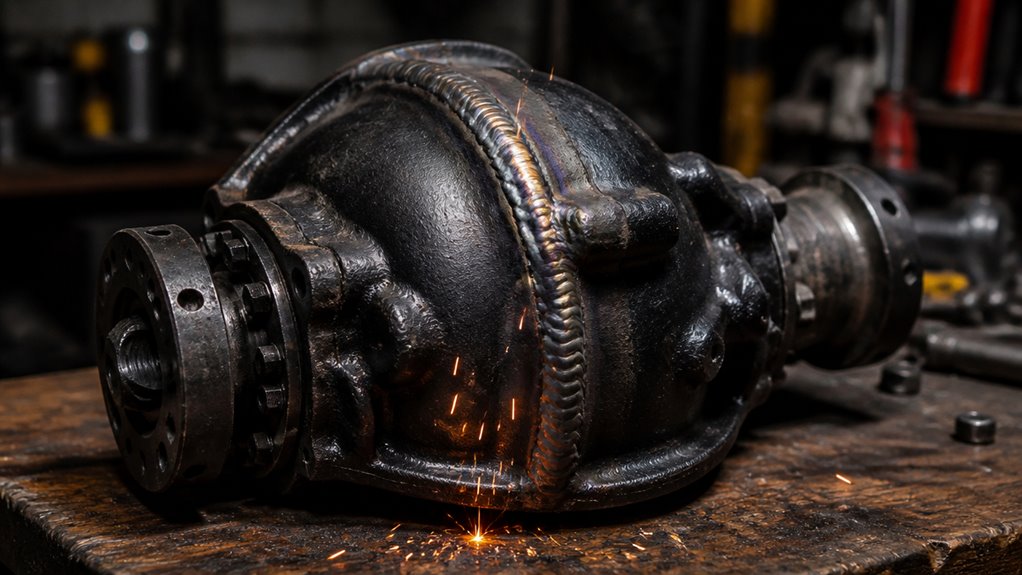
A welded diff locks the spider gears inside your rear differential by welding them together, forcing both rear wheels to rotate at the same speed.
This removes the normal differential action, making your rear axle behave like a solid unit. It’s a simple, cost-effective way to boost traction, especially popular in drift and racing cars where predictable breakaway grip matters most.
It does increase tire wear and drivetrain stress, so understanding its effects and maintenance is important for peak performance.
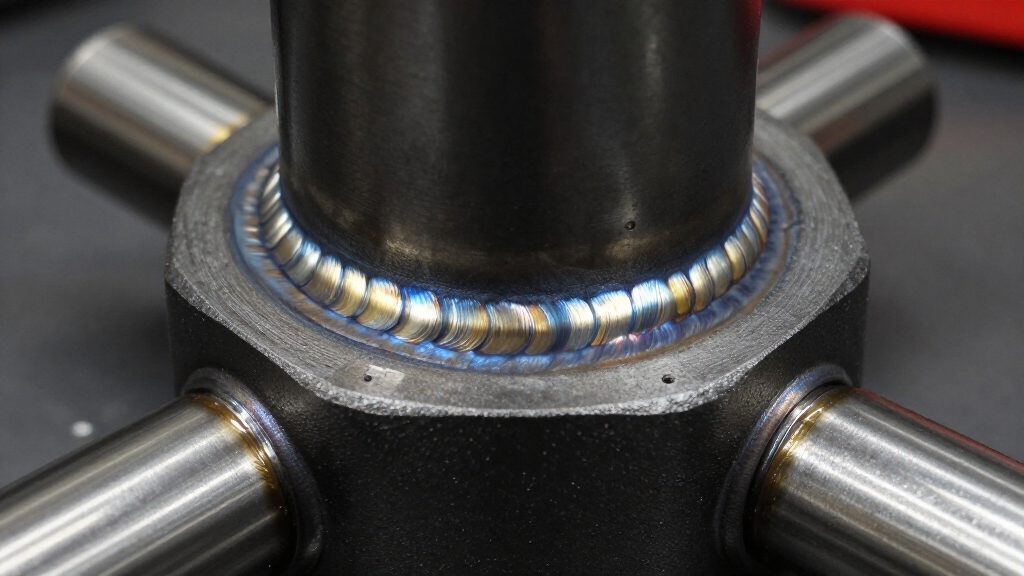
A welded diff, often known as a Lincoln Locker, is a differential modified by welding its spider gears together, forcing both axles to rotate at the same speed.
By removing the normal differential action, this modification prevents the carrier from allowing independent axle speed differences.
This modification stops the carrier from permitting different speeds between the axles.
In effect, your rear axle behaves like a solid unit or spool, ensuring equal wheel rotation under power.
Normally, a differential lets the inside and outside wheels rotate at different speeds during a turn.
When you use a welded diff, the gears are locked, so both wheels rotate identically.
Since the outside wheel travels farther in a corner, the inside tire must slip or scrub to compensate.
This slip replaces the differential’s usual role, fundamentally altering how your drivetrain distributes torque.
This modification is a cost-effective method to boost traction in low-grip conditions.
When you install a welded diff, you’ll definitely notice a shift in your car’s cornering behavior. Since both rear wheels rotate at the same speed, the inside tire tends to slip or hop during turns. This can feel a bit wild, right? Plus, that extra tire scrub really ramps up wear, especially on the inside wheel.
And then there’s the low-speed maneuverability. It can get tricky! You’ll find that the wheels can’t rotate independently when you’re making tight turns or trying to park. So, if you thought parallel parking was tough before, just wait!
This increased resistance and uneven rotation can cause stress concentrators that affect your vehicle’s handling and tire longevity.
Although a welded diff locks both rear wheels to spin at the same speed, it fundamentally alters how your car handles during cornering by eliminating the differential’s ability to accommodate varying wheel speeds.
When you enter a turn, the inside wheel needs to rotate slower than the outside wheel due to the shorter travel distance. With a welded diff, both wheels rotate identically, so the inside tire must slip, hop, or scrub against the pavement to compensate.
This causes increased resistance and a tendency for the rear end to feel less compliant, especially at low speeds or tight corners. You’ll notice a more abrupt, sometimes unpredictable rear behavior, as the forced wheel slip impacts traction and handling balance.
This requires precise throttle control to maintain stability.
Additionally, the altered load distribution can increase stress on the drivetrain, making understanding load capacity crucial for safe operation.
The forced slipping and hopping of the inside tire during cornering directly impacts tire wear on vehicles equipped with a welded diff. Because both wheels rotate at the same speed, the inside tire is forced to scrub or hop to accommodate the shorter travel distance. This generates excessive friction and heat.
This constant slip accelerates tread wear unevenly, often leading to premature degradation of the inside tire. You’ll notice the inside tire loses grip faster, reducing overall traction and potentially compromising handling precision over time.
Unlike an open differential, which allows wheels to rotate independently, the welded diff’s locked behavior sacrifices tire longevity for consistent power delivery. If you use your car regularly on roads, expect more frequent tire replacements and uneven wear patterns due to this forced slip during every corner.
You’ll frequently notice that low-speed maneuvers become more challenging with a welded diff installed. Since both rear wheels rotate at the same speed regardless of turning radius, the inside wheel must slip or scrub during tight turns.
This eliminates the differential’s ability to compensate for differing wheel speeds, causing resistance and hopping sensations when you try to park or execute slow cornering. You’ll find steering feels less smooth and more abrupt, with increased effort required to complete sharp turns.
This characteristic also elevates drivetrain stress and accelerates tire wear during these maneuvers. While the welded diff offers traction benefits under power, its impact on low-speed handling markedly reduces everyday drivability and comfort. This makes it less suitable for street use or tight urban environments. Prolonged exposure to intense mechanical stress can lead to cumulative damage similar to how repeated exposure to UV radiation harms skin over time.
When you’re driving with a welded diff, you should definitely brace yourself for some increased tire wear. That’s because the wheels can’t slip independently during turns, which leads to a lot of constant friction.
And here’s the kicker: handling can get pretty tricky, especially at low speeds. Since the wheels are locked together, they won’t rotate separately, making those tight maneuvers a real challenge.
Oh, and let’s not forget about the added stress on your drivetrain! One wheel has to do all the heavy lifting when you’re cornering, which can really ramp up the wear on your components over time. So, keep that in mind if you’re considering a welded diff for your ride!
Proper maintenance and component selection, like choosing the right welding tip size, can help ensure stronger and more reliable welds when fabricating or repairing differentials.
Frequently, drivers with a welded diff notice accelerated tire wear due to the forced equal rotation of both rear wheels. Because the differential’s spider gears are welded, both wheels spin at the same speed even during cornering.
This eliminates the natural speed differentiation needed for smooth turns. As a result, the inside tire must slip or scrub to compensate for the shorter travel distance, generating increased friction and heat.
Over time, this causes uneven and premature tread wear, particularly on the inside tire. Additionally, repeated tire slip stresses rubber compounds, reducing tire lifespan and grip.
If you drive aggressively or frequently take tight corners, expect faster tire degradation. Understanding this trade-off helps you anticipate maintenance needs and adjust driving style accordingly to mitigate excessive tire wear.
Welding, as a fusion welding method, permanently joins metal components, creating the solid connection that causes both wheels to rotate in unison in a welded differential.
Along with accelerated tire wear, a welded diff introduces notable challenges in low-speed handling. Because both rear wheels rotate at the same speed, you lose the differential’s ability to allow independent wheel speeds during tight maneuvers.
As a result, when you try to make slow turns, like in parking lots or during U-turns, the inside wheel must slip or scrub to compensate for the difference in travel distance. This causes the car to feel abrupt, resistant, and less predictable at low speeds.
You’ll notice increased steering effort and occasional hopping or jerking sensations from the rear axle. These effects make precise, controlled maneuvering more difficult and can strain your confidence in tight, slow-speed situations.
This highlights the welded diff’s compromise between performance and everyday drivability. Effective thermal management is crucial in welding processes to prevent material distortion and maintain structural integrity.
Installing a welded diff markedly increases drivetrain stress because both wheels are forced to rotate at the same speed, even during cornering.
Since the inside wheel travels a shorter distance than the outside wheel, it must slip or scrub to compensate, generating significant friction and strain.
This constant resistance puts extra load on the axle shafts, differential carrier, and drivetrain components.
You’ll notice increased wear on tires and potential premature failure of drivetrain parts due to the elevated mechanical stress.
Additionally, the forced wheel slip raises heat and can cause metal fatigue over time.
While this setup benefits traction in drifting, it compromises component longevity and driving smoothness.
Understanding these stress effects helps you weigh performance gains against durability concerns when choosing a welded diff.
It is important to monitor for metal fatigue and perform regular inspections to prevent unexpected drivetrain failures.
Because a welded diff forces both rear wheels to rotate at the same speed, you’ll notice increased tire wear due to constant slipping and scrubbing during cornering.
This abnormal tire friction accelerates tread degradation, especially on the inside rear tire, which scrubs to compensate for the locked axle.
You’ll need to monitor tire condition more frequently, as wear patterns become uneven and more severe than with an open differential.
| Factor | Impact on Tire Wear |
|---|---|
| Locked axle rotation | Equal wheel speed, no slip |
| Cornering | Inside tire scrubs and hops |
| Tire wear rate | Increased, uneven |
| Maintenance | More frequent tire checks |
| Driving style | Aggressive cornering worsens |
Regular tire rotation and alignment checks become essential to prolong tire life with a welded diff. Additionally, addressing wear-related repairs promptly can prevent further damage and maintain vehicle safety.
While a welded diff offers a straightforward and cost-effective way to achieve locked-axle behavior, it comes with distinct trade-offs that impact performance, drivability, and tire longevity.
You gain consistent torque delivery to both wheels, which improves traction during drifting or aggressive acceleration. Its mechanical simplicity also reduces costs compared to LSDs or spools.
However, you’ll face increased tire scrub in corners, as the inside wheel is forced to slip rather than rotate independently, accelerating tire wear.
Low-speed maneuvers become more challenging due to drivetrain binding, causing harsh handling in tight turns. Additionally, the constant lockup increases stress on drivetrain components.
Proper maintenance and inspections are important to ensure the structural integrity of the welded diff and prevent premature failure.
When deciding between a welded diff, an LSD, or a spool, you should weigh your performance goals, budget, and driving conditions carefully.
Opt for a welded diff if you need a cost-effective, mechanically simple solution that guarantees equal wheel speed without the complexity of an LSD or spool.
It’s ideal when consistent, locked behavior under power is more critical than smooth cornering or tire longevity.
Choose a welded diff if your driving involves controlled oversteer or predictable breakaway traction, especially in motorsport or drift applications where budget constraints exist.
However, if you prioritize street drivability or minimal tire wear, an LSD or spool might suit you better.
A welded diff is a strategic choice when you accept trade-offs in handling for affordable, straightforward locked-axle performance.
Drifters and racers frequently choose welded diffs for their ability to provide consistent, locked rear-wheel rotation under power. This locked behavior guarantees both wheels turn at the same speed, making it easier to break traction simultaneously and maintain controlled oversteer.
You’ll find welded diffs especially useful in rear-wheel-drive drift cars, where predictable rear-wheel lockup helps initiate and sustain slides. Compared to limited-slip differentials or spools, welded diffs offer a budget-friendly alternative that’s mechanically simple yet effective.
The constant axle speed prevents one wheel from overpowering the other during acceleration, improving traction consistency on the track. While this setup compromises smoothness in everyday driving, racers appreciate its directness and reliability in high-slip situations.
This makes it a practical choice for competitive motorsport environments focused on performance rather than comfort.
You can often identify a welded differential by observing how your car behaves during turns and acceleration. If the inside rear tire hops, scrubs, or slips instead of rolling smoothly, it’s a key sign.
Additionally, the car may feel resistant or abrupt in tight turns, especially at low speeds. Equal wheel rotation under power also indicates a welded diff.
| Symptom | Explanation |
|---|---|
| Tire hop or scrub | Inside wheel forced to rotate at same speed as outside wheel. |
| Difficult low-speed turns | Wheels can’t rotate independently, causing resistance. |
| Equal wheel speeds | Both axles turn together, no speed differentiation. |
Checking these behaviors helps confirm if your car has a welded differential.
Yes, you can reverse a welded diff, but it requires effort.
You’ll need to disassemble the differential and grind or cut the welds carefully to restore the spider gears’ independent movement.
This process demands precision to avoid damaging the gears or carrier.
Afterward, you might need to replace worn components.
Keep in mind, undoing a welded diff isn’t as simple as flipping a switch, so plan for thorough inspection and reassembly.
Think of welding a differential like forging a bond that locks two spirits in sync.
To do this, you’ll need a MIG or TIG welder, protective gear, and a solid grasp of welding techniques.
You should understand differential mechanics well and know how to disassemble the carrier.
Precise welding of the spider gears is crucial without over-welding.
Patience, steady hands, and experience with metalwork are essential to achieve a reliable, durable welded diff.
A welded diff generally reduces your fuel economy because it forces both wheels to rotate at the same speed, causing increased tire scrub especially during turns.
This additional friction means your engine works harder to overcome resistance, leading to higher fuel consumption.
You’ll also experience more drivetrain strain, which further decreases efficiency.
Think of a welded diff as a wild card in your drivetrain. It’s not universally welcomed on public roads.
No, welded diffs aren’t legal for street use in all regions. Many areas restrict or prohibit them due to safety concerns. They can cause unpredictable handling and increased tire wear.
You’ll need to check local laws and vehicle codes carefully before running one on the street. This is especially important outside motorsport or off-road contexts.
Yes, a welded diff can cause drivetrain damage over time.
Because it forces both wheels to rotate at the same speed, it increases strain on axles, gears, and wheel bearings during cornering.
The inside wheel slips or scrubs, creating extra mechanical stress.
This added load, especially under aggressive driving or low-speed maneuvers, can accelerate wear and potentially lead to premature failure of differential components and related drivetrain parts.
So, you want a welded diff for smoother cornering and predictable traction, right?
Just remember, while it locks both wheels together perfectly, it also turns every turn into a tire-screeching, fuel-guzzling adventure.
It’s like buying a sports car and insisting on parking in a compact spot—effective but not always practical.
If you can handle the quirks, a welded diff might be your best mechanical mischief yet.