Phone:
(701)814-6992
Physical address:
6296 Donnelly Plaza
Ratkeville, Bahamas.

Phone:
(701)814-6992
Physical address:
6296 Donnelly Plaza
Ratkeville, Bahamas.

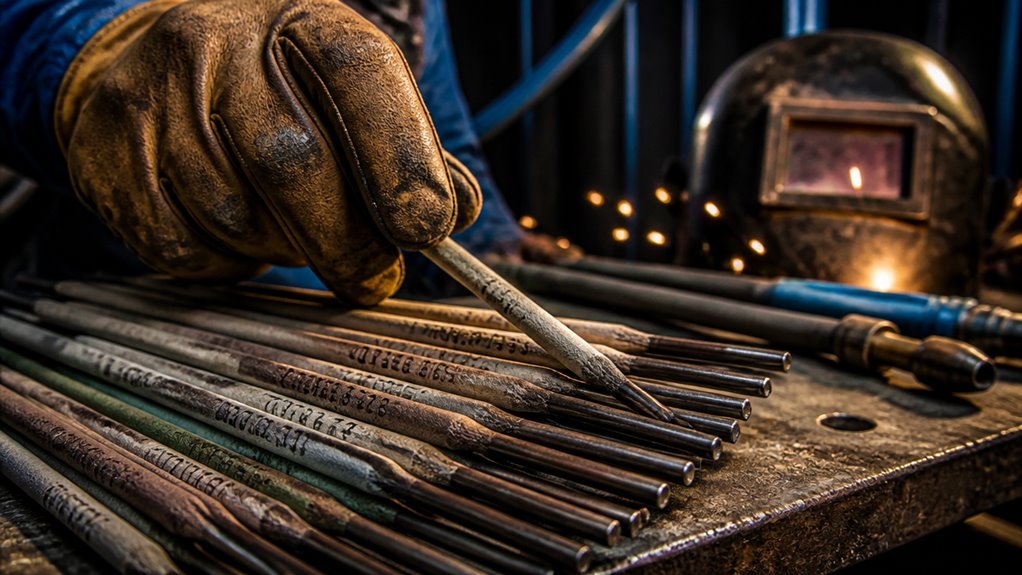
When choosing a welding rod, match it to your base metal. Use E6010 or E7018 for mild steel, E308L for stainless, and ER4043 for aluminum via TIG or MIG.
Select rod diameter based on material thickness: 1/16-inch for thin sheet, 3/32 or 1/8-inch for moderate thickness, and 5/32-inch for heavy plate.
Consider welding position and power source polarity; for example, E6010 needs DC positive. Proper rod choice guarantees weld integrity and reduces defects.
Understanding these factors assures you optimize performance and quality.
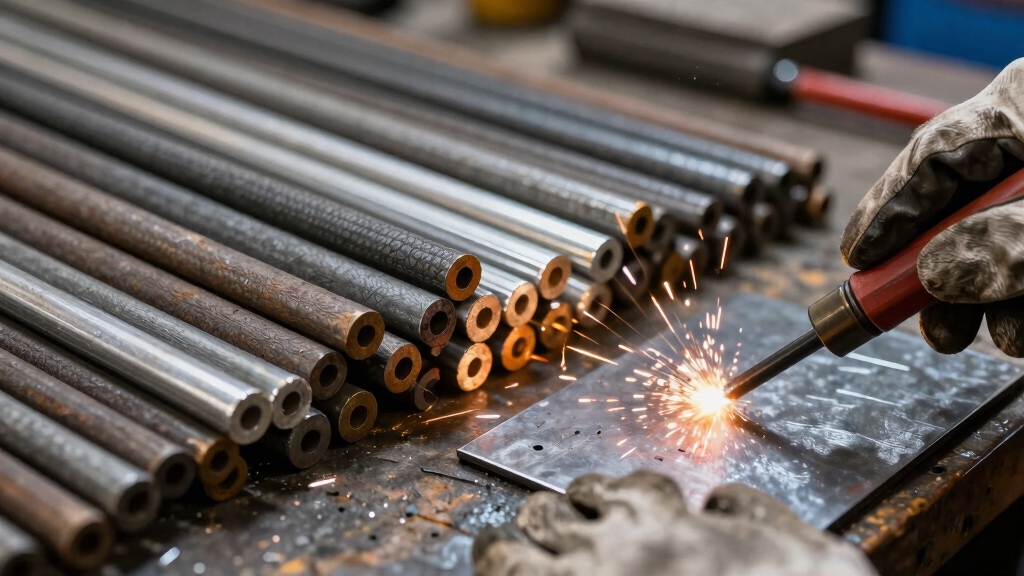
When selecting welding rods, the base metal you’re working with dictates the appropriate electrode family to guarantee weld integrity and minimize cracking.
For mild steel, electrodes like E6010, E6011, E6013, and E7018 are your standard choices, each offering specific penetration and arc characteristics.
Stainless steel requires rods such as E308L or E309L to match its corrosion-resistant alloy composition.
Cast iron demands specialty electrodes like E312 or nickel-based rods to accommodate its high carbon content and brittleness.
Aluminum, typically welded by TIG or MIG, pairs with ER4043 or ER5356, not stick electrodes.
Matching the electrode’s chemical makeup to the base metal’s assures metallurgical compatibility, reducing weld defects and enhancing mechanical performance.
Selecting the correct electrode family is critical for achieving durable, crack-resistant welds tailored to each metal type’s unique properties.
For aluminum welding, it is essential to use a welder with AC TIG capability to properly break the oxide layer and ensure clean, strong welds.
Selecting the appropriate rod size directly impacts weld penetration and control, especially relative to the thickness of the material you’re joining.
Choosing the right rod size is crucial for optimal weld penetration and precise control based on material thickness.
For thin sheet metal, you’ll want smaller rods like 1/16-inch or 3/32-inch to minimize burn-through and ensure precise heat input.
Moderate thickness materials typically call for 3/32-inch or 1/8-inch rods, balancing penetration and deposition rate efficiently.
When working with heavy plate, 5/32-inch rods provide deeper penetration and higher deposition, critical for structural integrity.
Additionally, thicker materials often require low-hydrogen electrodes such as E7018 to enhance weld strength and toughness.
Choosing the correct rod size guarantees peak arc stability and fusion, directly influencing weld quality and durability without risking material damage or weak joints.
Always match rod diameter to material thickness for effective, reliable welds.
Using a 3/32-inch rod is ideal for vertical and overhead welding positions due to its better control and reduced sagging, especially on thinner materials.
Although welding positions vary widely, choosing the right electrode markedly affects your control and weld quality. For flat and horizontal positions, you can use larger diameter rods like E7024 for high deposition rates.
For vertical and overhead welding, smaller electrodes such as E6010, E6011, and E6013 provide better control and prevent excessive dripping. All-position rods like E6010 and E7018 offer versatility but differ in penetration and toughness.
| Welding Position | Recommended Rods | Key Advantage |
|---|---|---|
| Flat | E7024, E7018 | High deposition, strength |
| Horizontal | E7024, E6013 | Smooth bead, moderate speed |
| Vertical | E6010, E6011, E6013 | Control, arc stability |
| Overhead | E6010, E6011 | Minimal slag, precision |
Choosing electrodes with the appropriate arc characteristics significantly improves weld quality and ease of use.
Select rods aligning with position to optimize weld integrity and ease.
Because your power source and polarity directly influence arc stability and penetration, matching them correctly with your welding rod is essential for peak performance.
For example, E6010 electrodes require DC electrode positive (DCEP) to achieve deep penetration. This makes them ideal for root passes and pipe welding.
E6011 rods offer versatility by running on AC or DC, accommodating dirty or rusty metal conditions. However, they sacrifice some penetration depth compared to E6010.
E6013 rods also function well on AC or DC, providing a stable arc for light-duty or home welding machines.
Meanwhile, E7018 rods demand DCEP to maintain a low-hydrogen arc and guarantee structural integrity.
When selecting rods, confirm your power source polarity matches the electrode’s requirements to optimize arc characteristics and weld strength.
Proper storage and handling are also crucial to prevent moisture absorption and maintain electrode quality, as moisture-compromised electrodes can cause weld defects and cracking.
Matching your welding rod to the power source sets the stage. Choosing the right rod for specific surfaces and applications directly impacts weld quality and durability.
For mild steel, select E6010 or E6011 for deep penetration and dirty surfaces. E7018 offers low-hydrogen strength for structural work.
Stainless steel demands E308L or E309L electrodes to prevent corrosion and cracking. Cast iron requires specialty rods like E312 or nickel-based electrodes to accommodate its brittleness.
Thin sheet metal benefits from smaller-diameter rods such as 1/16-inch E6013 for controlled, precise welds. Heavy fabrication favors larger, low-hydrogen rods like 5/32-inch E7018 for enhanced toughness.
Avoid aluminum stick rods; TIG or MIG with ER4043 or ER5356 suits that metal better. Matching electrode chemistry and size to material and application guarantees peak penetration, arc stability, and weld integrity.
Proper electrode selection also involves understanding polarity requirements to optimize heat distribution and weld quality.
When you size up the joint fit-up and environmental conditions, you can pinpoint the ideal electrode for your weld.
Evaluating joint fit-up and environment helps you select the perfect electrode for a strong, reliable weld.
Tight fit-ups with narrow or non-beveled joints typically call for electrodes like E6010 or E6011 that produce a digging arc. This ensures deep penetration and good fusion.
Conversely, wide root openings may require bridging electrodes such as E6013 to span gaps effectively.
Environmental factors critically influence your choice. If you’re working outdoors or on rusty, oily, or painted surfaces, electrodes like E6011 that tolerate contaminated metal and run on AC or DC are preferable.
Moisture and exposure necessitate low-hydrogen rods like E7018 to minimize cracking risk.
Electrodes with a forceful arc action like E6010 are especially suited for root-pass welding on carbon-steel pipes, providing deep penetration and cleaning ability.
To boost your weld quality, it’s really important to match the welding rod to the chemistry of the base metal. This ensures compatibility and helps minimize defects. Think of it like finding the right pair of shoes; if they don’t fit, you’re going to have problems!
Also, pay attention to the size of the rod you choose. This is crucial for managing penetration and steering clear of issues like burn-through, especially when you’re dealing with materials of different thicknesses. It’s all about finding that sweet spot.
And let’s not forget about the welding position! Some electrodes are better suited for flat positions, while others shine in vertical or overhead applications. This choice can really affect your arc stability and control, so it’s worth giving it some thought.
Additionally, selecting rods with the correct polarity requirements optimizes heat distribution and improves weld quality.
Selecting the correct welding rod directly influences the strength and durability of your weld. You must match the rod’s chemistry to the base metal to prevent cracking and guarantee metallurgical compatibility.
For mild steel, rods like E6010, E6011, E6013, or E7018 are standard. Stainless steel requires E308L or E309L electrodes. Cast iron demands specialty rods such as E312 or nickel-based electrodes due to its unique composition.
Avoid aluminum stick rods and instead use TIG or MIG wires like ER4043 or ER5356 for aluminum. Proper rod selection reduces defects and improves weld integrity by maintaining consistent mechanical properties and minimizing thermal stresses.
Analyzing your base metal’s composition guides you to the correct electrode family. This is critical for consistent, high-quality welds. For example, the E7018 rod is favored for its low-hydrogen flux coating, which helps reduce cracking and provides superior weld quality for structural steel.
Match your welding rod size carefully to your material’s thickness and joint requirements to optimize penetration and minimize defects.
Smaller rods like 1/16-inch reduce burn-through on thin sheet metal. Larger rods such as 5/32-inch penetrate heavy plate effectively. Selecting the right diameter improves arc stability, deposition rate, and weld integrity.
| Material Thickness | Recommended Rod Size | Application Example |
|---|---|---|
| Thin Sheet Metal | 1/16″ – 3/32″ | Automotive body panels |
| Moderate Thickness | 3/32″ – 1/8″ | Structural steel beams |
| Heavy Plate | 5/32″ | Heavy equipment frames |
Use low-hydrogen electrodes like E7018 on thick materials for toughness. Match size to joint design for uniform fusion and minimal weld defects. For mild steel repairs, rods such as 6013 provide stable arc control and smooth slag removal across various welding positions.
Choosing the right rod size sets the foundation for weld quality, but understanding how welding position influences electrode performance can markedly enhance your results.
For flat and horizontal welding, you can use larger diameter rods like E7024 to achieve higher deposition rates efficiently. However, vertical or overhead positions demand smaller-diameter electrodes such as 1/16-inch or 3/32-inch to maintain control and prevent slag inclusions.
All-position rods like E6010, E6011, and E7018 offer versatility, but selecting the proper diameter tailored to the orientation is vital.
Position also affects arc stability; for instance, E6011’s AC capability helps manage dirty or rusty surfaces in varied positions. Consequently, factoring in welding position guarantees peak penetration, bead shape, and defect reduction, directly improving weld integrity.
Additionally, controlling rod heating by adjusting amperage and travel speed is essential for vertical and overhead welding to prevent rapid electrode burnout and maintain arc stability.
You should store welding rods in a dry, temperature-controlled environment to maintain their quality.
Moisture exposure leads to hydrogen absorption, causing weld porosity and cracking.
Keep rods sealed in their original packaging or airtight containers with desiccants.
For low-hydrogen electrodes like E7018, use rod ovens at 250°F to 300°F to prevent moisture pickup.
Proper storage guarantees stable arc performance, consistent penetration, and structural integrity in your welds.
You generally shouldn’t reuse welding rods after partial consumption because exposure to moisture and contaminants degrades the flux coating.
This leads to poor arc stability and weld quality.
If you must reuse, make certain the rod remains dry and free from rust or oil.
Storing partially used rods in airtight containers with desiccants can help.
However, repeated exposure lowers performance and increases slag and porosity risks.
Therefore, fresh rods are always best.
You should always wear a welding helmet with an appropriate shade to protect your eyes from intense UV and infrared radiation.
Use flame-resistant gloves and long-sleeve clothing to guard against sparks and spatter.
Respiratory protection is vital, especially when welding coated rods that emit fumes.
Safety glasses under the helmet add extra eye protection.
Don’t forget ear protection in noisy environments and guarantee proper ventilation to minimize fume inhalation risks.
Welding rod coatings directly impact your weld’s arc stability, slag formation, and gas shielding.
They control penetration depth and protect molten metal from atmospheric contamination.
For example, cellulose coatings produce deep, forceful arcs ideal for root passes.
In contrast, rutile coatings create smooth, easy-to-control arcs with cleaner slag removal.
Selecting the right coating improves weld integrity, reduces spatter, and guarantees proper mechanical properties.
This ensures you get consistent, high-quality results tailored to your metal and position.
You know what they say: a stitch in time saves nine.
If your welding rod shows signs like cracked or flaking flux coating, excessive rust, or moisture absorption, it’s defective or expired.
Such flaws compromise arc stability and weld integrity.
Bent or damaged rods and inconsistent diameter also indicate poor condition.
Always check rods for uniform coating and dryness before use to make certain precise, strong welds and avoid costly rework.
When you choose the right welding rod, you’re not just following guidelines. You’re shaping weld quality and durability.
Contrary to the theory that any rod works with enough skill, precise matching of rod type, size, position, and power source drastically reduces defects and improves consistency.
By understanding these factors, you guarantee stronger joints and fewer reworks. So, don’t guess; analyze your materials and conditions to select the best rod every time for reliable, professional results.