Phone:
(701)814-6992
Physical address:
6296 Donnelly Plaza
Ratkeville, Bahamas.

Phone:
(701)814-6992
Physical address:
6296 Donnelly Plaza
Ratkeville, Bahamas.

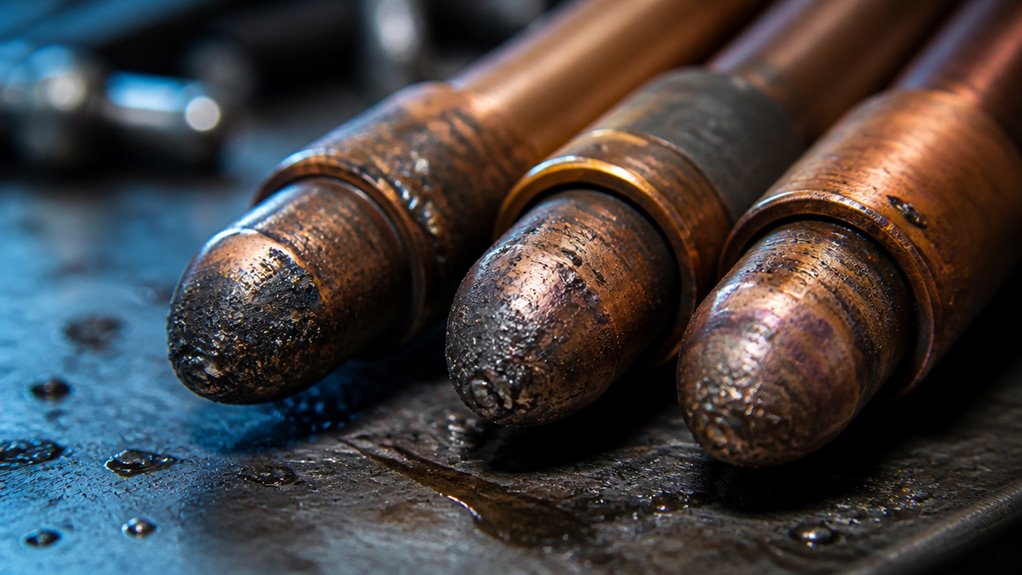
To get stronger spot welds, start by thoroughly cleaning metal surfaces to remove rust, oil, and coatings.
Make certain tight, gap-free fit-up and use calibrated clamps for consistent squeeze pressure. Too much or too little affects weld quality.
Match electrode tip shape and size to material thickness. Keep tips clean and well-dressed, and align them precisely.
Balance current and weld time carefully to avoid expulsion or weak nuggets. Understanding these basics helps optimize weld strength and consistency for your projects.
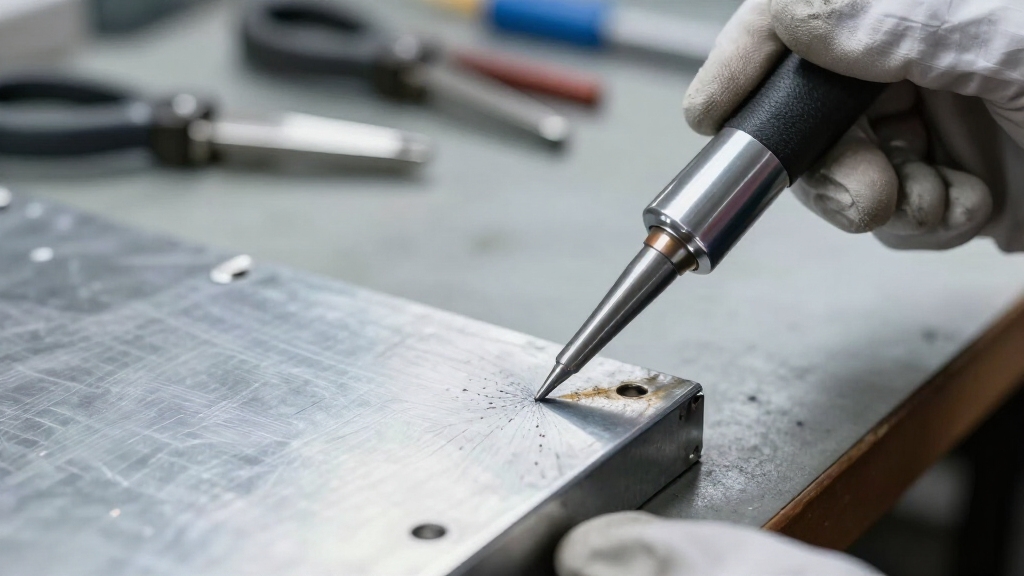
Start by thoroughly cleaning the metal surfaces to guarantee peak electrical contact and weld quality.
Begin with meticulous metal surface cleaning to ensure optimal electrical contact and superior weld quality.
You need to remove rust, paint, oil, and dirt since contaminants increase resistance and cause inconsistent welds.
Use mechanical methods like wire brushing, then wipe the surfaces with a clean cloth.
Applying acetone or a degreaser afterward further assures cleanliness.
Don’t overlook cleaning the electrode tips; dirty tips reduce output and destabilize the weld process.
Expose bare, shiny metal at the weld points to facilitate consistent current flow and stronger nugget formation.
Maintaining a contaminant-free contact area minimizes resistance variability, reduces defects, and improves heat delivery.
This careful surface preparation is essential for achieving repeatable, high-quality resistance spot welds and sets the foundation for all subsequent welding parameters and joint integrity.
Remember to wear appropriate PPE, such as cut-resistant gloves and eye protection, to ensure safety during the cleaning process and prevent recontamination of the weld area.
Make certain tight, gap-free fit-up between sheets to maximize weld strength and consistency. Misalignment or gaps increase resistance variability, causing weak spots and inconsistent nugget formation.
Use clamps or fixtures to hold sheets flush and prevent movement during welding. Confirm edges are clean and properly prepared to guarantee full contact. Maintain uniform pressure to avoid sheet separation.
Proper fit-up is especially critical in processes like plug welding where hole alignment directly affects weld integrity.
| Fit-Up Aspect | Impact on Weld Quality |
|---|---|
| Gap-Free Contact | Guarantees stable electrical path |
| Sheet Alignment | Promotes uniform nugget size |
| Proper Clamping | Prevents sheet movement |
| Edge Preparation | Enhances weld cleanliness |
| Pressure Control | Maintains consistent heat input |
When it comes to welding, choosing the right electrode tips is super important. You want tips with the correct shape to ensure consistent contact and optimal heat generation. This makes a big difference in the quality of your welds.
It’s also crucial to regularly dress and maintain the tip surfaces. If you let buildup happen, it can really degrade the quality of your welds and affect your output. Remember, the condition of your tips directly influences weld nugget formation and how repeatable your results are. So, keep those tips in top shape for the best performance! Proper electrode pressure ensures good electrical contact and heat generation without deforming the sheets.
Electrode shape frequently plays a critical role in achieving consistent resistance spot welds, as it directly influences contact area, current density, and heat generation at the weld interface. You must select electrode tips whose geometry matches your material thickness and application to optimize weld quality.
A larger contact area lowers current density but improves heat distribution. In contrast, a smaller tip concentrates heat but risks expulsion.
| Electrode Shape | Effect on Welding |
|---|---|
| Flat Face | Even pressure, broad heat distribution |
| Domed Face | Concentrated current, deeper nugget |
| Truncated Cone | Balanced contact, moderate heat focus |
Choosing the right shape guarantees repeatable welds by controlling heat flow and electrical resistance. This control is critical for nugget formation and strength. Proper electrode force and current control are essential for strong, consistent, defect-free welds, making electrode shape a key factor in overall weld quality and electrode maintenance.
Matching the right electrode shape sets a foundation, but maintaining those tips is equally important to guarantee stable, consistent welds.
You need to dress electrode tips regularly to preserve the correct face size and geometry, ensuring proper electrical contact and heat distribution.
Clean tips prevent buildup of oxides and contaminants that increase resistance and reduce weld quality.
Align electrodes precisely to maintain square contact and even pressure during welding cycles.
Monitor tip wear closely; excessive erosion or deformation compromises nugget formation and repeatability.
Use a dressing stone or file to restore the tip’s profile early and often, avoiding excessive material removal.
Consistent tip maintenance directly influences heat delivery, weld nugget size, and overall process stability.
Integrate these practices into your routine to optimize resistance spot welding performance.
Additionally, using nickel strips and thick copper conductors for electrode design helps maintain reliable electrical contact and reduces wear over time.
Hey there! So, when you’re getting ready to spot weld, the first thing you want to do is make sure your electrode tongs are lined up just right. It’s super important that the tips meet squarely and apply force evenly. If they’re off, it can cause some issues.
Now, let’s talk about squeeze pressure. You really need to keep that consistent. It’s key for ensuring the sheets stay in tight contact without squishing the material too much or cutting down on heat generation. And you know what? Both of these factors—alignment and pressure—play a big role in how your weld nugget turns out. They affect its size, strength, and overall quality. So, focus on getting it right!
Precise control of current, force, and timing is essential to minimize defects and produce a high-quality spot weld.
Achieving proper tong alignment is critical to ensuring consistent contact and uniform pressure during spot welding. You must keep electrode tips perfectly square and parallel to avoid uneven resistance, which can cause weak welds or expulsion.
Precision in alignment guarantees repeatable nugget formation and stable heat distribution. Use a calibrated fixture or alignment tool regularly to maintain exact positioning.
Proper equipment settings and electrode type selection also play a vital role in maintaining consistent weld quality.
| Parameter | Ideal Condition | Effect of Misalignment |
|---|---|---|
| Electrode Tip Angle | 90° to workpiece surface | Increased resistance, weak weld |
| Contact Area | Full tip face contact | Uneven heating, inconsistent welds |
| Parallelism | Tips aligned on the same plane | Off-center nuggets, tip wear |
Maintain firm and steady squeeze pressure to guarantee the sheets stay tightly clamped throughout the welding cycle.
You must avoid pressure fluctuations, as inconsistent force causes variable contact resistance and weld irregularities.
Apply enough force to make intimate metal-to-metal contact without crushing the sheets, which would reduce heat generation at the joint.
Too little pressure increases resistance and risks expulsion or weak nuggets, while excessive pressure dissipates heat prematurely, impairing fusion.
Consistent pressure also stabilizes electrode tip contact, critical for repeatable weld size and strength.
Use properly calibrated clamps and make sure your fixture holds components flush and immobile.
Regularly verify squeeze pressure settings and monitor tong alignment to maintain uniform force application.
This precision in clamping underpins reliable, repeatable spot welds with controlled electrical resistance throughout each cycle.
Maintaining beam focus during welding is similarly critical for ensuring consistent energy delivery and weld quality.
When electrodes align properly and consistent squeeze pressure is applied, the quality of spot welds improves markedly. This ensures uniform electrical contact and heat distribution. Misalignment or uneven pressure causes irregular current flow, leading to weak or inconsistent weld nuggets.
You must control electrode positioning and force precisely to optimize joint strength and repeatability.
Key effects include:
Additionally, ensuring a secure ground connection is critical to maintain consistent current flow and prevent welding defects.
Because resistance spot welding relies on generating controlled heat at the interface of the sheets, you must carefully balance current and weld time to produce consistent nugget size and quality.
Too little current or insufficient weld time results in weak nuggets due to inadequate heat generation. Excessive current or prolonged weld time causes expulsion and inconsistent welds.
You need to optimize the combination so the heat is sufficient to form a solid metallic bond without overheating. Keep in mind that both parameters are interdependent; adjusting one requires recalibrating the other.
Monitoring cycle consistency guarantees repeatable results in production. By maintaining this balance, you achieve uniform nugget diameters aligned with material thickness, improving joint strength and reducing defects like splatter or voids.
Resistance welding concentrates heat at the joint via electrical resistance, enabling efficient and precise control over the welding process.
When setting up your spot welder, it’s a good idea to choose scrap material that closely matches the thickness and composition of your production sheets. This way, you can ensure your trial results are spot-on.
As you start adjusting the weld current and time settings, do it gradually. Watch for how the nugget forms and keep an eye out for any defects, like expulsion or weak bonds. This step-by-step approach really helps you fine-tune the parameters before you dive into working with the actual pieces.
Scrap trials serve as the essential foundation for calibrating your spot welder to achieve consistent, high-quality welds.
Selecting appropriate scrap material is critical; it must closely match your production workpieces in composition, thickness, and surface condition.
Using scrap that differs can mislead your settings and compromise weld reliability.
Focus on these key factors when choosing your scrap:
Accurate scrap selection sharpens your trial results, minimizing guesswork before final weld adjustments.
Once you have selected scrap material that closely mimics your production parts, the next step involves systematically adjusting your spot welder settings through trial welds.
Begin by cleaning the scrap thoroughly, removing rust, paint, and oil to guarantee accurate results. Set initial parameters based on material thickness and electrode condition.
Then perform short welds while monitoring nugget formation. Adjust current, weld time, and squeeze pressure incrementally to optimize nugget size and quality without causing expulsion or splatter.
Maintain consistent electrode alignment and tip condition throughout trials. Use peel tests and visual inspection to evaluate weld integrity.
Document each setting change and corresponding weld results to identify the best combination. This methodical approach minimizes defects and guarantees repeatable, strong welds before moving to production.
Adjusting spot welding parameters to match the material type and thickness is essential for achieving strong, consistent welds. You must tailor your settings based on the material’s conductivity and thickness to avoid weak joints or overheating. For example, steel and stainless steel weld predictably. Aluminum requires special consideration or alternative techniques.
Focus on these key adjustments:
This analytical approach safeguards repeatability and prime weld strength.
Recognizing and addressing common spot welding defects is essential to guaranteeing weld integrity and performance. You must inspect for issues like expulsion, insufficient nugget size, and electrode tip wear.
Adjust parameters such as current, time, and pressure to correct defects. Clean surfaces and electrodes thoroughly to prevent poor electrical contact and inconsistent welds.
| Defect | Fix Approach |
|---|---|
| Expulsion | Reduce current or weld time |
| Insufficient Nugget | Increase pressure or cycle time |
| Electrode Wear | Dress electrodes frequently |
Maintaining proper electrode condition and alignment helps avoid inconsistent heat delivery and nugget formation. Confirm proper material fit-up and avoid gaps that weaken weld quality. Systematic troubleshooting guarantees consistent, strong welds and minimizes costly rework.
Although spot welds can often be visually inspected, peel testing provides a quantitative measure of weld strength and quality. This is done by evaluating how the welded sheets separate under controlled force. You’ll use this method to verify weld integrity beyond surface appearance.
During peel testing, the welded sheets are peeled apart, and you observe how the joint fails. Key indicators you’ll look for include:
When you manage heat effectively during spot welding, you protect electrode tips from premature wear and damage caused by overheating.
Controlling heat involves optimizing current, weld time, and squeeze pressure to prevent excessive thermal buildup.
Use precise cycle control with appropriate off times to allow electrode cooling between welds.
Maintain clean, well-dressed tips to improve heat dissipation and electrical contact.
Avoid high current or prolonged welds that cause tip softening or deformation.
Implement cooling breaks during production runs to reduce cumulative heat stress.
Monitor nugget formation carefully; oversized nuggets indicate excessive heat input that can degrade electrodes.
Proper heat management extends electrode life, stabilizes weld resistance, and guarantees consistent nugget quality.
You need to wear safety glasses or a welding helmet with the proper shade to protect your eyes from intense light and sparks.
Use heat-resistant gloves to shield your hands from burns and electrical shock.
Wear flame-resistant clothing to avoid ignition from molten metal splatter.
Make certain proper ventilation or respiratory protection to prevent inhaling fumes.
Don’t forget ear protection against noise and sturdy footwear for foot safety near heavy equipment.
Environmental factors affect spot weld quality like a conductor influencing an orchestra’s harmony.
If humidity causes surface oxidation or contaminants, you’ll get poor electrical contact, weakening the weld.
Temperature fluctuations can alter material properties, impacting weld consistency and nugget formation.
Dust or dirt in the workspace compromises surface cleanliness, increasing resistance.
To guarantee repeatable, strong welds, you’ve got to control these variables rigorously and maintain a clean, stable environment.
Yes, you can automate spot welding for high-volume production.
Automation guarantees consistent electrode tip alignment, precise current, and timing control, which improves weld quality and repeatability.
You’ll benefit from steady squeeze pressure and uniform material handling, reducing defects.
Integrating sensors and feedback loops helps monitor weld parameters in real-time.
This approach increases throughput while maintaining strong, reliable weld nuggets, essential for industrial-scale manufacturing efficiency and quality assurance.
You’ll notice electrode wear beyond visual cues when weld quality drops. Nuggets shrink or become inconsistent, and weld strength weakens.
Increased electrical resistance causes unstable current flow, leading to overheating or splatter. The machine may pull higher current to compensate, and you might detect irregular squeeze pressure or misalignment.
Monitoring these performance changes lets you identify worn electrodes before visible damage appears. This ensures consistent weld quality and avoids costly defects.
If you face inconsistent welds due to power supply issues, first check voltage stability and make certain connections are secure and clean.
Use a multimeter to measure current output during welding cycles, verifying it matches set parameters. Look for fluctuations or drops indicating supply faults.
Inspect cables and connectors for damage or corrosion.
Finally, calibrate the power supply and run trial welds on scrap material to confirm consistent current delivery and weld quality.
Think of spot welding like tuning a high-performance engine. Every component must align perfectly.
Just as a mechanic fine-tunes spark and timing for peak power, you must prepare surfaces, fit electrodes precisely, and balance current with weld time.
Missing one detail can weaken the joint, much like a misfire reduces engine efficiency.
By mastering these technical nuances, you guarantee stronger, cleaner welds that perform reliably under pressure, every single time.