Phone:
(701)814-6992
Physical address:
6296 Donnelly Plaza
Ratkeville, Bahamas.

Phone:
(701)814-6992
Physical address:
6296 Donnelly Plaza
Ratkeville, Bahamas.

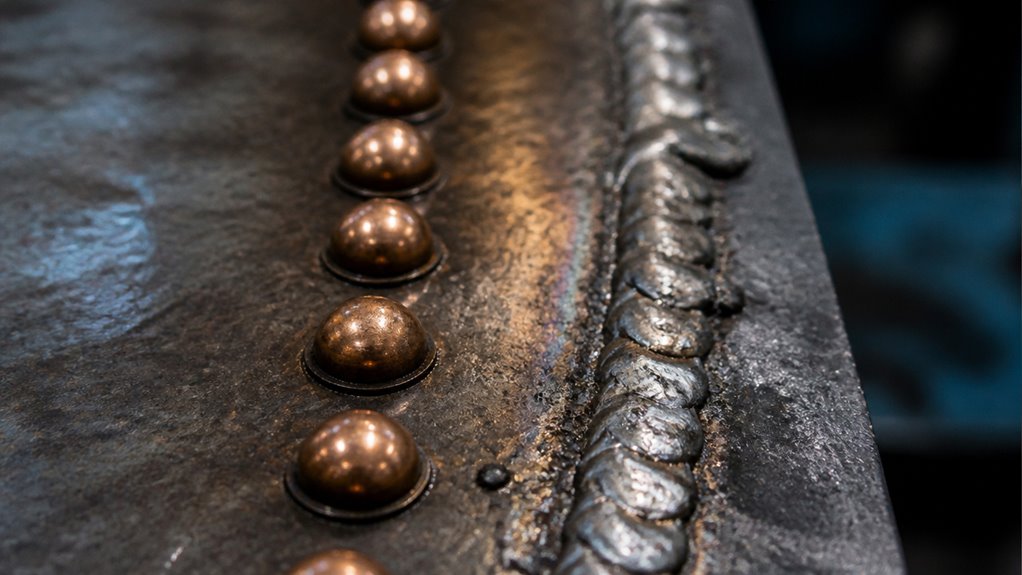
When deciding between riveting and welding, consider strength, materials, and production needs.
Welding offers stronger, seamless joints ideal for compatible metals and airtight seals but demands skilled labor and heat control.
Riveting works better for dissimilar or heat-sensitive materials, allows vibration tolerance, and is easier to inspect and repair.
However, it adds weight and visible fasteners. Your choice hinges on joint strength, environmental exposure, and maintenance priorities.
Explore further to weigh these factors in detail.
| Feature | Riveting | Welding |
|---|---|---|
| Joining Method | Mechanical fastening with rivets | Fuses metals by melting |
| Heat Requirement | No melting or significant heat | Requires controlled heat |
| Joint Strength | Strong in shear | Generally higher overall strength |
| Tension Resistance | Lower due to drilled holes | Superior |
| Shear Performance | Excellent | Strong, but less flexible |
| Vibration Resistance | Better; absorbs shocks and vibration | Rigid and can transmit stress |
| Impact Tolerance | Good due to joint flexibility | More rigid under impact |
| Material Compatibility | Good for dissimilar materials | Best with compatible/weldable metals |
| Heat-Sensitive Materials | Well suited | Can cause distortion or property changes |
| Dissimilar Metals | Easier to join | More challenging due to fusion and intermetallic risks |
| Joint Appearance | Visible rivet heads | Seamless and smoother |
| Assembly Weight | Higher due to overlaps and fasteners | Generally lighter |
| Sealing | Not inherently airtight/watertight | Can provide airtight and watertight joints |
| Inspection | Easier visual and mechanical inspection | Often requires advanced NDT |
| Repair | Rivets can be drilled out and replaced | Defect usually requires grinding/cutting and re-welding |
| Disassembly | Relatively easy | Difficult because the joint is permanent |
| Labor Skill | Requires less specialized labor | Requires skilled operators |
| Equipment | Simpler and cheaper tools | More specialized and expensive equipment |
| Preparation | Requires accurate hole preparation | No drilled holes required |
| Production Speed | Simple and fast, especially when automated | Can be faster in repetitive production |
| Maintenance | Easier to inspect and replace fasteners | Requires more complex inspection and repair |
| Best Applications | Dissimilar/heat-sensitive materials, vibration-prone or disassemblable structures | High-strength, permanent, smooth, sealed assemblies |
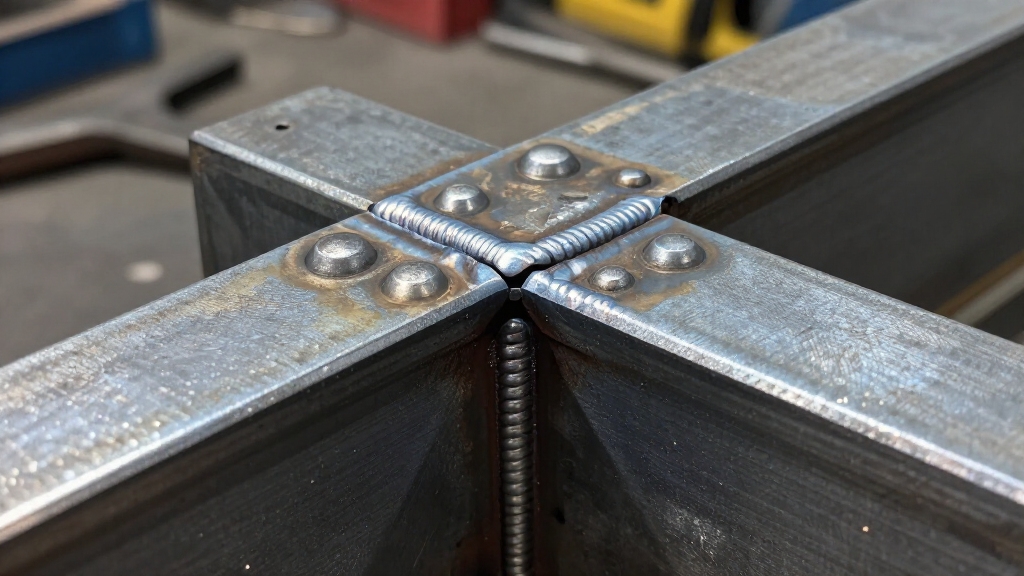
When deciding between riveting and welding for your project, you’ll need to take into account factors like material compatibility, joint strength, and assembly conditions.
Riveting mechanically fastens parts using rivets without melting base metals. This makes it ideal when heat could damage materials or alter properties. It also allows for joining dissimilar materials more easily since it doesn’t require fusion.
Riveting joins parts without heat, protecting materials and enabling easy bonding of different metals.
Welding fuses metals by melting them at the joint, providing a more permanent, seamless connection. However, it demands compatible metals and controlled heat application. Welding avoids the need for drilled holes but requires higher skill and specialized equipment.
Riveting requires hole preparation and leaves visible fasteners, which may affect aesthetics and add weight. Evaluate your project’s material types, heat sensitivity, and required joint permanence carefully to choose the method that fits best. For welding, understanding the differences between butt weld and socket weld types can help optimize strength and fabrication efficiency.
Welded joints usually provide a higher overall strength, often getting close to the capacity of the parent metal, especially when it comes to tensile loads. This means they can handle a lot of stress without giving way.
On the other hand, riveted joints shine in shear performance. They also have a unique advantage when it comes to absorbing impact and vibration, thanks to their inherent flexibility. This can make a big difference in dynamic conditions.
However, unlike welding, riveting allows for easier inspection and maintenance due to joint accessibility and disassembly options.
Although welding often offers superior joint strength by fusing base metals to nearly match the parent material’s integrity, riveting provides notable advantages in specific load scenarios, especially shear forces.
When you weld, the joint behaves almost as a continuous material, maximizing tensile strength and distributing loads evenly. In contrast, riveting introduces holes that reduce cross-sectional area, weakening tension capacity but enhancing shear resistance due to rivet bearing.
You should consider that riveted joints tolerate differential expansion and dissimilar materials better, which affects joint durability under certain conditions. However, welding generally outperforms riveting in static load-bearing applications where maximum strength and sealing are critical.
Ultimately, your choice depends on load type: welding excels in tension-dominant contexts, while riveting offers reliable shear load performance without thermal distortion risks. Additionally, factors such as joint type and loading direction significantly influence weld strength and must be considered when comparing these joining methods.
Managing impact and vibration loads requires careful consideration of joint behavior under dynamic stress.
When you use riveting, you benefit from its inherent flexibility, which allows riveted joints to absorb shocks and vibrations more effectively without immediate failure.
This flexibility stems from the slight movement allowed by the rivet holes and fastener deformation.
Welding, in contrast, creates rigid joints that can transmit stresses directly, potentially leading to brittleness or crack initiation under cyclic loading.
However, welded joints typically offer higher static strength.
If your application involves frequent vibrations or impacts, riveting can reduce fatigue risk by accommodating slight displacements.
Conversely, welding suits static or high-strength requirements but may necessitate additional design measures like stress relief or post-weld treatments to withstand dynamic loads without degradation.
Additionally, proper flange support in riveted joints enhances load distribution and fatigue resistance, improving vibration durability.
Since material compatibility directly affects joint integrity, choosing between riveting and welding requires careful consideration of the metals involved and their properties.
Welding demands metals with similar melting points and thermal expansion characteristics to guarantee a reliable fused joint. You’ll find welding less suitable for dissimilar metals, as it risks brittle intermetallic formation or weak fusion.
Riveting offers greater flexibility, enabling mechanical joining of dissimilar materials without altering their metallurgical properties. Additionally, thin or heat-sensitive materials may warp or distort under welding heat, making riveting preferable to avoid damage.
Keep in mind, riveting requires precise hole preparation, which can affect material strength locally. Ultimately, when metals differ considerably or heat sensitivity is critical, riveting is often the safer, more compatible choice.
Welding excels with homogeneous, weldable metals for permanent, high-strength joints. Careful heat input control is essential in welding dissimilar metals like aluminum and steel to prevent brittle Fe-Al intermetallics and joint failure.
Choosing between riveting and welding not only depends on material compatibility but also markedly impacts the joint’s weight and appearance.
Riveted joints add weight due to overlapping materials and the presence of multiple fasteners, which can increase structural mass. You’ll notice rivet heads remain visible, potentially affecting the component’s aesthetic and surface smoothness.
Conversely, welded joints eliminate the need for fasteners and overlaps, resulting in lighter assemblies. Welding fuses base metals, producing a seamless joint that can be ground smooth for improved appearance and aerodynamic performance.
Additionally, welded joints offer superior sealing capabilities, making them preferable where airtight or watertight integrity is critical. When appearance and weight are priorities, welding generally provides a sleeker, lighter solution compared to the more robust but visually intrusive riveted alternative.
However, welding can also lead to increased stress on components, similar to how a welded differential permanently locks parts together, which may affect long-term durability.
When evaluating cost and time factors between riveting and welding, consider the specific demands of your project and production environment.
Evaluate project needs and production context when comparing riveting and welding costs and time.
Riveting generally offers simplicity and speed, especially when automated, but requires hole preparation and additional fasteners, which can increase material costs.
Welding, while demanding higher skill and specialized equipment, often completes permanent joints faster in repetitive production settings.
Key considerations include:
Additionally, welding creates permanent fused joints that provide higher structural integrity and resistance to vibration and heat cycles compared to mechanical fasteners.
Weigh these factors carefully to optimize your project’s cost-efficiency and production timeline.
When it comes to inspecting rivet joints, you’ll probably find them a lot easier to check out, both visually and mechanically. The fasteners are pretty accessible, making the whole process straightforward.
On the flip side, welded joints can be a bit more complex. They often require advanced testing methods—think ultrasonic or radiographic inspections—to spot any internal flaws.
Now, when it comes to repairs, rivets have the upper hand. Replacing them is usually a much simpler task.
In contrast, if you need to repair a weld, it typically involves cutting and rejoining, which can be a more involved process. So, if ease of inspection and repair is your priority, rivets might just be the way to go!
Additionally, maintaining weld quality depends heavily on controlling heat input and cooling rates to prevent defects and ensure joint integrity.
Visual inspection often serves as the primary method for evaluating rivet joints due to their exposed fasteners and straightforward geometry.
When you inspect riveted connections, you can quickly identify issues such as loose or missing rivets, corrosion, and deformation.
Welded joints, in contrast, often require more expertise for visual assessment because surface cracks, porosity, or incomplete fusion may be subtle.
Consider these key points for visual inspection ease:
Spot welds produce small, discrete weld spots that may not be easily visible, making weld quality control crucial during inspection.
Understanding these differences helps you prioritize inspection methods effectively.
Although rivet joints allow for straightforward visual and mechanical inspection, welded joints demand more sophisticated testing methods to guarantee integrity.
You must employ non-destructive testing (NDT) techniques like ultrasonic testing (UT), radiographic testing (RT), magnetic particle inspection (MPI), or dye penetrant inspection (DPI) to detect subsurface defects such as cracks, porosity, or incomplete fusion.
These tests reveal internal discontinuities invisible to the naked eye, ensuring weld quality under structural loads.
Additionally, you’ll need to schedule regular inspections to monitor weld degradation caused by fatigue, corrosion, or environmental stress.
Maintenance plans should incorporate documented test results for trend analysis.
Unlike rivets, welds require this rigorous scrutiny because failure modes can be catastrophic and not always visually apparent.
Consequently, advanced weld testing is indispensable for maintaining joint reliability in critical applications.
A proactive approach to inspection and maintenance significantly reduces the risk of weld failure and enhances overall safety.
Maintaining joint integrity demands tailored approaches for rivet and weld repairs based on their distinct characteristics and inspection findings.
When you inspect riveted joints, visual and mechanical checks let you identify loose or damaged rivets quickly. Repair typically involves drilling out the compromised rivet and replacing it, keeping disassembly straightforward.
Welded joints require more advanced inspection methods like ultrasonic testing to detect subsurface flaws. Repair often means grinding out the defect and re-welding, which demands skilled labor and controlled conditions.
Focus on these key aspects:
Choose methods based on joint type, accessibility, and required service conditions.
Selecting between riveting and welding hinges on analyzing specific project requirements such as material compatibility, joint strength, and environmental conditions. If you need to join dissimilar materials or avoid heat distortion, riveting offers mechanical fastening without base metal melting.
Choosing riveting or welding depends on material type, joint strength, and environmental factors.
Conversely, welding suits similar metals and provides joints approaching parent metal strength with superior tension resistance. Consider environmental exposure; welding guarantees airtight, watertight seals, while riveting tolerates vibration better.
Factor in production constraints. Welding demands skilled labor and specialized equipment but enables lighter, smoother assemblies. Riveting is simpler and faster for smaller or disassemblable structures, requires hole preparation, and adds weight.
Finally, assess inspection and maintenance needs. Rivets allow easier visual checks and replacement, whereas welds often need advanced non-destructive testing. Your choice should align with these technical parameters for peak joint performance.
Yes, rivets can cause galvanic corrosion when joining dissimilar metals.
You create a galvanic cell where the rivet and base metals act as electrodes in the presence of an electrolyte. This accelerates corrosion on the more anodic metal.
To minimize this, you should select rivet materials compatible with the metals involved.
Alternatively, use insulating coatings to prevent direct metal-to-metal contact. This will reduce the risk of corrosion in your assembly.
Imagine an aircraft wing exposed to rapid temperature shifts; riveted joints handle this better due to their slight flexibility. This flexibility reduces stress buildup.
You’ll find welded joints, being rigid, often develop cracks or distortions under thermal expansion and contraction.
Yes, you’ll find riveting preferred in aerospace, shipbuilding, and railway industries where vibration resistance and heat-sensitive components matter.
When disassembly or inspection ease is essential, like in aircraft fuselages or certain bridge structures, riveting excels.
You’ll also see it in applications joining dissimilar materials or where heat from welding could cause distortion.
You’ll need eye and ear protection for riveting due to flying debris and noise but won’t face intense heat hazards.
For welding, you must guard against burns, UV radiation, and fumes by wearing flame-resistant clothing, a welding helmet, and using ventilation systems.
Welding demands stricter controls for fire risk and respiratory safety. Riveting’s risks are more mechanical, while welding requires thorough thermal and chemical hazard management.
No, you generally can’t reuse rivets after removal.
When you drill out or cut a rivet to disassemble parts, the rivet deforms permanently, losing its original mechanical properties and grip.
Reusing it compromises joint integrity and safety.
Instead, you should replace rivets with new ones designed for the specific application to guarantee proper fastening strength and reliability in your assembly.
When choosing between riveting and welding, think of your project as a bridge. Each joint is a vital link.
Rivets act like bolts of tradition, offering reliable, inspectable strength. Welds fuse materials into a seamless bond, symbolizing modern unity.
Your decision hinges on load demands, material type, and maintenance needs. By weighing these technical factors precisely, you’ll craft connections that don’t just hold—they endure.
This ensures your design’s integrity stands the test of time.