Phone:
(701)814-6992
Physical address:
6296 Donnelly Plaza
Ratkeville, Bahamas.

Phone:
(701)814-6992
Physical address:
6296 Donnelly Plaza
Ratkeville, Bahamas.

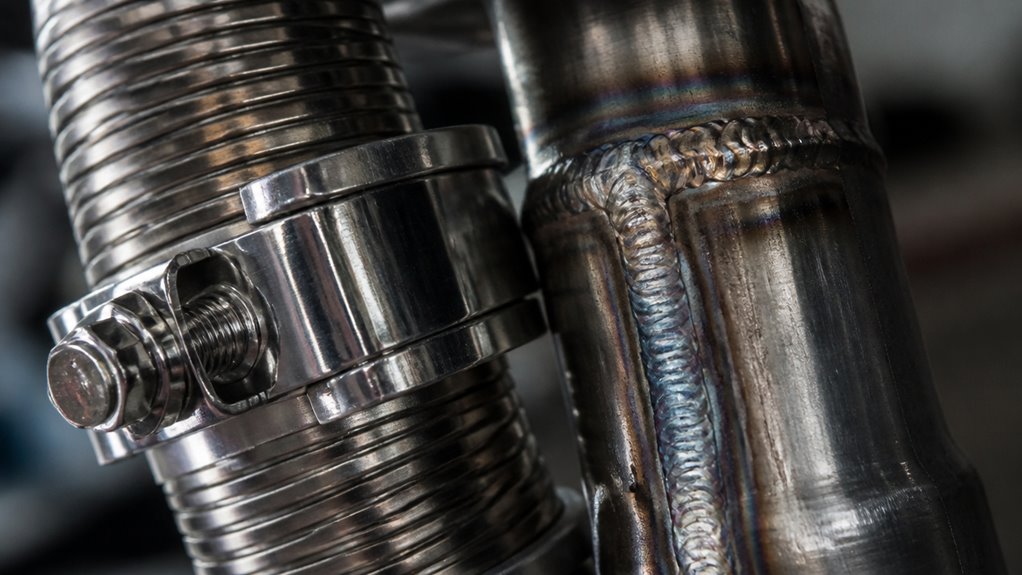
When choosing between clamp and weld exhaust joints, you’ll want to weigh ease of installation against long-term durability.
Clamps offer quick, tool-light assembly and simple future disassembly, making them great for modular setups or DIY work.
Welding, however, creates strong, permanent bonds that resist vibration and thermal cycles, ideal for heavy-duty or high-performance needs.
Clamps may loosen over time, while welds demand skilled labor but provide superior structural integrity.
Exploring their strengths and limitations will help you decide which method fits your project best.
| Feature | Exhaust Clamps | Welded Exhaust |
|---|---|---|
| Joining Method | Mechanical fastening | Metallurgical fusion |
| Installation | Fast and simple | More time-consuming |
| Required Skill | Basic mechanical skills | Skilled welding required |
| Specialized Equipment | Minimal | Welding equipment required |
| Joint Strength | Good | Excellent |
| Durability | Good, but may loosen over time | Excellent |
| Vibration Resistance | Moderate | High |
| Heat-Cycle Resistance | Moderate | Excellent |
| Leak Resistance | Good with proper fitment | Excellent |
| Disassembly | Easy | Difficult; requires cutting |
| Repositioning | Easy | Difficult |
| Serviceability | Excellent | Limited |
| DIY Suitability | Excellent | Lower |
| Upfront Cost | Lower | Higher |
| Typical Repair Cost | About $20–$100 | About $100–$300+ per joint |
| Maintenance | Periodic inspection and retightening may be needed | Less frequent joint maintenance |
| Best Applications | DIY repairs, modular systems, frequently serviced sections | Heavy-duty, high-performance, permanent exhaust systems |
| Main Advantage | Quick installation, low cost, and easy future removal | Strong, permanent, leak-resistant connection |
| Main Drawback | Can loosen from vibration and thermal cycling | Higher labor cost and difficult future modification |
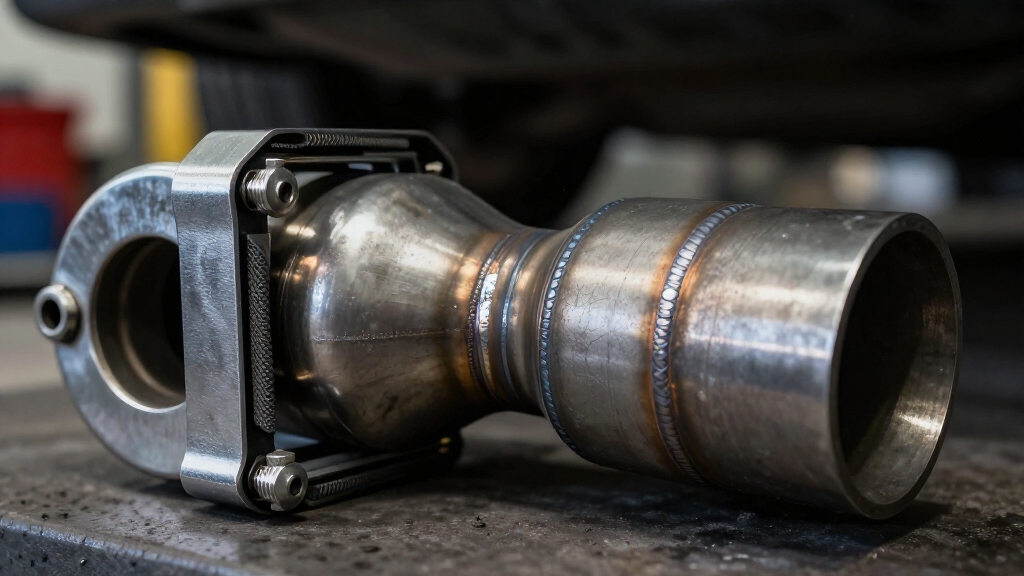
Although both clamped and welded exhaust joints serve to connect pipe sections, they operate through fundamentally different mechanisms.
Clamped joints rely on mechanical fasteners that grip the pipe surfaces without altering the metal.
Welded joints fuse the metals together into a single, permanent bond.
When you use clamps, you apply external pressure to hold pipes in place, allowing for easier disassembly and repositioning.
Welding creates a continuous metal joint that eliminates movement at the connection point, resulting in a rigid interface.
Clamps depend on proper alignment and fitment to maintain a reliable seal, whereas welds rely on metallurgical fusion for integrity.
Your choice hinges on whether you prioritize modularity and serviceability or a fixed, seamless connection.
Proper installation of clamped joints involves using exhaust clamps and sealants to ensure airtight, vibration-resistant connections without welding.
When it comes to exhaust joints, welded options typically stand out for their strength and durability. They create a permanent metal bond that can really handle heat and vibration better than other types. On the other hand, clamped joints can also do a decent job, but there’s a catch—they often loosen over time, especially with all the thermal cycling and mechanical stress they go through. So, it’s important to keep these longevity factors in mind. Additionally, choosing the right welding method, such as arc welding versus TIG welding, can impact the joint’s overall strength and precision.
When comparing the strength and durability of exhaust joints, welding clearly stands out as the superior method due to its ability to create a permanent, fused bond between metal surfaces.
This fusion eliminates mechanical fasteners, reducing potential failure points caused by vibration or thermal cycling. Welded joints provide a rigid, continuous metal connection, which translates into higher structural integrity and resistance to loosening over time.
In contrast, clamped joints rely on hardware tension and fitment quality, making them more susceptible to loosening under heat-induced expansion and contraction.
While clamps offer easier installation and serviceability, their mechanical nature inherently limits maximum joint strength.
Consequently, if your priority is a robust, long-lasting exhaust connection, welding delivers unmatched strength compared to clamps, which are better suited for less permanent applications.
Proper joint preparation and heat management techniques are essential for achieving a strong, durable weld that resists cracking and distortion, ensuring leak-free joints.
Because exhaust systems face constant heat cycles, vibration, and mechanical stress, the durability of joints under these conditions becomes a critical factor in their performance.
Welded joints fuse metal surfaces, creating a rigid, permanent bond that resists loosening and deformation. Clamped joints rely on mechanical fasteners, which can degrade due to thermal expansion and vibration, risking loosening over time.
Consider these key durability aspects:
Longevity in exhaust joints hinges on the integrity of their connection under thermal stress, vibration, and mechanical wear.
Welding fuses metal surfaces into a permanent bond, offering superior strength and durability. This rigid joint resists loosening and deformation even in severe conditions, making it the benchmark for long-term reliability.
Clamps rely on mechanical tension and precise fitment. Over time, heat cycles and vibrations can cause them to loosen or degrade, especially if pipe alignment isn’t ideal.
However, high-quality stainless steel clamps can still provide considerable lifespan in less demanding applications. If you prioritize maximum durability and permanence, welding is the stronger choice.
But if you value ease of maintenance with acceptable longevity, clamps may suffice, albeit with more frequent inspections and potential retightening.
Applying multiple clamps or jubilee clips can enhance seal integrity and reduce slippage from vibration, increasing the durability of clamp repairs.
Although both clamps and welding serve to join exhaust components, their installation processes differ markedly in complexity and required skill.
When you install clamps, you’ll notice it’s faster and requires only basic tools. No specialized welding gear or expertise is needed.
Welding, however, demands skillful preparation, precise metal fusion, and thorough inspection, making it more time-consuming and technical.
Consider these points:
Additionally, using properly sized T-bolt or U-bolt clamps rated for heat and corrosion is crucial to prevent leaks and ensure durability in clamp installations.
When evaluating exhaust repair options, you’ll find that clamps generally cost less upfront than welding due to lower material expenses and simpler labor requirements. Clamps typically involve straightforward installation with basic tools, reducing labor hours and shop fees.
In contrast, welding demands specialized equipment, skilled labor, and additional preparation time, all contributing to higher costs. Welding also requires thorough inspection and finishing, increasing overall expense.
While clamp repairs might range from $20 to $100 depending on clamp quality and size, welding can cost between $100 and $300 or more per joint, factoring in labor intensity and complexity.
Ultimately, your choice hinges on balancing initial budget constraints against the long-term durability and permanence welding offers compared to the cost-effective but potentially less durable clamping solution. For a temporary fix, products like J-B Weld exhaust repair can provide a stopgap but are not a substitute for professional welding.
Balancing cost and durability is just one factor in choosing between clamps and welding for exhaust repairs.
Serviceability plays a vital role, especially when you anticipate future maintenance or upgrades.
Welded joints offer permanence but limit your ability to modify or access the system without cutting metal.
Clamps, by contrast, provide flexibility.
Consider these key points:
When serviceability matters, clamps often reduce downtime and labor costs, enabling efficient interventions that welding simply can’t match.
Additionally, mastering welding requires hands-on training and significant practice, which can impact repair turnaround times compared to clamp use.
You’ll want to opt for clamps in your exhaust system when ease of installation and future maintenance take priority. Clamps enable quicker assembly without specialized welding tools or skills, making them ideal for DIY repairs and modular setups.
Their mechanical fastening allows you to reposition or remove sections efficiently, facilitating routine service or component swaps. While clamps may loosen over time due to heat cycles and vibrations, selecting quality clamps and ensuring precise pipe alignment can maintain a reliable seal.
Clamps also reduce upfront costs and labor compared to welding, offering budget-friendly flexibility. If your system requires periodic adjustments or you anticipate upgrades, clamps provide the adaptability that welded joints lack, making them the practical choice for non-permanent, service-oriented exhaust configurations. Additionally, clamps create secure mechanical joints without intense heat, preserving thin-wall tubing integrity and preventing damage during installation.
You’ll definitely want to go for welding when your exhaust connection needs a strong, permanent bond that can handle tough conditions. Basically, welding fuses the metal surfaces together, creating a rigid joint that stands up to heat cycles and vibrations like a champ.
This method really shines in situations where you need long-term reliability. If you’re not too worried about future disassembly or adjustments, welding is probably your best bet. It’s all about ensuring that your connection can take the heat—literally! For the best results, use the push technique to direct heat into the joint root for deeper fusion without excessive burn-through.
When you need a permanent, unyielding connection in your exhaust system, welding provides the strongest bond available.
Welding fuses metal surfaces, creating a single, continuous joint that resists separation under stress.
This method outperforms clamps by eliminating reliance on mechanical fasteners and hardware tension, which can loosen over time.
Consider these benefits of welding for a permanent strong bond:
Building on the strength of welded joints, their durability under heavy-duty conditions makes them the preferred choice for demanding exhaust applications.
When subjected to extreme heat cycles, vibration, and mechanical stress, welded connections maintain integrity by fusing metal surfaces into a single, continuous structure.
Unlike clamps, which rely on hardware tension and can loosen over time, welds eliminate joint movement and minimize the risk of leaks or failure.
You’ll find welds particularly advantageous in heavy-duty trucks, industrial machinery, or high-performance vehicles where exhaust systems face prolonged stress.
While clamps offer convenience, welding provides a rigid, permanent bond that withstands harsh environments better.
For applications where reliability and longevity under severe conditions are critical, welding is the technical solution that guarantees your exhaust system performs consistently without degradation.
Although welding delivers unmatched strength and permanence, combining clamps with welds offers a strategic balance between rigidity and serviceability in performance exhaust systems.
You can leverage welds where a permanent, leak-proof seal is critical while using clamps in areas needing future access or adjustment. This hybrid approach optimizes both durability and modularity.
Consider these key points:
Since both clamped and welded exhaust joints face distinct challenges, understanding their common failure modes is vital to guaranteeing a reliable system.
Clamped joints often loosen due to vibration and thermal cycling, causing leaks and misalignment. To avoid this, guarantee precise pipe fitment, use high-quality clamps, and regularly inspect tension.
Welded joints, while rigid, can develop cracks from stress concentration or poor weld penetration. Prevent these by employing experienced welders, maintaining proper heat control, and performing post-weld inspections.
Additionally, corrosion at weld seams can weaken joints. Selecting corrosion-resistant materials and applying protective coatings mitigates this.
Yes, exhaust clamps can cause leaks if you don’t tighten them properly. Insufficient torque allows gaps between pipe sections, letting exhaust gases escape.
You need to make certain clamps are evenly and securely fastened to maintain a tight seal. Misalignment or poor pipe condition can worsen leakage risks.
Precise fitment and correct clamp tension are essential. Otherwise, you’ll face diminished performance and potential noise or harmful fumes escaping.
Imagine your clamp exposed to relentless heat cycles, metal expanding and contracting repeatedly. Temperature markedly shortens clamp material longevity by accelerating corrosion and weakening metal properties.
High heat can cause stainless steel clamps to lose tension, leading to loosened joints over time. If you don’t select heat-resistant materials or fail to inspect regularly, your clamp might crack or fail prematurely. This could compromise the exhaust seal and risk leaks or damage.
Yes, you’ll find specific clamp types tailored for different exhaust pipe materials. For stainless steel pipes, you’ll want clamps made from stainless steel to prevent galvanic corrosion and ensure durability under high temperatures.
Mild steel pipes often use standard steel clamps with protective coatings. You should also consider clamp design. V-band clamps suit precise fitments on performance pipes, while band clamps or U-bolts work better on standard round pipes, matching material and stress requirements.
Over 40% of welding-related exhaust repairs report sensor malfunctions due to heat damage.
Yes, welding can damage catalytic converters or sensors nearby if you’re not careful. The intense heat from welding can degrade sensor elements or warp catalytic materials, leading to faulty readings or reduced efficiency.
To avoid this, you should use heat shields, maintain distance, or cool the area during welding to protect sensitive components effectively.
Vibration dampeners absorb and isolate oscillations, preventing stress buildup at clamped exhaust joints.
When you use them with clamped sections, they reduce metal fatigue by minimizing movement caused by engine vibrations and road conditions.
This lowers the risk of clamp loosening or joint leaks over time.
When deciding between clamped and welded exhaust joints, know that about 60% of professional mechanics prefer welding for its superior strength and durability.
However, clamps offer easier serviceability and quicker installation. Your choice depends on whether you prioritize long-term durability or maintenance convenience.
Combining both methods can optimize performance and flexibility. Understanding these trade-offs guarantees you make an informed decision that matches your vehicle’s needs and your repair goals precisely.