Phone:
(701)814-6992
Physical address:
6296 Donnelly Plaza
Ratkeville, Bahamas.

Phone:
(701)814-6992
Physical address:
6296 Donnelly Plaza
Ratkeville, Bahamas.

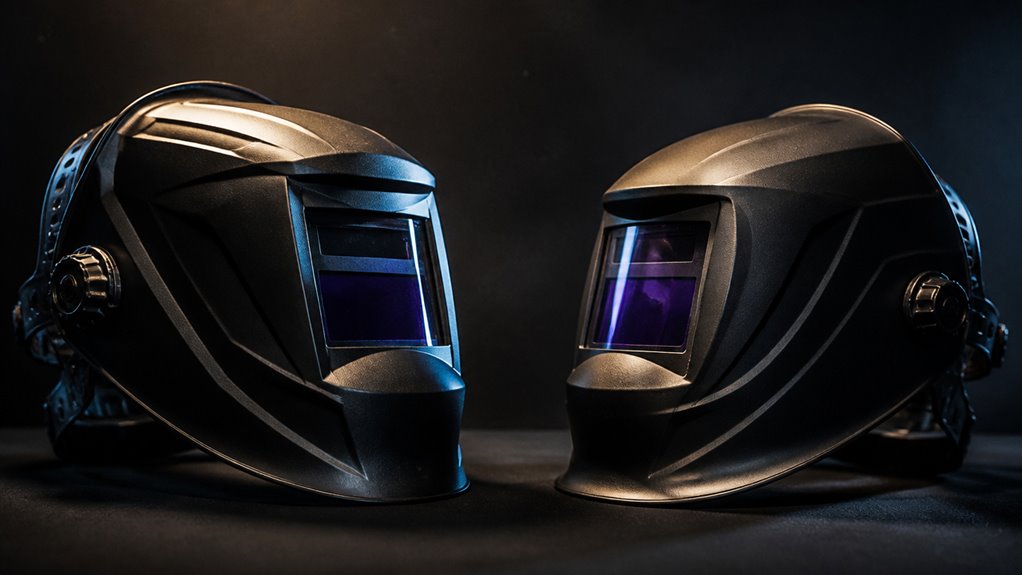
When choosing between the Miller Digital Elite and Infinity, consider your priorities.
The Infinity offers a larger 13.4 sq. in. viewing area, enhancing visibility, peripheral awareness, and precision for detailed welding.
The Elite, at 3.4 ounces lighter, reduces neck strain and improves comfort during extended use.
Both helmets share ClearLight 4x lenses and advanced sensors for fast, reliable auto-darkening.
If you want to balance visibility with portability, exploring their features more closely will clarify which fits your workflow best.
| Feature | Miller Digital Elite | Miller Digital Infinity |
|---|---|---|
| Primary Focus | Lightweight comfort and portability | Maximum visibility and situational awareness |
| Viewing Area | 9.2 sq. in. | 13.4 sq. in. |
| Weight | 18 oz | 21.4 oz |
| Weight Difference | 3.4 oz lighter | 3.4 oz heavier |
| Lens Technology | ClearLight 4x | ClearLight 4x |
| Arc Sensors | 4 | 4 |
| Auto-Darkening | Yes | Yes |
| X-Mode | Yes | Yes |
| AutoSense | Yes | Yes |
| InfoTrack 2.0 | Yes | Yes |
| Peripheral Visibility | Good | Superior |
| Maneuverability | Better in tight spaces | More bulky |
| Extended-Wear Comfort | Better due to lighter weight | More weight may increase fatigue |
| Weld Detail Visibility | Clear and precise | Enhanced due to larger viewing area |
| Battery Life | About 2,000 hours | About 2,000 hours |
| Prescription Inserts | Compatible | Compatible; larger window may accommodate larger inserts more easily |
| Headgear | Adjustable | Adjustable |
| Warranty | 3 years | 3 years |
| Best For | Long-duration use and portability | Complex welding requiring maximum visibility |
| Main Advantage | Lighter, compact design | Largest viewing area and better peripheral vision |
| Main Drawback | Smaller viewing area | Heavier and bulkier |
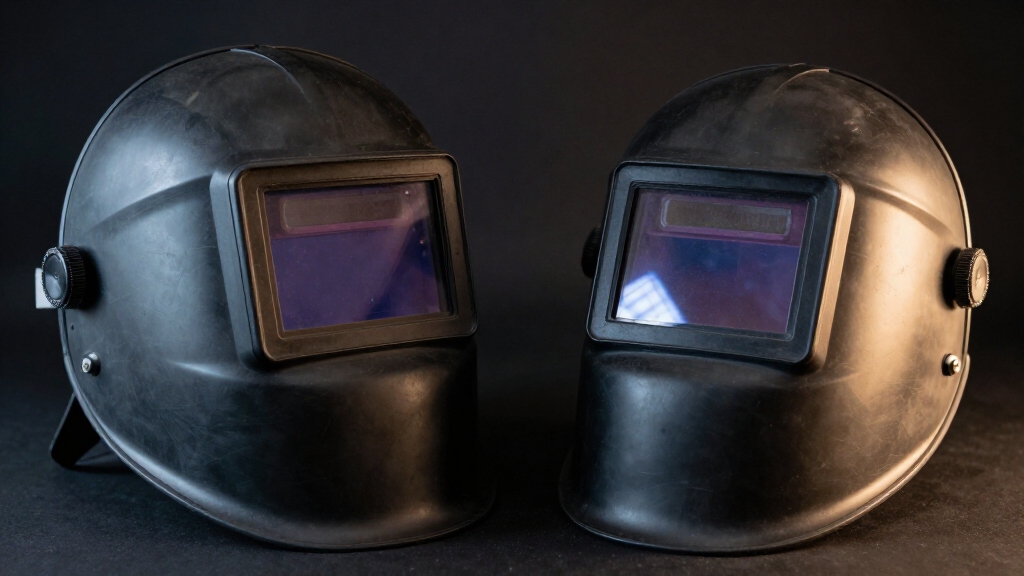
When choosing a welding helmet, the viewing area directly impacts your field of vision and overall efficiency.
A larger viewing area allows you to see more of the weld zone and surrounding environment without excessive head movement. This reduces fatigue and increases precision, which is vital when working in complex or tight spaces.
In such situations, peripheral vision aids in positioning and safety. Conversely, a smaller viewing area can make the helmet more compact and lightweight but may restrict your vision.
This restriction can potentially require more frequent repositioning. The ideal balance depends on your workflow priorities. Broader visibility enhances situational awareness and task accuracy, while a reduced lens size can improve maneuverability.
Understanding how viewing area influences these factors helps you select a helmet that aligns with your operational demands. Additionally, helmets with ANSI Z87.1 certification ensure both impact and UV/IR protection, contributing to overall safety during welding.
You’ll notice that the Digital Infinity offers a significantly larger viewing area at 13.4 square inches, while the Elite has a smaller window at 9.2 square inches.
This difference can really make a difference when it comes to peripheral visibility and situational awareness. For welders who want a broader field of view, the Infinity is definitely the way to go.
On the other hand, the Elite’s smaller window has its perks too. It reduces bulk, which can be a plus for comfort and maneuverability.
Plus, it doesn’t compromise on core clarity or performance features. So, you really can’t go wrong with either option; it just depends on what you prioritize!
Both helmets often feature auto-darkening technology, which enhances safety and convenience by adjusting shade levels instantly during welding.
How much does viewing area impact your welding experience? The size of the lens directly affects your field of vision and comfort.
Miller’s Digital Infinity offers a 13.4 sq. in. viewing area, the largest in their lineup. The Digital Elite provides a more compact 9.2 sq. in. window. This difference influences your workflow in key ways:
1. Peripheral Awareness
The Infinity’s larger viewing space enhances your ability to see surrounding details without moving your head.
2. Bulk and Weight
A bigger lens adds size and weight, which can affect long-term wearability and maneuverability.
3. Task Precision
While both models use ClearLight 4x technology, the Elite’s smaller window focuses on reducing bulk while maintaining clarity.
Choosing between them depends on whether you prioritize maximum visibility or a lighter, less intrusive helmet. For optimal welding performance, maintaining proper shielding gas flow is essential to ensure clear visibility and weld quality.
Frequently, welders find that the size of the viewing area directly shapes their visibility experience and efficiency on the job.
The Miller Digital Infinity offers a 13.4 sq. in. viewing area, providing you with the largest lens in Miller’s lineup. This enhances peripheral vision and situational awareness, making it ideal if you prioritize a broader field of view for complex or multi-angle welding tasks.
In contrast, the Digital Elite’s 9.2 sq. in. viewing area, while smaller, still delivers sharp clarity through ClearLight 4x technology. It reduces bulk and weight, making it a good option if you need a balance between visibility and mobility.
Ultimately, your choice hinges on whether maximum visibility or a lighter, less obtrusive profile better suits your workflow. Both helmets utilize advanced auto darkening technology to ensure rapid lens response and eye protection during welding.
Although the Digital Infinity offers a larger viewing area, it comes with a weight of 21.4 ounces, which is 3.4 ounces heavier than the Digital Elite’s 18 ounces.
This weight difference influences comfort, especially during extended wear. When choosing between these helmets, consider:
Ultimately, if you prioritize comfort and less fatigue, the Elite’s lighter design is advantageous.
However, if you accept extra weight for superior visibility, the Infinity remains a strong contender.
Additionally, selecting helmets with auto-darkening features can enhance safety and convenience during varying welding conditions.
Beyond weight and comfort considerations, both the Digital Elite and Digital Infinity helmets share advanced ClearLight 4x lens technology. This technology markedly enhances clarity and color accuracy during welding.
It sharpens visual details, allowing you to see weld puddles and joint edges with greater precision. Both helmets employ four arc sensors positioned strategically for reliable arc detection. This reduces the chance of lens delay or blackout.
Additionally, Auto On-Off functionality conserves battery life by activating the lens only when needed. You’ll also benefit from X-Mode, which improves electromagnetic sensing and minimizes sunlight interference. This ensures consistent performance outdoors.
AutoSense automatically adjusts sensitivity based on ambient conditions, while the memory function lets you save two customized presets. These shared features provide a robust, professional-grade optical experience regardless of your helmet choice.
For optimal welding results, maintaining precise heat control is essential to minimize distortion and achieve superior weld appearance.
Experience rapid response times with both the Digital Elite and Digital Infinity helmets. They deliver industry-leading auto-darkening speeds designed to protect your eyes instantly as the arc strikes.
Both helmets use advanced ClearLight 4x lens technology paired with four arc sensors, ensuring precise and consistent darkening. They support multiple operating modes: weld, cut, grind, and X-Mode for versatile performance in various tasks.
When evaluating auto-darkening speed and precision, consider:
Additionally, these helmets feature optical clarity ratings that reduce visual distortion and improve arc perception during welding.
You’ll find both helmets deliver professional-grade performance, with no significant difference in speed or precision.
When you think about achieving maximum visibility, consider the Digital Infinity. With its impressive 13.4 sq. in. viewing area, it boasts the largest lens in Miller’s lineup. This means you get a significant boost in peripheral vision, which is super helpful during those intricate welding tasks.
Plus, with this expanded field of view, maintaining situational awareness becomes a whole lot easier. You’ll be able to keep an eye on everything happening around you, which adds to your overall safety.
And let’s not forget about the Infinity’s premium visibility features—they really do enhance clarity and detail, making your work more precise and secure.
Its advanced digital controls and memory functions offer enhanced precision and ease of use during complex welds.
Few welding helmets offer the expansive viewing area that the Miller Digital Infinity delivers, boasting 13.4 square inches of visible workspace.
This is particularly larger than the Digital Elite’s 9.2 square inches, making the Infinity the clear choice if you prioritize maximum visibility.
The larger lens enhances your field of view, allowing better monitoring of your weld pool and surroundings without moving your head excessively.
Consider these key advantages:
Choosing Digital Infinity means opting for the largest viewing area in Miller’s lineup, ideal for visibility-focused workflows.
Additionally, pairing this helmet with a welder that offers precise voltage control settings can further enhance your welding accuracy and efficiency.
Although both Miller helmets offer advanced lens technology, the Digital Infinity stands out by delivering enhanced peripheral visibility thanks to its expansive 13.4 square inch viewing area.
This larger window not only broadens your field of view but also minimizes the need for frequent head movement, allowing you to track your work environment more effectively.
The Digital Elite’s smaller 9.2 square inch lens, while sufficient for many tasks, limits your side vision compared to the Infinity.
Choosing the Digital Infinity means you prioritize maximum visibility, which can improve safety and precision in complex welding projects.
Its design guarantees you capture more peripheral details without sacrificing clarity, making it ideal if you need a thorough visual range during your workflow.
Additionally, using helmets with UV and IR radiation protection helps prevent eye injuries such as arc eye during welding operations.
How do you make sure you never miss a critical detail during welding?
Choosing the Digital Infinity helmet puts maximum visibility front and center. Its 13.4 sq. in. viewing area is the largest in Miller’s lineup, giving you a broader and clearer field of view than the Digital Elite’s 9.2 sq. in. window.
This premium visibility reduces eye strain and enhances precision in complex welds.
Key features that support this include:
If visibility is your priority, Digital Infinity’s design guarantees you capture every detail with confidence.
When you prioritize lightweight portability without sacrificing core performance, the Miller Digital Elite stands out as the best choice. Weighing just 18 ounces, it’s 3.4 ounces lighter than the Digital Infinity, reducing fatigue during extended use.
Its smaller 9.2 sq. in. viewing area balances visibility and a less bulky profile, ideal if you need easy maneuverability in tight spaces. Despite its compact design, the Elite retains all essential features: ClearLight 4x lens technology, four arc sensors, and X-Mode, ensuring high clarity and reliable arc detection.
You won’t lose reaction speed or sensitivity adjustment, as AutoSense and InfoTrack 2.0 remain intact. Choosing the Elite means you get a streamlined, comfortable helmet without compromising the professional-grade performance critical for diverse welding tasks.
You can’t fully interchange replacement parts between Digital Elite and Infinity helmets because they differ in size and design.
While both share similar lens technology and core features, their shells and viewing areas aren’t identical, affecting fit and compatibility.
You might find some internal components like sensors or batteries compatible, but parts specific to shell size, lens frames, or headgear adjustments are usually unique to each model.
Always verify part numbers before ordering.
You’ll find both helmets offer roughly the same battery life, lasting about 2,000 hours on their replaceable lithium-ion batteries.
You won’t see significant differences here since both are designed for extended use without frequent battery swaps.
You can expect consistent power performance whether you choose the Digital Elite or Digital Infinity, ensuring uninterrupted work sessions and reliable auto-darkening functionality throughout your welding tasks.
Yes, both helmets come with adjustable headgear, allowing you to customize the fit for comfort during extended use. This feature guarantees stability and reduces fatigue by distributing weight evenly across your head.
You can easily fine-tune the tension and positioning, which is vital for maintaining safety and peak visibility. The adjustable headgear supports all-day wearability, matching the helmets’ design focus on ergonomic and professional-grade performance.
Yes, both helmets are compatible with prescription inserts, allowing you to customize your vision correction while welding.
You can fit standard prescription lens holders inside either helmet’s viewing area. This compatibility supports comfort and safety without sacrificing performance.
Given the Digital Infinity’s larger viewing window, it may accommodate larger inserts more easily.
However, both models effectively support prescription solutions, ensuring you maintain clear visibility tailored to your vision needs.
You get a 3-year warranty for both helmets, covering defects in materials and workmanship.
You’ll appreciate that Miller offers consistent protection across their lineup, ensuring reliability whether you choose the Digital Elite or Infinity.
This warranty reflects Miller’s confidence in durability and performance. Just remember, it doesn’t cover damage from wear, misuse, or unauthorized repairs.
Handle your helmet carefully to maximize your coverage benefits.
When choosing between the Miller Digital Elite and Infinity, consider the viewing area: the Infinity offers a 9.3 square inch viewing space, nearly 1.5 times larger than the Elite’s 6.3 square inches.
This difference markedly enhances visibility and precision, especially for detailed welding tasks. However, the Elite’s lighter weight boosts comfort during extended use.
By weighing these factors, visibility versus portability, you can select the helmet that best fits your specific welding needs.