Phone:
(701)814-6992
Physical address:
6296 Donnelly Plaza
Ratkeville, Bahamas.

Phone:
(701)814-6992
Physical address:
6296 Donnelly Plaza
Ratkeville, Bahamas.

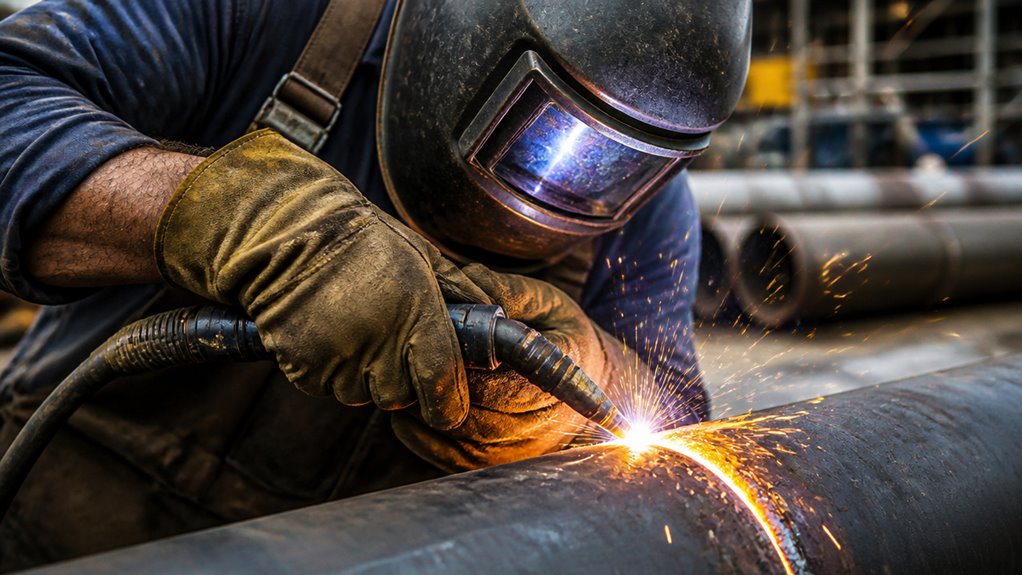
To become a pipeline welder, start with a high school diploma or GED. Then pursue pipe welding training focusing on fixed-position techniques like the 6G weld.
Gain proficiency in key processes such as SMAW, especially with E6010 and E7018 electrodes. Obtain your API 1104 certification by passing qualification tests, including a full circumferential weld under strict code standards.
Build practical pipeline experience to maintain certification and advance your career. Understanding field conditions and safety is also essential for success.
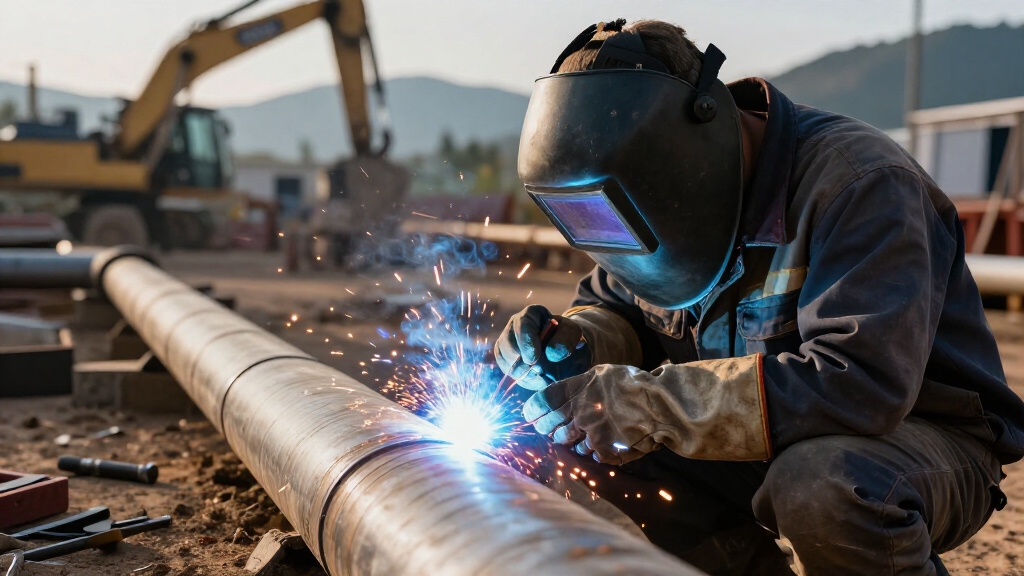
Start by securing a high school diploma or GED, which serves as the minimum educational foundation for pipeline welding.
From there, you should pursue structured welding education, such as a welding certificate, associate degree, or apprenticeship, to build practical skills.
Focus on programs that emphasize pipe fundamentals rather than just flat-plate welding, as pipeline work demands specialized knowledge.
Seek out pipe welding schools or employer-based training that cover key processes like SMAW, GTAW, GMAW, and FCAW.
Early training should include fixed-position welding techniques and open-root pipe welding.
This foundational education prepares you for the precise, code-compliant welds pipeline projects require.
It ensures you gain hands-on experience critical for advancing toward certification and field readiness.
Understanding sequential passes like root, hot, filler, and cap is essential to build robust, leak-proof joints in pipeline welding.
Specialized pipe welding training is crucial if you want to master the skills needed for intricate pipe joints and fixed-position welds. This kind of training really helps you grasp the strict code compliance criteria, like API 1104, which is all about ensuring the quality of pipeline welds.
Plus, it gets you ready for the tough conditions you’ll face in the field. Consistency in your technique and safety practices is key to doing successful pipeline work. So, having that specialized training under your belt makes a world of difference! Downhill welding is explicitly accommodated in API 1104 requirements, especially for pipeline root passes, emphasizing speed and efficiency.
Mastering pipe-specific welding techniques is essential because pipeline welding demands precision beyond general welding skills. You need to develop expertise in fixed-position welding, especially the 6G position, which challenges your control and consistency.
Familiarity with processes like SMAW using E6010 for root passes and E7018 for fill and cap passes is critical. You’ll also learn open-root welding, where joint fit-up and bead placement must be flawless to avoid defects.
Developing these skills guarantees you can create sound, code-compliant welds that pass rigorous inspections. Precision in heat control, electrode manipulation, and joint preparation directly impacts weld integrity and performance under pressure.
Investing time in pipe-specific training sharpens your ability to meet pipeline standards and maintain qualification, which is crucial for securing and excelling in pipeline welding roles. Additionally, understanding the risks of hydrogen and oxygen gas accumulation during welding helps ensure safer practices in confined spaces.
Because pipeline welding directly affects the integrity and safety of critical infrastructure, strict adherence to code compliance is non-negotiable.
You must master specialized training focused on pipeline codes like API 1104, which governs weld procedure qualification, inspection, and acceptance criteria.
This training ensures you understand essential requirements such as proper joint preparation, filler metal selection, and welding techniques specific to pipe diameters and positions.
Code compliance reduces risks of weld defects, leaks, and failures that could lead to environmental damage or catastrophic accidents.
By developing proficiency in standardized testing methods, like the 6G fixed-position weld qualification, you guarantee your work meets industry-accepted standards.
Ultimately, specialized pipe welding training equips you to produce consistent, code-compliant welds crucial for pipeline durability and operational safety.
Familiarity with welding processes such as Flux-Cored Arc Welding is essential since it offers high deposition rates and reliable weld quality in outdoor pipeline construction environments.
When preparing for pipeline welding in the field, specialized training sharpens your ability to perform consistently under demanding conditions.
You’ll develop critical skills like fixed-position pipe welding, mastering processes such as SMAW with E6010 and E7018 electrodes.
This training guarantees you understand code-specific requirements, fit-up precision, and joint preparation essential for defect-free welds.
You’ll also learn to operate within the constraints of production deadlines and physically challenging environments, maintaining weld quality per API 1104 standards.
Specialized pipe welding education equips you to pass rigorous qualification tests like the 6G fixed-position test, which proves your competence across pipe diameters and wall thicknesses.
Ultimately, this preparation is crucial for job readiness, safety compliance, and maintaining certifications that employers require for pipeline assignments.
Proper pipe alignment and fit-up techniques are also emphasized to prevent weld defects and ensure structural integrity.
Understanding the common welding processes and techniques used in pipeline work is essential for meeting industry standards and ensuring weld integrity. You’ll primarily work with Shielded Metal Arc Welding (SMAW), Gas Tungsten Arc Welding (GTAW), Gas Metal Arc Welding (GMAW), and Flux-Cored Arc Welding (FCAW).
In pipeline welding, downhill SMAW using E6010 electrodes for root and hot pass, followed by E7018 for fill and cap, is standard practice. Mastering open-root welding is critical, as it demands precise control to avoid defects.
You must consistently produce welds that comply with API 1104 codes, maintaining proper bead shape, penetration, and fusion. Adhering strictly to procedure specifications, including electrode type, welding position, and technique, ensures weld quality and qualification success in the field.
Welding plays a crucial role in joining pipeline components by creating permanent, load-bearing joints that withstand operational stresses.
To build core pipe welding skills, it’s important to focus on mastering some essential techniques. For example, you’ll want to get comfortable with downhill SMAW using E6010 for the root pass and E7018 for the fill and cap. These choices really help create strong, reliable welds.
Now, let’s talk about fixed-position welding. Developing your skills in the 6G position is especially crucial for pipeline work. It’s a challenging position, but getting it right can make a huge difference in your work.
Additionally, advancing beyond plate certifications like 3G to pipe welding certifications can significantly expand your career opportunities in pipeline welding.
Mastering essential welding techniques is vital for building the core pipe welding skills that pipeline work demands.
You’ll need proficiency in processes like SMAW, especially downhill welding with E6010 for root passes and E7018 for fill and cap passes.
Developing a consistent open-root technique guarantees strong, defect-free welds that meet code requirements.
Focus on clean joint preparation and precise electrode manipulation to control penetration and bead shape.
Practice fixed-position welding rigorously since pipelines often require 6G or similar positions.
Maintain steady travel speed and angle to avoid defects like slag inclusions or undercut.
Consistently applying these techniques helps you produce welds that pass stringent inspection and testing, including bend and radiographic exams.
Your ability to replicate these methods reliably under field conditions builds your pipeline welding expertise.
Using E6010 rods with DC electrode positive polarity maximizes penetration and travel speed, crucial for effective root passes on pipelines.
Building on your welding technique foundation, focusing on position-specific pipe skills will sharpen your ability to handle the unique challenges of pipeline welding.
You’ll need to master fixed-position welding, such as the 6G pipe position, which demands precise control over bead placement and heat input.
Practice downhill SMAW using E6010 for root passes and E7018 for fill and cap passes to meet industry standards.
Developing consistent open-root welding technique is critical, as is maintaining proper joint fit-up and cleanliness.
You must also adapt your technique to various pipe diameters and wall thicknesses while ensuring code-compliant weld quality.
Regularly simulate testing conditions similar to API 1104 qualification to prepare for certification.
These skills build your reliability and efficiency in the field, essential for pipeline welding success.
Gaining proficiency in the 5G welding position is also vital, as it validates your ability to perform high-quality welds on fixed horizontal pipes commonly encountered in pipeline construction.
Although pipeline welding certification can seem complex, understanding the API 1104 standard is essential for demonstrating your qualifications.
To get certified, you’ll need to pass a welding test that follows this standard, typically involving a full circumferential butt weld on a pipe coupon.
The test evaluates your ability to produce defect-free welds in various positions, using approved processes like SMAW with specific electrodes.
You must meet strict acceptance criteria verified by bend tests, radiographic exams, or nick-break tests.
Certification is procedure-specific, meaning you qualify for certain pipe sizes, welding positions, and techniques.
Keep in mind your qualification is usually tied to your employer and must be maintained through continuous work.
Mastering API 1104 requirements guarantees you meet industry expectations and are ready for pipeline welding assignments.
Proper preparation and curing procedures, similar to those critical for effective surface preparation, are essential for durable welds and certifications.
In the 6G pipeline welding qualification test, you’re going to tackle a fixed pipe set at a 45-degree angle. This setup really pushes your skills since you need to master all the different welding positions. It’s not just about getting it done; it’s about doing it right.
You’ll be using some specific techniques, like downhill SMAW. For the root pass, you’ll work with E6010, and for the fill and cap passes, you’ll switch to E7018. It’s crucial to have precise control over your technique to ensure a solid weld.
Once you’ve completed the weld, it’s not just a matter of crossing your fingers and hoping for the best! The weld will go through a rigorous evaluation process. They’ll conduct bend tests, radiographic exams, or nick-break tests to make sure everything meets the necessary code and quality standards. So, be prepared to show what you’ve got!
When you take on a 6G pipeline welding qualification test, you’ll work on a pipe positioned at a 45-degree angle.
It’s fixed in a way that challenges your ability to weld in all positions. The pipe is securely clamped to prevent movement, simulating real pipeline conditions.
You’ll perform a full circumferential weld, starting from the root pass through fill and cap passes. This setup forces you to weld overhead, vertical, horizontal, and flat positions without repositioning the pipe.
Proper joint alignment and fit-up are critical before starting, as misalignment can cause test failure. The test pipe typically measures around 6 inches in diameter with a standard wall thickness, requiring precise control over heat input and welding parameters throughout the procedure.
Mastering specific welding techniques is essential to passing the 6G pipeline welding qualification test.
You’ll weld a fixed-position, 45-degree inclined pipe, requiring full circumferential penetration with no defects. Precision and control are critical, as this test simulates real pipeline conditions.
Focus on these key techniques:
Your ability to execute these techniques reliably under pressure proves your readiness for pipeline welding demands.
Although the 6G pipeline welding qualification test challenges your skills, understanding the evaluation and acceptance criteria helps you prepare effectively.
You’ll perform a complete circumferential butt weld on a fixed pipe positioned at a 45-degree angle. Inspectors will evaluate your weld through radiographic testing, bend tests, or nick-break tests to verify integrity and penetration.
Your weld must meet API 1104 standards, showing no cracks, porosity, or unacceptable defects. The test focuses on your ability to maintain proper technique, filler metal use, and consistent weld quality under fixed-position constraints.
Passing requires adherence to procedure specifics, including electrode selection and welding parameters. Meeting these standards guarantees your qualification is valid for pipeline work and demonstrates your readiness for demanding field conditions.
Maintaining your pipeline welding qualification demands consistent adherence to code requirements and continuous demonstration of welding proficiency.
To keep your certification valid, you must meet specific criteria regularly. This ensures your skills remain sharp and code-compliant.
Here are three essential steps to maintain your qualification:
Facing varied and often challenging field conditions is a core aspect of pipeline welding work. You’ll need to adapt to outdoor environments where weather, terrain, and site accessibility vary widely.
Expect to work in extreme temperatures, both hot and cold, and sometimes in uneven or confined spaces. Physical endurance and mobility are essential, as you’ll often handle heavy equipment and maintain fixed welding positions for extended periods.
You must be prepared to travel frequently and adjust to remote locations with limited facilities. Additionally, maintaining consistent weld quality under production deadlines demands focus and efficiency.
Your ability to follow exact welding procedures, including process, filler metal, and joint specifications, directly impacts job success in these demanding field settings.
Prioritizing safety and weld quality is crucial when working on pipeline projects. Errors can lead to costly repairs or hazardous failures.
To protect yourself and guarantee top-quality welds, focus on the following:
Building pipeline welding experience directly increases your earning potential and opens doors to advanced career opportunities. As you gain hands-on skills in specific pipe diameters, positions, and welding processes like SMAW or GTAW, employers value your proven ability to deliver code-compliant welds. This experience often results in higher pay rates and preferential job assignments.
| Experience Level | Typical Pay Increase | Skill Focus | Career Benefit |
|---|---|---|---|
| Entry-Level | Base wage | Basic pipe welding | Apprenticeship and training |
| Intermediate | +15-25% | Fixed-position welding | Pipeline job qualifications |
| Experienced | +30-50% | Complex welds, code compliance | Advanced field assignments |
| Expert | +50%+ | Inspection roles, supervision | Leadership, contractor roles |
Your career growth depends on stacking certifications with practical pipeline welding experience.
You’ll typically find entry-level pipeline welders hired by large pipeline contractors, oil and gas service companies, and utility firms.
Companies like Michels, Fluor, and TC Energy often recruit those with welding certificates or apprenticeship experience.
Smaller regional contractors also offer opportunities, especially if you have strong pipe welding basics.
Focus on firms known for pipeline construction and maintenance projects, as they need welders who can grow into field roles with hands-on training.
You’ll often travel frequently for pipeline welding jobs, as projects are dispersed geographically and demand your presence on-site.
Expect to relocate for weeks or months at a time, sometimes to remote or physically demanding environments.
Employers value your readiness for this mobility, especially since pipeline work relies on meeting production deadlines and maintaining continuity in qualifications.
Being flexible with travel greatly enhances your employability and career progression in this trade.
You’ll need a solid physical fitness level since pipeline welding often demands working in fixed, awkward positions for hours.
For example, a 6G pipe weld test requires steady control while welding around a pipe at a 45-degree angle.
You must handle heavy equipment, maintain balance on uneven terrain, and withstand outdoor conditions.
Endurance, upper body strength, and flexibility are essential to meet production speed and quality standards consistently.
Yes, you’ll find union opportunities as a pipeline welder, especially through organizations like the United Association (UA) or the International Brotherhood of Boilermakers.
Joining a union can provide you with access to training, certifications, and job referrals.
Unions often negotiate better wages, benefits, and safer working conditions.
To tap into these opportunities, you’ll need to meet specific qualifications and maintain your certifications while demonstrating consistent, code-compliant welding performance.
Like a well-oiled machine, you’ll manage long periods away from home by establishing routines and maintaining communication.
Pipeline welding demands travel and physical endurance, so you’ll adapt by organizing your time efficiently on-site and staying connected with family through calls or messages.
Preparing mentally for isolation and physical challenges helps you maintain focus.
Employers often provide accommodations, but your ability to stay disciplined and balanced guarantees success during extended assignments.
So, you want to become a pipeline welder? Easy—just master complex welding processes, endure brutal field conditions, ace the API 1104 certification, and stay razor-sharp on safety, all while boosting your pay.
No pressure. Remember, specialized training isn’t optional; it’s your ticket to avoiding costly mistakes and leaking pipelines.
Embrace the grind, and you’ll weld your way to a solid career. Just don’t forget your helmet; it’s not a fashion statement.