Phone:
(701)814-6992
Physical address:
6296 Donnelly Plaza
Ratkeville, Bahamas.

Phone:
(701)814-6992
Physical address:
6296 Donnelly Plaza
Ratkeville, Bahamas.

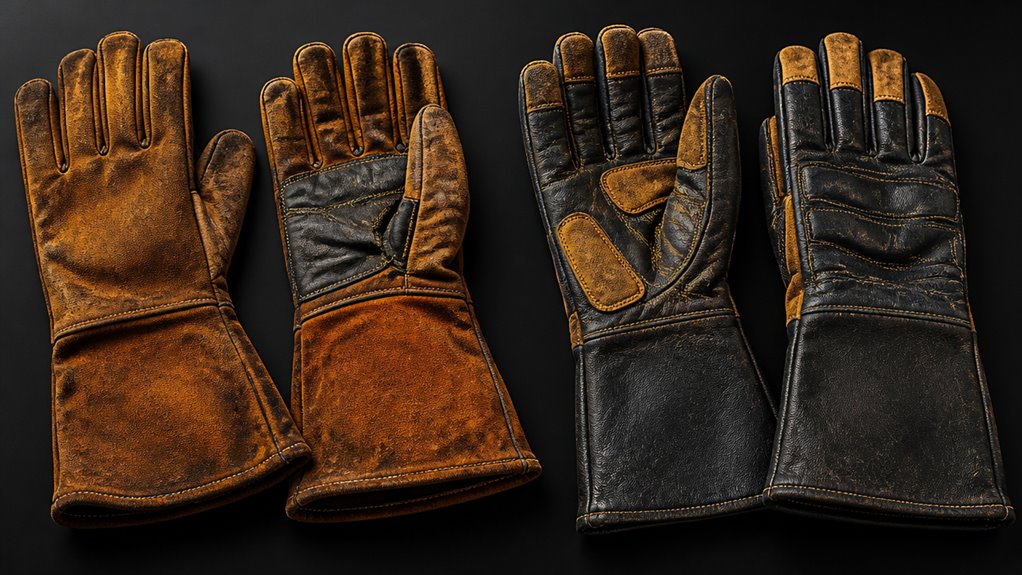
You’ll choose EN 12477 Type A gloves when you need maximum protection against heat, flames, molten metal, and mechanical hazards, sacrificing some dexterity.
Type B gloves prioritize finger flexibility and precision for tasks like TIG welding, offering lower but adequate protection.
Both types meet stringent thermal and mechanical performance levels, ensuring safety calibrated to your task’s demands.
Understanding these distinctions sharpens your glove selection for peak welding safety and control in varied environments.
| Feature | Type A Welding Gloves | Type B Welding Gloves |
|---|---|---|
| Primary Focus | Maximum protection | Dexterity and precision |
| Protection Level | Higher | Lower but adequate |
| Heat Resistance | Superior | Moderate |
| Burning Behavior | Level 3 | Level 2 |
| Molten Metal Splash | Level 3 | Level 2 |
| Convective Heat | Level 2 | No specific requirement stated |
| Contact Heat | Level 1 | Level 1 |
| Abrasion Resistance | Level 2 | Level 1 |
| Tear Resistance | Level 2 | Level 1 |
| Puncture Resistance | Level 2 | Level 1 |
| Blade Cut Resistance | Level 1 | Level 1 |
| Finger Mobility | Lower | Higher |
| Flexibility | More limited | Excellent |
| Fit | Generally bulkier | Thinner and more flexible |
| Tactile Control | Lower | Better |
| Typical Welding Use | General welding, heavy-duty welding, cutting | TIG welding and precision work |
| Best For | High heat, sparks, molten metal, and mechanical hazards | Fine motor control and intricate welds |
| Main Trade-Off | More protection with less dexterity | More dexterity with less protection |
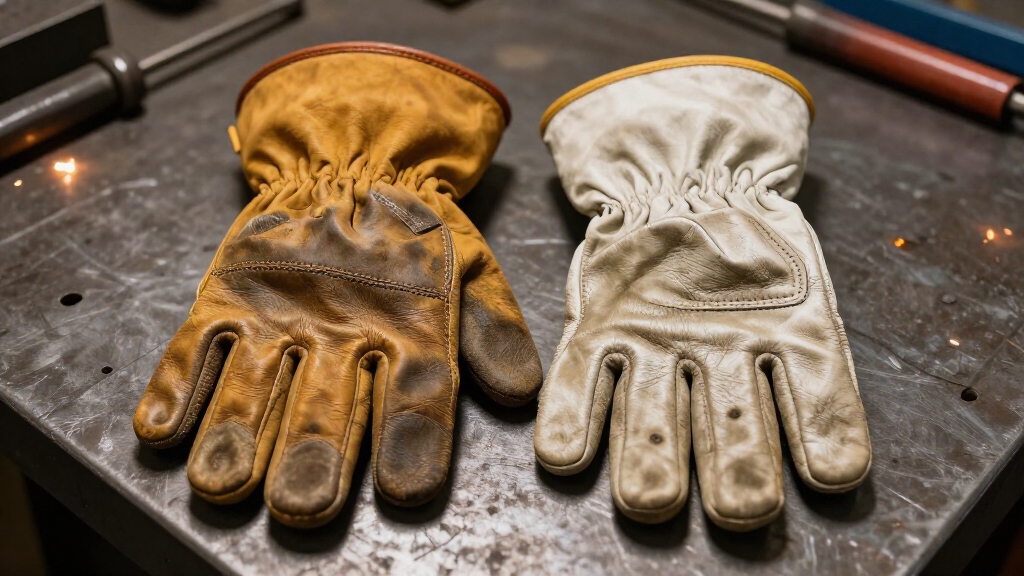
Although you might focus on material when choosing welding gloves, EN 12477 defines them primarily by performance characteristics to guarantee all-around protection.
Choosing welding gloves by performance, not just material, ensures comprehensive protection as per EN 12477 standards.
The standard covers gloves designed to shield you from heat, flames, molten metal splashes, mechanical hazards, and arc-welding electrical resistance.
It requires gloves to meet specific performance levels rather than specifying materials, ensuring consistent safety regardless of construction.
EN 12477 classifies gloves into Type A and Type B, each marked clearly on the glove, packaging, and instructions.
This classification reflects defined mechanical and thermal resistance thresholds that you must consider when selecting gloves, ensuring suitability for your welding environment.
Compliance with these criteria assures you of reliable defense against the multifaceted risks inherent in welding operations.
Choosing gloves that balance heat resistance levels and mechanical protection in compliance with EN 12477 enhances both safety and functionality for welders.
When it comes to choosing between Type A and Type B gloves, it really depends on what you prioritize: protection or dexterity.
Type A gloves offer excellent resistance to heat, mechanical hazards, and molten metal. They really shine when it comes to safety, but there’s a catch—they can limit your flexibility a bit.
So, if you’re doing something where you need maximum protection, these might be the way to go.
On the flip side, we’ve got Type B gloves. These are all about finger control and flexibility, which makes them perfect for precision tasks, like TIG welding.
If you’re looking for a glove that lets you move your fingers freely and get into those intricate details, Type B is definitely worth considering.
For both types, choosing gloves with heat-resistant stitching can help prevent burns and improve durability.
When choosing welding gloves under EN 12477, you must balance protection against dexterity according to the glove type.
Type A gloves deliver superior protection with higher abrasion, tear, puncture, and burning behavior resistance levels. They also withstand greater convective heat and molten metal splashes, making them ideal for demanding welding and cutting tasks.
In contrast, Type B gloves offer lower protection levels but prioritize dexterity, supporting precision work like TIG welding.
While both maintain baseline contact heat and blade cut resistance, Type A gloves excel in mechanical and thermal defense.
Your choice hinges on whether you need robust barrier performance or enhanced finger control, as Type A maximizes safety and Type B optimizes maneuverability under EN 12477 criteria.
Wearing gloves is essential safety gear to prevent thermal injuries and electrical shocks, providing critical heat and electrical shock protection.
Picking the right welding gloves means weighing the trade-off between protection and dexterity.
Type A gloves prioritize protection with higher abrasion, tear, and heat resistance, but that comes at the cost of reduced flexibility and finger mobility.
When you wear Type A gloves, expect a bulkier fit that limits precise hand movements.
On the other hand, Type B gloves offer enhanced dexterity and flexibility, allowing you to perform detailed tasks like TIG welding with greater control.
However, that flexibility reduces their mechanical and thermal protective capabilities compared to Type A.
Understanding this balance helps you select gloves that meet the demands of your welding application, favoring either robust protection or fine motor skills while staying compliant with EN 12477 standards.
Proper maintenance, such as gentle cleaning methods tailored to glove material, is essential to preserve both protection and dexterity over time.
Balancing protection and dexterity directly influences glove selection for specific welding tasks under EN 12477.
You’ll choose Type A gloves when heavy-duty protection against heat, molten metal, and mechanical hazards is critical, such as in general welding and cutting.
Conversely, Type B gloves suit precision tasks like TIG welding, where finger mobility and tactile sensitivity are paramount.
Use the table below to guide your choice:
| Task Requirement | Recommended Glove Type |
|---|---|
| Heavy thermal exposure | Type A |
| Precision work (e.g., TIG) | Type B |
| High abrasion/tear risk | Type A |
| Fine motor control needed | Type B |
Selecting based on this trade-off guarantees peak safety without compromising operational effectiveness. Choosing gloves made from durable leathers helps balance safety and comfort for longer-lasting protection.
Type A gloves are designed to offer higher mechanical protection levels. They provide excellent resistance to abrasion, tear, and puncture, all rated at level 2. On the other hand, Type B gloves only meet level 1 in these categories.
Now, when it comes to blade cut resistance, both types maintain a level 1 rating. This balance allows you to enjoy decent protection while still being able to move your hands comfortably.
For welding tasks requiring enhanced safety, selecting gloves that complement ANSI Z87.1 standards for eye and face protection is recommended to ensure comprehensive protection.
Several critical mechanical protection levels differentiate Type A and Type B welding gloves under EN 12477, specifically in abrasion, tear, and puncture resistance.
Type A gloves consistently meet level 2 for these hazards, offering enhanced durability and safety for heavier-duty welding.
Type B gloves meet level 1, prioritizing flexibility and dexterity with moderate protection.
Understanding these differences helps you select gloves suited to your task’s risk profile.
| Mechanical Hazard | Type A Level | Type B Level |
|---|---|---|
| Abrasion | 2 | 1 |
| Tear | 2 | 1 |
| Puncture | 2 | 1 |
Choose Type A when you need robust mechanical defense.
Opt for Type B when mobility matters more.
Additionally, selecting gloves with appropriate heat resistance and cuff features further ensures safety and comfort for specific welding tasks.
While Type A and Type B welding gloves differ markedly in abrasion, tear, and puncture resistance, their blade cut resistance remains consistent. Both types meet level 1 cut resistance under EN 12477, indicating minimal protection against sharp blade contact.
This uniformity means neither glove type offers enhanced defense against cutting hazards, regardless of their other mechanical strengths. When you select gloves for tasks involving sharp edges, you must recognize that cut protection is limited in both.
Instead, focus on the glove’s abrasion, tear, and puncture ratings to gauge overall mechanical durability. For substantial cut resistance, you’ll need gloves certified under EN 388 with a higher cut level, as EN 12477 prioritizes welding-specific protections over blade cut performance.
For optimal safety, pairing gloves with other personal protective equipment certified to relevant standards, such as those ensuring ANSI Z87.1 impact resistance, is recommended to safeguard against additional workplace hazards.
Because welding exposes your hands to intense heat and molten metal, EN 12477 sets stringent heat and flame resistance requirements to guarantee adequate protection.
These requirements differentiate Type A and Type B gloves based on performance levels. You should note:
This heat-performance profile guarantees Type A gloves handle heavier thermal exposure, while Type B offers moderate protection with greater flexibility. Always wear properly fitted PPE to maximize safety benefits when using these gloves.
Choosing between Type A and Type B welding gloves hinges substantially on dexterity requirements.
If your work demands precise finger control, Type B gloves offer superior flexibility, enabling intricate manipulation without sacrificing essential protection.
Conversely, Type A gloves prioritize protection with higher abrasion, tear, and puncture resistance but reduce finger mobility.
When you choose Type A, you accept less dexterity for enhanced safety against heat and mechanical hazards.
This trade-off is critical: Type B’s design suits precision tasks, such as TIG welding, where tactile sensitivity matters.
Meanwhile, Type A fits general welding jobs requiring robust defense.
Understanding this balance guarantees you select gloves that meet both your operational precision and safety standards under EN 12477.
Your choice directly influences your control and protection in welding environments.
Proper care and maintenance, including avoiding fabric softeners, ensure the durability and protective qualities of your gloves over time.
Understanding the balance between dexterity and protection naturally leads to identifying which welding tasks best suit Type A and Type B gloves under EN 12477.
Type A gloves excel in tasks demanding robust thermal and mechanical defense. Type B gloves prioritize finger agility and precision. You’ll find the best fit by matching glove capabilities to task requirements:
Selecting gloves this way optimizes both safety and performance on the job.
You should interpret EN 12477 glove type markings as clear indicators of protection level and dexterity.
Type A gloves prioritize higher protection with lower flexibility, suited for heavy welding tasks.
Type B gloves offer greater dexterity but lower protection, ideal for precision work.
These markings appear on gloves, packaging, and instructions, guiding you to choose based on your specific welding needs.
This helps in balancing safety requirements against the need for finger control.
Yes, EN 12477 gloves are compatible with electrical arc welding safety. They provide electrical resistance up to 100V AC or DC, meeting minimum safety requirements for arc welding.
The gloves maintain vertical resistance above (10^5 Omega) after conditioning, ensuring effective insulation. When you select gloves under this standard, you can trust they offer reliable protection against electrical hazards associated with arc welding tasks.
You’ll commonly find Type A and Type B gloves made from high-quality split leather, like cowhide or goatskin, offering durability and heat resistance.
Type A gloves often use thicker leather for extra protection, while Type B gloves use thinner, more flexible leather to enhance dexterity.
Both may include additional heat-resistant linings and reinforcements to meet EN 12477’s mechanical and thermal performance requirements, ensuring peak safety and comfort during welding tasks.
You might think conditioning weakens electrical resistance, but it actually refines it by simulating real-use environments.
Conditioning gloves, exposing them to humidity and temperature changes, ensures their resistance ratings remain stable, typically above (10^5 Omega).
This process verifies the gloves maintain reliable arc-welding electrical insulation after exposure.
Yes, you can use EN 12477 gloves in non-welding industrial settings, especially where heat, flame, or mechanical hazards exist.
Their performance against abrasion, tear, puncture, and heat makes them suitable beyond welding.
However, you should assess if their specific protection levels and dexterity match your task demands.
For precision work, their dexterity may be limited, so consider glove type and compliance with other standards like EN 388 for broader industrial use.
When you wear EN 12477 Type A gloves, imagine a sturdy shield wrapping your hands in superior heat and mechanical protection, perfect for heavy-duty welding.
Type B gloves, on the other hand, feel like a second skin, offering agility without compromising safety.
Choosing between them means balancing the fierce heat and sparks with the nimble precision your task demands.
Trust this standard to guide you to gloves that protect and perform with technical excellence.