Phone:
(701)814-6992
Physical address:
6296 Donnelly Plaza
Ratkeville, Bahamas.

Phone:
(701)814-6992
Physical address:
6296 Donnelly Plaza
Ratkeville, Bahamas.

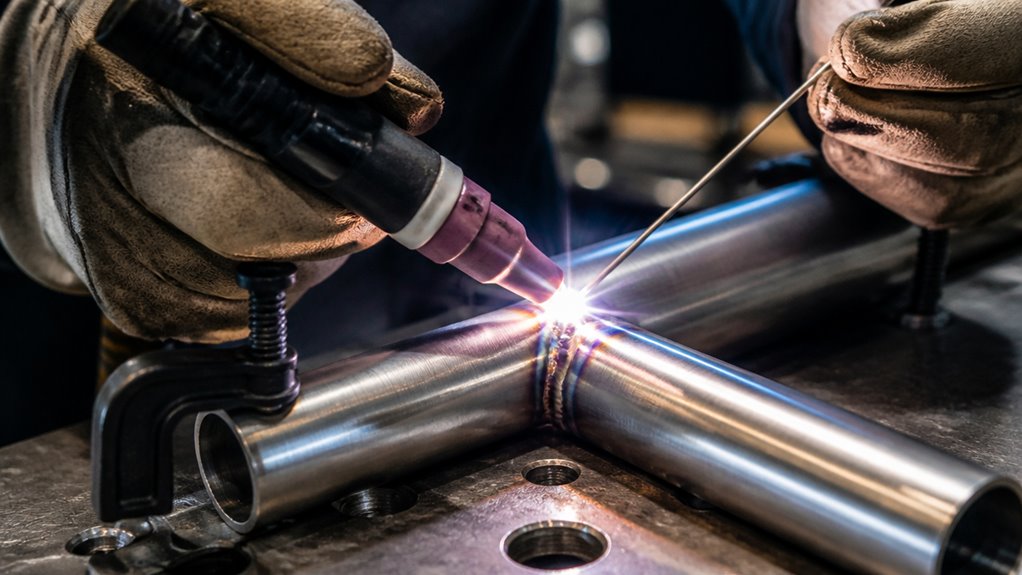
To weld stainless steel at home, select TIG for thin, visible joints or MIG for thicker materials. Use stainless-specific filler wire like ER308L or ER316L.
Clean and degrease your workpiece thoroughly, using a dedicated stainless brush. Control heat by applying short weld runs and maintaining interpass temperatures below 350°F. Use stringer beads.
Shield the weld with 100% argon gas to prevent oxidation. Set up in a ventilated area with proper PPE for safety. Following these steps ensures corrosion-resistant, high-quality welds.
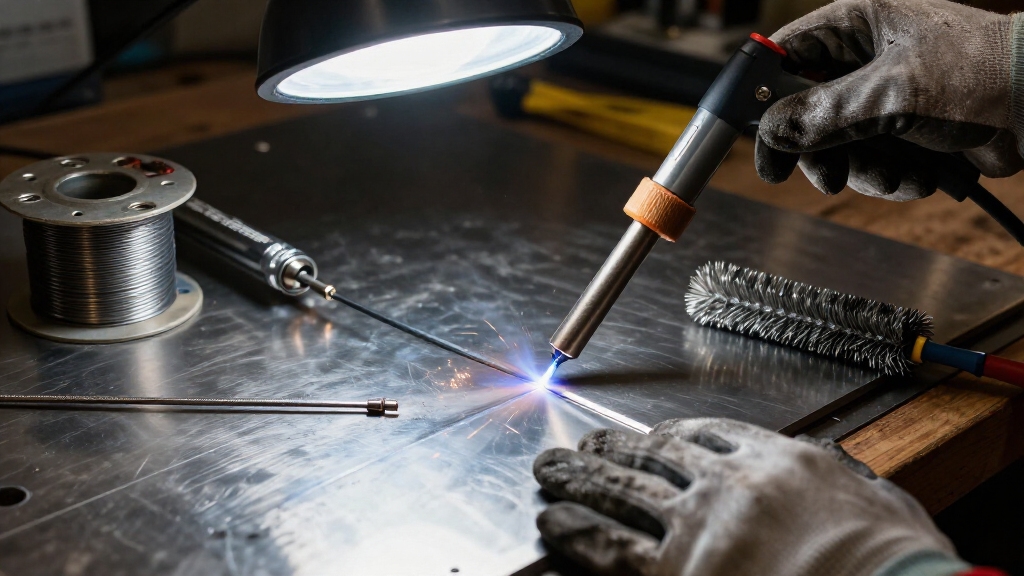
When welding stainless steel at home, selecting the right process is crucial for achieving strong, corrosion-resistant joints.
You’ll find TIG welding delivers the cleanest, most controlled results, especially for thin stainless or visible seams.
Use DCEN polarity and 100% argon shielding gas at 15–20 CFH for peak TIG performance.
For thicker materials or faster fabrication, MIG welding works better, but make sure you use stainless-specific wire.
Stick welding is an option but requires stainless rods and tighter heat control to maintain corrosion resistance.
Choose your process based on material thickness, joint visibility, and your equipment.
Controlling heat input and shielding gas coverage depends on the process you pick.
Setting these parameters correctly will help you avoid weld defects and preserve stainless steel’s corrosion properties.
Proper heat control is essential to prevent microstructure alteration that can weaken the weld and compromise corrosion resistance.
Selecting the appropriate filler metal directly impacts the strength and corrosion resistance of your stainless steel welds. Always match your filler to the base metal grade and application.
Use low-carbon “L” grade fillers like ER308L for 304 stainless or ER316L for 316 stainless to minimize carbide precipitation. For dissimilar joints, ER309L works well. Avoid mild steel wire in MIG welding. Stainless-specific wire guarantees compatibility and corrosion resistance.
| Base Metal Grade | Recommended Filler Metal |
|---|---|
| 304 Stainless | ER308L / E308L |
| 316 Stainless | ER316L / E316L |
| Dissimilar | ER309L |
| MIG Stainless | Stainless-specific wire |
Choosing the correct filler prevents weld cracking and maintains longevity under corrosive conditions. Additionally, using specialized wires like 347 or ER2209 can help prevent carbide precipitation and enhance weld performance in specific stainless steel grades.
Although welding stainless steel demands precision, preparing and cleaning the metal before you start is essential to achieving corrosion-resistant joints.
Begin by thoroughly degreasing the joint to remove oils and contaminants that compromise weld quality.
Use a dedicated stainless steel wire brush, never one previously used on carbon steel, to eliminate mill scale and surface impurities.
Carefully inspect the fusion line and make certain of consistent fit-up with a uniform joint gap along the seam.
Employ clamps or fixtures to hold the alignment firmly and prevent movement during welding.
Proper preparation reduces the risk of contamination and improves weld integrity, helping maintain the stainless steel’s inherent corrosion resistance.
Skipping these steps increases the chance of weld defects and surface oxidation that degrade performance.
Additionally, ensuring the use of inert shielding gases during welding is crucial to prevent oxidation and maintain corrosion resistance.
Because excessive heat degrades stainless steel’s corrosion resistance, you must carefully control your welding temperature and technique.
Use short weld runs and tack weld frequently to minimize heat buildup. Avoid long continuous passes, which increase thermal input and risk carbide precipitation.
Maintain interpass temperatures below 350°F (175°C) for common grades like 304 and 316 to preserve the metal’s integrity.
Favor stringer beads over wide weaving to reduce heat input and keep the weld puddle small and stable.
Control your travel speed consistently to prevent overheating the base metal. Monitoring and managing heat input directly impacts the final corrosion resistance.
Always use proper welding parameters to protect the stainless steel’s protective chromium oxide layer during fabrication.
Additionally, employing chill bars can help absorb excess heat and limit distortion during welding.
To keep your welds free from oxidation and contamination, it’s super important to maintain consistent shielding gas coverage throughout the process. This helps prevent issues like oxidation and porosity that can compromise your work.
Now, if you’re working on full-penetration or closed-joint projects, consider using a backside argon purge. This technique really helps protect the root from any potential contamination.
Don’t forget, getting the proper gas flow and ensuring purge levels stay below 100 ppm of oxygen are critical. This little detail can make a big difference in preserving the integrity of your welds. So, keep an eye on those levels!
Using 100% argon for shielding and back purge ensures a stable arc and prevents contamination during welding.
Proper gas coverage almost always plays a critical role in shielding stainless steel welds from oxidation and contamination.
You’ll want to use 100% argon gas at a flow rate of about 15–20 cubic feet per hour (CFH) to guarantee consistent coverage.
Position the gas nozzle close to the weld area without obstructing your view or the welding path.
Maintain a steady and sufficient gas flow, adjusting for any drafts or air movement, especially if you’re welding outdoors.
Avoid excessive flow rates, as turbulence can pull air into the weld zone, causing oxidation.
Check your equipment for leaks or damaged hoses before starting.
Proper gas coverage guarantees a clean weld bead, preserves corrosion resistance, and prevents porosity by isolating the molten metal from atmospheric oxygen and nitrogen.
For enhanced penetration and weld bead width on stainless steel, consider argon-hydrogen blends with up to 5% hydrogen for improved arc heat and weld quality.
Guaranteeing a consistent backside argon purge during stainless steel welding shields the weld root from oxidation and contamination that can compromise corrosion resistance.
You’ll want to set up an argon flow on the backside of the weld joint, especially for full-penetration welds or closed joints, to displace oxygen and moisture.
Use a purge gas flow rate sufficient to maintain oxygen levels below 100 ppm for critical applications.
Seal the purge area with tape or specialized dams to prevent gas leaks and monitor oxygen levels with a digital meter if possible.
Proper backside purging guarantees a clean, oxide-free root surface, which preserves the stainless steel’s corrosion resistance.
Without this step, you risk discoloration, porosity, and weakened weld integrity that reduce service life.
Additionally, maintaining a short arc length during welding helps minimize heat transfer to the stainless steel, further protecting its corrosion resistance.
When welding stainless steel at home, setting up a safe workspace is critical to minimize health risks and guarantee effective ventilation.
Position your welding station in a well-ventilated area or use a local exhaust ventilation system to capture harmful fumes, especially hexavalent chromium.
Always wear a rated respirator during welding and grinding to protect your lungs. Equip yourself with appropriate personal protective equipment: a welding helmet, gloves, and a flame-resistant jacket or apron.
Separate clean work clothes from contaminated gear to avoid cross-contamination. Control dust and debris by sweeping regularly and preventing accumulation.
Use screens or barriers to shield others nearby. Keep your workspace organized to reduce trip hazards and ensure quick access to fire extinguishing equipment.
Maintain proper gas flow rates to prevent oxidation and ensure weld quality during stainless steel welding.
These measures maintain safety and protect your health during stainless steel welding.
After welding, it’s really important to clean the weld area thoroughly. You want to get rid of any slag, discoloration, and contaminants that could compromise the corrosion resistance. Trust me, a clean weld is a happy weld!
To restore that protective chromium oxide layer on stainless steel, you can use pickling paste or passivation treatments. These methods work wonders in bringing back the steel’s protective qualities.
Taking the time for proper post-weld care is crucial. It ensures your joints stay durable and resistant to corrosion over time. So, don’t skip this step—it’ll pay off in the long run!
Using pickling paste or passivation treatments helps maintain corrosion resistance by restoring the protective oxide layer essential for stainless steel’s longevity.
Although welding completes the structural join, you still need to clean your stainless steel welds to restore corrosion resistance and achieve a professional finish.
Begin by removing slag and spatter using a stainless steel wire brush dedicated exclusively to stainless work. Never use one contaminated by carbon steel.
Next, clean the weld area with a suitable solvent or mild detergent to eliminate oils and residues. Avoid aggressive grinding that can embed contaminants or alter the surface.
For discoloration caused by heat tint, use a chemical pickling paste or electropolishing to restore the chromium oxide layer.
Finally, rinse thoroughly with clean water and dry the weld completely to prevent spotting. Proper post-weld cleaning guarantees durability and maintains the aesthetic quality of your stainless steel project.
To fully restore corrosion resistance, perform passivation after cleaning to protect the passive chromium oxide film and prevent future degradation.
Proper post-weld cleaning sets the stage for effective corrosion protection of your stainless steel welds.
After removing slag and discoloration, apply a pickling paste or perform passivation to restore the chromium oxide layer, which safeguards against rust.
Use stainless steel wire brushes dedicated solely to stainless to prevent contamination.
Avoid abrasive tools that embed carbon steel particles.
For critical applications, consider using a chemical passivation process with nitric or citric acid solutions to enhance corrosion resistance.
Additionally, store your welded pieces in a dry, controlled environment to prevent moisture-induced corrosion.
Regularly inspect welds for signs of pitting or discoloration and reapply passivation treatments as needed.
To prevent warping in thin stainless steel, control heat input carefully. Use short weld runs with tack welds instead of continuous beads to minimize distortion.
Opt for stringer beads over wide weaving to limit heat spread. Maintain a steady travel speed to keep the puddle small and manageable.
Also, clamp the workpiece securely to reduce movement. Let the metal cool gradually between passes to avoid excessive thermal stress and distortion.
You often make mistakes like using the wrong filler metal or welding process, which harms corrosion resistance.
Neglecting proper surface prep, like not degreasing or using a carbon steel brush, leads to contamination.
Overheating the metal causes warping and discoloration.
Poor shielding gas coverage invites oxidation and porosity.
Also, failing to control heat input with short weld runs or improper sequencing can ruin weld quality.
Always maintain proper ventilation and safety gear to avoid health risks.
You can weld stainless steel to mild steel safely by using a suitable filler metal like ER309L, designed for dissimilar joints.
Prepare both metals thoroughly, removing all contaminants. Control heat input carefully to avoid warping and maintain corrosion resistance on the stainless side.
Use appropriate shielding gas, typically 100% argon, and ensure proper joint fit-up.
To tackle tough thermal tints, try pickling paste or a passivation process to perfectly preserve your stainless steel’s surface.
First, scrub stubborn stains with a dedicated stainless brush. Then apply the acid-based pickling paste carefully.
After the recommended dwell time, rinse thoroughly with water and dry completely to prevent further oxidation.
Always adhere to safety standards, wear gloves, and follow manufacturer instructions to avoid surface damage and maintain corrosion resistance.
After stainless steel welding, clean your equipment thoroughly to remove any dust, metal particles, and residue.
Inspect and replace consumables like tungsten or contact tips if contaminated.
Check gas lines and regulators for leaks or damage, ensuring 100% argon purity remains intact.
Clean or replace welding cables and connectors to prevent corrosion.
Regularly inspect and maintain your ventilation system and respirators, keeping them free of stainless steel dust and fumes for safe operation.
Welding stainless steel at home requires precision. Did you know that improper heat control can reduce corrosion resistance by up to 50%?
By choosing the right process and filler metal, thoroughly cleaning your materials, and shielding your welds from contamination, you’ll maintain stainless steel’s durability.
Always prepare a safe workspace and finish your welds properly to ensure long-lasting quality.
Follow these steps closely, and your home stainless steel welds will perform like professional ones.