Phone:
(701)814-6992
Physical address:
6296 Donnelly Plaza
Ratkeville, Bahamas.

Phone:
(701)814-6992
Physical address:
6296 Donnelly Plaza
Ratkeville, Bahamas.

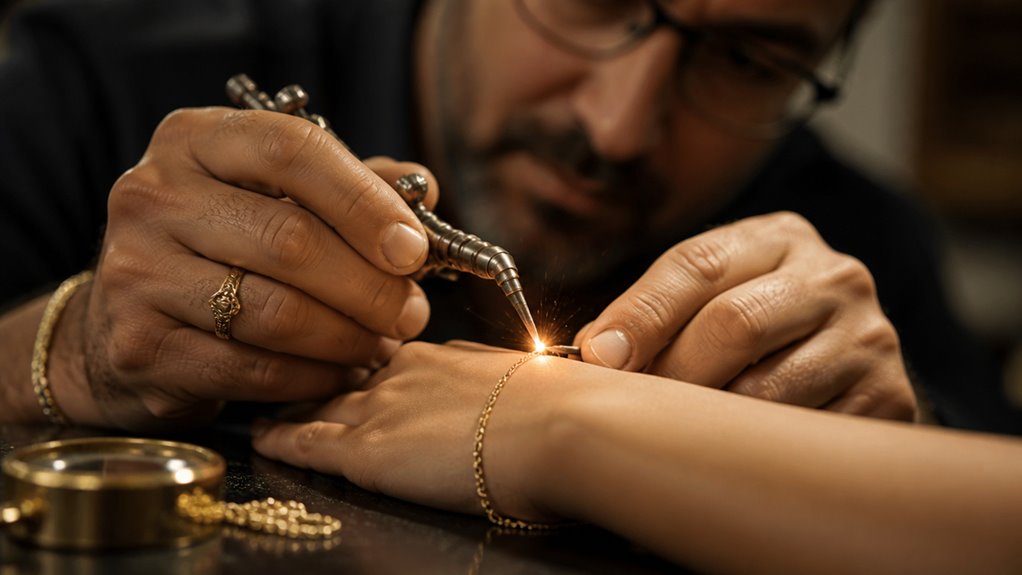
You want a permanent jewelry welder that delivers precise micro-welds with adjustable power settings down to 0.1 joules for delicate metals like 14k gold-filled and sterling silver.
Look for compact, ergonomically designed units with instant pulse control and argon shielding to protect joints from oxidation.
Fine-tuned current and matching electrodes assure seamless, strong links without heat damage.
Whether for studio use or events, the right welder balances speed, accuracy, and safety.
Exploring key features will reveal how to optimize your setup.
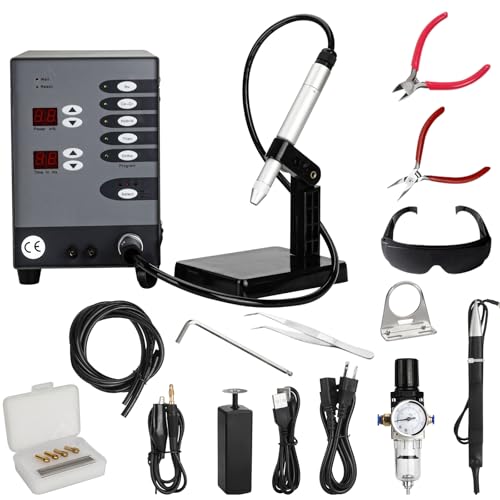
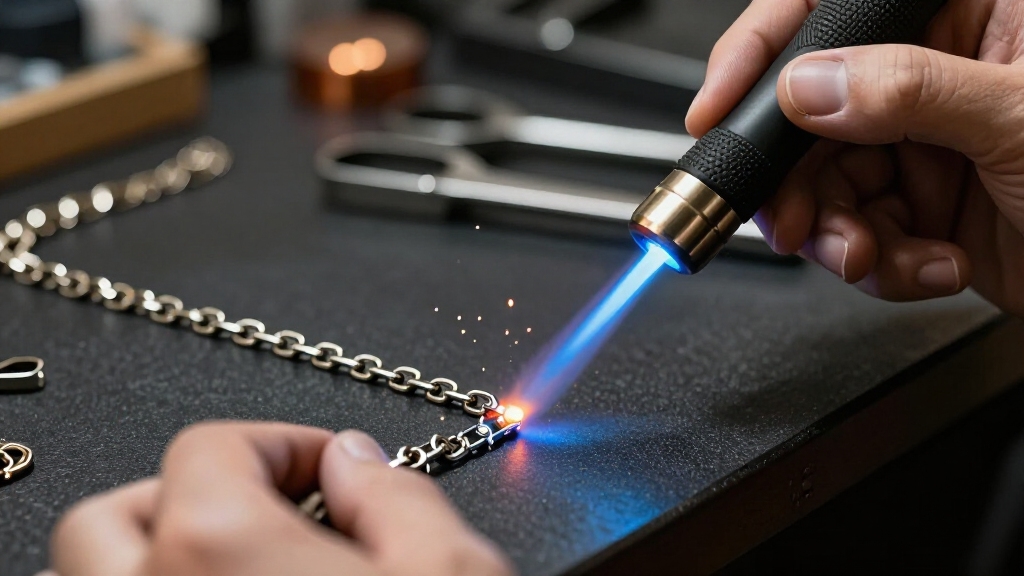
Although traditional soldering methods have served jewelers for decades, a permanent jewelry welder offers a more precise and efficient alternative. It fuses fine chain links into a clasp-free loop using controlled electrical pulses.
Permanent jewelry welders provide a precise, efficient way to fuse fine chain links into seamless, clasp-free loops.
You’ll appreciate how this compact pulse-arc welding machine replaces open flame with fast, targeted energy delivery. This minimizes heat exposure to adjacent links.
When working with materials like 14k gold-filled chain, sterling silver, or solid gold, micro-weld precision is vital. It helps maintain chain integrity and aesthetic.
Selecting the right welder depends on your chain thickness, metal type, and workflow volume. This ensures consistent, strong joins without damage.
This technology streamlines the process, enhances durability, and creates seamless jewelry designs. It’s a valuable tool for both artisans and studios focused on quality and reliability.
To achieve optimal results, it is essential to match electrode materials and apply precise current control during welding to avoid weak fusion or burn-through, as outlined in the spot welding basics.
When you adjust power settings on a permanent jewelry welder, you control the energy delivered to each weld. This directly impacts the strength and appearance of micro-welds.
Precise power calibration guarantees optimal fusion of chain links without causing heat distortion or chain damage. Most welders offer fine increments down to 0.1 or 0.5 joules.
This allows you to tailor the pulse energy based on chain thickness and metal type. Lower power settings reduce the risk of over-welding and maintain the integrity of delicate materials like 14k gold-filled or sterling silver.
Conversely, higher settings are required for thicker or denser metals. You should systematically test power levels on sample links to identify the minimal effective energy.
This assures consistent, clean welds with strong mechanical bonds and minimal surface discoloration. Proper adjustment of power settings also helps maintain molten pool stability, which is critical for ensuring weld quality and joint integrity.
To get the best results from your welder, it’s crucial to match its power and control settings to the specific chain thickness you’re working with. This ensures that you achieve clean and secure joins every time.
Now, let’s talk about the metals. Different types, like 14k gold-filled, sterling silver, and solid gold, each require their own energy adjustments. If you don’t tailor these settings, you might end up with damage or weak welds.
Proper joint preparation and cleaning are essential to enhance weld quality and reduce defects, especially when working with delicate metals and fine chains, as outlined in joint preparation.
Consider the chain thickness and metal type as critical factors when selecting a permanent jewelry welder. Thicker chains demand welders with higher power output and fine control to guarantee strong, precise joins without damaging links.
Conversely, ultra-fine chains require delicate pulse energy settings to avoid distortion or burn-through. Matching the welder’s adjustable energy range to your chain gauge optimizes weld integrity and aesthetic quality.
Achieve flawless welds on chains ranging from 0.5mm to 2mm thickness. Avoid weak joints by calibrating power to chain gauge. Protect delicate links with micro-adjustable energy increments. Guarantee consistent weld strength on varied chain profiles. Minimize chain deformation through precise pulse control.
Understanding chain thickness compatibility directly impacts your welding success and client satisfaction. For thicker chains, using an uphill welding technique can ensure deeper penetration and stronger joints without compromising the chain’s integrity.
Although chain thickness plays a pivotal role, selecting the appropriate welder also depends heavily on the metal type you work with.
Different metals, such as 14k gold-filled, sterling silver, and solid gold, respond uniquely to pulse-arc welding due to their varying thermal conductivity and melting points.
You’ll want a welder offering finely tunable power settings, ideally with increments as precise as 0.1 or 0.5 joules, to avoid overheating delicate metals or under-welding robust ones.
For sterling silver, higher output guarantees strong, clean joins, while softer metals like gold require gentler pulses to prevent distortion.
Consider welders with argon shielding compatibility as inert gas reduces oxidation during welding, improving joint integrity across metal types.
Matching welder capabilities to metal characteristics guarantees consistent, damage-free permanent jewelry fabrication.
Selecting the correct electrode type and current is essential to prevent defects and ensure stable arcs when welding different jewelry metals.
When working with gold, silver, and mixed metals, the choice of welder materially impacts the quality and durability of each weld. Gold requires lower joule settings and precise pulse control to avoid overheating. This preserves its malleability.
Silver demands higher energy output due to its higher thermal conductivity, ensuring strong, consistent joints. Mixed metals challenge welders to balance power and pulse duration to prevent brittleness or weak bonds.
Select welders with fine energy increments and adjustable pulse widths for ideal results across materials.
Feel confident knowing your welder adapts to delicate gold without damage. Experience the power to weld robust silver with precision. Achieve flawless joins on mixed metals, reducing rework.
Trust in micro-weld accuracy that safeguards tiny chain links. Rely on consistent weld strength for lasting permanent jewelry.
Maintaining a controlled environment is essential to prevent contamination and ensure the integrity of delicate jewelry welds.
Mastering weld quality across gold, silver, and mixed metals sets the foundation. Optimizing your workflow drives productivity in studio or event settings.
High-performance permanent jewelry welders achieve approximately one weld per second, markedly accelerating your throughput. Instant pulse delivery eliminates variability inherent in manual heat methods, ensuring consistent micro-welds with minimal thermal impact.
When equipped, on-demand argon flow further enhances weld integrity while reducing gas consumption, streamlining material use. A straightforward user interface reduces setup errors and accelerates training, critical for event environments with varying operator skill levels.
Additionally, compact form factors and longer stylus cords improve maneuverability around wrists and ankles. This allows you to maintain speed without sacrificing precision.
These factors collectively enhance your operational efficiency, enabling high-volume production without compromising weld quality. Selecting the appropriate welding rod classification is also crucial to optimize weld strength and durability for different metals.
Because permanent jewelry welding involves concentrated electrical pulses and delicate materials, prioritizing safety is essential to protect both the operator and the client. You must use certified equipment with built-in safeguards like over-temperature protection and auto-shutoff to prevent accidents.
Wearing proper eye protection shields against accidental arc flashes. When using argon shielding gas, guarantee adequate ventilation to avoid gas buildup. Always inspect the welder’s stylus and cords before operation to avoid electrical faults.
Keep these safety tips in mind:
These measures reduce risks and maintain precision in every weld. Additionally, ensure that your workspace is prepared on a stable, dry surface free of flammable materials to prevent any fire hazards and maintain fire safety.
Although permanent jewelry welding demands exacting precision, several key features in modern welders enhance your accuracy and control.
Adjustable power settings with fine increments down to 0.1 joules allow you to tailor energy output precisely to chain thickness and metal type, minimizing weld defects.
Ergonomic stylus designs with longer cords improve your reach and stability, especially for delicate placements like anklets.
Integrated magnification or camera systems enable you to target micro-weld points with greater clarity, reducing errors.
Additionally, pulse duration control and instant pulse delivery guarantee consistent, repeatable welds without overheating adjacent links.
Argon-ready welders provide cleaner welds by shielding the joint from oxidation, further improving weld integrity.
These features collectively empower you to achieve meticulous, reliable permanent jewelry welds.
It is also vital to maintain proper electrode distance during welding to prevent contamination and ensure arc stability.
With advanced features like adjustable power increments and ergonomic stylus designs enhancing weld accuracy, selecting the right welder depends heavily on your skill level and application needs.
Entry-level welders offer straightforward controls and sufficient power for delicate chains, ideal if you’re starting out or handling low volume.
Professional welders provide finer power adjustments, faster cycle times, and enhanced durability, supporting more complex metals and high-throughput environments.
Consider these emotional factors when choosing:
Your choice impacts both the quality of your work and your creative freedom. Proper arc control technique is essential to achieve consistent and high-quality welds, regardless of welder type.
When choosing a permanent jewelry welder, you need to evaluate key factors like power adjustability, weld precision, and safety features to match your specific metal types and workflow demands.
Evaluate power control, precision, and safety features to suit your metals and workflow requirements.
Prioritize machines offering fine power increments, down to 0.1 or 0.5 joules, to prevent over-welding delicate chains. Assess weld speed and pulse consistency, especially if you handle high volumes or event work.
Confirm the welder supports materials you use, such as 14k gold-filled or sterling silver, ensuring adequate energy output for thicker links. Safety features like auto-shutoff, over-temperature protection, and eye protection compatibility are essential for client and operator security.
Consider ergonomic elements like stylus design and cord length for precise placement. Finally, evaluate durability and warranty terms to guarantee long-term studio reliability and efficiency.
A permanent jewelry weld typically lasts many years, often matching the lifespan of the jewelry itself.
When you use precise pulse-arc welding with proper power settings and quality materials like 14k gold or sterling silver, the micro-weld creates a strong, durable bond.
However, its longevity depends on factors like metal type, chain thickness, and wear conditions.
Regular inspection and professional maintenance can further extend the weld’s durability.
Funny enough, you might assume these welders could handle plastics or leather, but they’re strictly for metals.
Permanent jewelry welders rely on precise pulse-arc energy to fuse metal links, which non-metal materials can’t conduct or withstand.
Using them on anything non-metal risks damage to both the material and the machine.
You need to regularly clean the stylus tip to prevent debris buildup and guarantee precise welds.
Check and replace consumables like electrodes as they wear down.
Calibrate power settings periodically to maintain consistent energy output.
Inspect cables and connections for damage or wear to avoid electrical faults.
Keep the machine dust-free and store it in a dry environment.
Following the manufacturer’s guidelines for routine checks will keep your jewelry welder performing at its best.
Yes, you should pursue specialized training programs tailored for permanent jewelry welding.
These courses focus on pulse-arc welding techniques, safety protocols, and machine calibration for various metals.
They often include hands-on practice with micro-weld precision and argon gas usage.
Manufacturers and professional jewelry associations frequently offer certifications to guarantee you master equipment operation, optimize weld quality, and maintain client safety effectively in studio or event environments.
Environmental factors like humidity, temperature, and ventilation directly affect your welding quality and durability.
High humidity can cause oxidation or contamination on chain surfaces, weakening welds.
Excessive heat or drafts may alter pulse consistency, reducing precision.
Proper ventilation, especially when using argon shielding, prevents gas buildup, ensuring clean, strong joins.
Controlling these variables helps you achieve consistent micro-welds, preserves metal integrity, and extends the longevity of your permanent jewelry pieces.
You might think all permanent jewelry welders perform similarly, but precision and control vary widely.
Understanding power settings, chain compatibility, and metal type is essential to achieving flawless micro-welds.
When you prioritize safety features and workflow efficiency, you not only protect yourself but also enhance productivity.
Whether you choose entry-level or professional models depends on your specific needs.
Knowing what to look for guarantees you invest in a welder that truly meets your technical demands.
Last update on 2026-10-07 / Affiliate links / Images from Amazon Product Advertising API