Phone:
(701)814-6992
Physical address:
6296 Donnelly Plaza
Ratkeville, Bahamas.

Phone:
(701)814-6992
Physical address:
6296 Donnelly Plaza
Ratkeville, Bahamas.

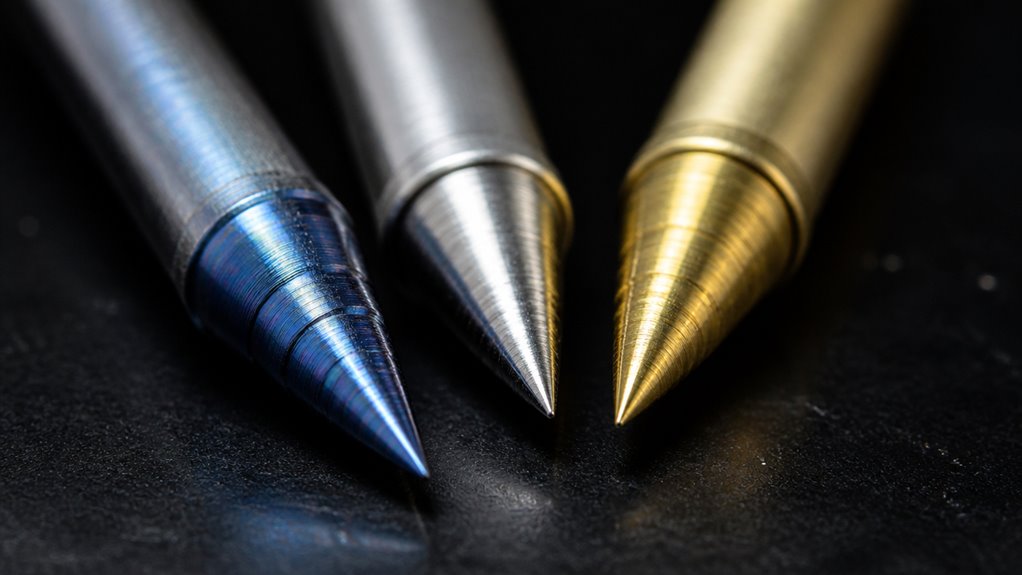
To choose the right tungsten tip for your TIG welder, match electrode type and color to metal and current. Use 2% lanthanated for versatility, balled tips for AC aluminum, and pointed tips for DC steel.
Grind tips longitudinally at 15°–60° to balance bead shape and penetration while minimizing erosion. Select tip size to control arc concentration and tip life.
Proper preparation and current choice stabilize your arc and optimize weld quality. Understanding these details guarantees your welds perform reliably.
When selecting the right tungsten tip for your TIG welder, you must consider the material you’re welding, the current type, and the desired bead profile to guarantee peak arc stability and penetration.
Start by matching the electrode composition. 2% lanthanated tungsten offers versatility and longevity, suitable for most materials and currents. For aluminum or magnesium, choose zirconia or pure tungsten with AC current to optimize arc cleaning.
Adjust electrode diameter to match joint thickness and current range. Larger diameters handle higher amperages without degradation. Grind the tip longitudinally to maintain arc stability and prevent contamination.
Avoid using pure tungsten with modern power sources, as oxide-containing electrodes provide superior ignition and arc consistency. Taking these factors into account secures efficient heat transfer, reduces tungsten erosion, and yields precise, high-quality welds.
For most aluminum TIG welding tasks, lanthanated tungsten is recommended as the best general-purpose electrode for both AC and inverter machines.
Selecting the right tungsten tip shape directly influences weld quality and bead profile by controlling arc focus, penetration depth, and bead width.
A sharply ground tip at 15 degrees produces a wider bead with lower penetration, ideal for thin sheet metal. However, it increases tungsten erosion risk.
A 30- to 60-degree taper balances penetration and bead width, ensuring a stable arc and reduced erosion, suitable for most applications.
Tips grounded above 60 degrees concentrate heat for deeper penetration and narrow beads but risk arc wandering and are seldom used.
Pointed tips deliver precise, focused arcs, enhancing control on steel with DC welding.
Conversely, balled or rounded tips stabilize the arc for AC welding aluminum, promoting consistent bead shape and effective cleaning action, critical for aluminum’s oxide layer.
Maintaining precise grinding angles during sharpening is essential to achieve these tip shapes and optimize weld quality.
Understanding how tungsten tip size and shape influence penetration and erosion is essential for optimizing weld quality.
Smaller tip diameters concentrate arc energy, increasing penetration depth but accelerating tungsten erosion due to higher heat density. Conversely, larger tips disperse the arc, producing wider, shallower beads and reducing erosion rates.
Tip shape directly affects arc focus. Sharply ground tips at 15–30 degrees create broader, lower-penetration beads with higher erosion risk, suitable for thin metals. Angles above 60 degrees yield narrow, deep penetration with lower erosion but can cause arc instability.
Rounded or balled tips stabilize the arc, decreasing erosion, especially on AC aluminum welding applications. Properly balancing tip size and shape allows you to control penetration profiles while minimizing tungsten consumption and maintaining arc stability. This balance is vital for repeatable, high-quality welds.
For best performance, ensure the tungsten electrode is clean and inserted securely, as proper electrode preparation is crucial for a stable arc and reduced contamination.
When it comes to welding, matching the right tungsten electrode types and their color codes to the metal and current type is crucial for achieving peak performance. You know how important it’s to get this right, right? Understanding how pure, ceriated, lanthanated, and zirconiated electrodes behave under different amperages and materials is the key to stable arcs and the penetration you’re looking for.
So, let’s break it down a bit. Each electrode color has its own best applications and performance factors that can significantly impact your weld quality. For instance, pure tungsten is great for DC welding, but it can be tricky with AC.
On the other hand, ceriated electrodes excel at lower amperages, making them perfect for thin materials. Lanthanated electrodes are super versatile and work well across a range of metals. And don’t forget about zirconiated electrodes—these are fantastic for AC welding and can help you achieve a smooth arc.
As you can see, choosing the right electrode isn’t just a matter of preference; it’s about understanding the specifics of the job at hand. With the right electrode in your corner, you’ll be well on your way to high-quality welds every time! The use of a non-consumable tungsten electrode ensures precise heat control and clean welds in TIG welding applications.
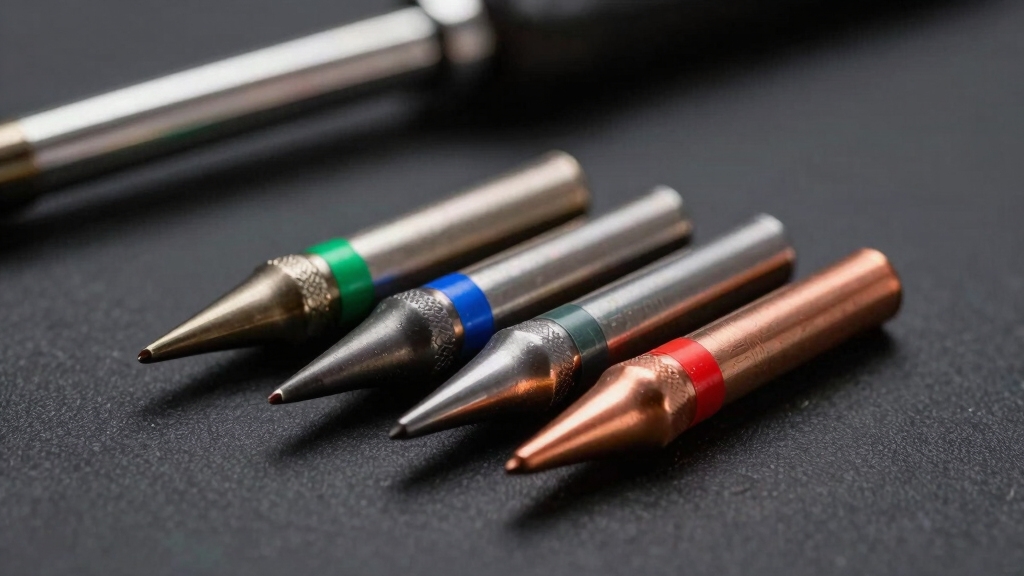
Although tungsten electrodes come in various colors, each color corresponds to specific alloy compositions designed to optimize arc performance for different metals and welding conditions.
For example, pure tungsten electrodes are green and provide a steady arc but have limited current capacity. Ceriated electrodes, marked grey, offer higher tensile strength and suit medium-low amperage welding on steels and copper.
Lanthanated electrodes, often identified with blue or gold bands, deliver smooth, stable arcs across a broad amperage range and maximize electrode life. Zirconiated types, brown or white, serve niche applications with specialized power sources.
Understanding these color codes helps you select electrodes that maintain arc stability, reduce erosion, and match your metal’s thermal conductivity and welding current. This ensures precise, efficient TIG welds without premature electrode degradation. Maintaining a sharp tungsten and avoiding contamination is equally crucial for stable arc initiation and preventing weld defects.
Choose the right tungsten electrode by matching its alloy type and color to the metal you’re welding and the current settings you use.
For steels and stainless, 2% lanthanated tungsten (blue or gold) offers excellent arc stability and longevity across DCEN currents.
Ceriated tungsten (grey) suits medium-low amperage welding on steel, copper, and aluminum, providing smoother starts and consistent arcs.
Pure tungsten (green) works best with older, single-phase TIG machines but lacks durability.
For aluminum and magnesium, zirconium-doped electrodes (brown or white) or fully balled pure tungsten guarantee stable AC arcs and effective cleaning action.
Avoid tungsten types incompatible with your power source or metal, as mismatches cause arc instability, premature erosion, and poor bead quality.
Start with 2% lanthanated for versatility, then tailor electrode choice to your specific metal and current conditions for peak welds.
Using the correct polarity, such as DCEN polarity for steels and stainless, helps prolong tungsten life and achieve precise weld penetration.
Understanding how different tungsten electrode types and colors affect weld quality allows you to optimize performance for specific metals and welding conditions.
For steel and stainless, ceriated (grey) tungsten performs well at medium-low currents, offering stable arcs and higher tensile strength.
The versatile 2% lanthanated (blue or gold) electrode suits most metals, ensuring consistent results and extended life.
Pure tungsten (green) is limited to older single-phase power sources due to its steady arc but lower durability.
For aluminum and magnesium, zirconated (brown or white) and balled tips promote stable AC arcs and effective cleaning action.
Electrode choice directly influences arc stability, penetration, and erosion rates.
You must match electrode type, color, and tip shape to metal type and current to prevent defects, arc wander, and tungsten contamination.
This ensures precise, efficient TIG welds.
Using zirconiated tungsten electrodes with helium blends enhances arc stability and weld pool fluidity on aluminum and copper alloys.
When welding different metals, selecting AC or DC current directly impacts tungsten tip performance and weld quality. You’ll use DCEN (Direct Current Electrode Negative) for steel, stainless, and copper to achieve deeper penetration and a focused arc.
AC current is essential for aluminum and magnesium, providing a self-cleaning action that maintains weld integrity. The tungsten tip shape also correlates with current type. For example, balled tips stabilize AC arcs, while pointed tips excel with DC.
| Current Type | Metal Types |
|---|---|
| DCEN | Steel, Stainless, Copper |
| AC | Aluminum, Magnesium |
| Both | Various alloys with tip adjustment |
Choosing the right current optimizes arc stability, penetration, and tip longevity. This ensures consistent weld quality tailored to the metal. Properly setting the amperage based on material thickness is crucial to achieve the desired heat input and welding results.
Grinding tungsten tips longitudinally along their length is essential for maintaining arc stability and preventing contamination. When you grind parallel to the electrode’s centerline, you ensure the arc remains concentrated and avoids wandering.
Grinding tungsten tips lengthwise keeps the arc stable and focused, preventing contamination and wandering.
Use a dedicated tungsten grinder or belt sander exclusively to prevent metal contamination, which destabilizes the arc. Select an appropriate angle: 15 to 30 degrees for sharp tips on thin metals, or 30 to 60 degrees for moderate penetration and bead width.
For AC aluminum welding, prepare a small ball or rounded end to enhance arc cleaning and stability. Avoid transverse grinding; it creates crosswise scratches, leading to erratic arcs.
Consistent, precise grinding optimizes heat concentration and arc control, reducing tungsten erosion and improving weld quality. Grinding tungsten electrodes correctly reduces arc instability by up to 30%.
Want to extend the life of your tungsten tips and boost your welding quality? It all starts with precise tip grinding. Keeping that tip in the right shape is crucial since it helps prevent arc instability. You wouldn’t want your arc going wonky on you, right?
Next up, choosing the right electrode type and diameter is key. Make sure it matches your material and current. This not only ensures efficient arc performance but also cuts down on erosion. It’s all about finding that perfect match!
And don’t forget about optimizing your arc settings! Adjusting things like current type and balance can really help stabilize the arc and minimize tungsten degradation while you’re welding. With these tweaks, you’ll notice a big difference in both performance and longevity. Happy welding!
Additionally, avoiding oxygen exposure is essential since oxygen attacks tungsten electrodes, reducing their lifespan and impairing arc stability.
Maintain arc stability and prevent contamination by always grinding tungsten electrodes longitudinally along their length. Grinding parallel to the electrode centerline guarantees that scratches don’t cause arc wandering or instability.
Use a dedicated tungsten grinder or belt sander to avoid metal contamination, which degrades arc quality. When preparing your tip, focus on creating a consistent taper angle, typically between 15 and 30 degrees for most applications, to balance penetration and bead profile.
Avoid excessive grinding that rounds the tip prematurely, reducing precision. For low-amperage welding, a slight ball or blunted end on the tapered tip enhances arc control.
Precision in grinding directly impacts arc consistency, tungsten longevity, and weld quality. Maintaining proper technique is vital for peak TIG performance.
When selecting the correct electrode for your TIG welding project, you’ll directly influence both tungsten tip longevity and weld quality.
Choose electrode type based on base material and current: 2% lanthanated tungsten offers versatility and extended life for most steels and alloys with DC. Pure tungsten suits legacy single-phase machines.
For aluminum welding with AC, opt for balled zirconiated or lanthanated electrodes to maintain arc stability and cleaning action. Match electrode diameter to amperage and joint thickness to prevent overheating or insufficient penetration.
Grind the electrode longitudinally and maintain a precise tip shape—pointed for DC steel, balled for AC aluminum—to optimize arc focus and reduce erosion.
Correct electrode selection minimizes contamination, arc wander, and premature tip degradation. This ensures consistent, high-quality welds.
Choosing the right electrode sets the foundation, but optimizing your arc settings directly impacts tungsten tip longevity and weld quality.
You need to tailor amperage to the electrode size and material. Excessive current accelerates tip erosion and causes instability.
Adjust your AC balance when welding aluminum; more positive for cleaning and more negative for penetration.
This adjustment maintains a stable arc and preserves the tungsten ball shape. Use DCEN for steel or titanium to focus heat and reduce tip wear.
Maintain a consistent arc length to prevent overheating and contamination. Proper grinding with longitudinal scratches complements arc stability, ensuring precise control.
By fine-tuning these parameters, you reduce tungsten degradation, minimize arc wander, and achieve repeatable, high-quality welds.
This extends electrode service life while optimizing your TIG welding performance.
Yes, you can reuse tungsten tips after reshaping or sharpening, but you need to grind them longitudinally to maintain arc stability and prevent contamination.
Avoid lateral scratches and always use a dedicated tungsten grinder.
Over time, repeated reshaping reduces tip length and changes geometry, which may affect arc quality.
Monitor tungsten erosion and tip shape closely.
Once it becomes too short or misshapen, replace it to ensure consistent weld performance.
Environmental factors affect tungsten tip performance like rust affecting a steel blade.
Humidity and contamination can degrade the tip’s surface, causing unstable arcs and erratic welds.
Moisture promotes oxidation, increasing tungsten erosion.
Dust or oil contamination disrupts arc stability and shortens electrode life.
You need to keep tips clean, grind longitudinally, and store them dry to maintain consistent arc quality.
This helps prevent premature tip degradation in variable environments.
You need to wear gloves and a mask when handling tungsten electrodes to avoid skin contact and inhalation of harmful dust, especially during grinding.
Always use a dedicated tungsten grinder to prevent contamination, which can cause arc instability.
Work in a well-ventilated area to disperse fumes.
Store electrodes in a clean, dry place to prevent oxidation.
Avoid dropping or damaging tips, as chips can cause welding defects and safety hazards.
Yes, automated TIG welding requires tungsten tips with consistent shapes and precise grinding, usually longitudinal, to guarantee arc stability and repeatability.
You’ll find that 2% lanthanated electrodes are preferred for their long life and smooth arc at varied currents.
Tip geometry, like small ball or tapered ends, must be uniform to prevent arc wandering during automation.
Proper tip prep minimizes contamination and extends electrode life, essential for high-volume, consistent weld quality.
You’ll find that welding position impacts tungsten tip choice markedly. Over 70% of welders adjust tip shape to control arc stability in vertical or overhead work.
For example, pointed tips with a small ball improve heat focus and prevent arc wander when welding overhead, where gravity affects molten metal flow.
Conversely, flatter tips suit flat positions by providing wider bead profiles and better heat distribution. This ensures consistent penetration and weld quality.
Choosing the right tungsten tip for your TIG welder isn’t just important—it’s critical. Using the wrong shape, size, or type can turn your welds into a disaster zone, ruining penetration and bead quality instantly.
By mastering tip preparation and current choice, you’ll extend electrode life and achieve flawless arcs every time. Neglecting these details? You might as well toss your welder out the window. Precision in tungsten tips is the secret weapon for perfect welds.