Phone:
(701)814-6992
Physical address:
6296 Donnelly Plaza
Ratkeville, Bahamas.

Phone:
(701)814-6992
Physical address:
6296 Donnelly Plaza
Ratkeville, Bahamas.

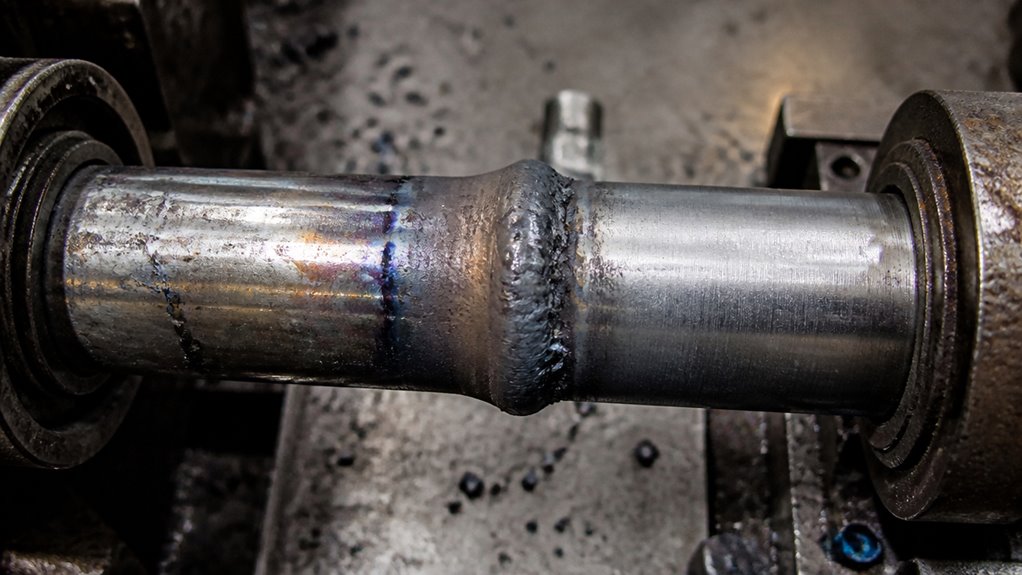
You’ll face challenges with friction welding due to its need for rigid, heavy-duty machines that apply high axial forces. This raises equipment and maintenance costs.
You must maintain precise control over parameters like speed and pressure to avoid defects such as voids or flash formation.
Material restrictions and joint geometry limitations can complicate your setup. Skilled operators are essential for consistent quality.
These constraints impact productivity and increase operational complexity. Exploring these factors further reveals deeper insights into friction welding’s trade-offs.
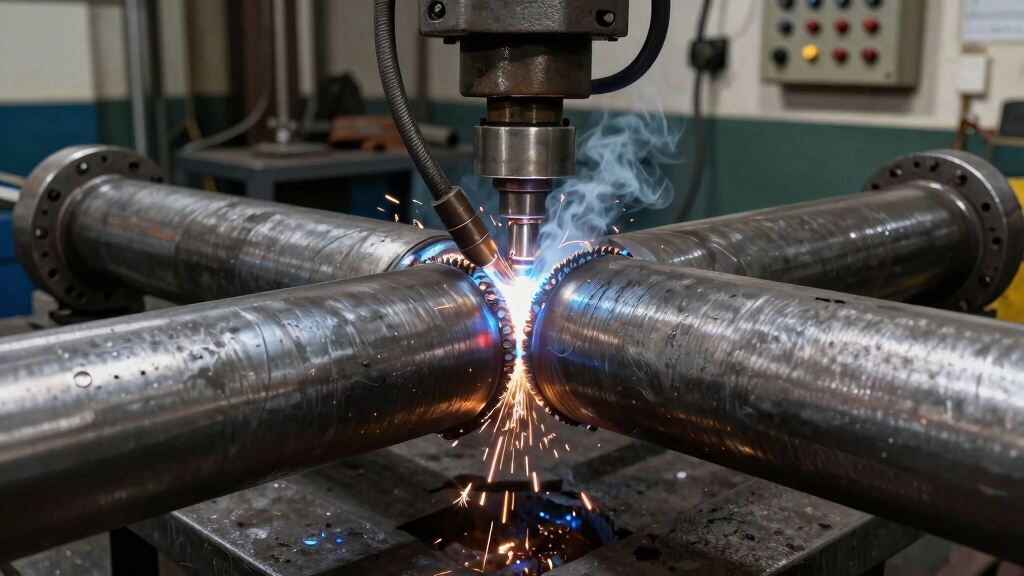
Because friction welding relies on generating sufficient heat through relative motion between components, you need a rigid, heavy-duty machine capable of applying high axial force to maintain intimate contact under pressure.
This axial force guarantees adequate frictional heat generation and effective plastic deformation to forge a quality joint. If the machine lacks rigidity or sufficient thrust, slippage or insufficient heat occurs, compromising weld integrity.
The equipment must also resist mechanical stresses from torque and axial loads without deflection to maintain precise alignment. Additionally, tooling and fixturing require robust design to withstand these forces without distortion.
These constraints increase capital and maintenance costs, limit portability, and demand precise control systems. Ultimately, the heavy-duty machine and high-force requirements represent significant barriers to friction welding’s broader application in diverse manufacturing environments. Furthermore, unlike inverter welding machines that use high-frequency inverter technology for compact, efficient power control, friction welding equipment generally lacks such advanced power efficiency features.
Friction welding really shines when it comes to parts that have symmetrical or rotationally compatible shapes. You see, when the pieces are asymmetric, it can get tricky with tool engagement and applying the necessary force.
Now, let’s talk about thickness. If you’re working with thick sections, the process can slow down quite a bit, and you might even need to make multiple passes to get the job done right.
Oh, and don’t forget about material compatibility! This method works best with ductile alloys, which means many brittle or non-forgeable metals are off the table for effective joining. So, keeping these limitations in mind can help ensure a successful welding process! Additionally, precise control of heat input is critical, similar to what is emphasized in precision thermal processes, to avoid defects and ensure strong welds.
When working with friction welding, you must guarantee that the parts exhibit a degree of symmetry or rotational compatibility. The process struggles to accommodate asymmetric or irregular shapes.
This requirement arises because friction welding relies on uniform rotational motion and axial force to generate consistent heat and plastic deformation at the interface. If the components lack symmetry, uneven heat distribution and varying contact pressures can cause incomplete bonding, voids, or distortion.
Additionally, irregular geometries complicate clamping and alignment, undermining process stability and repeatability. Consequently, you’re limited to relatively simple, axisymmetric joint designs like cylindrical shafts or flat butt joints.
The inability to effectively weld asymmetric or complex shapes restricts friction welding’s applicability, especially in industries demanding intricate geometries or multi-dimensional weld paths.
Moreover, precise control of the heat generation is essential in friction welding to ensure consistent weld quality despite joint geometry challenges.
Although friction welding excels with certain geometries, it faces significant challenges with material thickness.
When working with thick sections, you’ll notice slower welding speeds and increased cycle times, which reduce productivity. Furthermore, the process struggles with achieving consistent weld quality across the entire thickness, often requiring multiple passes or post-weld treatments.
Finally, the clamping and rotational forces needed grow substantially, demanding more robust equipment and careful setup.
These constraints restrict friction welding’s application in heavy-section components. For very thick plates, alternative methods such as Submerged Arc Welding offer better penetration and deposition rates suited to the material thickness.
Because friction welding relies on specific joint configurations and material behaviors, its applicability is limited to relatively symmetric or rotationally compatible parts.
You’ll find it challenging to weld asymmetric or irregular shapes since the process demands uniform rotation and axial force.
Additionally, friction welding struggles with dissimilar or non-forgeable materials, especially brittle or non-ductile alloys, which can’t plastically deform under the required conditions.
Joint designs are also constrained; wide-open fillet or lap joints require significant adaptation, limiting your options.
Thick sections slow down welding speeds, and thin-walled tubes present clamping and rotational difficulties, complicating tube welding.
Ultimately, these material compatibility and joint geometry restrictions reduce friction welding’s versatility, restricting it to simpler, more uniform assemblies rather than complex or highly variable workpieces.
Moreover, welding processes like friction welding must consider the risk of microstructure alterations that can weaken material properties under heat and stress.
Welding thick or irregular materials with friction welding presents significant challenges that can limit process effectiveness and joint quality.
You’ll encounter these key issues:
Additionally, managing thermal expansion differences between materials is critical to prevent cracking and ensure joint durability in thick or irregular welds.
Understanding these challenges helps you assess whether friction welding suits your application or if alternative joining methods might better handle thick or irregular components.
In friction welding, you’ll often run into issues like residual stresses and distortion. These arise from the high clamping forces and localized deformation during the process. Unfortunately, this can really affect dimensional accuracy.
Also, the microstructure of the weld zone tends to change. You might see grain coarsening or even partial recrystallization in the thermo-mechanically affected and heat-affected zones. These changes can have a significant impact on the mechanical performance of the welded joint. Applying post-weld heat treatments can help relieve residual stresses and improve the weld’s overall durability.
Although friction welding generates less overall heat than fusion welding, it still subjects the workpiece to high clamping forces and localized deformation. This can induce significant residual stresses and distortion. You must consider these effects carefully, as they can compromise dimensional accuracy and structural integrity.
High axial forces cause plastic deformation near the weld interface, creating uneven strain distribution and residual stress buildup. Localized cooling rates vary, leading to thermal gradients that exacerbate distortion, especially in thin or asymmetrical parts.
Clamping rigidity and fixture design influence how stresses redistribute post-weld. This can potentially cause warping or dimensional deviations. Understanding and mitigating these factors is critical to maintaining tolerances and preventing premature failure in friction-welded assemblies.
Implementing post-weld heat treatment below 400°F can help relieve residual stresses without softening the heat-affected zone, improving overall structural performance.
Residual stresses and distortion from high clamping forces directly affect the microstructural evolution in the weld zone, where intense thermo-mechanical interactions occur.
You’ll find that the thermo-mechanically affected zone (TMAZ) and heat-affected zone (HAZ) often undergo grain coarsening or partial recrystallization. This can degrade mechanical properties in certain alloys.
Dynamic recrystallization produces fine grains, but this benefit depends on tightly controlled cooling rates and tool travel speeds. If you don’t optimize process parameters, you risk internal defects like voids or kissing bonds, compromising weld integrity.
Furthermore, the microstructural changes may cause localized hardness variations, making the joint prone to premature failure under cyclic loading.
Additionally, improper shielding or environmental protection during welding can lead to oxidation and contamination, further weakening the weld zone through weld metal embrittlement.
When you factor in the rapid wear of non-consumable stir tools during friction welding, especially friction stir welding, the overall production costs rise markedly.
Tool degradation not only demands frequent replacements but also interrupts production, impacting efficiency.
You’ll notice these cost drivers distinctly:
Thus, wear-related expenses markedly elevate your operational costs, challenging friction welding’s economic viability for low-volume or highly variable production runs.
Managing tool wear is essential to keeping friction welding cost-effective and competitive.
Considering alternative welding methods like multi process welding can sometimes offer more cost-effective solutions depending on production needs.
Controlling process variables such as rotational speed, axial force, and travel speed is critical to achieving consistent weld quality in friction welding.
If you don’t precisely regulate these parameters, you risk defects like voids, lack of penetration, or kissing bonds that compromise joint integrity.
Excessive axial force or speed can cause flash formation and residual stresses, while insufficient heat input may lead to incomplete bonding.
Additionally, improper rotational speed affects dynamic recrystallization, resulting in grain coarsening or weakened mechanical properties in the thermo-mechanically affected zone.
You must optimize the interplay of these variables to balance heat generation and material flow, ensuring defect-free welds with adequate strength and ductility.
Variability in process control directly influences structural performance, making tight parameter management essential to avoid costly rework or failure.
Although friction welding offers advantages for joining thick-section materials, its speed and productivity are often limited by inherent process constraints.
Single-pass friction stir welding of thick plates proceeds slowly, restricting throughput despite good joint integrity.
Setup times also cut into your effective cycle time since you need precise tool loading, alignment, and clamping for each weld.
Furthermore, optimizing process parameters to maintain weld quality often forces you to sacrifice speed.
These factors collectively constrain your productivity when working with thick-section friction welding.
Because friction welding demands specialized and heavy-duty machinery, you’ll face high initial capital costs that exceed those of many conventional fusion-welding systems.
The equipment requires rigid clamping fixtures and backing plates, which add to your upfront investment and limit portability.
Maintenance expenses also escalate, as high-precision machines and tooling demand frequent servicing to sustain performance and accuracy.
In friction stir welding, tool wear occurs rapidly, increasing consumable replacement costs compared to non-rotating welding processes.
These factors combine to raise your operational expenses markedly.
Consequently, friction welding becomes economically viable primarily for medium- to high-volume production runs, where the investment and upkeep can be amortized effectively.
For sporadic or low-quantity jobs, the high equipment and operating costs often outweigh the process benefits, limiting its practical application.
Since friction welding relies heavily on tightly controlled process parameters, you must have skilled operators who understand the nuances of rotational speed, axial force, and travel speed adjustments.
Precise setup and expert control are critical to avoid defects like voids, underfill, or flash, which compromise joint integrity.
You need to:
Without this expertise, you risk producing substandard welds, increasing scrap rates and maintenance costs.
Operator skill directly impacts the mechanical properties and reliability of the joint, making training and experience indispensable for optimal friction welding outcomes.
Friction welding improves environmental sustainability by eliminating filler metals, shielding gases, and fluxes, reducing waste and emissions compared to fusion welding.
You’ll also avoid fumes and spatter, lowering air pollution. However, it demands high-energy, heavy-duty equipment, increasing electricity use.
Plus, secondary operations like flash removal add labor and environmental impact.
Yes, you can automate friction welding for robotic manufacturing systems, but it demands detailed design and diligent control. You’ll need precise programming to manage parameters like axial force, rotational speed, and travel speed.
The process’s sensitivity to these variables means any deviation risks defects. Furthermore, tooling wear and complex joint geometries require regular monitoring and maintenance.
You need to prioritize guarding against high rotational speeds and axial forces unique to friction welding, as these pose mechanical hazards.
Make sure proper shielding to avoid contact with hot surfaces and friction-generated sparks.
Because the process produces minimal fumes, ventilation isn’t as critical, but you must still manage oxide dust.
Also, secure heavy-duty clamps firmly to prevent workpiece ejection.
Finally, train operators specifically on controlling machine parameters to prevent sudden tool failures or malfunctions.
Certain sectors should steer shy of friction welding. If your industry demands intricate, irregularly shaped components or wide-open fillet joints, friction welding falls flat due to joint geometry limitations.
Also, if you work with brittle, non-ductile alloys or dissimilar materials, friction welding won’t fuse them effectively. Industries relying on rapid, high-volume production of thick or asymmetric parts might find the process painfully slow and prohibitively pricey.
Choose wisely based on your technical and economic needs.
Friction welding generally preserves the recyclability of components since it produces solid-state joints without introducing filler metals or fluxes that complicate recycling.
However, the localized microstructural changes and residual stresses you’ll see may slightly affect downstream processing.
Also, mixing dissimilar metals through friction welding can hinder recycling because separation becomes difficult.
You’ll need to take into account joint design and material compatibility carefully to maintain effective recyclability in your welded assemblies.
You can’t overlook the disadvantages of friction welding if you want precision and efficiency. Heavy machines, high forces, and strict setup demand skilled hands and escalate costs.
Tool wear and material limits challenge your workflow, while process variables threaten weld quality. Like walking a tightrope, balancing speed and defect prevention requires unwavering focus.
In the end, friction welding’s complexity isn’t just a hurdle; it’s a call for mastery you can’t afford to ignore.