Phone:
(701)814-6992
Physical address:
6296 Donnelly Plaza
Ratkeville, Bahamas.

Phone:
(701)814-6992
Physical address:
6296 Donnelly Plaza
Ratkeville, Bahamas.

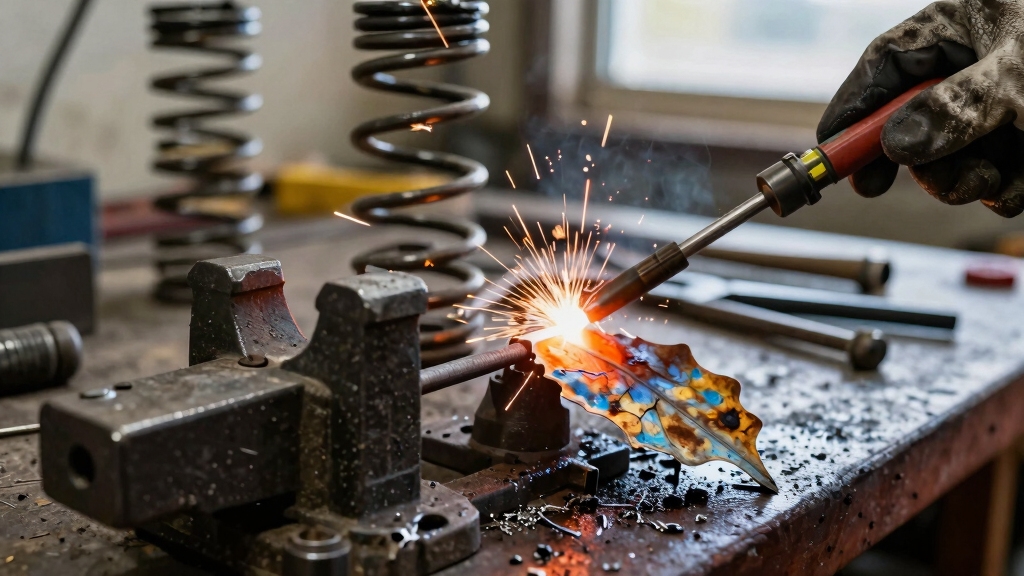
You can weld a leaf spring, but only as a risky, temporary fix.
Welding introduces intense heat that alters the metal’s microstructure, causing brittleness and significant strength loss.
This leads to potential catastrophic failures under dynamic loads. Proper welding requires strict temperature control and post-weld treatments, yet it still won’t restore original durability.
Replacing the spring preserves load capacity and safety. Understanding these risks and best practices will clarify why replacement is the preferred solution over welding.
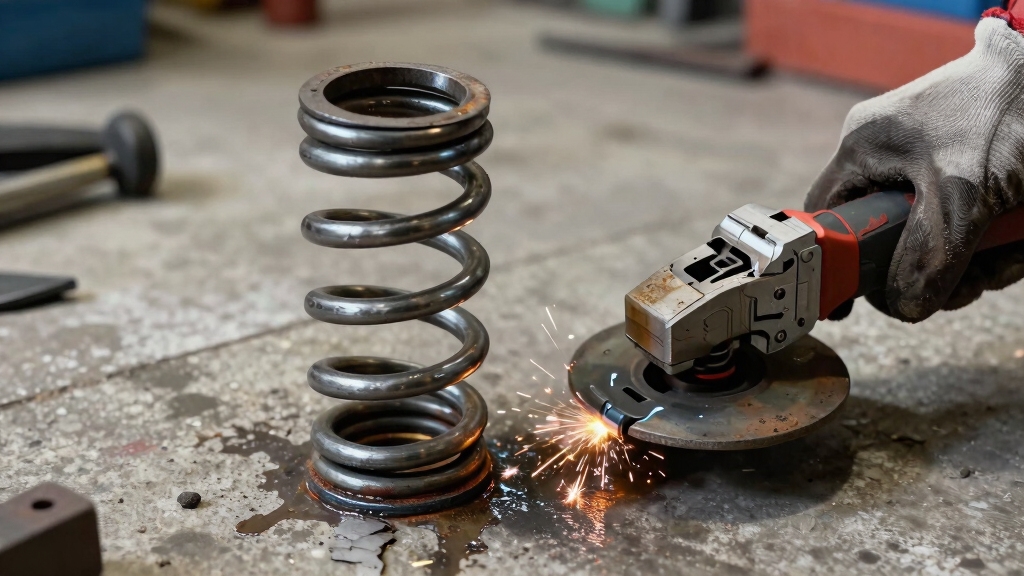
Although you can weld a leaf spring in emergency situations, doing so safely is extremely challenging due to the material properties of spring steel and the heat involved in welding.
Welding leaf springs in emergencies is possible but poses significant safety challenges due to spring steel properties and heat effects.
Leaf springs consist of high-carbon spring steel, which loses tensile strength rapidly when exposed to heat exceeding 400°F.
Welding introduces localized heating that alters the microstructure, forming a mild steel weld zone incompatible with the spring’s strength requirements.
Additionally, weld splatter creates stress risers that become initiation points for fractures under load.
While arc welding methods like SMAW are sometimes used for temporary repairs, the risk of compromised integrity remains high.
Consequently, even though welding is possible, the inherent metallurgical changes and mechanical weaknesses make it an unreliable and unsafe long-term solution.
Proper preheating techniques can reduce cracking risk but are difficult to apply effectively in field repairs of leaf springs.
When you weld a leaf spring, the intense heat involved fundamentally alters the spring steel’s microstructure. This causes a loss of tensile strength and increased brittleness.
The high temperature leads to de-carbonization and phase changes that weaken the steel, making it prone to fractures under load. Additionally, the weld zone forms mild steel that lacks the original spring’s resilience.
You risk creating stress risers from weld splatter, which accelerate crack initiation.
Consider these critical heat and brittleness risks:
These factors make welded leaf springs unreliable for heavy or dynamic loads. Controlled heating below 400°F is essential to relieve residual stresses without softening the heat-affected zone (HAZ hardness).
Understanding the heat and brittleness risks involved in welding leaf springs helps clarify why industry experts strongly advise against it.
If you must weld, keep temperatures below 400°F to avoid de-carbonization and loss of tensile strength.
Maintain welding temperatures under 400°F to prevent de-carbonization and preserve tensile strength.
Experts recommend TIG welding over MIG or SMAW for better heat control and compatibility with spring steel.
However, welding should only be a temporary measure.
The safest, most reliable option is to replace leaf springs with vehicle-specific, high-carbon steel units designed for your suspension needs.
Before replacement, remove springs to prevent heat damage during any nearby welding.
Avoid quick fixes that create stress risers or brittle zones prone to failure.
Prioritize proper replacement to maintain structural integrity and ensure safe, long-lasting suspension performance.
Proper welding of leaf springs requires preheating to prevent stress cracking and controlled post-weld heat treatment to maintain material properties.
Since welding leaf springs carries inherent risks, professionals follow stringent protocols to minimize heat damage and maintain structural integrity during repairs.
You need to control heat input carefully to avoid de-carbonization and brittleness in the spring steel.
Pros often use TIG welding over MIG or SMAW for better precision and lower heat.
Preparation includes thorough grinding to remove contaminants and guarantee a clean weld zone.
Post-weld, stress-relieving techniques may be applied to restore some toughness.
This method prioritizes minimizing tensile strength loss while delivering a temporary fix. Controlling heat input is critical to minimize distortion and residual stress during the welding process.
Mastering quick leaf spring welding requires strict control over heat input and meticulous preparation to prevent permanent damage.
First, thoroughly grind the fracture edges to remove contaminants and create a clean welding surface.
Use low heat input, ideally with TIG welding, to limit thermal exposure and preserve spring steel’s tensile strength.
Maintain welding temperatures below 400°F to avoid de-carbonization and brittleness.
Apply short, controlled weld beads to minimize heat buildup and avoid weld splatter that creates stress risers prone to cracking.
Clamp the spring firmly to prevent distortion during welding.
After welding, allow the spring to cool slowly at ambient temperature to reduce residual stresses.
Finally, inspect the weld zone for cracks or flaws before reinstalling.
This ensures the repair holds under load without compromising safety.
Proper amperage control is crucial, as excessive heat input can cause thermal shock and cracking in high carbon steels like spring steel.
Although welding leaf springs might seem like a quick fix, replacing them guarantees the structural integrity and performance necessary for safe vehicle operation.
Welding induces heat that compromises the high-carbon spring steel’s tensile strength, causing brittleness and stress risers prone to fractures.
When you replace leaf springs, you restore the original material properties and load-bearing capacity, essential for suspension reliability.
Consider these reasons why replacement outperforms welding:
Because welding high-carbon steels like leaf springs requires meticulous control of heat input and cooling to avoid thermal stresses, replacement is the technically sound choice for long-term safety and vehicle handling.
When you need to address damaged leaf springs, opting for safe alternatives to welding preserves the spring’s mechanical integrity and guarantees reliable vehicle performance.
Instead of welding, you should replace the damaged leaf spring with a new one specifically designed for your vehicle’s load and suspension requirements. This guarantees material properties and tensile strength remain uncompromised.
If immediate replacement isn’t feasible, consider using flat iron replacements for non-spring functions, but only as temporary fixes. Avoid any welding near the springs to prevent heat-induced brittleness.
Additionally, removing the springs before performing adjacent welding tasks protects them from indirect heat damage. Prioritizing these methods maintains structural soundness, reduces stress risers, and prevents the catastrophic failures common with welded leaf springs under dynamic loads.
Controlled heat input and proper cooling methods are critical in preventing heat-induced brittleness in spring materials during any necessary repair processes.
Replacing or temporarily fixing leaf springs helps maintain your vehicle’s suspension.
However, preventing damage in the first place extends spring life and guarantees consistent performance. Proper maintenance reduces stress risers and avoids premature fractures caused by overloading or corrosion.
You should routinely inspect for cracks, rust, and uneven wear before issues escalate.
To prevent leaf spring damage, focus on:
These steps optimize your suspension’s durability, minimize failure risks, and maintain reliable handling under varied conditions.
Welding repairs can alter metal microstructure and should be approached cautiously, especially in high-stress areas, to avoid compromising structural integrity.
You’ll need a welding machine, typically an arc welder (SMAW) or TIG welder for better control.
Prepare with an angle grinder to clean and shape the weld area, removing rust and paint.
Use clamps to hold the leaf spring securely.
Protective gear, including a helmet, gloves, and apron, is essential.
A low heat input and proper welding rods or filler metals compatible with spring steel help minimize damage during welding.
A temporary leaf spring weld typically lasts from a few hundred to a few thousand miles, depending on load and usage conditions.
You’ll find it highly unreliable under heavy or off-road stress because heat-induced brittleness and stress risers accelerate failure.
If you rely on such a weld, expect it to be a short-term fix, weeks or months at best, before fatigue causes cracks or complete failure.
This risks vehicle safety and performance.
You’ll find that certain spring steel grades, like 5160 and 9260, offer better weldability due to their lower carbon content and alloying elements designed for toughness.
These grades tolerate heat input more effectively, reducing brittleness risks. However, even with these steels, welding demands strict temperature control and post-weld heat treatment to restore mechanical properties.
Avoid high-carbon steels, as they’re prone to cracking and loss of tensile strength during welding.
You identify a cracked leaf spring by visually inspecting for visible fractures, rust buildup, or deformation along the leaf edges and eyes.
Use a bright light and clean the spring to spot fine cracks or fatigue lines.
Tap the spring lightly with a hammer; a dull sound indicates a crack.
Magnetic particle inspection or dye penetrant tests provide more precise detection of subsurface cracks before considering any repair.
You might think welding a leaf spring is a quick fix, but the heat can create brittleness, risking failure just when you need strength most.
Coincidentally, the very process meant to restore durability often compromises it. Instead, you should prioritize replacement or professional repair to maintain safety and performance.
By understanding these technical risks, you can avoid costly errors and keep your vehicle’s suspension reliable under any load or terrain.